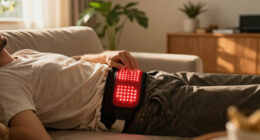

LED light therapy doesn’t tan you because it uses visible wavelengths, not ultraviolet (UV) rays. UV rays stimulate melanin production, which darkens your skin, causing tanning. In contrast, LED lights like red or blue light target cellular activity without triggering melanin synthesis. They improve your skin’s health safely, without causing any pigmentation change. If you’re curious about how different lights impact your skin, discover more about the science behind UV and LED effects.

Get wellness gear delivered free with Prime
- Fast, free delivery on millions of items
- Prime Video, Amazon Music and more included
- Member-only deals all year
Key Takeaways
- LED emits visible light, which lacks the energy to stimulate melanin production responsible for tanning.
- UV radiation causes a biological response in skin cells, increasing melanin, while LED light does not trigger this process.
- LED therapy targets cellular activity for skin health without penetrating deeply enough to induce pigmentation.
- UV exposure can cause skin damage and tanning, but LED treatments are safe and do not alter skin color.
- The fundamental difference is that UV light activates pigment-producing pathways, whereas LED light improves skin without tanning.

LED light therapy has gained popularity as a safe and effective way to enhance skin appearance, but many people wonder how it relates to tanning. The key difference lies in the type of light used. Tanning occurs primarily through ultraviolet (UV) radiation, which is part of the sun’s spectrum. UV rays penetrate your skin and stimulate the production of melanin, the pigment responsible for tanning. When your skin absorbs UV light, it triggers a biological response that increases melanin synthesis, giving your skin that darker hue. That’s why spending time in the sun or under UV tanning beds results in a tan.
LED therapy enhances skin without causing a tan, unlike UV rays that stimulate melanin production.
In contrast, LED light therapy uses visible light, which doesn’t carry the same energy as UV rays. LED devices emit specific wavelengths of visible light—such as red, blue, or near-infrared—that target different skin concerns without penetrating deeply enough to cause tanning. These wavelengths influence cellular activity in your skin, promoting healing, reducing inflammation, and boosting collagen production. Since visible light lacks the energy to stimulate melanin production, it doesn’t darken your skin or cause a tan.
It’s important to understand that UV radiation is what makes tanning possible. UV rays cause a photochemical reaction in your skin’s melanocytes, the cells that produce melanin. This process is what leads to that darker skin tone after sun exposure or tanning bed use. LED light therapy, however, operates on a different principle. It doesn’t have the energy to induce melanin synthesis; instead, it works on a cellular level to improve skin health and appearance without altering skin color.
Because of this, LED light therapy is considered safe for those who want skin improvements without the risks associated with UV exposure, such as skin damage, premature aging, or skin cancer. It’s also suitable for people with sensitive skin or those who want to avoid tanning altogether. You won’t see a tan develop from LED treatments because they simply don’t trigger the biological pathways involved in melanin production.
In essence, the reason LED doesn’t tan you is because it doesn’t mimic the UV radiation that causes your skin to darken. Instead, it uses visible light to stimulate beneficial cellular processes without affecting your skin’s pigmentation. So, if you’re looking to improve your skin’s appearance safely, LED therapy offers a way to do so without risking the harmful effects of UV rays or ending up with a tan. It’s a targeted, non-invasive approach that enhances your skin’s health without changing its color. LED light therapy does not produce tanning effects because it operates on a different energy wavelength and biological mechanism.
LED light therapy devices for skin
As an affiliate, we earn on qualifying purchases.
As an affiliate, we earn on qualifying purchases.
Frequently Asked Questions
Can LED Lights Cause Skin Damage Despite Not Tanning?
LED lights can cause skin damage even if they don’t tan you. Some LED devices emit blue or high-energy visible light that penetrates your skin and generates free radicals, leading to oxidative stress. Over time, this can damage skin cells, cause premature aging, or increase your risk of skin issues. It’s important to protect your skin by limiting exposure and using appropriate skincare, especially with prolonged or frequent LED light use.
Are There Any Health Risks Associated With Long-Term LED Exposure?
Long-term LED exposure is generally safe, but it’s not completely risk-free. Think of it like a gentle rain—you might not notice the impact right away, but over time, it could cause dryness or eye strain. Extended exposure to blue light from LEDs may disrupt your sleep or cause digital eye strain. To stay safe, take regular breaks and limit your screen time, especially before bed.
How Do LED Lights Affect Different Skin Types?
LED lights affect different skin types uniquely. If you have fair or sensitive skin, you might notice redness or irritation after prolonged exposure, especially from high-intensity LEDs. darker skin tones tend to be less reactive, but overexposure can still cause dryness or uneven pigmentation. Always use appropriate protection and limit your exposure time. Pay attention to how your skin responds and consult a dermatologist if you experience any adverse effects.
Is LED Light Therapy Effective for Skin Conditions?
Yes, LED light therapy can be effective for skin conditions. Imagine revealing your skin’s potential—LED therapy stimulates collagen, reduces inflammation, and targets acne, offering visible improvements. You might notice smoother, clearer skin over time. Unlike harsh treatments, it’s non-invasive and gentle. With consistent use, you can empower your skin to heal and renew naturally, making this innovative approach a promising option for your skincare journey.
Can LED Light Improve Skin Tone Without UV Exposure?
Yes, LED light can improve your skin tone without UV exposure. It stimulates collagen production and promotes cell renewal, which helps even out your skin’s appearance and enhances its brightness. You won’t risk UV damage, making it a safe option for skin rejuvenation. Just follow your skincare professional’s advice on frequency and duration, and you’ll likely see a noticeable improvement in your skin’s tone and overall health.
Conclusion
So, next time you think LED lights might give you a tan, remember they don’t emit UV rays, which are necessary for tanning. For example, a friend used LED lights thinking they’d get a sun-kissed glow, but instead, they saw no change in their skin tone. This shows LEDs won’t give you a tan and highlights the importance of understanding the differences between UV and visible light. Choose your light source wisely to achieve your desired results.
Halloween Picks
halloween
As an affiliate, we earn on qualifying purchases.