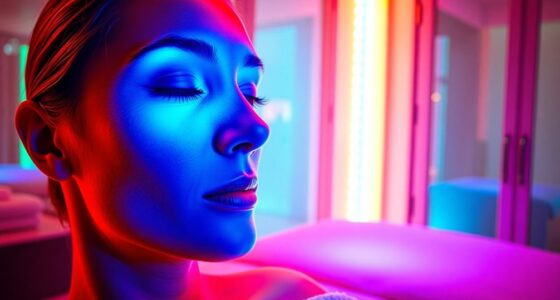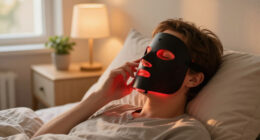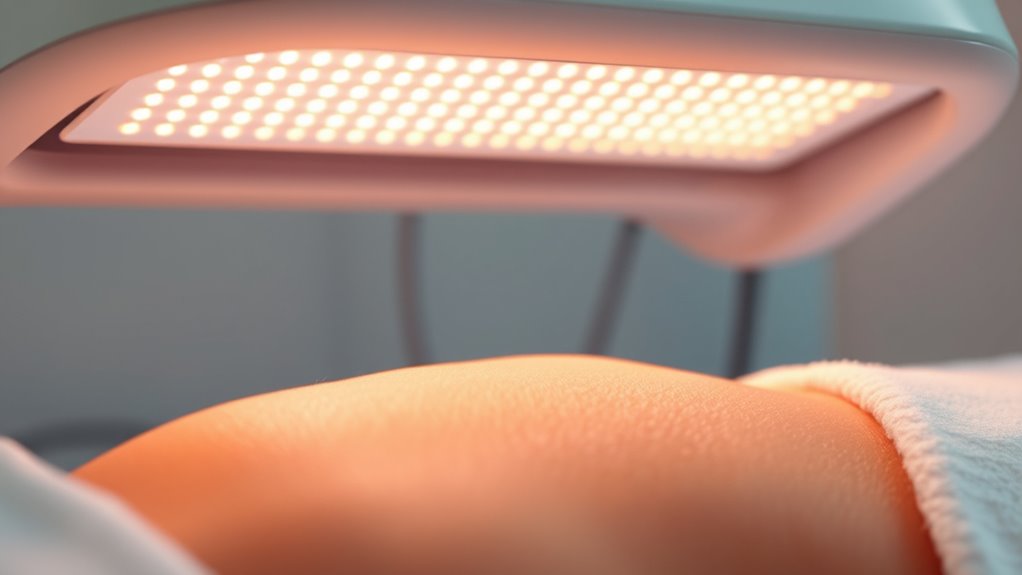

To keep LED treatments comfortable, it’s key to manage heat effectively. LEDs generate some heat during operation, which can cause discomfort or even minor burns if not controlled. Modern devices include cooling systems like fans, heat sinks, or gels to dissipate heat and prevent hot spots. Proper heat management guarantees your treatments stay safe, comfortable, and effective. If you continue exploring, you’ll discover how innovative designs keep devices cool and extend their lifespan.

Get wellness gear delivered free — and shop member deals
- Fast, free delivery on millions of items
- Access to Prime Big Deal Days deals on October 6–7
- Prime Video, Amazon Music and more included
Key Takeaways
- Effective heat dissipation in LED devices prevents overheating, ensuring treatments remain comfortable and safe for patients.
- Incorporating cooling systems like fans or liquid cooling maintains optimal temperatures during LED treatments.
- Proper device design with heat-conductive materials minimizes hot spots, enhancing user comfort.
- Managing heat reduces skin discomfort or burns, making LED treatments safer and more tolerable.
- Maintaining controlled temperatures prolongs device lifespan and ensures consistent, comfortable treatment outcomes.
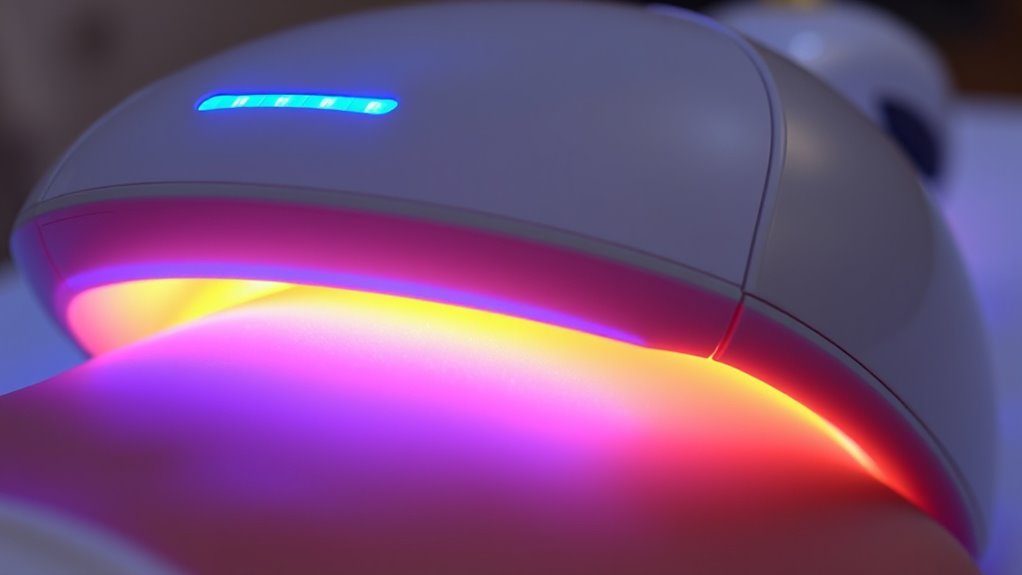
LED lights are known for their energy efficiency and long lifespan, but they also generate heat during operation. This heat, while less intense than traditional lighting sources, can still impact both the equipment and your comfort during treatments. When LEDs produce heat, it tends to escape from the bulb or device, which can cause surrounding surfaces to warm up. In medical or cosmetic treatments that rely on LED technology, excessive heat can lead to discomfort or even unintended tissue effects. That’s why managing heat effectively is essential to guarantee your treatments remain safe and comfortable.
LEDs generate heat that can affect equipment and comfort during treatments if not properly managed.
One of the main challenges with LED heat is that, unlike incandescent bulbs, LEDs convert most of the electrical energy into light rather than heat. However, the small amount of heat generated needs proper dissipation to prevent overheating. If heat isn’t managed properly, it can cause the LED components to degrade faster, reducing the device’s lifespan and efficiency. For you, this could mean inconsistent results or the need for more frequent equipment replacements. To prevent this, manufacturers incorporate heat sinks or cooling systems into LED devices, which draw heat away from the light source and disperse it safely.
In treatment settings, controlling heat isn’t just about prolonging device life; it’s also about your comfort. Excess heat can make the treatment area uncomfortably warm or even cause minor burns if not properly managed. This is particularly important in skincare procedures, where your skin’s sensitivity can vary. Some devices include built-in cooling mechanisms, such as fans or liquid cooling systems, to keep the temperature at a comfortable level. These systems work quietly in the background, ensuring that the heat remains controlled without disrupting the treatment process.
Another key aspect is the design of LED devices for heat management. Good design incorporates materials that conduct heat away efficiently and prevent hot spots. For you, this means a more comfortable experience, as the device remains cool to the touch and doesn’t cause unnecessary discomfort during use. Proper positioning and the use of cooling gels or pads can also help dissipate heat and improve overall comfort.
Ultimately, keeping heat in check during LED treatments isn’t just about protecting the equipment; it’s about safeguarding your comfort and safety. Manufacturers recognize this, and they continue to develop advanced cooling technologies to ensure that LED-based treatments are both effective and pleasant. When you undergo an LED treatment, you can be confident that the device’s heat management systems work behind the scenes to keep you comfortable throughout the process. Proper heat dissipation also helps prevent device degradation, ensuring consistent performance over time.
As an affiliate, we earn on qualifying purchases.
Frequently Asked Questions
How Does Heat Affect LED Treatment Duration?
Heat can cause LED treatment duration to vary. When the skin gets too warm, it may lead to discomfort or even skin sensitivity, prompting you to pause or shorten the session. Excess heat can also reduce the effectiveness of the treatment by causing premature cooling or discomfort. To get the best results, make sure the treatment area stays at a comfortable temperature, allowing you to complete the full session safely and effectively.
Are There Any Safety Concerns With Heat During LED Therapy?
Like a gentle guardian, heat in LED therapy can be a double-edged sword. While it enhances treatment, excessive heat may cause discomfort or skin irritation. Always guarantee the device’s temperature remains within safe limits, and monitor your skin’s response. If you notice redness or pain, reduce the heat. Trust your body’s signals—safety and comfort are your guiding stars to effective therapy.
Can Heat Cause Skin Irritation During LED Treatments?
Yes, heat can cause skin irritation during LED treatments if it’s too intense or applied for too long. You might notice redness, discomfort, or even mild burns if the heat isn’t properly controlled. To avoid this, guarantee the device settings are appropriate for your skin type and follow your practitioner’s guidelines. Communicate any discomfort immediately so adjustments can be made to keep your treatment safe and comfortable.
How Do Different Skin Types Respond to Heat in LED Therapy?
Different skin types respond uniquely to heat in LED therapy; sensitive or rosacea-prone skin may experience redness or irritation, while thicker skin might tolerate heat better. You should always customize the treatment intensity based on your skin’s reaction, and inform your practitioner if you feel discomfort. This approach helps prevent adverse effects and guarantees you get the most comfortable and effective experience during your LED sessions.
Is Heat Adjustable for Personalized LED Treatment Comfort?
Think of your comfort like a finely tuned instrument—adjustable heat levels guarantee a personalized symphony. Yes, heat is adjustable in LED treatments, allowing you to set the temperature to your preference. Many devices come with customizable settings, so you can enjoy a soothing experience without feeling overwhelmed. This flexibility helps accommodate different skin sensitivities, making your treatment both effective and comfortable, like a gentle breeze on a warm day.
Conclusion
Think of LED and heat treatments like a cozy campfire—warm, comforting, and effective when used right. Just like you wouldn’t sit too close or too far, you need the right balance to get the best results. One patient I know improved their skin in weeks simply by adjusting their heat exposure. When you find that sweet spot, your treatments become a powerful, comfortable tool—making health improvements feel like a gentle, guiding glow rather than a harsh blaze.
Fall Picks
fall essentials
As an affiliate, we earn on qualifying purchases.