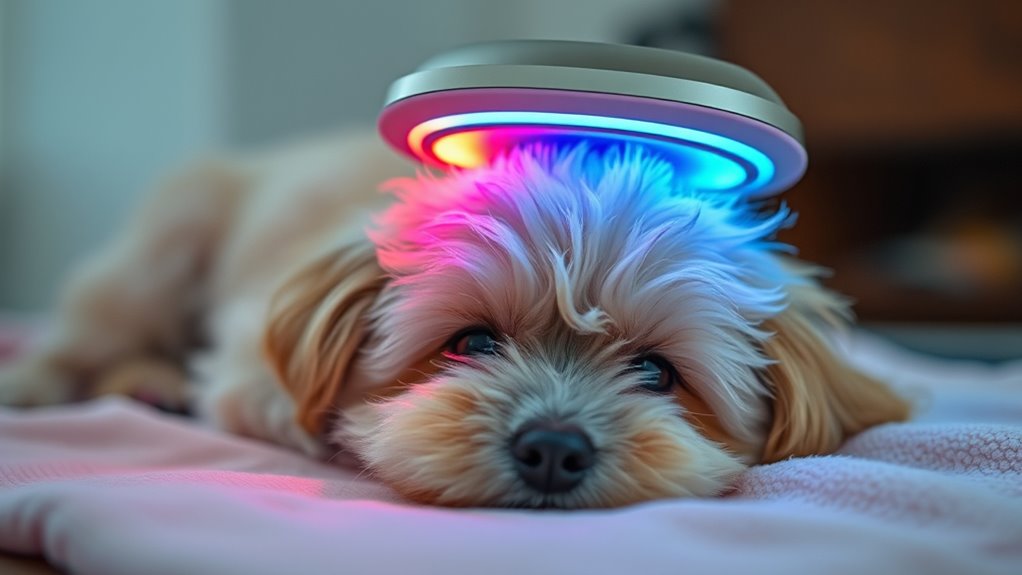

LED therapy offers a safe, non-invasive way to boost your pet’s healing and ease pain. It stimulates cellular activity, improves blood flow, and speeds up tissue repair for issues like arthritis, skin problems, and wounds. Keep in mind, consulting your vet before use is essential to guarantee safety and effectiveness. Proper application and guidance help avoid risks. If you want to discover more about how this gentle treatment can benefit your pet, continue exploring the options available.
Key Takeaways
- LED therapy stimulates cellular activity, accelerates tissue repair, and reduces pain for conditions like arthritis and skin issues.
- It is a non-invasive, pain-free treatment that promotes healing without side effects, making it a safe complementary option.
- Proper use requires consultation with a veterinarian and trained personnel to ensure safety and effectiveness.
- DIY or unprofessional application may be ineffective or harmful; professional guidance is essential for proper treatment.
- LED therapy should complement veterinary care, not replace it, with precautions taken to avoid improper use or overexposure.
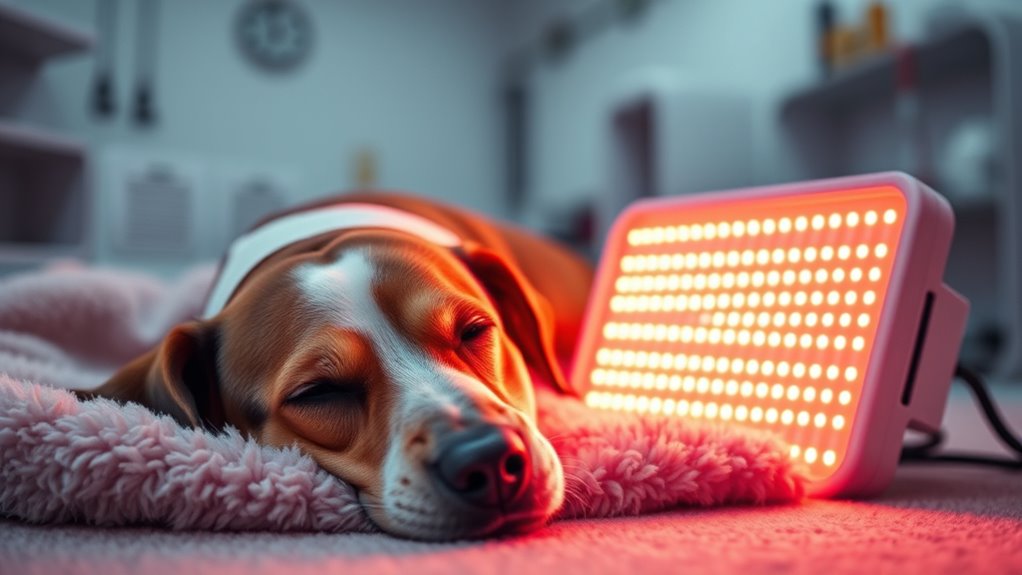
Have you ever wondered how LED therapy can benefit your pets? It’s an innovative treatment gaining popularity for its non-invasive, pain-free approach to healing. Many pet owners are exploring LED therapy as a complementary option alongside traditional veterinary clinics. While some might consider home remedies for minor issues, LED therapy offers a more targeted and scientifically supported method to promote healing and reduce discomfort. Unlike simple home remedies, which may lack scientific backing or appropriate application, LED therapy is administered using specialized devices designed specifically for pets. This ensures safety and efficacy, making it a reliable option for various conditions.
Incorporating LED therapy into your pet’s care routine can be straightforward, especially with guidance from your veterinarian. Veterinary clinics often offer this treatment as part of their thorough services. They use professional-grade LED devices that emit specific wavelengths of light to stimulate cellular activity, increase blood flow, and accelerate tissue repair. When performed correctly, LED therapy can help with a variety of issues, including arthritis, skin conditions, wounds, and post-surgical recovery. It’s a non-invasive alternative that minimizes stress for your pet and avoids the side effects some medications might cause.
It’s essential to consult your veterinarian before starting LED therapy for your pet. While it’s generally safe, improper use or application on certain conditions may not be effective or could even be harmful. Veterinarians are trained to evaluate your pet’s health and determine if LED therapy is appropriate. They can also show you how to use portable LED devices at home, but always under their supervision to ensure correct technique and safety. Remember, LED therapy isn’t meant to replace veterinary care but to complement it, offering a gentle way to enhance healing.
Some pet owners might be tempted to try DIY home remedies for ailments, but LED therapy is a treatment that requires proper equipment and understanding. Relying solely on home remedies without professional guidance might delay proper treatment or fail to address the root cause of health issues. Instead, consider consulting your vet about LED therapy as a safe, effective addition to your pet’s health plan. Many veterinary clinics now recognize the benefits of LED therapy and can provide trained staff to administer it effectively. This ensures your pet receives the full benefits of the treatment while minimizing risks.
Ultimately, LED therapy for pets offers a promising, drug-free approach to healing and comfort. Whether administered at a veterinary clinic or with professional guidance for at-home use, it’s a valuable tool for supporting your pet’s well-being. Always prioritize professional advice to ensure safe and appropriate application, and remember that a holistic approach combining veterinary care, proper nutrition, and gentle therapies can help your pets thrive.
Frequently Asked Questions
Can LED Therapy Replace Traditional Veterinary Treatments?
LED therapy can’t replace traditional veterinary treatments, but it can complement them as an effective alternative therapy. You should see it as a supportive option to enhance your pet’s healing and comfort. Always consult your veterinarian before trying LED therapy, since some conditions require standard treatments. While LED therapy offers benefits like reduced inflammation and pain relief, it shouldn’t be the sole approach for serious health issues.
How Often Should Pets Undergo LED Therapy Sessions?
You should schedule LED therapy sessions for your pet based on their specific needs and your veterinarian’s recommendations. Typically, frequency guidelines suggest starting with 2-3 sessions per week, then adjusting as your pet responds. Consistent session scheduling is key to seeing benefits. Always follow your vet’s advice to guarantee the therapy is safe and effective, and avoid overdoing it to prevent any potential issues.
Are There Any Pet Breeds That Should Avoid LED Therapy?
Some breeds with breed sensitivities or allergy concerns should avoid LED therapy. For example, pets with skin conditions or known sensitivities may react poorly, just like humans with allergies. While most pets tolerate LED therapy well, breeds with sensitive skin or immune issues need careful consideration. Always consult your veterinarian before starting treatment, especially if your pet belongs to a breed prone to sensitivities or allergies, to guarantee safety.
What Signs Indicate LED Therapy Is Working or Not Working?
You’ll notice signs of improvement, like reduced inflammation, pain relief, or quicker healing, indicating LED therapy is working. If your pet’s condition doesn’t improve after several sessions, or if symptoms worsen, it may be signs of inefficacy. Keep an eye on their behavior and physical condition, and consult your vet if you’re unsure, so adjustments can be made for optimal results.
Is LED Therapy Safe for Senior or Immunocompromised Pets?
Safety concerns are minimal with LED therapy for senior or immunocompromised pets, but you should consult your vet first. You might wonder if the immune response is affected; generally, LED therapy is gentle and non-invasive, supporting healing without stressing their immune system. While safe for most, monitoring your pet closely guarantees their comfort and safety, especially when their health is more vulnerable.
Conclusion
As you explore LED therapy for your pets, remember that this innovative treatment holds incredible potential. But, as with any new approach, there’s more beneath the surface—benefits that could transform your pet’s well-being, and precautions that demand careful attention. Will this be the key to revealing a healthier, happier life for your furry friend? Only time will tell, but one thing’s certain: the future of pet care is brighter than ever.