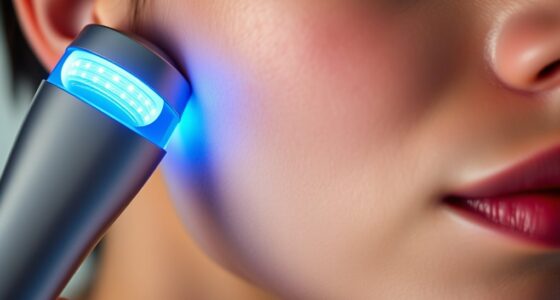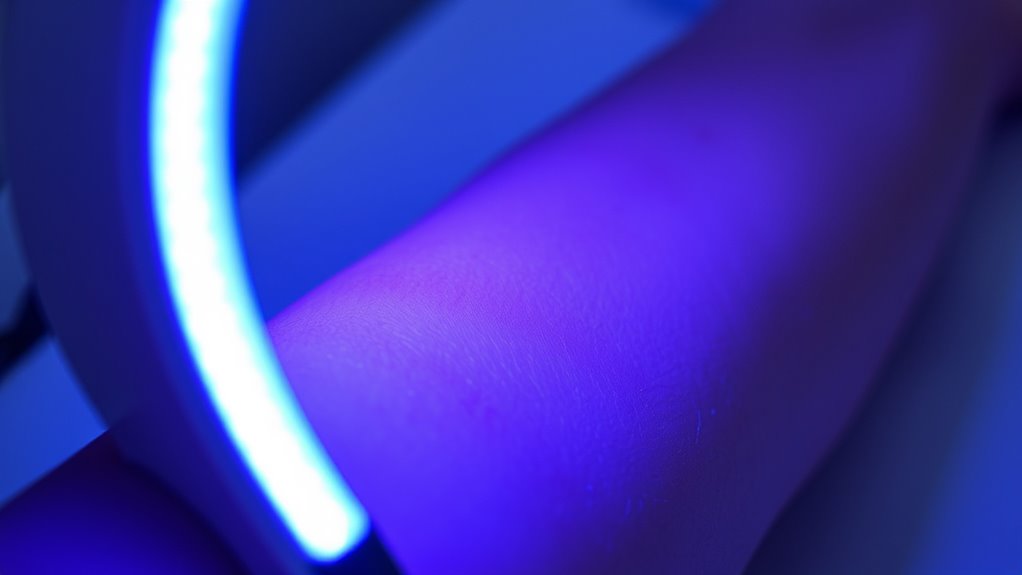

Science suggests that LED therapy is a promising, non-invasive way to manage psoriasis and eczema. It uses specific light wavelengths to reduce inflammation, calm irritated skin, and promote healing without the risks associated with steroids or UV treatments. When used correctly, LED devices are safe, effective, and have minimal side effects like mild redness. If you want to understand how this innovative approach can work for you, keep exploring the details.
Key Takeaways
- Scientific studies indicate LED therapy can reduce inflammation and improve skin healing in psoriasis and eczema patients.
- Specific wavelengths, such as red and near-infrared, penetrate skin to calm irritated tissues effectively.
- LED therapy is a safe, non-invasive alternative to topical steroids and systemic medications, with minimal side effects.
- Research suggests LED treatment may slow excessive skin cell growth associated with psoriasis.
- Clinical evidence supports the use of at-home LED devices for ongoing management of skin conditions under professional guidance.

LED therapy has emerged as a promising treatment option for managing psoriasis and eczema, offering a non-invasive way to soothe inflamed skin. Many people turn to this approach because it can reduce symptoms without the risks associated with more aggressive treatments like systemic medications or topical steroids. One of the main reasons patients find LED therapy appealing is due to its potential phototherapy benefits. Unlike traditional light therapy, LED devices emit specific wavelengths of light that penetrate the skin to target inflammation and promote healing. These wavelengths can help slow down the excessive skin cell growth characteristic of psoriasis and calm irritated skin in eczema. The ability to customize treatments based on individual skin needs makes LED therapy a adaptable option.
When considering LED therapy, safety is a vital factor. You might wonder if using an LED device is safe for your skin. The good news is that LED device safety is well-established, especially when used correctly. These devices are designed to deliver controlled doses of light, minimizing the risk of burns or skin damage. Unlike UV-based therapies, LED treatments don’t carry the same risk of skin cancer or premature aging, making them a safer alternative for long-term use. Most devices are tested and approved by relevant health authorities, ensuring they meet strict safety standards. Additionally, because LED therapy is non-invasive, it reduces the chance of infections or adverse reactions often linked with more invasive procedures.
Another benefit of LED device safety is that the treatment is generally painless, and side effects are minimal. Some users might experience mild redness or temporary skin sensitivity, but these reactions usually fade quickly. This low risk profile means you can often incorporate LED therapy into your skincare routine without significant interruptions or worries about safety concerns. It’s also worth noting that LED devices are designed for at-home use, providing convenience without sacrificing safety. As long as you follow manufacturer instructions and consult with a healthcare professional, you can confidently use these devices to help manage your condition.
Frequently Asked Questions
Are There Any Long-Term Risks Associated With LED Therapy?
Long-term safety of LED therapy appears promising, but potential risks still exist. While most users experience minimal side effects, extended use could lead to skin irritation or eye strain. It’s important that you follow recommended treatment durations and protective measures. Consulting with a healthcare professional helps guarantee you minimize any potential risks and safely benefit from LED therapy, making it a sustainable option for managing psoriasis and eczema.
How Does LED Therapy Compare to Traditional Psoriasis and Eczema Treatments?
Imagine a treatment so revolutionary it outshines traditional options—LED therapy offers impressive phototherapy efficacy with fewer side effects. Unlike topical alternatives or systemic treatments, LED therapy is non-invasive, painless, and targets affected skin deeply. While traditional treatments may cause irritation or long-term risks, LED therapy provides a gentle yet effective approach, making it an appealing choice for managing psoriasis and eczema with minimal discomfort and maximum results.
Can LED Therapy Be Combined With Other Dermatological Treatments Safely?
Yes, LED therapy can be combined with other dermatological treatments safely, but you should always consult your dermatologist first. Combining LED therapy with treatments like topical medications or phototherapy often enhances outcomes through combination therapy, provided your healthcare provider guarantees treatment safety. They’ll assess your specific condition to prevent adverse effects and optimize healing. Always follow professional advice to minimize risks and achieve the best results with your integrated treatment plan.
Is LED Therapy Suitable for All Skin Types and Ages?
LED therapy is generally suitable for most skin types and ages, but you should consider skin sensitivity and individual needs. If you have sensitive skin, it is crucial to customize the treatment to avoid irritation. Consult with a dermatologist who can tailor the LED therapy to your specific skin type and age, ensuring safe and effective results. Personalization helps maximize benefits while minimizing potential side effects.
How Many Sessions Are Typically Needed to See Noticeable Improvements?
You typically need around 8 to 12 LED therapy sessions to notice significant improvements. The treatment duration varies, but most programs recommend sessions twice a week initially, then tapering off as your skin responds. Consistent session frequency is key to seeing results, so sticking to your schedule helps maximize benefits. Keep in mind that individual responses differ, so your dermatologist might suggest a personalized treatment plan.
Conclusion
In the battle against psoriasis and eczema, LED therapy might just be your secret weapon, backed by promising science. While it’s not a miracle cure, it offers a safe, non-invasive option that could transform your skin journey. Don’t underestimate its power—this therapy could be the game-changer you’ve been waiting for. Stick with it, and you might find relief that’s as dramatic as a lightning bolt, lighting up your path to healthier skin.