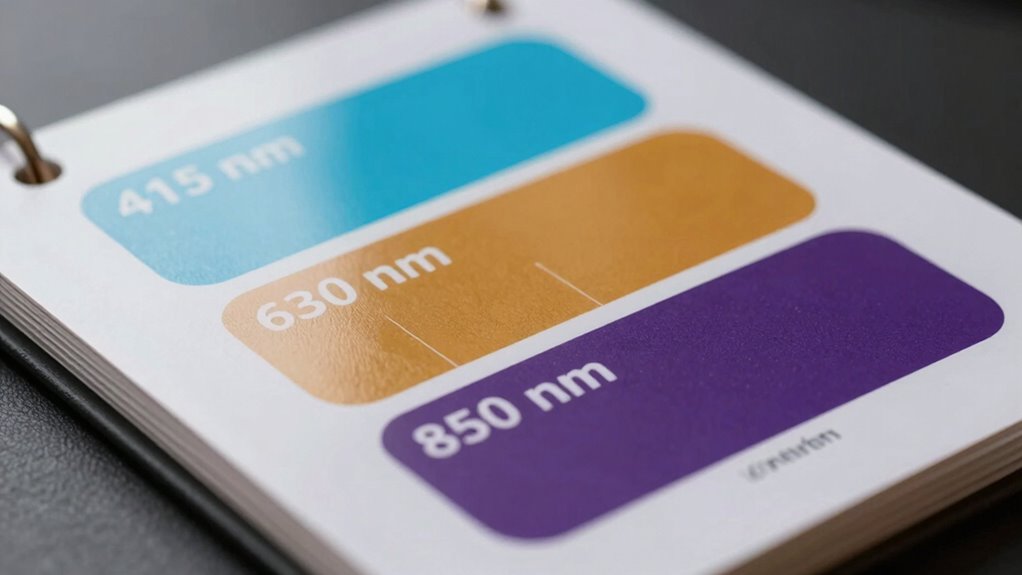

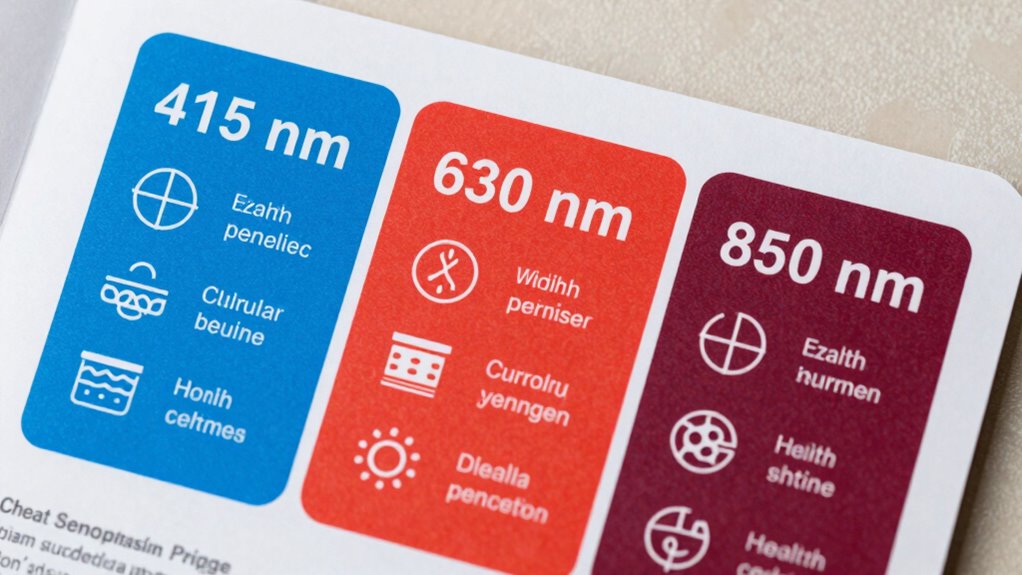
The wavelengths 415 nm, 630 nm, and 850 nm each target different skin and tissue depths. 415 nm is great for surface issues like acne and redness, offering antibacterial effects. 630 nm penetrates deeper to boost collagen, reduce wrinkles, and improve skin glow. 850 nm reaches deep into muscles, joints, and bones for pain relief and healing. Understanding these differences helps you choose the right option for your specific needs—more details lie ahead.
Key Takeaways
- 415 nm targets surface skin issues like acne and pigmentation with shallow penetration.
- 630 nm promotes collagen production, skin rejuvenation, and reduces fine lines at moderate depths.
- 850 nm penetrates deeply, aiding in pain relief, deep tissue healing, and inflammation reduction.
- Shorter wavelengths like 415 nm are safer for superficial treatments, while longer wavelengths like 850 nm reach deeper tissues.
- Proper wavelength selection depends on desired tissue depth, treatment goals, and safety precautions.
What Do the Wavelength Numbers (415 Nm, 630 Nm, 850 Nm) Actually Mean?
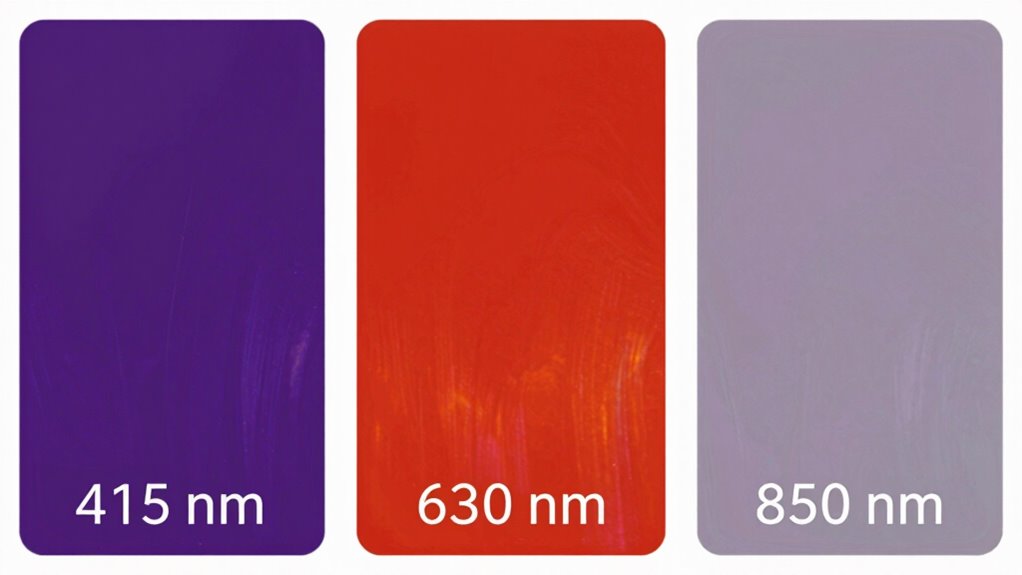
Wavelength numbers like 415 nm, 630 nm, and 850 nm specify the distance between successive peaks of light waves, measured in nanometers. These numbers directly influence how light interacts with materials and biological tissues, shaping various wavelength applications. For example, 415 nm is in the blue spectrum, often used in light therapy advancements for skin conditions and acne treatment. Meanwhile, 630 nm is in the red spectrum, widely employed for wound healing and inflammation reduction. The 850 nm wavelength falls into the near-infrared range, penetrating deeper into tissues for pain relief and cellular recovery. Understanding these wavelength numbers helps you grasp their specific roles in light therapy and other applications, highlighting how precise wavelengths optimize therapeutic outcomes. Understanding wavelength interactions can enhance the effectiveness of targeted light therapies and their therapeutic benefits, especially when considering wavelength-specific tissue penetration for different treatment goals. Additionally, recognizing how these wavelengths interact with biological tissues can improve treatment precision and outcomes, leading to more efficient clinical applications.
How Does 415 Nm Light Affect Skin and Cell Activity?

Light at 415 nm, which falls within the blue spectrum, interacts with your skin in ways that promote cellular activity and healing. During light therapy, this wavelength penetrates shallowly, targeting surface layers and stimulating your skin cells. The wavelength penetration at 415 nm helps reduce bacteria, making it effective for acne treatment and preventing breakouts. It also encourages the production of antioxidants, which fight inflammation and support skin repair. Because of its targeted effects, 415 nm light enhances your skin’s overall clarity and health. You may notice improvements in redness and blemishes with regular use. This blue light therapy is a safe, non-invasive way to boost skin activity and address surface-level skin concerns effectively. Additionally, the safe, non-invasive nature of blue light therapy makes it suitable for regular at-home use without significant risks. It’s important to follow proper light therapy protocols to maximize benefits and ensure safety. Proper skin safety measures should also be observed to prevent any potential irritation or adverse reactions. Furthermore, understanding the wavelength-specific effects can help you tailor your skincare routines for optimal results.
What Skin Benefits Can 630 Nm Light Provide?

Since 630 nm light falls within the red spectrum, it offers significant skin benefits by penetrating deeper into the skin layers. You can expect an improved skin glow as this wavelength stimulates cellular activity, enhancing your complexion’s radiance. It also encourages a collagen boost, which helps reduce the appearance of fine lines and wrinkles. Regular exposure to 630 nm light can promote healthier, more youthful skin by supporting tissue repair and increasing blood circulation. This wavelength is known for its ability to rejuvenate aging skin and improve overall texture. Additionally, 630 nm light has been shown to stimulate cellular regeneration, making it a popular choice for skin rejuvenation treatments. If you’re looking for a non-invasive way to enhance your skin’s appearance, 630 nm light provides a targeted approach to achieving a brighter, more vibrant look.
How Does 850 Nm Near-Infrared Light Reach Deeper Tissues?
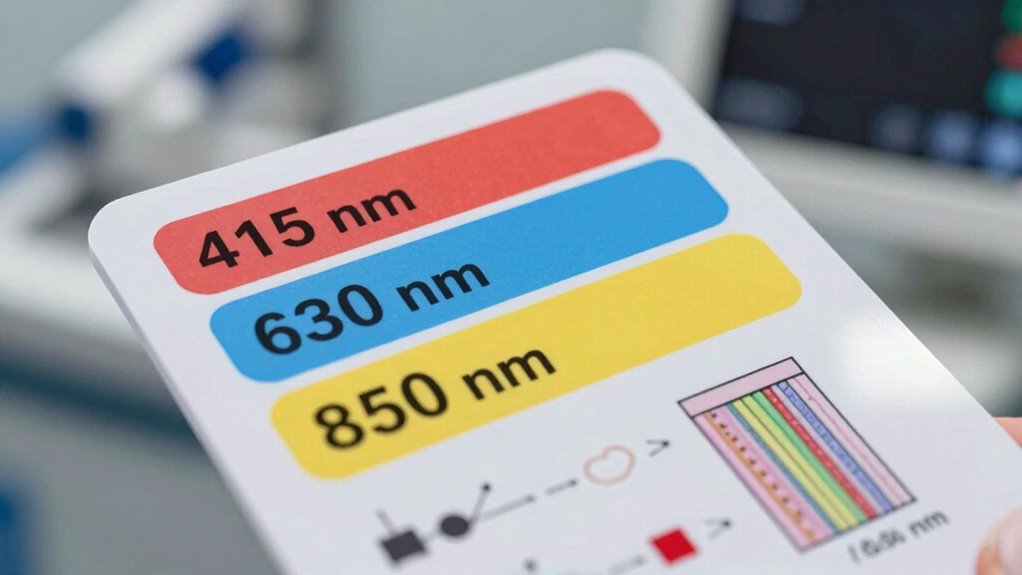
850 nm near-infrared light penetrates deeper into the tissues because of its ability to bypass the skin’s outer layers more effectively. This wavelength technology allows the light to reach muscles, joints, and even bones, making it ideal for targeted therapy. Many light therapy myths suggest that longer wavelengths are less effective, but in reality, 850 nm is designed for deeper tissue benefits. Its ability to absorb into mitochondrial cells boosts cellular repair and reduces inflammation. Because it can penetrate beyond surface layers, it’s often used for pain relief and healing. Understanding how this wavelength works helps you see why 850 nm is favored for treatments requiring deeper tissue engagement, debunking misconceptions about effectiveness based solely on wavelength length.
Which Wavelength Is Best for Skin Rejuvenation and Anti-Aging?
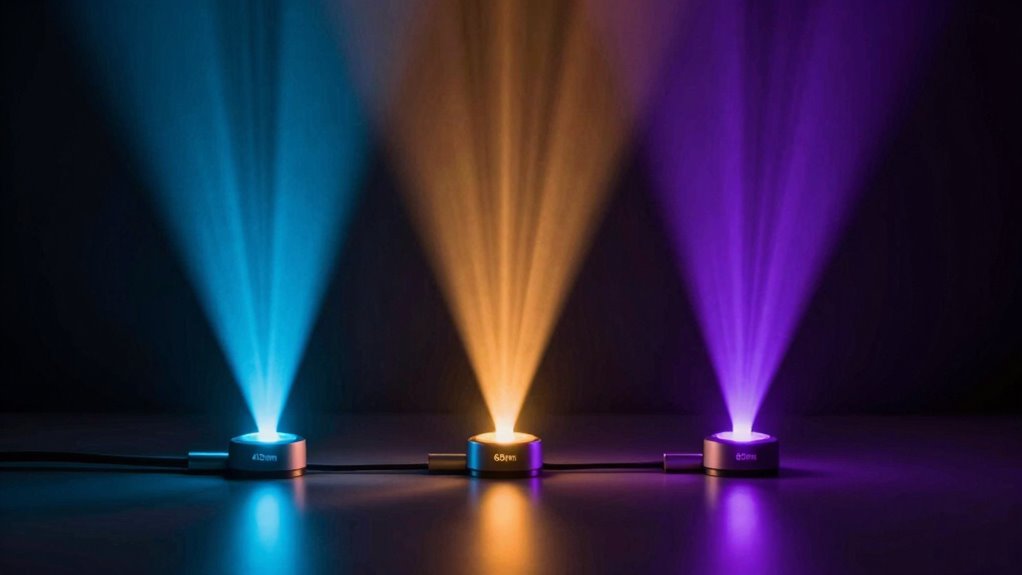
While deeper tissue penetration benefits pain relief and healing, different wavelengths excel in promoting skin rejuvenation and reducing signs of aging. For cosmetic applications, wavelength specificity plays a vital role in targeting skin layers effectively. The 630 nm wavelength is popular for skin rejuvenation because it stimulates collagen production and improves skin texture, making it ideal for anti-aging treatments. Conversely, 415 nm targets superficial skin issues like pigmentation and redness. The 850 nm wavelength penetrates deeper, supporting healing and overall skin health but isn’t as focused on visible anti-aging effects. Ultimately, choosing the right wavelength depends on your specific skin concerns and goals. For skin rejuvenation and anti-aging, the 630 nm wavelength often offers the best balance of efficacy and safety. Additionally, understanding light therapy can help optimize treatment outcomes for various skin conditions.
How to Choose the Right Wavelength for Your Skin or Health Goals?
Choosing the right wavelength depends on your skin type and the specific health benefits you’re aiming for. Some wavelengths work better for sensitive skin, while others target deeper tissues or skin rejuvenation. Consider your goals and consult with a specialist to find the most effective option for you. Additionally, understanding home safety tips and proper device usage can help optimize results and prevent potential issues. Familiarizing yourself with digital safety practices can further ensure safe and effective use of light therapy devices. Being aware of wavelength specifications can also guide you in selecting the most suitable device for your needs. For optimal results, it’s important to evaluate the biological effects of different wavelengths and how they interact with your skin and body. Recognizing the specific biological interactions of each wavelength can help tailor treatments more effectively.
Skin Type Compatibility
Ever wondered how your skin type influences the wavelength you should choose? Your skin sensitivity plays a key role in wavelength compatibility. If you have sensitive skin, shorter wavelengths like 415 nm might cause irritation, so opt for longer wavelengths like 630 nm or 850 nm, which are gentler. For those with resilient skin, you can safely experiment with a broader range, but always start slow. Understanding your skin’s response helps you avoid adverse effects and maximizes benefits. Thinner or fairer skin may react more intensely to certain wavelengths, so choosing a suitable one is vital. In general, match your skin sensitivity with the wavelength’s power to guarantee safe, effective results. Additionally, tissue penetration depth varies with wavelength, influencing how deeply the light affects underlying tissues. Recognizing the optimal wavelength ranges for different skin types can further help you tailor your approach, ensuring both safety and efficacy. Factors like skin thickness also impact how your skin responds to various wavelengths, so considering these can help you select the most suitable option. This tailored approach lets you harness the benefits without risking irritation or discomfort. Moreover, understanding the effectiveness of different wavelengths can guide you in choosing the most suitable light therapy for your specific skin goals. For example, selecting wavelengths aligned with your skin’s healing capacity can accelerate recovery and improve results.
Specific Health Benefits
Selecting the right wavelength depends on your specific health goals, as different wavelengths target different tissues and conditions. For example, laser therapy using specific wavelengths can promote tissue repair, reduce inflammation, and alleviate pain. Red and near-infrared light (around 630 and 850 nm) penetrate deeper, making them effective for joint or muscle issues, while shorter wavelengths like 415 nm are better for skin surface treatments and acne. Light therapy harnesses these wavelengths to stimulate cellular activity, boost circulation, and support healing. Understanding these differences helps you choose the most suitable wavelength for your needs. Understanding wavelength functions ensures you select the most effective therapy for faster recovery, skin rejuvenation, or pain relief, maximizing the benefits of laser therapy or light therapy. Additionally, considering wavelength penetration depth can help optimize treatment outcomes based on your targeted tissues. Recognizing tissue-specific effects also guides you in selecting the appropriate wavelength for your particular health concern, and paying attention to tissue response to light can further refine your treatment choices. Moreover, biological tissue response varies with wavelength, influencing how your body reacts to different light therapies.
Are There Safety Tips or Risks When Using Different Light Wavelengths?

Using different light wavelengths can pose risks to your eyes if proper precautions aren’t taken. You should always wear protective eyewear when working with intense or UV light sources. Ignoring these safety tips can lead to serious eye damage over time.
Eye Damage Risks
Different light wavelengths can pose varying risks to your eyes, especially if you’re exposed to intense or prolonged sources. UV exposure is particularly harmful, increasing the risk of eye damage and conditions like cataracts. Longer wavelengths, like 850 nm, may seem safer but can still cause eye strain or damage with excessive exposure. To protect your eye safety, keep these tips in mind:
- Avoid staring directly into bright or intense light sources.
- Use proper eye protection when working with UV or high-intensity light.
- Limit exposure time, especially with blue and UV wavelengths.
- Recognize symptoms of eye strain or discomfort early and rest your eyes.
Being aware of these risks helps you prevent potential damage and maintain good eye health when dealing with different wavelengths.
Protective Measures Needed
To effectively protect your eyes from potential harm caused by various light wavelengths, it’s important to adopt specific safety measures. Always wear appropriate protective gear, such as safety glasses or goggles designed for the specific wavelength you’re working with. These reduce direct exposure and prevent eye damage. Be aware of exposure limits, which specify safe duration and intensity levels for different wavelengths. For example, UV and blue light (around 415 nm) require more caution, while longer wavelengths like 850 nm are generally safer but still warrant protection during prolonged exposure. Ensure your workspace is well-ventilated and use shielding or barriers when necessary. Following these safety tips helps minimize risks and preserves your eye health when handling or working near different light wavelengths.
Frequently Asked Questions
Can These Wavelengths Be Combined for Enhanced Therapeutic Effects?
Yes, combining these wavelengths can create synergistic effects in therapy. Using a combined therapy approach, you can target different layers of tissue more effectively, enhancing overall benefits. The 415 nm light promotes cellular activity, while 630 nm supports skin healing, and 850 nm penetrates deeper for pain relief. This multi-wavelength strategy maximizes therapeutic outcomes, allowing you to tailor treatments for ideal results through synergistic effects.
How Long Should Treatments With Each Wavelength Last?
Treatments are like a delicate dance, so you should aim for an ideal session length of about 10-20 minutes per wavelength. For 415 nm, keep sessions around 10 minutes to avoid overstimulation. With 630 nm, 15 minutes is perfect for skin benefits, while 850 nm can be extended to 20 minutes for deeper tissue penetration. Adjust based on your response and consult a professional for personalized advice.
Are There Specific Skin Types That Respond Better to Certain Wavelengths?
You’ll find that specific skin types respond better to certain wavelengths, especially considering skin sensitivity. For sensitive skin, shorter wavelengths like 415 nm may be gentler, while 630 nm fits those with less sensitivity. Always check device compatibility, as some devices are optimized for particular wavelengths and skin types. Tailoring treatments based on your skin’s sensitivity ensures safer, more effective results while minimizing irritation.
What Are Common Side Effects Associated With Each Wavelength?
They say “prevention is better than cure,” so understanding wavelength safety is key. Common side effects include temporary redness, swelling, and skin irritation, varying with wavelength compatibility. For example, 415 nm may cause more photosensitivity, while 850 nm could lead to mild discomfort. Always consult a professional to guarantee phototherapy safety, as mismatched wavelengths can increase side effects. Proper monitoring minimizes risks and maximizes treatment benefits.
How Do Wavelength Devices Differ in Cost and Usability?
You’ll find that wavelength devices differ in cost and usability factors markedly. Generally, 415 nm devices tend to be more affordable and user-friendly due to their simpler design, while 630 nm and 850 nm devices can be pricier with more advanced features. Usability varies based on your needs; shorter wavelengths often require more precise handling, but all are designed for ease of use with clear instructions. Consider your budget and comfort level before choosing.
Conclusion
Choosing the right wavelength depends on your skin goals. Whether you want to brighten your complexion, boost collagen, or reach deeper tissues, understanding these wavelengths helps you make informed decisions. Remember, not all light treatments are one-size-fits-all—do your homework and listen to your skin. When used correctly, you can get the most bang for your buck. Stay safe, and don’t overlook the fact that sometimes, it’s the right tool that makes all the difference.