

At home, you control your environment and establish routines that fit your schedule, making consistency easier to maintain. Unlike clinics where motivation can fade, creating personal accountability and organized spaces helps reinforce your goals daily. Building habits at home fosters long-term discipline because you’re more invested in your progress. When you take charge of your surroundings and responsibilities, you set yourself up for ongoing success. Keep exploring to discover how to make this approach even more effective.

Get wellness gear delivered free with Prime
- Fast, free delivery on millions of items
- Prime Video, Amazon Music and more included
- Member-only deals all year
Key Takeaways
- Personal accountability and environment shaping foster sustainable habits beyond sporadic clinic visits.
- Routine consistency at home builds internal motivation, reducing reliance on external prompts.
- Organized, dedicated spaces reinforce goals and minimize distractions, supporting ongoing adherence.
- Regular self-monitoring and goal setting maintain focus and motivation over time.
- Home routines promote long-term success by integrating habits seamlessly into daily life.
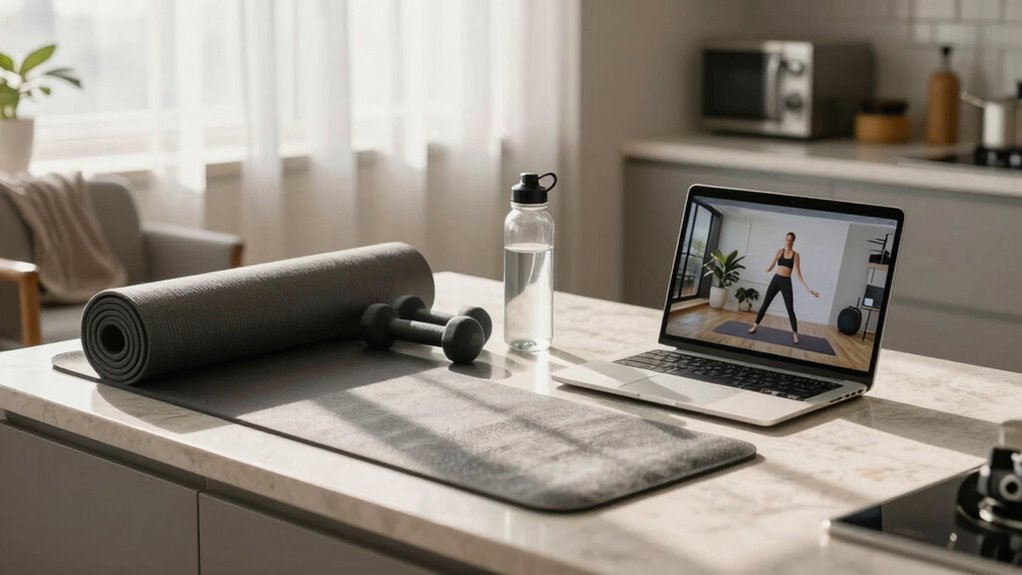
Maintaining consistency at home can be challenging without the immediate accountability and motivation found in a clinic setting. When you’re on your own, it’s easy to let daily distractions or fatigue derail your routine. However, the key to long-term success often lies in establishing personal accountability. Unlike a clinic, where professionals keep you on track, at home you need to actively hold yourself responsible for sticking to your goals. This means setting clear, measurable targets and regularly tracking your progress. When you take ownership of your routines, you develop a sense of commitment that fosters consistency. It becomes less about external pressure and more about your own desire to improve, which can be surprisingly motivating over time.
Personal accountability and clear goals are essential for maintaining consistency at home.
Environmental influence plays a significant role in your ability to stay consistent at home. Your surroundings can either support or hinder your efforts. For example, if your space is cluttered with temptations or distractions, it’s harder to focus on your routines. Conversely, creating a dedicated, organized area for your activities can boost your motivation and ease the process. By designing your environment to align with your goals, you reinforce positive habits. This might mean setting up a specific corner for workouts, keeping healthy foods accessible, or scheduling specific times for practice. When your environment consistently reminds you of your commitments, it becomes a silent but powerful motivator. Additionally, understanding how your environment influences your behavior can help you make more intentional choices and shape your habits with environmental cues.
While clinic settings offer immediate accountability through professionals and scheduled appointments, you can cultivate similar discipline at home by integrating personal accountability into your daily life. This could involve sharing your goals with a friend or family member who can check in on your progress, or using apps that prompt you to stay on track. The importance of self-monitoring cannot be overstated, as it helps you stay aware of your progress and adjust accordingly. Creating a routine of regular self-assessment can further enhance your ability to stay on track. Incorporating consistent routines into your daily schedule further reinforces your habits, making them more natural over time. The key is consistency—doing your routines regularly and making them part of your daily rhythm. Over time, this builds a natural sense of discipline that doesn’t rely on external motivation alone.
Ultimately, at-home consistency can surpass sporadic clinic motivation because it’s rooted in your own commitment and environment. When you take personal responsibility, you create a self-sustaining cycle of progress. By intentionally shaping your environment to support your routines, you reinforce your dedication. It’s this combination of personal accountability and environmental influence that empowers you to stay consistent, even when external motivators fade. Over time, this approach makes your routines feel less like a chore and more like an integral part of your lifestyle, leading to sustainable achievement.
As an affiliate, we earn on qualifying purchases.
Frequently Asked Questions
How Do I Stay Motivated at Home Consistently?
To stay motivated at home consistently, adopt mindset strategies that focus on your goals and progress. Set clear, achievable routines to create stability, and use accountability partners—friends or family—to keep you on track. Celebrate small wins to boost your confidence, and remind yourself why you started. These habits help maintain your motivation, making it easier to stay committed even when motivation dips.
What Tools Can Aid At-Home Workout Consistency?
You can stay consistent at home by using tools like exercise variety apps or streaming services to keep your workouts fresh and engaging. Additionally, accountability partners—whether friends, family, or online communities—help you stay motivated and committed. These tools make it easier to maintain regular routines, prevent boredom, and stay accountable, ensuring your at-home workouts become a sustainable part of your lifestyle.
How Does At-Home Consistency Impact Long-Term Results?
At-home consistency boosts your long-term results by reinforcing healthy nutrition habits and building mental resilience. When you stick to your routine, you develop habits that become second nature, leading to sustained progress. Staying consistent also strengthens your mental resilience, helping you overcome challenges and setbacks. Over time, this steady effort creates lasting change, making your fitness journey more effective and rewarding compared to sporadic efforts at the clinic.
What Are Common Barriers to At-Home Workout Routines?
Did you know that 50% of people struggle with consistent at-home workouts? Common barriers include nutrition challenges and poor time management, making it hard to stay committed. You might find it tough to prioritize exercise amid daily responsibilities or resist unhealthy snacks. Overcoming these hurdles requires planning, setting realistic goals, and creating a dedicated space. Staying consistent becomes easier when you address these obstacles proactively, turning your routine into a sustainable habit.
How Can I Track Progress Without a Trainer?
You can track your progress easily through progress journaling and digital tracking tools. Keep a workout journal to note your exercises, reps, and how you feel afterward. Use apps or fitness trackers to monitor metrics like steps, heart rate, or calories burned. Regularly reviewing this data helps you see improvements over time, keeps you motivated, and guarantees you’re staying consistent even without a trainer guiding you.
Conclusion
Think of your health journey like watering a delicate plant. If you only water it sporadically during visits, it struggles to grow strong. But when you nurture it daily at home, consistency becomes your steady sunlight, helping it flourish. Studies show that regular at-home habits lead to better long-term outcomes than fleeting clinic visits. So, stay committed daily—your health will thrive, much like a well-tended garden blossoming with patience and care.
Halloween Picks
halloween
As an affiliate, we earn on qualifying purchases.