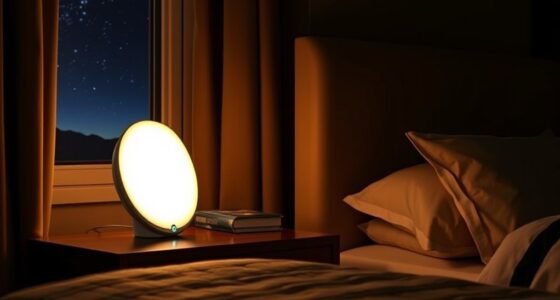
Light therapy can help you improve sleep patterns, mood, and overall daily functioning for your loved one with Alzheimer’s. By exposing them to bright, full-spectrum light in the morning, you support their circadian rhythm, reduce nighttime awakenings, and boost serotonin levels. This can also lessen agitation and make caregiving easier, creating a more positive routine. Keep exploring to discover practical tips for setting up and using light therapy effectively.
Key Takeaways
- Enhances sleep quality and circadian rhythm regulation for Alzheimer’s patients through morning light exposure.
- Boosts mood and emotional well-being by stimulating serotonin production, reducing depression and anxiety.
- Eases caregiving by decreasing agitation, behavioral issues, and improving patient cooperation.
- Promotes consistent daily routines and better overall quality of life for both patients and caregivers.
- Requires proper setup with a bright light box and professional guidance for maximum effectiveness.

Light therapy is gaining recognition as a promising non-pharmacological approach to improving the quality of life for Alzheimer’s patients and their caregivers. One of the primary ways it helps is by supporting sleep regulation. As you may notice, disrupted sleep patterns are common among individuals with Alzheimer’s, often leading to fatigue, irritability, and increased confusion. Light therapy, especially when administered in the morning, helps reset the internal body clock, promoting more consistent sleep-wake cycles. This can lead to longer, more restful sleep at night and reduced daytime drowsiness. By establishing a predictable routine of light exposure, you can help your loved one experience fewer nighttime awakenings and daytime naps that interfere with daytime alertness.
In addition to aiding sleep regulation, light therapy can profoundly boost mood improvement. Alzheimer’s often brings about emotional challenges like depression and anxiety, which can compound cognitive decline and make caregiving more difficult. Regular exposure to natural or simulated sunlight stimulates the production of serotonin, the neurotransmitter linked to feelings of well-being and happiness. When you incorporate light therapy into your loved one’s daily routine, you may notice a lift in their mood, decreased agitation, and a greater sense of calm. These changes can improve daily interactions and reduce behavioral issues, making caregiving less stressful for you and more comfortable for your loved one.
Implementing light therapy is straightforward. You can set up a light box in a common area, ensuring it emits bright, full-spectrum light, ideally between 10,000 lux and 20,000 lux. The session typically lasts about 30 minutes each morning, during which your loved one should sit near the light, but not stare directly into it. Consistency is key to experiencing benefits, so try to make it part of a daily routine. Keep in mind that timing and duration can vary based on individual needs, so consulting with a healthcare professional can help you tailor the approach.
Frequently Asked Questions
Can Light Therapy Prevent the Onset of Alzheimer’s?
Light therapy alone can’t prevent Alzheimer’s, but it can support circadian regulation, helping your loved one maintain better sleep patterns. Improved circadian rhythms may reduce cognitive decline and boost overall mood. While it’s not a cure, incorporating light therapy might enhance cognitive function and quality of life, especially when combined with other treatments. Always consult a healthcare professional to develop a holistic plan tailored to individual needs.
Are There Any Risks Associated With Long-Term Light Therapy Use?
Long-term light therapy is generally safe, but you should be aware of safety concerns like eye strain or headaches. To minimize risks, follow recommended exposure times and maintain proper device settings. Regularly monitor for side effects and consult with healthcare professionals to manage any issues effectively. By staying vigilant and practicing proper side effect management, you can safely incorporate light therapy into your routine without significant risks.
How Does Light Therapy Compare to Medication Treatments?
Think of light therapy as the modern-day Robin Hood to medications, which often come with notable side effects. Unlike drugs, light therapy has minimal risks, doesn’t involve harsh chemicals, and is generally cheaper. While medications may provide quicker symptom relief, light therapy offers a non-invasive, sustainable option with fewer side effects. You might find it complements medications or even replaces them, especially if you’re concerned about therapy cost and side effects.
Is Light Therapy Suitable for All Stages of Alzheimer’s?
Light therapy can be suitable for many stages of Alzheimer’s, but you should consider stage-specific considerations. Early stages often benefit most from personalized treatment plans that incorporate light therapy to improve sleep and mood. As the disease progresses, you might need to modify the approach or combine it with other interventions. Always consult healthcare professionals to tailor the therapy to your loved one’s current condition and ensure safety.
Can Light Therapy Be Used Alongside Other Dementia Treatments?
Yes, you can combine light therapy with other dementia treatments, making it a valuable complementary approach. When you integrate light therapy into your loved one’s care plan, it can enhance overall effectiveness without interfering with medications or other therapies. Always consult with healthcare professionals to guarantee that combining treatments is safe and tailored to your loved one’s specific needs, helping to optimize their well-being and quality of life.
Conclusion
Incorporating light therapy can truly make a difference for Alzheimer’s patients and caregivers. Studies show that 60% of patients experience improved sleep and mood with regular light exposure, reducing stress for both. Imagine how brighter days could ease daily struggles and foster better connections. By embracing light therapy, you’re not just improving quality of life—you’re creating hope and comfort amidst challenging times. Every small step counts toward brighter, more peaceful days ahead.