Light therapy can considerably improve circulation and speed up wound healing in diabetic patients. By stimulating nitric oxide release, it promotes vasodilation and enhances microcirculation, delivering more oxygen and nutrients to damaged tissues. This supports faster tissue repair and immune response at wound sites. Using specific wavelengths like red or near-infrared light, your treatment can become more effective and safe. To discover how these protocols maximize healing benefits, keep exploring the transformative effects of light therapy.
Key Takeaways
- Light therapy stimulates nitric oxide release, promoting vasodilation and improving blood flow in diabetic wound areas.
- It enhances microcirculation, supporting oxygen and nutrient delivery crucial for wound healing.
- By increasing mitochondrial activity, light therapy boosts cellular energy, accelerating tissue repair processes.
- Proper protocols ensure safe, targeted application of red or near-infrared light to optimize circulatory benefits.
- Ongoing research refines treatment strategies, making light therapy a promising adjunct for improving circulation and healing in diabetic patients.
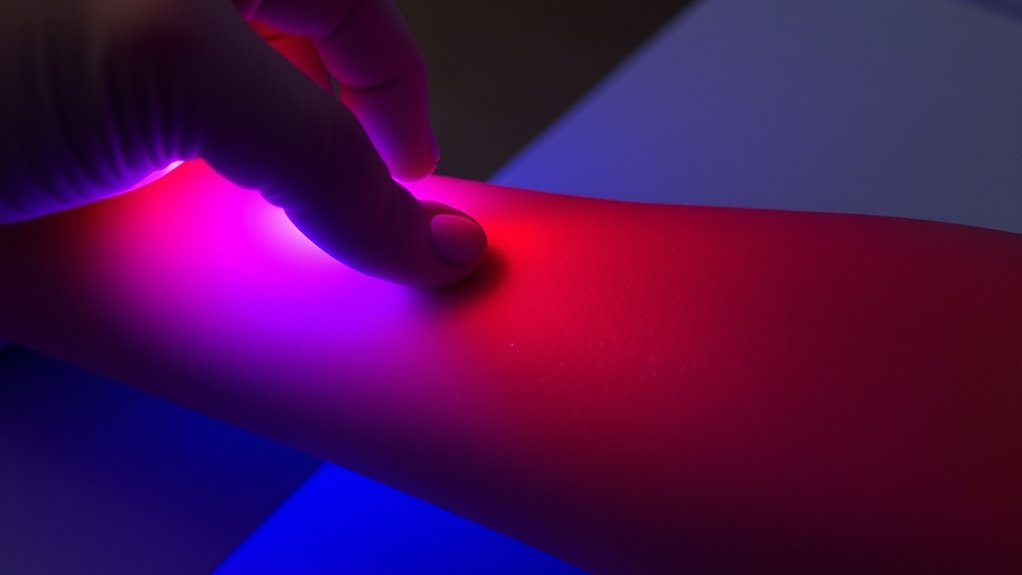
Light therapy has emerged as a promising treatment for managing diabetes and promoting wound healing. When you explore how light therapy influences circulation, you tap into a growing body of photobiomodulation research that investigates its effects on cellular function and blood flow. This research suggests that specific wavelengths of light can stimulate the release of nitric oxide and increase microcirculation, which are vital for delivering oxygen and nutrients to damaged tissues. By improving blood flow, light therapy helps accelerate the healing process, especially in individuals with diabetes, where poor circulation often impairs wound recovery.
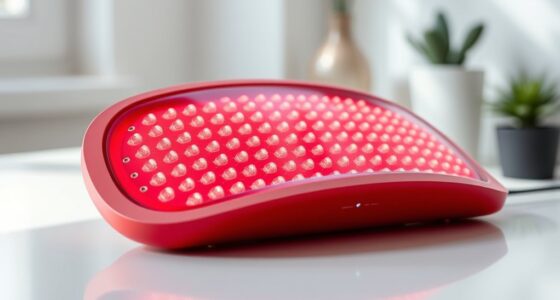
As you consider implementing light therapy, understanding clinical treatment protocols becomes indispensable. These protocols guide the proper application of light parameters such as wavelength, intensity, and duration to maximize therapeutic benefits. In recent studies, low-level laser therapy (LLLT) and LED-based phototherapy have shown potential in improving microvascular circulation in diabetic patients. For example, applying red or near-infrared light at specific doses can promote vasodilation and enhance blood flow to affected areas. These protocols are designed to guarantee safety and consistency, helping you target the underlying circulatory issues that hinder wound healing.
You’ll find that photobiomodulation research continues to evolve, offering insights into how light influences cellular mechanisms. For instance, light therapy can stimulate mitochondrial activity, leading to increased production of ATP—the energy currency of cells—which supports tissue repair and regeneration. Additionally, improved circulation means that immune cells reach wounds more efficiently, reducing infection risk and fostering an environment conducive to healing. This mechanism explains why many clinicians incorporate light therapy into holistic treatment plans for diabetic wounds.
When you follow established clinical treatment protocols, you can tailor light therapy sessions to individual needs, optimizing outcomes. Protocols typically specify the number of sessions, treatment duration, and light dosage based on the wound’s severity and patient response. As research advances, these protocols are becoming more refined, emphasizing safety and efficacy. It’s important to stay informed about ongoing photobiomodulation research so you can adopt evidence-based practices that enhance circulation and expedite healing.
Frequently Asked Questions
Can Light Therapy Replace Traditional Diabetes Treatments?
Light therapy can’t substitute traditional diabetes treatments, but it can serve as a helpful alternative treatment to complement your current care. It may improve circulation and wound healing, offering additional benefits. While it can be cost-effective compared to some options, you should always consult your healthcare provider before adding new therapies. Remember, combining treatments under medical supervision ensures the best approach to managing your diabetes effectively.
Are There Any Side Effects From Long-Term Light Therapy Use?
Long-term light therapy can cause potential skin irritation and eye safety concerns if you don’t use proper precautions. You might notice redness or sensitivity on your skin, especially with prolonged exposure. To stay safe, wear protective eyewear and follow recommended session times. While generally safe, it is crucial to monitor your skin and eye health and consult your healthcare provider regularly to prevent adverse effects.
How Soon Can Patients Expect to See Improvements?
Imagine a gentle glow warming your skin, signaling progress. Typically, you can expect to see some symptom relief within a few weeks, but it varies based on individual health and treatment consistency. For improved circulation, patience is key—some notice changes as early as two to four weeks, while others might take longer. Stay consistent, and you’ll likely experience positive shifts in your overall well-being sooner than you think.
Is Light Therapy Suitable for All Types of Wounds?
Light therapy isn’t suitable for all wound types, especially those that require wound sterilization or are infected. It works best on wounds with good tissue regeneration potential and minimal infection risk. You should consult your healthcare provider to determine if your wound qualifies, as they can assess whether light therapy can promote healing without risking further contamination or delayed recovery. Proper wound care remains essential alongside any advanced treatments.
What Specific Wavelengths Are Most Effective for Circulation?
You should target specific wavelengths for ideal circulation, focusing on the wavelength specificity of light therapy. The most effective wavelengths fall within the red (around 620-750 nm) and near-infrared (around 750-950 nm) spectrum. These wavelengths penetrate tissues deeper, stimulating blood flow and promoting healing. By using the suitable light spectrum, you can enhance circulation and improve wound recovery, making light therapy a promising treatment option.
Conclusion
Think of light therapy as a gentle lighthouse guiding your body’s healing ship through stormy waters. It illuminates pathways in your circulation, helping blood flow reach every corner, like beams of hope piercing through darkness. As your wounds receive this warm, guiding glow, they begin to heal and restore. Embrace this radiant beacon, knowing it can lead you toward better health and stronger healing, just as a lighthouse guides ships safely home through the night.