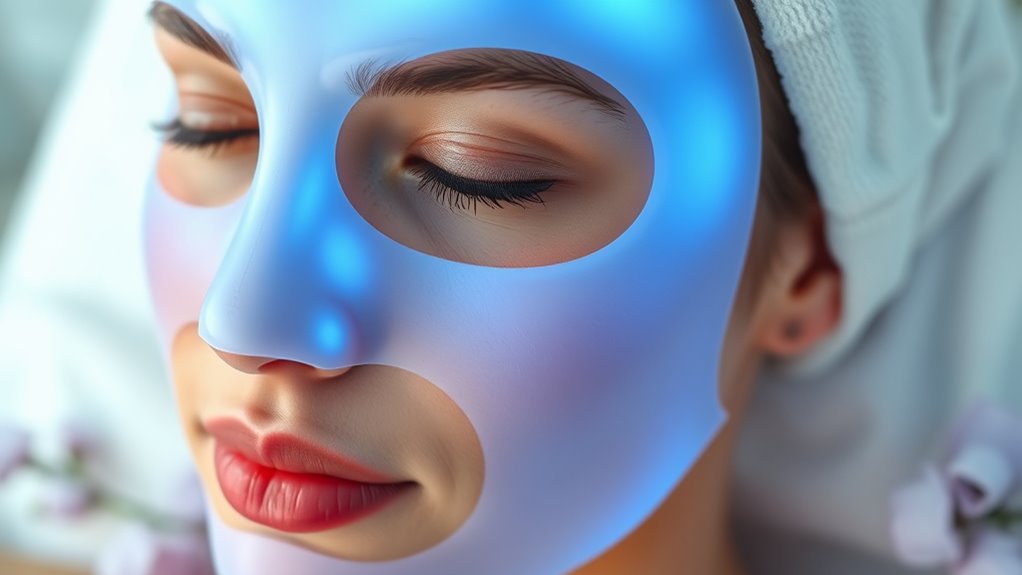
LED face masks can be safe for sensitive skin if you follow proper precautions. Start with low-intensity settings and short sessions, and always perform a patch test beforehand. Use gentle skincare products and avoid harsh cleansers around treatment times. Keep an eye on your skin’s response, and stop if you notice redness or irritation. Protect your skin from sun exposure afterward with sunscreen. For more tips to keep your skin safe, continue exploring these guidelines.

Get wellness gear delivered free with Prime
- Fast, free delivery on millions of items
- Prime Video, Amazon Music and more included
- Member-only deals all year
Key Takeaways
- LED face masks are generally safe for sensitive skin if used with low intensity and proper duration.
- Always perform a patch test and follow manufacturer instructions before full use.
- Avoid harsh skincare products immediately before or after treatment to minimize irritation.
- Monitor skin response closely; discontinue if redness, itching, or discomfort occurs.
- Consult a dermatologist if you have underlying skin conditions or experience adverse reactions.
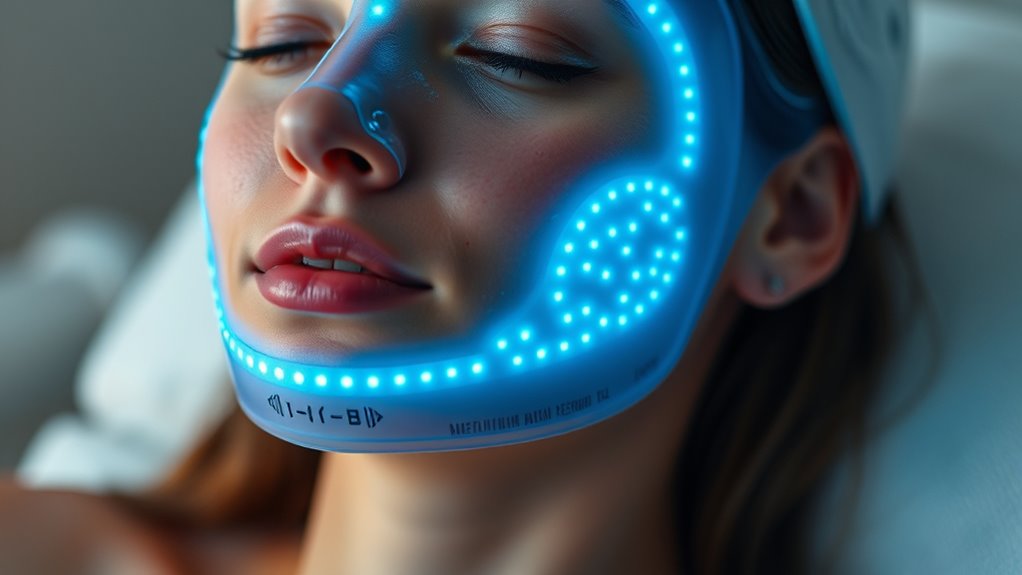
LED face masks have become a popular skincare tool, but using them safely is essential to avoid skin irritation or other issues. If you have sensitive skin, you might be wondering whether LED therapy is suitable for you. The good news is that LED therapy is generally gentle and non-invasive, making it a popular choice for many skin types, including those with heightened sensitivity. However, because sensitive skin can react more easily to external stimuli, it’s crucial to approach LED mask use with caution and awareness.
First, understand that not all LED face masks are created equal. Some devices emit specific wavelengths of light, like red or blue, for targeted skin benefits. When it comes to skin sensitivity, starting with a low-intensity setting or shorter treatment durations can help your skin adjust without overreacting. Always read the manufacturer’s instructions carefully, especially if you’re new to LED therapy. Many brands recommend performing a patch test before full application, applying the mask on a small skin area and monitoring for any adverse reactions over 24 hours. This step is vital for sensitive skin to make certain you don’t experience redness, itching, or irritation.
Not all LED masks are equal; start with low settings and perform patch tests to protect sensitive skin.
While LED therapy is generally safe, it’s important to be mindful of how your skin responds. If you notice increased redness, swelling, or discomfort during or after treatment, discontinue use immediately. Sensitive skin may also be more prone to dryness or flakiness, so supplement your LED routine with gentle, hydrating skincare products. Avoid using harsh cleansers or exfoliants immediately before or after treatment, as they can further irritate your skin.
Another key tip is to protect your skin from potential light sensitivity. Although LED light is usually safe, some individuals with sensitive skin may find that their skin becomes more reactive if exposed to sunlight or strong artificial lights shortly after a session. Wearing broad-spectrum sunscreen daily can help shield your skin and prevent any unwanted side effects. Furthermore, consult with a dermatologist if you’re unsure about how LED therapy might affect your skin or if you have underlying skin conditions like rosacea, eczema, or psoriasis. They can provide personalized advice and recommend suitable treatments.
LED face mask for sensitive skin
As an affiliate, we earn on qualifying purchases.
As an affiliate, we earn on qualifying purchases.
Frequently Asked Questions
Can LED Masks Worsen Allergic Reactions on Sensitive Skin?
Yes, LED masks can worsen allergic reactions and cause skin irritation if you have sensitive skin. The light therapy might trigger increased redness or itching, especially if you’re prone to allergies. To minimize risks, do a patch test first and follow the manufacturer’s instructions carefully. If you notice any worsening of allergic reactions or irritation, stop using the mask and consult a dermatologist.
Are There Any Long-Term Side Effects of Using LED Face Masks?
While LED face masks are generally safe, some worry about long-term effects on skin health. Currently, there’s limited evidence of serious long-term side effects, but extended use might cause skin irritation or dryness for sensitive skin types. To safeguard your skin, follow recommended usage guidelines and consult a dermatologist if you notice adverse reactions. Staying cautious ensures your skin benefits without risking unforeseen long-term effects.
How Often Should Sensitive Skin Users Incorporate LED Masks Into Their Routine?
You should incorporate LED face masks into your routine 2-3 times a week, especially if you have skin sensitivity. Follow the frequency guidelines provided by the manufacturer, and always start with shorter sessions to see how your skin reacts. Pay close attention to any irritation or discomfort, and adjust usage accordingly. Consistent, cautious use allows you to enjoy potential benefits without risking adverse reactions.
Do LED Masks Interfere With Other Skincare Products?
Think of your skincare products as ingredients in a recipe, and the LED mask as a gentle oven. When used correctly, they work harmoniously, but some ingredients may not blend well with the light therapy, causing product interactions or reduced effectiveness. To guarantee skincare compatibility, apply active products beforehand and wait a few minutes. This way, your LED mask enhances, rather than interferes with, your routine.
Are There Specific LED Wavelengths Safer for Sensitive Skin?
Yes, certain LED wavelengths are safer for sensitive skin because of their wavelength specificity. You should opt for red or near-infrared light, which are gentler and less likely to cause irritation. Avoid blue or UV wavelengths, as they can be harsher. Always start with shorter sessions and monitor your skin’s response. Consulting a dermatologist before use guarantees you select the safest wavelength for your skin sensitivity.
Conclusion
Remember, using LED face masks is like tending a delicate garden—you need to nurture it with care and attention. Always follow safety tips, start with shorter sessions, and listen to your skin’s signals. If you notice irritation or discomfort, stop immediately. With patience and proper precautions, your skin can blossom beautifully without any harm. Treat your skin gently, and it’ll glow as brightly as a flower in full bloom.
Halloween Picks
halloween
As an affiliate, we earn on qualifying purchases.