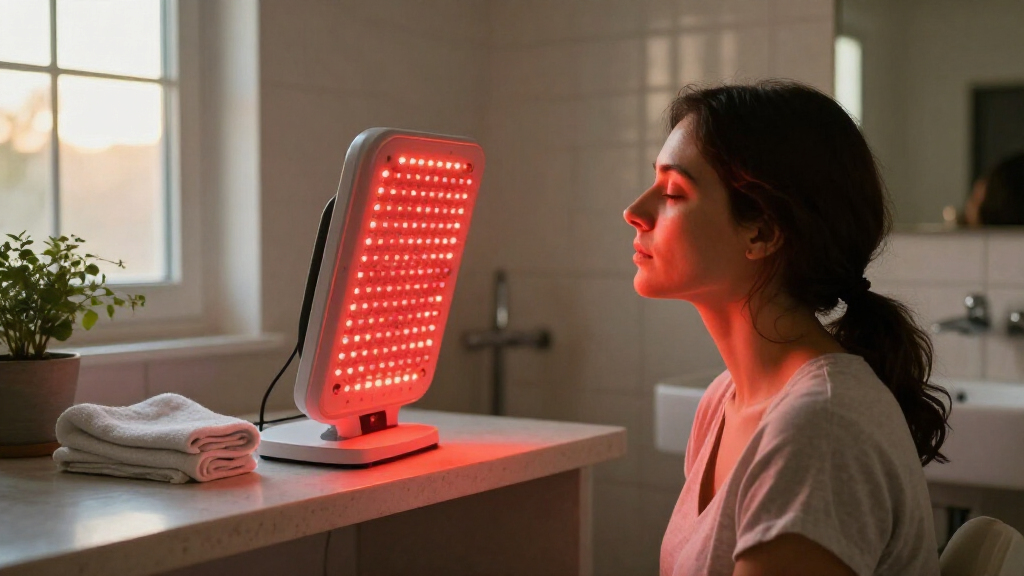

LED light therapy panels range from compact tabletop units to flexible wraps and larger, multi-wavelength systems, so the best choice depends on your coverage needs and setup. My best overall pick is the Hooga PRO300, a tabletop panel with dual-chip 660nm red and 850nm near-infrared LEDs. The BestQool 160W panel stands out for its four wavelengths, while the EXESAS full-body panel offers six wavelengths and a stand for broader setups. The main tradeoffs are coverage versus portability, plus whether extra wavelengths and controls are worth added complexity. Read on for the full breakdown of all 14 options and guidance for matching a panel to your space and routine.

Get wellness gear delivered free with Prime
- Fast, free delivery on millions of items
- Prime Video, Amazon Music and more included
- Member-only deals all year
Key Takeaways
- Tabletop panels dominate the practical middle ground: Hooga’s PRO300 and HG300, plus the BestQool BQ60, balance a defined treatment area with a setup that can fit on a desk or table.
- More wavelengths do not automatically mean a better fit: EXESAS offers six wavelengths and BestQool’s 160W model offers four, while several simpler panels focus on 660nm red and 850nm near-infrared.
- Full-body coverage comes with a space tradeoff: The EXESAS panel’s stand-based format is aimed at larger-area use, while compact lamps and tabletop panels are easier to place and store.
- Flexible wraps solve a different problem than rigid panels: The two wrap-style options can sit close to specific body areas, but they do not offer the same open-panel coverage or positioning flexibility.
- Similar product names need careful checking: Hooga HG200, HG300, and PRO300, as well as several Viconor lamps and panels, differ in stated power, LED count, or format; compare the exact model rather than relying on brand name alone.
| Flexible 3-in-1 LED Light Therapy Wrap for Face and Body |  | Best Flexible Multi-Wavelength Wrap | Wavelengths: Blue 465 nm, red 640 nm, near-infrared 880 nm | Design: Flexible, wearable face and body wrap | Timer: Automatic 30-minute shut-off | VIEW LATEST PRICE | See Our Full Breakdown |
| Celluma PRO Series 1 LED Light Therapy Panel |  | Best for Multi-Purpose Face and Body Treatments | Treatment modes: Acne, wrinkles, and pain | Design: Flexible panel with built-in foam stands | Coverage: Face and body | VIEW LATEST PRICE | See Our Full Breakdown |
| Hooga HG300 Red and Near-Infrared Light Therapy Panel |  | Best Compact Panel for Targeted Sessions | Wavelengths: 660 nm red and 850 nm near-infrared | LED count: 60 | Irradiance: Over 73 mW/cm² at 6 inches | VIEW LATEST PRICE | See Our Full Breakdown |
| Hooga Red Light Therapy Panel for Face & Body (HG200) |  | Best Compact High-Irradiance Pick | Wavelengths: 660 nm red and 850 nm near-infrared | LED count: 40 | Irradiance: Over 90 mW/cm² at 6 inches | VIEW LATEST PRICE | See Our Full Breakdown |
| Viconor Red Light Therapy Lamp with Stand – 660nm Red & 850nm Infrared Light for Face and Body |  | Best Adjustable Stand-Mounted Lamp | LED count: 120 | Wavelengths: 660 nm red and 850 nm infrared | Power cord: 3 m | VIEW LATEST PRICE | See Our Full Breakdown |
| 45W Red Light Therapy LED Panel with 660nm Red and 850nm Near-Infrared Light |  | Best Simple Dual-Wavelength Pick | Power: 45W | Wavelengths: 660nm red and 850nm near-infrared | Intended use: At-home light therapy | VIEW LATEST PRICE | See Our Full Breakdown |
| Viconor Red Light Therapy Lamp for Face and Body with Stand, 660nm Red & 850nm Infrared LEDs |  | Best Adjustable Curved Lamp | LED count: 120 | Wavelengths: 660nm red and 850nm infrared | Power cord: 1.8m | VIEW LATEST PRICE | See Our Full Breakdown |
| EXESAS Full-Body Red and Near-Infrared Light Therapy Panel, 6 Wavelengths, 600 LEDs, with Stand and Remote |  | Best Full-Height Multi-Wavelength Panel | Wavelengths: 630, 660, 810, 850, 940, and 1060nm | LED count and type: 600 dual-chip LEDs | Dimensions: 15 × 2.6 × 60 in | VIEW LATEST PRICE | See Our Full Breakdown |
| BestQool Red Light Therapy Panel, 4 Wavelengths for Body and Face, 160W |  | Best for Stated Irradiance and Modular Expansion | Power: 160W | Wavelengths: Four red and near-infrared wavelengths | Dimensions: 19.7 × 8.4 × 2.6 in | VIEW LATEST PRICE | See Our Full Breakdown |
| Morfone Tri-Wavelength Red Light Therapy Panel for Face and Body |  | Best for Adjustable Modes | LED beads: 200 | Wavelengths: 660nm, 850nm, and 940nm | Panel size: 16 × 8 in | VIEW LATEST PRICE | See Our Full Breakdown |
| Flexible Red Light Therapy Panel for Face, Neck, Chest, and Body |  | Best for Broad, Flexible Coverage | Panel dimensions: 30.8 × 11.8 inches | LED chips: 720 | Light modes: Red, infrared, blue, and yellow | VIEW LATEST PRICE | See Our Full Breakdown |
| BestQool BQ60 Red Light Therapy Panel, 660nm Red and 850nm Near-Infrared, 105W |  | Best for Flexible Setup | Power: 105W | Wavelengths: 660nm red and 850nm near-infrared | Irradiance: 95.6 mW/cm² at 3 inches | VIEW LATEST PRICE | See Our Full Breakdown |
| Viconor Red Light Therapy Panel, 660nm and 850nm, 60 Dual-Chip LEDs |  | Best for Timed Sessions | Wavelengths: 660nm red and 850nm near-infrared | LEDs: 60 dual-chip LEDs (120 beads) | Power: 300W | VIEW LATEST PRICE | See Our Full Breakdown |
| Hooga Red Light Therapy Panel for Body & Face, PRO300 – Dual-Chip 660nm Red & 850nm Near Infrared, 60 LEDs, Flicker-Free, Tabletop Stand |  | Best Premium Large Panel | Light source: LED | Wavelengths: 660nm red and 850nm near-infrared | Power: 300 watts | VIEW LATEST PRICE | See Our Full Breakdown |
| LED light therapy panel | Wavelengths |
|---|---|
| Flexible 3-in-1 LED Light Ther | Blue 465 nm, red 640 nm, near-infrared 880 nm |
| Celluma PRO Series 1 LED Light | — |
| Hooga HG300 Red and Near-Infra | 660 nm red and 850 nm near-infrared |
| Hooga Red Light Therapy Panel | 660 nm red and 850 nm near-infrared |
| Viconor Red Light Therapy Lamp | 660 nm red and 850 nm infrared |
| 45W Red Light Therapy LED Pane | 660nm red and 850nm near-infrared |
| Viconor Red Light Therapy Lamp | 660nm red and 850nm infrared |
| EXESAS Full-Body Red and Near- | 630, 660, 810, 850, 940, and 1060nm |
| BestQool Red Light Therapy Pan | Four red and near-infrared wavelengths |
| Morfone Tri-Wavelength Red Lig | 660nm, 850nm, and 940nm |
| Flexible Red Light Therapy Pan | — |
| BestQool BQ60 Red Light Therap | 660nm red and 850nm near-infrared |
| Viconor Red Light Therapy Pane | 660nm red and 850nm near-infrared |
| Hooga Red Light Therapy Panel | 660nm red and 850nm near-infrared |
More Details on Our Top Picks
Flexible 3-in-1 LED Light Therapy Wrap for Face and Body
I’d choose this wrap when conforming to different body areas matters more than having a rigid panel. Its flexible design and included bracket and belt offer more ways to position it than the tabletop Hooga HG300, while blue, red, and near-infrared wavelengths give it a broader light mix than the red-and-NIR-only options in this group. The tradeoff is that its wearable format is not the same as a stand-mounted panel for hands-free, fixed-position coverage, and the product information does not give an irradiance figure for comparing output. Protective goggles are required for every session, and the suggested wrinkle routine calls for 12 sessions over four weeks, so this is a commitment rather than an occasional-use device.
Pros:- Flexible wrap can conform to the face and multiple body areas
- Combines blue, red, and near-infrared wavelengths
- Automatic 30-minute shut-off timer
- Includes protective goggles, bracket, and belt
Cons:- Protective goggles must be worn during every session
- Suggested wrinkle regimen requires 12 sessions over four weeks
- No irradiance figure is provided in the supplied product details
Best for: Buyers who want one flexible device that can be positioned on the face and several body areas, with blue light alongside red and near-infrared.
Not ideal for: Shoppers who want a rigid tabletop panel, published irradiance for comparing output, or a routine that does not require goggles and repeated sessions.
- Wavelengths:Blue 465 nm, red 640 nm, near-infrared 880 nm
- Design:Flexible, wearable face and body wrap
- Timer:Automatic 30-minute shut-off
- Device class:OTC Class II
- Accessories:Protective goggles, bracket, belt
- Coverage:Face and body
Our verdict“Choose this wrap if adaptable face-and-body placement and three wavelengths matter more to you than a fixed tabletop-panel setup.”
Celluma PRO Series 1 LED Light Therapy Panel
The Celluma PRO Series 1 earns its place for buyers who want three distinct treatment modes—acne, wrinkles, and pain—in a single flexible panel. That makes it more versatile by stated treatment modes than the Hooga HG300 and HG200, which specify red and near-infrared wavelengths instead. Its built-in foam stands support hands-free positioning, while the flexible panel can be set against body areas; that is a different use style from the wearable wrap’s adjustable belt and bracket. The main compromise is practical: this large panel needs a 110V wall outlet, so it is less convenient to move or store than the compact Hooga models. The supplied details also do not list wavelengths or irradiance, limiting direct technical comparisons with those panels.
Pros:- Three modes cover acne, wrinkles, and pain
- Flexible panel accommodates face and body positioning
- Built-in foam stands allow hands-free setup
- International adapter kit is included
Cons:- Requires access to a 110V wall outlet
- Large panel may be awkward to store or transport
- Supplied specifications do not list wavelengths or irradiance
Best for: People seeking one flexible, outlet-powered panel with separate acne, wrinkle, and pain modes for face and body use.
Not ideal for: Buyers who need a compact travel-friendly device, cordless operation, or published wavelength and irradiance figures.
- Treatment modes:Acne, wrinkles, and pain
- Design:Flexible panel with built-in foam stands
- Coverage:Face and body
- Power source:110V wall electricity
- Batteries:Not required
- Included adapter:International adapter kit
Our verdict“Pick the Celluma if three stated treatment modes and flexible face-and-body positioning outweigh size and outlet dependence.”
Hooga HG300 Red and Near-Infrared Light Therapy Panel
I’d rank the HG300 as the most informative compact pick for buyers who want a small, targeted red-and-NIR panel with useful output details. It lists 660 nm red and 850 nm near-infrared light, independent controls, and irradiance of over 73 mW/cm² at six inches—figures the Celluma PRO Series 1 details do not provide. Its 60 LEDs and 12.6-inch length suit smaller treatment areas, but this is not the choice for broad full-body coverage. Compared with the smaller Hooga HG200, the HG300 has more LEDs and a longer body, though the HG200 lists a higher irradiance figure at the same distance. The tabletop stand and protective eyewear make setup straightforward, but you still need a desk or table and a separate session for each area.
Pros:- Independent controls for red and near-infrared light
- Lists irradiance of over 73 mW/cm² at six inches
- Includes adjustable tabletop stand, protective eyewear, and built-in timer
- Active cooling and stated LED lifespan over 50,000 hours
Cons:- Designed for targeted areas rather than full-body coverage
- Requires tabletop or desk space for setup
- The HG200 lists a higher irradiance figure at six inches
Best for: Buyers who want a compact, spec-detailed panel for targeted at-home sessions and value independent red and near-infrared controls.
Not ideal for: People seeking full-body coverage in one setup or a panel that can be used without a tabletop or desk.
- Wavelengths:660 nm red and 850 nm near-infrared
- LED count:60
- Irradiance:Over 73 mW/cm² at 6 inches
- Dimensions:12.6 × 4.92 × 2.44 inches
- Wattage:300 watts
- Beam angle:60 degrees
- Controls:Independent red and near-infrared controls
- Warranty:3 years
Our verdict“Choose the HG300 for a compact, adjustable red-and-NIR panel with detailed output specifications, not for broad coverage.”
Hooga Red Light Therapy Panel for Face & Body (HG200)
The HG200 is a strong fit for buyers who want a small tabletop panel with a stated irradiance above 90 mW/cm² at six inches. Its 40 LEDs pair 660 nm red and 850 nm near-infrared light in a 1:1 ratio, giving shoppers more concrete output information than the Celluma PRO Series 1 listing supplies. Compared with the Hooga HG300, the HG200 is physically shorter and lists higher irradiance at the same distance, but it has fewer LEDs; neither specification alone tells the whole story about real-world treatment coverage. The adjustable stand and built-in timer make repeat sessions easier to set up, while the cooling fan supports operation. Its compact size limits how much area can be treated at once, and it is corded, indoor-only, and not water resistant.
Pros:- Lists irradiance above 90 mW/cm² at six inches
- Balanced 660 nm red and 850 nm near-infrared wavelengths
- Adjustable tabletop stand and built-in timer
- Compact dimensions suit limited home spaces
Cons:- Small panel means treating larger areas in separate positions
- Corded and limited to indoor use
- Not water resistant
Best for: Home users who want a compact, corded red-and-NIR tabletop panel with a stated irradiance figure and a built-in timer.
Not ideal for: Buyers who need broad area coverage, outdoor or damp-environment use, or a cordless device.
- Wavelengths:660 nm red and 850 nm near-infrared
- LED count:40
- Irradiance:Over 90 mW/cm² at 6 inches
- Dimensions:9.8 × 6.3 × 1.2 inches
- Wattage:48 watts
- Power source:Corded electric
- Construction:Iron
- Warranty:3 years
Our verdict“Choose the HG200 if compact size and its stated irradiance matter more than the HG300’s larger LED count or wider panel.”
Viconor Red Light Therapy Lamp with Stand – 660nm Red & 850nm Infrared Light for Face and Body
The Viconor takes a different approach from the Hooga HG200 and HG300: instead of a small tabletop panel with listed irradiance, it offers a 120-LED curved lamp with a stand, hook, and 180-degree angle adjustment. That gives home users more placement options around the face or body, and the 3 m power cord adds reach when the nearest outlet is not beside the treatment spot. Its 660 nm red and 850 nm infrared combination matches the wavelength pair used by the Hooga panels, but the supplied details do not state irradiance, dimensions, or a timer, so buyers have less information for comparing output and setup. The larger lamp may also take up more room than either compact Hooga unit. Its suggested daily 15–30-minute routine suits consistent users, not people seeking quick, occasional sessions.
Pros:- 120 LEDs combine 660 nm red and 850 nm infrared light
- Stand and hook support multiple placement options
- 180-degree adjustable angle helps direct the lamp
- 3 m power cord offers extra positioning reach
Cons:- Bulky design may not suit small spaces
- No irradiance figure or dimensions are provided in the supplied details
- Suggested routine calls for daily 15–30-minute sessions
Best for: People who want a stand- or hook-positioned red-and-infrared lamp with adjustable angle and enough cord length for flexible home placement.
Not ideal for: Shoppers with very limited storage space or buyers who prioritize published irradiance, dimensions, or a built-in timer.
- LED count:120
- Wavelengths:660 nm red and 850 nm infrared
- Power cord:3 m
- Adjustable angle:180 degrees
- Included accessories:Stand, hook, and power cord
- Design:Curved lamp surface
- Suggested session duration:15–30 minutes daily
Our verdict“Choose the Viconor if adjustable stand-and-hook placement matters more than compact storage or detailed output specifications.”
45W Red Light Therapy LED Panel with 660nm Red and 850nm Near-Infrared Light
This is a straightforward choice for shoppers who want 660nm red and 850nm near-infrared light without a larger floor-standing setup. Its 45W rating and ability to hang or stand independently give it more placement flexibility than a fixed-format panel, while keeping the feature set simple. Compared with the Viconor lamp, it has less documented guidance on session length and no listed LED count; compared with the EXESAS full-body panel, it is the less imposing option but offers far less coverage information. The main tradeoff is uncertainty: dimensions, treatment area, and intensity are not provided, so buyers cannot readily judge fit or output before purchase. I’d choose it for basic at-home use, not when measurable coverage or detailed controls are a priority.
Pros:- Combines 660nm red and 850nm near-infrared wavelengths.
- Can be hung or placed freestanding for flexible positioning.
- Simple setup is suited to at-home use.
Cons:- No dimensions or treatment-area figures are supplied.
- No irradiance or other intensity rating is provided.
- The listed information offers little guidance for comparing expected performance.
Best for: At-home users who want a two-wavelength panel with flexible hanging or freestanding placement and do not need a stated treatment area.
Not ideal for: Buyers comparing panels by coverage, irradiance, or detailed output specifications, since those details are not provided.
- Power:45W
- Wavelengths:660nm red and 850nm near-infrared
- Intended use:At-home light therapy
- Placement:Hanging or freestanding
- Treatment targets:Skin care and muscle and joint pain relief
- Dimensions:Not specified
Our verdict“Choose this panel for uncomplicated dual-wavelength home use if flexible placement matters more than documented coverage and output.”
Viconor Red Light Therapy Lamp for Face and Body with Stand, 660nm Red & 850nm Infrared LEDs
The Viconor’s clearest distinction is its curved 120-LED panel, paired with a stand, hook, and 180-degree angle adjustment. That setup gives face- and body-focused users more ways to position the light than the basic 45W panel, whose dimensions and treatment area are not listed. A 1.8m cord also gives some flexibility around a home setup, and the stated 15–30-minute daily session provides more usage guidance than the EXESAS panel description. The tradeoff is that Viconor does not provide a power or irradiance rating, so the LED count alone does not tell buyers how its output compares with the BestQool Pro100. Its curved design may also take up awkward space. I’d favor it for adjustable targeting, not for shoppers seeking quantified performance or a compact footprint.
Pros:- 120 LEDs combine 660nm red and 850nm infrared light.
- Curved panel and 180-degree adjustment support flexible targeting.
- Includes a stand and hook for different placement options.
- Lists a 1.8m power cord and a 15–30-minute daily session recommendation.
Cons:- Power output and irradiance are not specified.
- Panel dimensions are not provided, making storage and fit difficult to judge.
- Curved shape may be awkward in small spaces.
Best for: Home users who want a stand-supported lamp with a curved panel and adjustable positioning for face or body sessions.
Not ideal for: Buyers who need a stated intensity rating or a confirmed compact footprint before choosing a panel.
- LED count:120
- Wavelengths:660nm red and 850nm infrared
- Power cord:1.8m
- Angle adjustment:180 degrees
- Stand:Included
- Recommended session:15–30 minutes daily
- Panel shape:Curved; dimensions not specified
Our verdict“Pick the Viconor if adjustable, stand-supported positioning matters more to you than documented intensity or exact panel dimensions.”
EXESAS Full-Body Red and Near-Infrared Light Therapy Panel, 6 Wavelengths, 600 LEDs, with Stand and Remote
For buyers prioritizing a tall treatment surface and wavelength variety, the EXESAS is the most expansive option in this group: its 60-inch panel has 600 dual-chip LEDs spanning six wavelengths from 630nm to 1060nm. The floor stand, remote, LCD, timer, separate red and infrared controls, cooling fans, and protective glasses make it a more feature-rich setup than the BestQool Pro100, which instead supplies a specific irradiance figure and a modular linking design. That distinction matters: EXESAS emphasizes coverage and controls, while BestQool offers clearer output data for a smaller panel. The EXESAS takes substantial space, and its listed 5W light-source wattage does not clarify the whole panel’s performance. I’d treat the stated lifespan and wellness claims as manufacturer claims, not a substitute for independent output information.
Pros:- Six wavelengths cover a broader listed range than the two-wavelength panels here.
- 600 dual-chip LEDs span a 60-inch panel.
- Includes a base stand, remote, protective glasses, timer, and LCD control panel.
- Separate red and infrared controls and cooling fans add operating flexibility.
Cons:- The 60-inch panel requires substantial floor and storage space.
- No irradiance figure is provided, and the listed 5W light-source wattage leaves output unclear.
- The 100,000-hour lifespan and wellness benefits are manufacturer claims.
Best for: Buyers with room for a tall floor-standing panel who want multiple wavelengths, separate light controls, and included operating accessories.
Not ideal for: Small-space users or shoppers who require a clear irradiance or independently verified performance figure.
- Wavelengths:630, 660, 810, 850, 940, and 1060nm
- LED count and type:600 dual-chip LEDs
- Dimensions:15 × 2.6 × 60 in
- Light source wattage:5W
- Power and voltage:Corded electric; 120V
- Mounting:Floor mount, surface mount, or hanging kit
- Controls and features:Separate red and infrared controls, timer, LCD control panel, and cooling fans
- Included accessories:Remote control, protective glasses, user manual, and base stand
- Claimed lifespan:100,000 hours
Our verdict“Choose EXESAS for a tall, accessory-rich multi-wavelength setup if you have the space and can accept limited output data.”
BestQool Red Light Therapy Panel, 4 Wavelengths for Body and Face, 160W
The BestQool Pro100 earns its place through a more concrete output specification than most panels here: 109mW/cm² at 3 inches, alongside a stated 160W rating and four red and near-infrared wavelengths. That makes it easier to compare on paper than the Viconor lamp, which lists its LEDs and wavelengths but no intensity figure. Its modular linking design also lets buyers expand coverage later, unlike the fixed 60-inch EXESAS panel; the tradeoff is that full-body coverage may require additional units. At 19.7 × 8.4 inches and 6.61 pounds, it is a substantial panel rather than a lightweight compact lamp. The 60-degree beam angle is intended to spread light across the treatment area, but the sparse built-in controls and lack of a timer may limit convenience for users who want a more guided setup.
Pros:- Lists irradiance of 109mW/cm² at 3 inches.
- Four red and near-infrared wavelengths use dual-chip LEDs.
- Modular design allows multiple panels to be linked.
- A 60-degree beam angle is designed to spread illumination across the treatment area.
Cons:- At 6.61 pounds, the panel is relatively heavy for frequent repositioning.
- Full-body coverage may require additional panels.
- Built-in controls are limited, including no stated timer.
Best for: Buyers who value a stated irradiance figure and want to expand coverage by linking additional panels over time.
Not ideal for: Shoppers seeking a lightweight, ready-made full-body unit or built-in timer and extensive controls.
- Power:160W
- Wavelengths:Four red and near-infrared wavelengths
- Dimensions:19.7 × 8.4 × 2.6 in
- Weight:6.61 lb
- Irradiance:109mW/cm² at 3 in
- Beam angle:60 degrees
- LED type:Dual-chip
- Expansion:Multiple panels can be linked
Our verdict“Choose the BestQool Pro100 if you want a panel with a stated irradiance figure and the option to expand coverage later.”
Morfone Tri-Wavelength Red Light Therapy Panel for Face and Body
Morfone is the most mode-focused pick in this set: its 200 LED beads combine 660nm red with 850nm and 940nm infrared light, and five modes include pulsing. The 16 × 8-inch panel and bracket that rotates 180 degrees and adjusts in height make it easier to aim at different areas than the BestQool Pro100, which offers a clearer irradiance figure but less listed positioning detail. It also includes protective sunglasses and specifies a 10–30-minute session, three to seven times weekly. The main compromise is limited performance documentation: no power or irradiance figure is listed, unlike BestQool’s 109mW/cm² specification. Its 110V compatibility is another practical constraint, so buyers should check their outlet setup. I’d choose it for adjustable targeting and modes, not for quantified output comparisons.
Pros:- Combines 660nm, 850nm, and 940nm wavelengths.
- Five modes include a pulse option.
- Bracket rotates 180 degrees and adjusts in height for varied targeting.
- Includes protective sunglasses and lists a session schedule.
Cons:- No power or irradiance rating is provided.
- Requires a 110V-compatible outlet.
- The 16 × 8-inch panel is smaller than the EXESAS full-height panel.
Best for: Users who want a mid-size panel with adjustable height and angle, multiple light modes, and face-to-body targeting.
Not ideal for: Buyers who need a stated irradiance or power rating, or whose available outlet setup is not compatible with 110V.
- LED beads:200
- Wavelengths:660nm, 850nm, and 940nm
- Panel size:16 × 8 in
- Light modes:Five modes, including pulse
- Bracket adjustment:180-degree rotation and height adjustment
- Recommended session:10–30 minutes, 3–7 times per week
- Power compatibility:110V outlets
- Warranty:1-year quality assurance
- Included accessory:Protective sunglasses
Our verdict“Choose Morfone if adjustable positioning and several light modes matter more than a stated output rating or full-height coverage.”
Flexible Red Light Therapy Panel for Face, Neck, Chest, and Body
This panel’s main advantage over the more rigid BestQool BQ60 is its 30.8 × 11.8-inch flexible format, which is designed to sit across areas such as the chest, shoulders, or back. It also offers four light modes—red, infrared, blue, and yellow—where the BQ60 lists red and near-infrared options. Adjustable intensity, memory control, and a 5–20-minute timer make it easier to set up a repeatable at-home routine. The tradeoff is that the description gives no power or charging details, so I can’t judge how it connects or how practical it is to use in different positions. It also provides no clinical evidence for its stated skin benefits, so buyers should treat the modes as features rather than proof of results.
Pros:- Flexible, large-format design is intended for use across the face, neck, chest, shoulders, and back.
- Four light modes offer more variety than the red and near-infrared modes listed for the BestQool BQ60.
- Adjustable intensity and a 5–20-minute timer support control over session setup.
- Memory control can help preserve a preferred routine.
Cons:- The supplied description does not include clinical evidence supporting the claimed skin benefits.
- Power and charging details are not provided, making the operating setup difficult to evaluate.
- The description does not specify irradiance or other output measurements.
Best for: At-home skincare users who want a flexible panel for several body areas and prefer multiple light-mode options.
Not ideal for: Buyers who need documented clinical evidence, clear power or charging information, or a rigid panel with a stated mounting system.
- Panel dimensions:30.8 × 11.8 inches
- LED chips:720
- Light modes:Red, infrared, blue, and yellow
- Lining:Ice-silk Lycra
- Intensity:Adjustable
- Timer:5–20 minutes
- Coverage areas:Face, neck, chest, shoulders, back, and body
Our verdict“Choose this flexible panel if broad body-area coverage and several light modes matter more to you than clearly specified power details.”
BestQool BQ60 Red Light Therapy Panel, 660nm Red and 850nm Near-Infrared, 105W
The BQ60 is a practical pick for buyers who want a panel they can position in more than one way: it includes an adjustable U-shaped stand and a wall-hanging kit, unlike the Hooga PRO300’s tabletop-focused setup. Its 660nm red and 850nm near-infrared wavelengths can run separately or together, giving users three mode choices without adding extra wavelengths. The touchscreen and cooling system add convenience for home sessions, while the listed 105W output makes it a smaller-power option than the PRO300’s stated 300W. That difference may suit buyers seeking a less imposing setup, but the BQ60 listing omits panel dimensions and treatment area, so I can’t tell how much of the body it covers at once. Its irradiance figure is specified at just three inches, which also leaves distance-dependent output less clear.
Pros:- Red, near-infrared, and combined modes allow separate or simultaneous use of its two wavelengths.
- Adjustable stand and hanging kit provide more placement choices than the Hooga PRO300’s tabletop mount.
- Touchscreen controls offer a direct way to select the light mode.
- Cooling system is included for continued operation.
Cons:- Panel dimensions and treatment area are not specified.
- The listed irradiance is tied to a distance of three inches, limiting comparisons at other positions.
- At 105W, it has lower stated wattage than the Hooga PRO300’s 300W.
Best for: Home users who want red and near-infrared light with the choice to use a stand or hang the panel on a wall.
Not ideal for: Buyers who need a stated treatment area, a large-format panel, or output information at distances beyond three inches.
- Power:105W
- Wavelengths:660nm red and 850nm near-infrared
- Irradiance:95.6 mW/cm² at 3 inches
- Light modes:Red, infrared, or both
- Controls:Touchscreen
- Mounting:Adjustable U-shaped stand and hanging kit
- LEDs:Flicker-free
Our verdict“Pick the BQ60 if flexible wall-or-stand placement matters more than a documented panel size or higher stated wattage.”
Viconor Red Light Therapy Panel, 660nm and 850nm, 60 Dual-Chip LEDs
Viconor makes sense for buyers who want a straightforward red-and-near-infrared panel with session timing built in. Its 5–30-minute timer covers a broader stated range than the BestQool BQ60’s supplied description, and the included eye protection and hanging kit give it a ready-to-place setup for tabletop or wall use. A cooling fan is also built in. The listing states 60 dual-chip LEDs, or 120 beads, alongside 300W power and an irradiance figure of 140mW/cm² at six inches. Those numbers don’t resolve the biggest practical unknown: panel dimensions and treatment area are absent, so buyers can’t easily estimate coverage. The listing also makes health and performance claims without supporting evidence; I’d treat the specifications as product details, not proof of a particular outcome.
Pros:- 660nm red and 850nm near-infrared wavelengths are delivered through dual-chip LEDs.
- The 5–30-minute timer allows longer sessions than the BQ60’s described setup.
- Hanging kit supports tabletop or wall placement.
- Eye protection and a built-in cooling fan are included.
Cons:- Panel dimensions and treatment area are not specified.
- Health and performance claims are not backed by supporting evidence in the supplied description.
- The listed power and irradiance figures do not explain expected coverage across a treatment area.
Best for: Buyers seeking a red-and-near-infrared panel with a longer timer range, included eye protection, and wall or tabletop placement.
Not ideal for: Shoppers who need confirmed panel dimensions, a clearly stated treatment area, or evidence supporting health and performance claims.
- Wavelengths:660nm red and 850nm near-infrared
- LEDs:60 dual-chip LEDs (120 beads)
- Power:300W
- Irradiance:140mW/cm² at 6 inches
- Timer:5–30 minutes
- Cooling:Built-in cooling fan
- Included accessories:Hanging kit, eye protection, and user manual
Our verdict“Choose Viconor if you value a broad timer range and included eye protection, but skip it if panel coverage must be clear before buying.”
Hooga Red Light Therapy Panel for Body & Face, PRO300 – Dual-Chip 660nm Red & 850nm Near Infrared, 60 LEDs, Flicker-Free, Tabletop Stand
The Hooga PRO300 is the most clearly specified large-panel choice in this group: its listing gives 61.2 × 15.7-inch dimensions, 4.3kg weight, and a 60-degree beam angle, details absent from the Viconor panel. That makes it easier to judge whether the unit suits your space before buying. It combines 660nm red and 850nm near-infrared light through 60 dual-chip LEDs, with independent wavelength controls, a tabletop stand, flicker-free design, and internal cooling fans. Compared with the more flexible-placement BestQool BQ60, the Hooga is heavier and less adaptable to wall mounting, but its stated 300W power and larger listed dimensions point toward a more substantial setup. It needs a constant outlet, and its 4.3kg weight makes frequent repositioning less appealing. A three-year warranty is a useful ownership detail, not a guarantee of results.
Pros:- Published dimensions and weight make it easier to judge fit than the Viconor panel, whose size is unspecified.
- Independent controls let users select the 660nm red and 850nm near-infrared wavelengths separately.
- Flicker-free design and internal cooling fans are included.
- Three-year manufacturer warranty and compatibility with additional PRO series panels are listed.
Cons:- At 4.3kg, it is relatively heavy to move between treatment locations.
- Corded electric operation requires access to a power outlet.
- The tabletop mount offers less placement flexibility than the BestQool BQ60’s stand-and-hanging-kit combination.
Best for: Buyers who want a large, dimension-specified tabletop panel with separate wavelength controls and plan to keep it near a power outlet.
Not ideal for: People who need a lightweight, battery-powered, wall-mounted, or easily portable panel.
- Light source:LED
- Wavelengths:660nm red and 850nm near-infrared
- Power:300 watts
- Number of light sources:60
- Dimensions (L × W × H):61.2 × 15.7 × 3.1 inches
- Weight:4.3 kg
- Mounting:Table mount
- Beam angle:60 degrees
- Warranty:3-year manufacturer warranty
Our verdict“The PRO300 suits buyers who want a large, well-specified tabletop panel and can accommodate its weight and corded setup.”
How We Picked
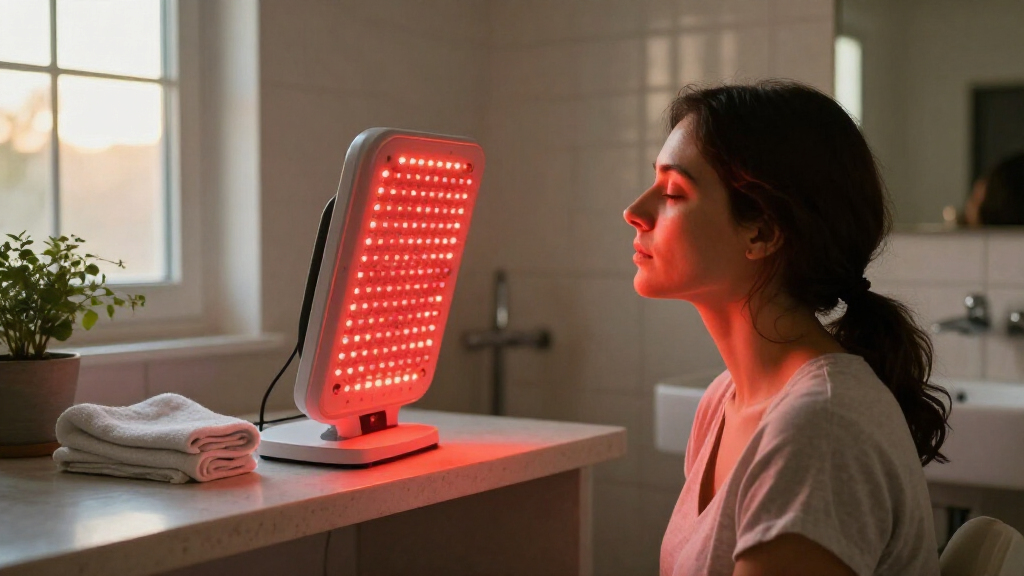
I compared the 14 options on details that change day-to-day use: panel format and coverage, stated wavelengths and LED configuration, included stands or controls, and how easily each unit can be positioned for face or body use. I also weighed setup demands, flexibility, and whether the product details support a clear role, such as a compact tabletop choice, a wrap for targeted placement, or a larger stand-based panel. Where listings provide different levels of detail, I treated unlisted specifications as unknown rather than assuming one model outperforms another.
The ranking favors useful combinations of clear specifications, adaptable placement, and manageable setup over feature count alone. The Hooga PRO300 leads as a straightforward tabletop pick with specified red and near-infrared wavelengths; larger or multi-wavelength units rank higher for buyers who can make use of their broader format or added options. Flexible wraps and basic lamps remain useful for narrower needs, but their specialized fit or less clearly differentiated specifications limit their appeal as one-size-fits-most choices. This is a comparison of product formats and stated features, not a claim that any device treats or prevents a medical condition.
Factors to Consider When Choosing LED Light Therapy Panels
Before choosing among LED light therapy panels, decide how you will use and store the device. Coverage, placement, and routine fit often matter more than a long feature list: a capable panel that is awkward to position may be a poor match for regular use. These broader checks can help you avoid paying for specifications that do not address your needs.
Match the format to the area you want to cover
Start by estimating the area you want to position the device near, rather than choosing by product name or advertised power alone. A tabletop panel can suit a defined face or body area and is usually easier to store than a stand-based unit. A larger panel may reduce repositioning when you want broader coverage, but it needs room for both the device and a stable setup. Flexible wraps take a different approach: they conform around a specific area, though they cannot serve as an open panel for multiple positions as easily. A common mistake is buying the largest format without checking where it will live between sessions. Choose the smallest format that suits your intended placement and your available space.
Read wavelength claims as specifications, not promises
Wavelength figures tell you which bands a product says it emits; they do not, by themselves, establish that one panel will produce a better personal result. Several options here specify 660nm red and 850nm near-infrared, while the BestQool 160W and EXESAS list additional wavelengths. Extra bands may appeal to buyers comparing wavelength configurations, but they also make it more important to check exactly what the manufacturer specifies for each setting. Do not assume that more wavelengths automatically make a device more effective or suitable for your goal. Look for clear, model-specific information and compare like with like. If a listing leaves key details unclear, treat that as uncertainty rather than filling in the gaps.
Check positioning and included accessories
How a panel is held can shape the experience as much as its light configuration. A tabletop stand can make a compact unit easier to aim, while a floor stand can help position a larger panel without holding it in place. Remote controls and timers may simplify operation, but they do not solve a poor fit between the panel and your room. Before buying, check whether a stand is included, how the panel can be angled, and whether the listed accessories match the specific model. Buyers sometimes focus on LED count and only later discover that their preferred position is awkward. Pay for added mounting features when they remove a real setup obstacle for you.
Treat wattage and LED count as incomplete comparison points
Wattage and LED count can help distinguish models, but neither offers a full picture of usable coverage or output at a given distance. Product titles in this lineup include numbers such as 45W, 105W, 160W, and 600 LEDs, yet those figures describe different aspects of the devices. Compare them alongside panel dimensions, wavelength details, and the manufacturer’s usage instructions rather than ranking products by one number. Also check whether a title refers to electrical power, a model name, or another stated measurement. When sellers provide a measurement method or testing conditions, use those details to interpret claims; when they do not, avoid making direct performance comparisons. A clearly described, suitably sized panel can be a more sensible choice than a bigger number with little context.
Balance portability against coverage and stability
A compact lamp or tabletop panel is easier to move between rooms and store, but it may cover a smaller area at once. Larger stand-based panels can suit a dedicated location and reduce the need to reposition, though they take up more space and may be less convenient to pack away. Wraps are portable and can sit against a targeted area, but their shape limits how freely you can change positioning. Think about where the device will be used on an ordinary day, not only where you could use it in theory. If you share a room or have limited storage, a smaller model can be the more practical choice even when it means adjusting its position. Buyers with a fixed treatment space may get more value from a stable stand or broader panel.
Choose controls and complexity you will actually use
Timers, remotes, and multiple wavelength settings can make a panel more adaptable, but each feature adds another decision to the routine. Buyers new to the category may prefer a simple model with clearly described operation over a device whose many modes are difficult to compare. On the other hand, experienced shoppers who have a specific reason to select among wavelength options may value a multi-wavelength panel. Check that instructions explain operation, recommended positioning, and session guidance for the exact model. Avoid treating a long feature list as a substitute for clear documentation. The right level of control is the one that supports your routine without making setup needlessly complicated.
Frequently Asked Questions
Should I choose a panel with more wavelengths?
Not automatically. The EXESAS panel lists six wavelengths and the BestQool 160W lists four, while several other models focus on 660nm red and 850nm near-infrared. More bands may be useful if you specifically want those options and the product explains how they are configured. If you do not have a reason to use the additional settings, a simpler panel can be easier to compare and operate. Base the decision on clear model-specific specifications and your intended routine, not the wavelength count alone.
Is a tabletop panel enough, or do I need a full-body model?
A tabletop panel can be a practical choice when you plan to use it on a limited area and are comfortable repositioning it. A stand-based full-body panel makes more sense when broader coverage and a dedicated placement are priorities. The larger format can require more floor space and a steadier setup, so it is not automatically the more convenient option. Think about your available room and whether you would realistically move or store the unit after use. The best fit is the one you can place consistently without disrupting your space.
Are flexible LED wraps interchangeable with rigid panels?
No: the formats support different kinds of placement. A wrap can sit close to a particular area and may be convenient when targeted positioning matters. A rigid panel gives you an open surface to position near different areas, but it may require a stand, table, or other stable support. Wraps are not a direct substitute for broader panel coverage, and panels may be less convenient when you want a device to conform around a specific area. Decide whether close, targeted placement or more adaptable open-panel positioning better suits your routine.
Can I compare panel performance using wattage or LED count?
Use those numbers as partial information, not as a standalone ranking. The lineup includes products with different wattage figures and LED counts, but those specifications do not tell you everything about panel area, wavelength configuration, or output at a particular distance. Confirm what a number refers to and look for the manufacturer’s measurement conditions before comparing models. If those details are missing, a direct performance comparison may not be supported by the listing. Prioritize clear specifications and a format that fits your intended use.
What should I check before buying a similar model from the same brand?
Compare the exact model identifier, not just the brand and general product name. This roundup includes several Hooga models, along with multiple Viconor options, and they differ by format and stated specifications. Check wavelength information, LED count or wattage where provided, included stand, controls, and intended placement for the specific listing you plan to buy. Product titles can make related models sound nearly interchangeable even when their practical setup differs. If a detail matters to your choice, confirm it in the product specifications and instructions rather than inferring it from another model.
Conclusion
For most shoppers seeking a manageable panel with clearly stated red and near-infrared wavelengths, I recommend the Hooga PRO300 as best overall. The BestQool BQ60 is my best value-style pick for buyers who want a compact tabletop format with specified 660nm and 850nm LEDs, while the EXESAS is the best premium-style choice for shoppers who want a larger stand-based setup and six listed wavelengths. Beginners may find the Hooga HG200 or another simple tabletop panel easier to place and understand than a feature-heavy unit. For targeted, close placement, choose a flexible wrap; for a more portable lamp-style setup, compare the Viconor models by their exact listed specifications. Match the device to your space and routine first, then use wavelength count and power figures to separate models that fit that need.
Halloween Picks
halloween
As an affiliate, we earn on qualifying purchases.