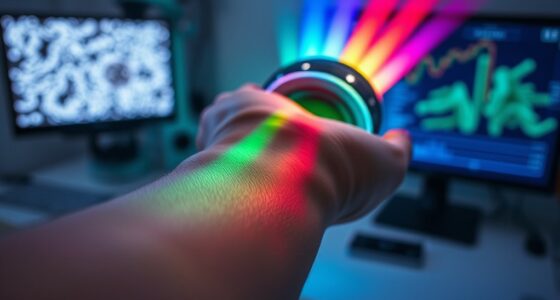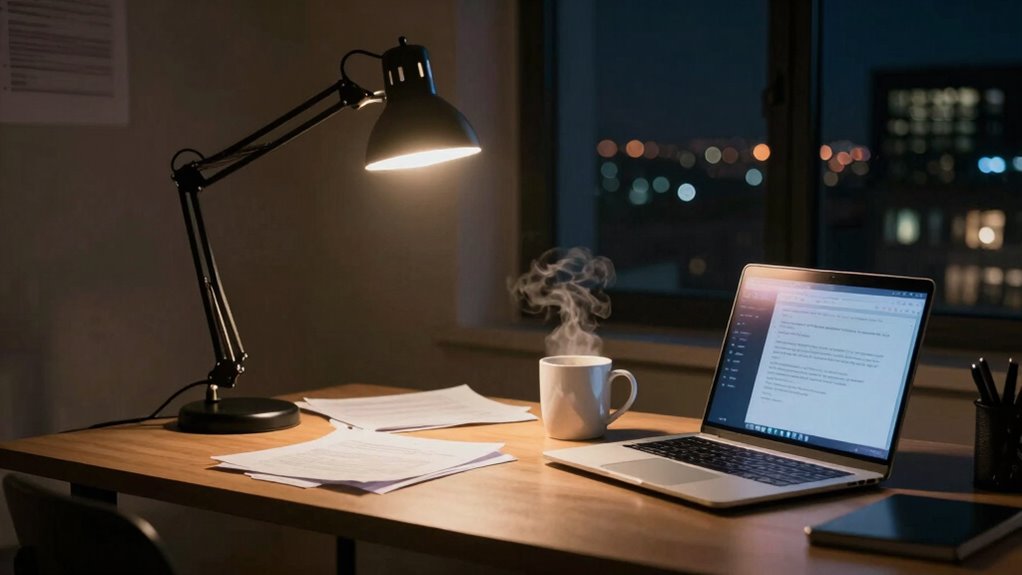

To survive night shifts, set up your lighting to boost alertness and comfort. Use bright, cool-toned lights (around 5000K–6500K) during your shift to mimic daylight, and install adjustable fixtures or smart controls to customize brightness. Place lights to minimize glare and shadows, and incorporate timers or automation to maintain a consistent schedule. Adjust lighting for shift changes to stay alert and safe—continue exploring these tips for a well-lit, effective night shift setup.
Key Takeaways
- Use bright, cool (5000K–6500K) lighting to boost alertness and mimic daytime cues during night shifts.
- Position lights to minimize glare and shadows, utilizing adjustable fixtures for ergonomic comfort.
- Automate lighting to simulate natural day/night cycles, supporting circadian rhythms and overall health.
- Incorporate task and ambient lighting with proper placement and controls to reduce eye strain and fatigue.
- Adjust lighting during shift changes—warmer tones for relaxation, cooler for alertness—to enhance safety and focus.
adjustable LED task lighting for night shift
As an affiliate, we earn on qualifying purchases.
As an affiliate, we earn on qualifying purchases.
Why Good Lighting Is Essential for Night Shift Workers
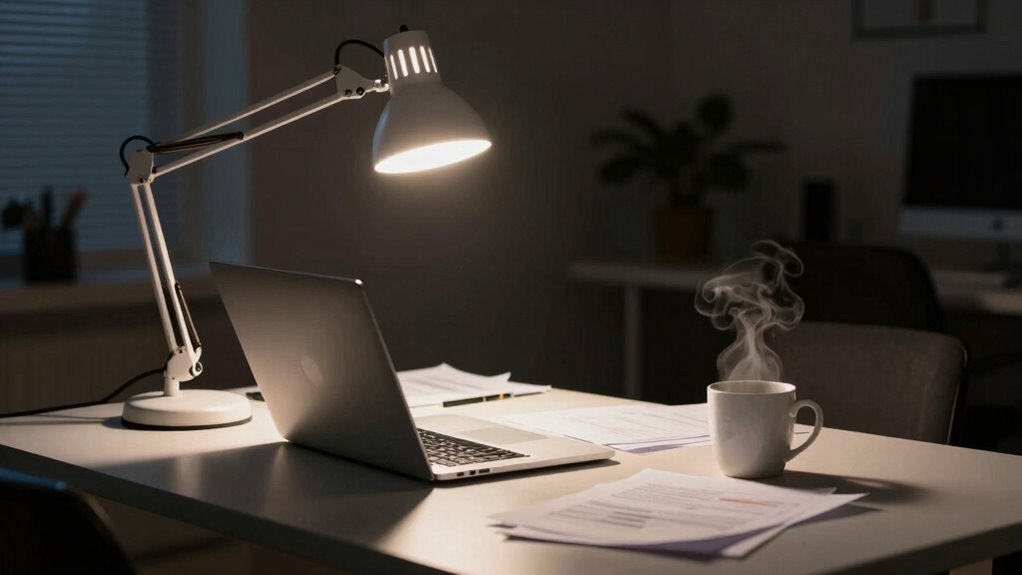
Good lighting is essential for night shift workers because it directly impacts alertness, safety, and productivity. Poor lighting can worsen daylight deprivation, making it harder to stay alert and focused during your shift. Additionally, external factors like light pollution from streetlights or nearby buildings can interfere with your circadian rhythm, further disrupting your sleep cycle. Bright, well-designed lighting helps counteract these effects by signaling your body that it’s daytime, improving your alertness and mood. Proper lighting also reduces the risk of accidents and mistakes caused by poor visibility. By controlling your indoor lighting environment, you can create a more natural, supportive setting that minimizes the adverse effects of light pollution and daylight deprivation, helping you perform better and feel more refreshed after your shift. Incorporating Free Floating lighting options can further optimize your environment for better sleep and productivity. Understanding Nail Biology and how lighting affects overall health can also contribute to better self-care during irregular work hours. Additionally, selecting appropriate light intensity can significantly enhance your overall well-being and work performance.
How to Choose Brightness and Color Temperature for Alertness
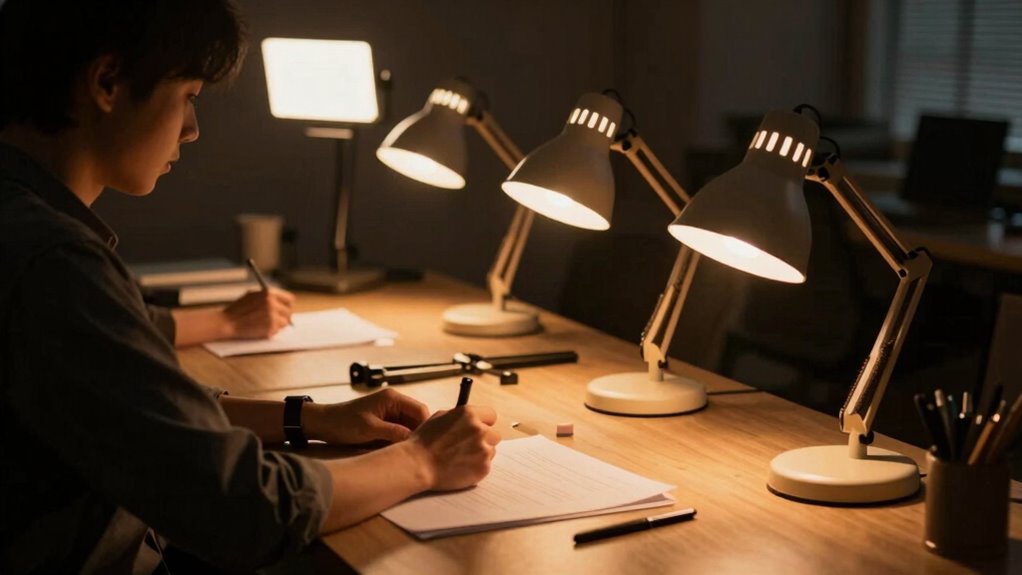
Choosing the right brightness levels can keep you alert without causing eye strain. Adjusting the color temperature to cooler tones may boost your focus, while warmer tones can promote relaxation. Understanding how these factors impact your alertness helps you stay sharp throughout your shift. Incorporating smart lighting protocols can further optimize your environment for better focus and comfort. Implementing Victorian steampunk-inspired lighting designs can also create an inspiring workspace that enhances productivity. Additionally, selecting high-quality car protection accessories such as remote car covers or gear upgrades can ensure durability and reliability during long night shifts. Optimizing home safety features, like proper lighting placement, can further reduce hazards and improve your overall safety during late-night hours. Exploring performance-enhancing engine parts like lightweight flywheels may also improve your vehicle’s responsiveness during late-night drives.
Ideal Brightness Levels
To stay alert during night shifts, selecting the right brightness and color temperature is essential. You want task lighting that provides enough illumination for detailed work without causing glare or eye strain. Keep ambient brightness at a moderate level—bright enough to prevent fatigue but not so intense that it disrupts your circadian rhythm. Aim for a brightness range around 300-500 lux for general areas, adjusting based on your specific tasks. Use focused task lighting for precision tasks, while maintaining softer, indirect lighting elsewhere. Consistent lighting levels help maintain alertness, so avoid stark contrasts. Remember, too dim can cause drowsiness, and too bright can be uncomfortable. Finding the right balance guarantees you stay focused and energized throughout your night shift. Additionally, understanding how contrast ratio affects visual clarity can help you choose lighting that minimizes eye strain and maximizes alertness during prolonged periods of work. Maintaining appropriate lighting uniformity can further reduce eye fatigue and support sustained concentration during long shifts. Regularly calibrating your lighting setup ensures optimal lighting quality, which is key to maintaining alertness and reducing fatigue over extended hours. Moreover, adjusting the color temperature to cooler tones can enhance alertness and focus during extended night work.
Optimal Color Temperatures
Since color temperature influences your alertness and comfort, selecting the right hue is essential for night shifts. The color temperature, measured in Kelvin, shapes the light spectrum you’re exposed to. Cooler temperatures, around 5000K to 6500K, emit bluish light that boosts alertness by mimicking daylight, helping you stay focused and awake. Warmer tones, below 4000K, produce yellow or amber hues that promote relaxation but may cause drowsiness. When choosing lighting, aim for a light spectrum that emphasizes higher blue content to enhance wakefulness without causing discomfort. Adjusting the color temperature to fit your shift can improve your overall alertness and reduce fatigue. Proper light spectrum management is essential for maintaining performance during long night hours. Additionally, understanding color temperature effects can help tailor your environment for optimal alertness. For example, selecting lights with a higher blue content aligns with the concept of blue light exposure and its influence on circadian rhythms. Incorporating lighting controls, such as dimmers or adjustable color temperatures, allows for more personalized and effective lighting setups. Remember, the right light spectrum balances alertness with comfort, keeping you sharper through those long night hours.
Impact on Alertness
The right combination of brightness and color temperature can considerably boost your alertness during night shifts. Bright, cool lighting (around 5000K-6500K) helps combat light sensitivity and reduces the impact of light pollution from external sources. It signals your brain to stay alert and focused, while softer, warmer lights may induce drowsiness. Be mindful of your environment; excessive brightness can cause glare and strain, especially if you’re light-sensitive. Adjust your setup to balance visibility with comfort. Use the following table as a quick guide:
| Brightness Level | Ideal Color Temperature | Effect |
|---|---|---|
| Low | 2700K-3000K | Relaxing, less alertness |
| Moderate | 4000K-5000K | Balanced alertness |
| High | 6000K-6500K | Maximizes alertness, reduces light pollution effects |
Additionally, understanding how circadian rhythms respond to different lighting conditions can further optimize your night shift experience. Incorporating a lighting strategy that aligns with your biological clock can help maintain alertness while supporting better sleep patterns during off-hours. Being aware of the impact of light temperature can guide you in selecting the most effective lighting for your needs. Properly managing your light exposure can also prevent disruptions to your natural sleep cycle and improve overall well-being. Implementing blue light management techniques can further enhance your ability to stay alert without compromising sleep quality.
Best Light Placement Tips to Reduce Eye Strain and Fatigue
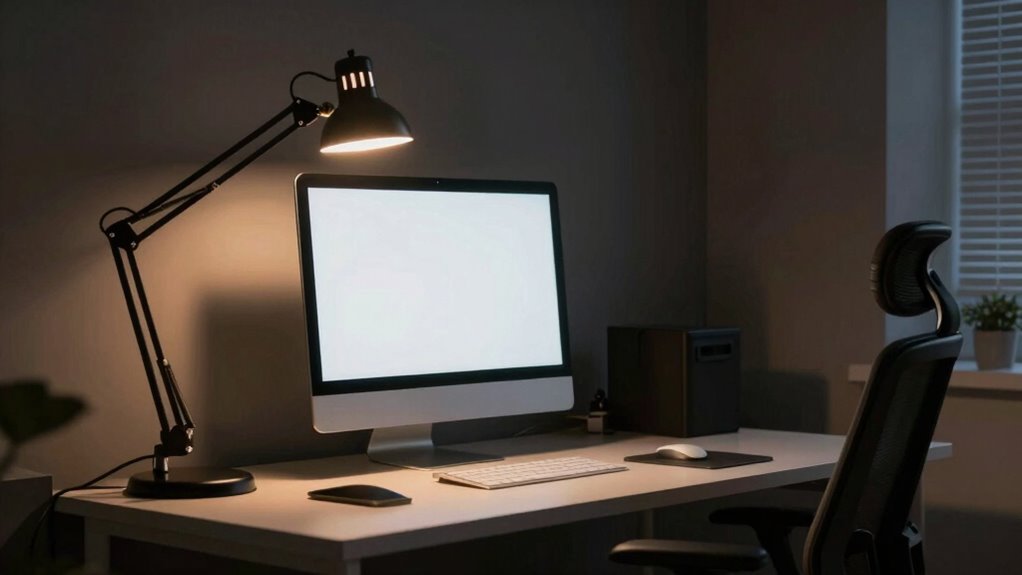
Proper light placement is key to minimizing eye strain and fatigue during night shifts. Position your light sources to avoid direct glare that hits your eyes, which can cause discomfort and reduce focus. Use adjustable lamps or diffusers to soften harsh light and ensure even illumination across your workspace. Keep your primary light source behind or to the side of your work area, rather than directly in front or above you. This setup helps reduce glare and reflection on screens or documents. Also, consider using task lighting that targets specific areas, minimizing overall brightness while providing enough light for your tasks. Proper light placement not only reduces eye strain but also helps maintain alertness, making your night shift more comfortable and productive. Incorporating appropriate lighting techniques based on your environment can further enhance visual comfort and reduce fatigue. Additionally, paying attention to lighting ergonomics can optimize your setup for long-term comfort and efficiency. Adjusting your lighting to suit your visual needs can make a significant difference in overall comfort during extended night work. Being mindful of the ambient lighting conditions in your workspace can also help prevent unnecessary strain and improve focus.
Using Light Timers and Automation to Stay Consistent
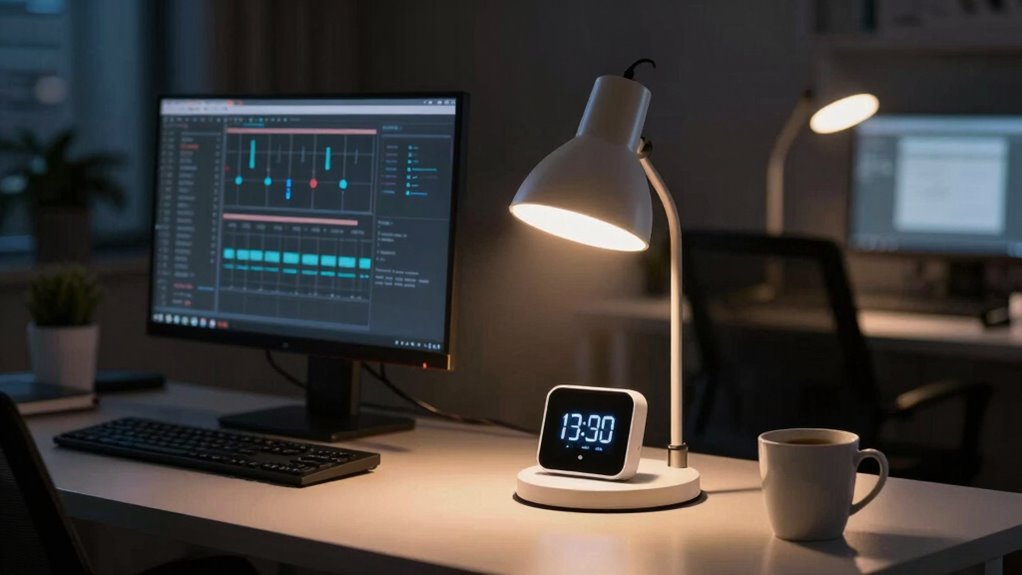
Using light timers and automation makes maintaining a regular schedule easier, even with irregular hours. Automated lighting schedules help you simulate natural day and night cycles, supporting your circadian rhythm. When paired with consistent sleep routines, these tools keep your body aligned and boost your overall alertness.
Automated Lighting Schedules
Automated lighting schedules can make a significant difference in maintaining a consistent sleep pattern during night shifts. By setting up your lights with timers, you guarantee your environment mimics natural cycles, helping your body stay aligned. Incorporate dynamic color schemes that shift throughout your shift—cooler tones for alertness and warmer hues to wind down. Motion activated lighting adds convenience, turning on only when you enter a room, reducing unnecessary exposure. These automated systems keep your lighting predictable, minimizing disruptions to your circadian rhythm. Consistent lighting cues reinforce your sleep-wake cycle, making it easier to adapt to night work. With the right setup, you create a controlled environment that supports focus during your shift and restful sleep afterward.
Consistent Sleep Routines
To maintain a consistent sleep routine during night shifts, setting up light timers and automation plays a crucial role. By aligning your light exposure with your sleep cycle, you help regulate your circadian rhythms, making it easier to fall asleep and stay rested. Use timers to gradually dim lights before your sleep time, signaling your body it’s time to wind down. Automate bright lights for your shift start, then switch to softer lighting afterward. This consistency reinforces your body’s internal clock, even when working irregular hours. Here’s a simple setup:
| Time of Day | Light Setting | Purpose |
|---|---|---|
| Before shift | Bright, cool | Alertness |
| During shift | Bright, adjustable | Focus and energy |
| Post-shift | Dimming, warm | Sleep preparation |
| Sleep time | Darkness | Restful sleep |
| Wake-up | Gradual bright | Wakefulness |
How to Combine Lighting With Sleep and Focus Habits
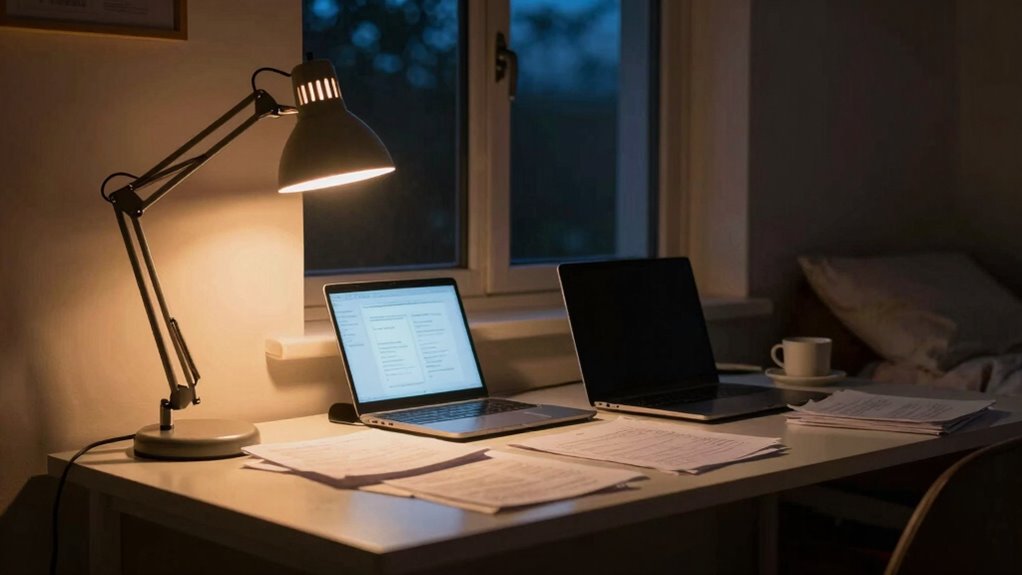
Balancing lighting to support both sleep and focus during night shifts requires intentional adjustments. You should minimize light pollution that disrupts your circadian rhythm, especially when trying to sleep after work. Use blackout curtains or eye masks to block artificial light, which can interfere with melatonin production. During your shift, opt for bright, natural-spectrum lighting to boost alertness and concentration. When shifting to sleep, switch to dim, warm lighting that mimics natural evening light, helping your body wind down. Understanding the difference between natural vs. artificial light is key: natural light supports your internal clock, while artificial light, especially blue light, can hinder sleep. With deliberate lighting choices, you’ll improve both your focus during shifts and your rest afterward.
Common Lighting Setup Mistakes to Avoid

One common mistake is relying solely on harsh, overly bright lighting during your shift, which can cause eye strain and reduce your focus. Overhead fixtures that are too intense may wash out colors and diminish visibility. Poorly chosen lighting can also impair color rendering, making it hard to distinguish important details. To avoid these pitfalls, consider your lighting setup carefully:
| Mistake | Effect | Solution |
|---|---|---|
| Overhead fixtures too bright | Eye strain, fatigue | Use dimmable or indirect lighting |
| Poor color rendering | Difficulty seeing details | Select bulbs with high color rendering index (CRI) |
| Uneven lighting | Shadows, glare | Incorporate layered lighting for balance |
Adjusting Your Lighting When Your Shift Changes
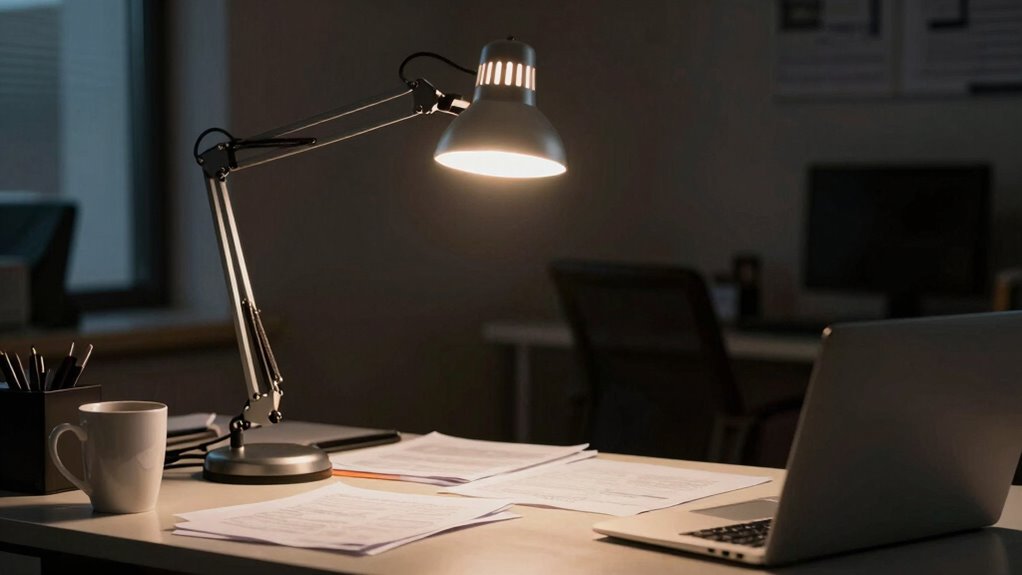
As your shift changes, adjusting your lighting setup helps maintain ideal visibility and reduces eye strain. Incorporate color therapy by shifting to warmer light tones to promote relaxation during your transition, or cooler tones to boost alertness. This helps your body adapt to the new schedule more smoothly. Additionally, tweak your light diffusion; softer, diffused lighting minimizes glare and harsh shadows, easing your eyes as they adjust. Consider using adjustable lamps or dimmable fixtures to fine-tune brightness easily. Properly managing these changes ensures you stay alert without overexerting your eyes. By intentionally adjusting your lighting with color therapy and light diffusion, you create a comfortable environment that supports your shift changes and enhances your overall night shift performance.
Frequently Asked Questions
Can Adjustable Lighting Enhance Alertness During Night Shifts?
Yes, adjustable lighting can boost your alertness during night shifts. You should focus on changing the light color to cooler tones, like blue, which help wake you up. Also, increase brightness levels when you need to stay alert, and dim them during breaks to relax. By customizing your light color and brightness, you’ll stay more focused and less fatigued throughout your shift.
What Safety Considerations Should Be Taken With Bright Lighting at Night?
Imagine a fortress of bright lights illuminating your workspace, but beware—excessive brightness can cause eye strain and circadian disruption, throwing off your sleep cycle. To stay safe, use adjustable lighting to prevent glare and harsh shadows, and incorporate warm tones to ease your eyes. Keep lights at ideal levels, take regular breaks, and make sure your workspace is well-ventilated to reduce fatigue and maintain alertness without risking your health.
How Does Lighting Impact Long-Term Health for Night Shift Workers?
Lighting impacts your long-term health by causing circadian disruption and melatonin suppression. When exposed to bright or blue-enriched light during your night shift, your body struggles to maintain natural sleep-wake cycles. This disruption can lead to sleep disorders, increased risk of chronic conditions like heart disease, and weakened immunity. To protect your health, use properly timed lighting that minimizes melatonin suppression and supports your circadian rhythm.
Are There Specific Light Brands Recommended for Night Shift Setups?
Imagine uncovering the perfect light bulb options for your night shift setup. Some brands like Philips and GE offer reliable, circadian-friendly lighting that helps keep you alert and healthy. Look for bulbs labeled “daylight” or “blue-enriched” to mimic natural sunlight. These brand recommendations can make a real difference, giving you steady energy without disrupting your sleep cycle. Don’t settle—your health depends on it.
How Can Lighting Help Improve Mood and Reduce Stress During Night Work?
Lighting can boost your mood and cut stress during night work by adjusting color temperature and ambient brightness. Use warmer tones, around 2700K to 3000K, to create a cozy atmosphere, and increase ambient brightness to stay alert. Proper lighting helps regulate your circadian rhythm, making you feel more awake and less anxious. Keep a consistent lighting setup to maintain stability and improve overall well-being during those late hours.
Conclusion
With the right lighting setup, you can stay alert, reduce fatigue, and maintain your focus during night shifts. Are you ready to transform your workspace into a bright, energizing environment that works for you? By choosing the right brightness, placement, and automation, you’ll feel more in control and less drained. Don’t let poor lighting steal your productivity—take charge and create a night shift setup that truly supports your well-being.