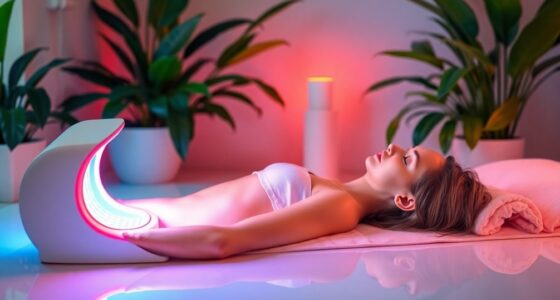
Light therapy provides a safe, drug-free way to ease discomfort after a procedure by reducing pain and inflammation while promoting faster healing. By using specific wavelengths, the device targets affected areas, encouraging natural tissue repair and better blood flow. With simple and consistent use, it can help improve your comfort and overall recovery experience. Keep exploring how integrating light therapy into your routine can support your healing process and wellbeing.
Key Takeaways
- Light therapy reduces pain and inflammation naturally, supporting quicker post-procedure recovery.
- Use specific wavelengths to stimulate cellular repair and tissue healing in affected areas.
- Consistent sessions over affected sites promote better blood flow and accelerate healing processes.
- Follow medical guidance on device placement, duration, and frequency to ensure safe, effective comfort.
- Light therapy is a non-invasive, drug-free option that can complement other recovery treatments for enhanced well-being.
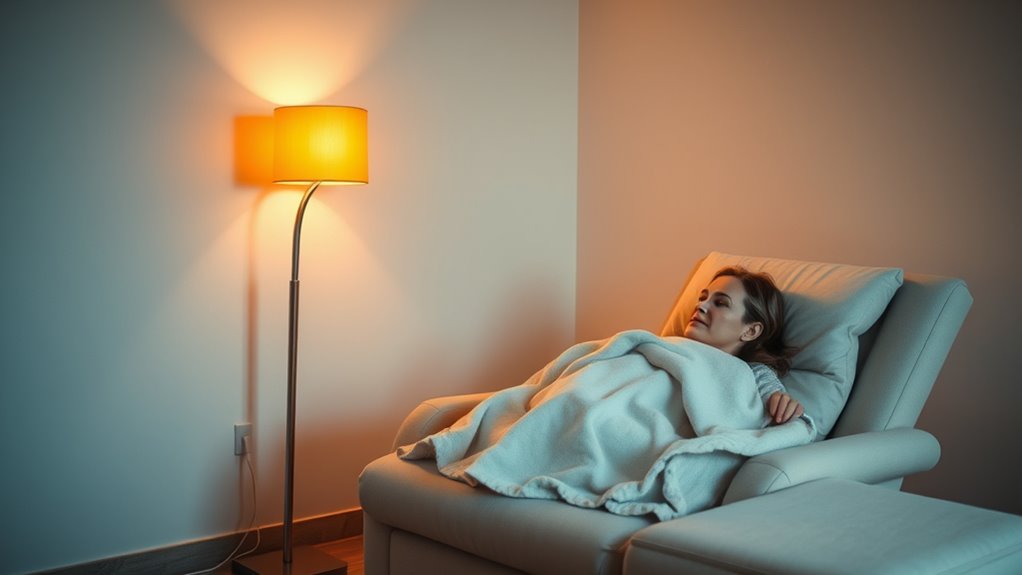
Recovering after a medical procedure is a critical part of ensuring overall health and preventing complications. During this period, finding effective ways to manage discomfort and promote healing can make a significant difference in your recovery experience. One increasingly popular method involves using light therapy to provide comfort and support your healing process. Light therapy, especially with specific wavelengths, can reduce pain, decrease inflammation, and improve your overall sense of well-being. It’s a non-invasive, drug-free option that many patients find helpful, especially when traditional pain management methods aren’t enough or aren’t suitable for their needs.
Using light therapy can ease pain, reduce inflammation, and support your healing process naturally and non-invasively.
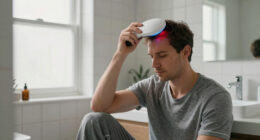
When you incorporate light therapy into your recovery, you might notice a reduction in swelling and discomfort. Light penetrates the skin at targeted wavelengths, stimulating cellular activity and encouraging tissue repair. This process can accelerate healing by boosting blood circulation and enhancing the body’s natural regenerative capabilities. Light therapy devices, which often resemble small lamps or pads, are designed for safe home use. You simply position the device over the affected area, ensuring the light covers the site of your procedure without causing discomfort. Sessions are typically short, ranging from a few minutes to about twenty minutes, depending on your specific treatment plan.
It’s important to follow your healthcare provider’s instructions when using light therapy. They will guide you on the right type of device, the ideal duration of each session, and how often you should use it. Consistency is key to achieving the best results, so making it a regular part of your recovery routine can help you feel better faster. You should also be aware of any potential side effects, which are usually minimal but can include mild skin irritation or sensitivity. If you notice any adverse reactions, stop using the device and consult your doctor promptly.
Using light for comfort during recovery isn’t just about reducing physical symptoms; it also supports your mental and emotional well-being. Feeling less pain and discomfort can alleviate stress and anxiety, helping you stay positive and motivated throughout your healing journey. Additionally, the relaxing nature of light therapy sessions can create a calming environment, making your recovery feel less burdensome. Incorporating essential oils into your routine may further enhance relaxation and improve your overall recovery experience by promoting a sense of calm and well-being. Remember, though, that light therapy is a complementary approach. It shouldn’t replace prescribed medications or other treatment plans, but rather serve as an adjunct that enhances your comfort and healing.

bonodave Red Light Pad for Body Back Knee Shoulder Hands Feet 660nm 850nm Home Use 3 Chips in 1 Infrared Wrap Belt Gift for Women Men (Corded)
- Corded Red Light Therapy Pad: Gentle warmth with energy-efficient pulse mode
- Versatile Usage: Adjustable, easy-to-wrap design for any body part
- Suitable for Pets: Provides comfort and warmth for pets and family
As an affiliate, we earn on qualifying purchases.
Frequently Asked Questions
Can Light Therapy Replace Traditional Pain Medications?
Light therapy can complement traditional pain medications but shouldn’t replace them entirely. You might find it helpful for reducing discomfort and promoting healing, yet it doesn’t address all pain types or underlying issues. Always consult your healthcare provider to determine the best approach for your specific situation. Using light therapy alongside medication can enhance comfort, but relying solely on it isn’t advisable without professional guidance.
How Soon After a Procedure Can I Start Light Therapy?
You can usually start light therapy within 24 to 48 hours after your procedure, but it’s essential to follow your healthcare provider’s advice. If your recovery involves open wounds or significant swelling, wait until your doctor approves. Starting too early could interfere with healing or cause discomfort. Always consult your provider before beginning light therapy to guarantee it’s safe and appropriate for your specific situation.
Are There Any Risks or Side Effects From Using Light Post-Procedure?
Think of light therapy like a gentle lighthouse guiding your recovery — generally, it’s safe with minimal risks. You might experience slight redness, dryness, or sensitivity, similar to a sun-kissed glow. Always follow your healthcare provider’s advice and start gradually. If you notice persistent discomfort or unusual reactions, stop and consult your specialist. With proper use, light therapy can be a comforting, effective part of your healing journey.
What Types of Light Are Most Effective for Recovery?
You should focus on red and near-infrared light for recovery, as they penetrate deeply and promote healing. These wavelengths stimulate cell repair, reduce inflammation, and enhance circulation, speeding up your recovery process. Blue light, while effective for skin conditions, isn’t as beneficial for internal healing. Always use devices designed for therapeutic purposes and follow your healthcare provider’s guidance to maximize benefits and minimize risks.
Is Light Therapy Suitable for All Ages and Health Conditions?
Over 60% of patients report improved comfort with light therapy, but it isn’t suitable for everyone. You should consult your healthcare provider, especially if you’re pregnant, have a skin condition, or are sensitive to light. While many ages benefit, children and seniors need tailored treatments. Always verify the therapy is safe for your specific health condition before starting, to avoid any potential risks.
Conclusion
After your procedure, using light therapy can speed up healing and boost comfort. Imagine Sarah, who used gentle red light daily after her laser treatment; she noticed less swelling and felt more relaxed faster. You can try similar methods to support your recovery, making the process smoother and more comfortable. Remember, incorporating light therapy into your post-care routine can make a real difference—helping you heal confidently and comfortably.