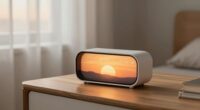
If you use light therapy in the morning, it helps reset your body clock, boosts alertness, and improves sleep quality by signaling daytime cues to your brain. But if you do it in the evening, it can delay sleep onset, suppress melatonin, and disrupt your circadian rhythm. Understanding the timing is essential for getting the best sleep benefits—stick around to learn how to optimize your schedule effectively.
Prime for Young Adults — start your free trial
Fast free delivery, streaming and member deals for eligible 18–24 year olds.
As an affiliate, we earn on qualifying purchases.
Key Takeaways
- Morning light therapy resets circadian rhythms, promoting earlier sleep onset and improved sleep quality.
- Evening light therapy can delay the internal clock, leading to later bedtimes and potential sleep disruptions.
- Proper timing ensures light therapy benefits mood and alertness without impairing natural melatonin production.
- Night-time exposure may suppress melatonin, making falling asleep harder and causing circadian misalignment.
- Consistent morning sessions reinforce natural rhythms, while evening use risks delaying sleep and impairing rest.
light therapy lamp for circadian rhythm
As an affiliate, we earn on qualifying purchases.
As an affiliate, we earn on qualifying purchases.
How Light Therapy Helps Reset Your Body Clock
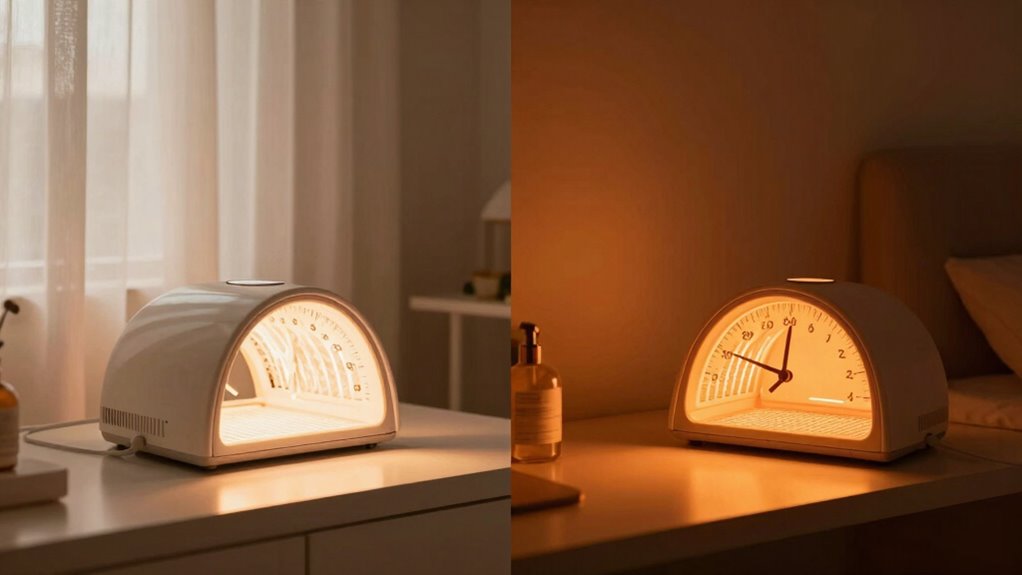
Light therapy works by signaling your brain to adjust your internal clock, also known as your circadian rhythm. The effectiveness depends heavily on light intensity; brighter lights deliver stronger signals that help reset your body’s timing. Additionally, spectrum quality matters—lights that mimic natural sunlight, with a balanced spectrum, are more effective in influencing your circadian rhythm. When you’re exposed to the right light, your brain receives cues about whether it’s day or night, helping you wake up feeling refreshed or wind down naturally. Proper light intensity and spectrum quality guarantee your body clock aligns with your daily schedule, improving sleep patterns and overall alertness. This targeted exposure helps your internal clock stay synchronized with your environment, making light therapy a powerful tool for regulating your biological rhythms. Understanding spectrum quality is crucial, as lights that closely resemble natural sunlight enhance the therapy’s effectiveness and promote better sleep regulation. Moreover, light intensity plays a critical role in ensuring the signals are strong enough to influence your circadian rhythm effectively. Ensuring the correct light spectrum can significantly improve how well your body responds to therapy, leading to more consistent sleep patterns and mood regulation. Additionally, selecting lights with optimal light spectrum quality can enhance your overall well-being by supporting your natural sleep-wake cycle. Research shows that light wave frequencies can influence brain activity, further emphasizing the importance of spectrum accuracy.
Morning Light Therapy: Benefits for Sleep and Wakefulness
Morning light therapy helps reset your internal clock, making it easier to wake up feeling refreshed. It boosts your alertness during the early hours and improves your overall sleep quality at night. By starting your day with light, you set a healthier rhythm for both sleep and wakefulness. Additionally, consistent morning light exposure can support circadian rhythm regulation, leading to more stable sleep patterns over time. Proper light exposure can also help reduce exposure to microplastics in dust, which may impact overall indoor air quality. Incorporating this practice safely involves managing portable oil radiators to prevent hazards like overheating or fire risks.
Regulates Circadian Rhythms
Since your body’s internal clock relies on cues to stay synchronized, exposure to morning light plays a crucial role in regulating your circadian rhythms. When you get natural light in the morning, it signals your brain to adjust melatonin production, helping you feel alert during the day and sleepy at night. This light exposure influences hormone regulation, ensuring your sleep-wake cycle remains consistent. By aligning your internal clock with the outside world, morning light therapy helps prevent circadian misalignment, which can cause sleep issues and fatigue. Regular morning light exposure reinforces your body’s natural rhythm, making it easier to fall asleep at night and wake up refreshed. Proper regulation of circadian rhythms is essential for overall sleep quality and daytime alertness. Natural light benefits can also improve mood and cognitive function, further supporting healthy sleep patterns. Additionally, consistent morning light exposure supports regional cultural practices that emphasize the importance of morning routines for overall well-being. Incorporating morning light exposure into your daily routine is a simple yet effective way to promote sleep health and overall vitality. Moreover, understanding the vetted survival gear can be helpful for outdoor enthusiasts seeking safety during early morning activities or in unpredictable environments.
Boosts Morning Alertness
Exposure to morning light can markedly boost your alertness at the start of the day, helping you wake up feeling more energized and focused. The key lies in the light spectrum and light intensity, which stimulate your brain’s alertness pathways. Bright morning light, especially with a high light intensity, signals your body to suppress melatonin and increase cortisol levels, making you feel more awake. To maximize this effect:
- Make certain exposure occurs within the first hour after waking.
- Use light therapy devices with a broad light spectrum similar to natural sunlight.
- Aim for a light intensity of at least 10,000 lux for peak alertness boost.
- Incorporating inclusive casting practices can enhance the diversity of your morning routine, promoting a more welcoming environment for all.
- Understanding contrast ratio helps in selecting lighting conditions that optimize your alertness without causing discomfort.
- Recognizing the importance of light spectrum can further improve the effectiveness of your therapy sessions. Additionally, choosing lights with an optimal color temperature can make your exposure more effective.
- Proper air purifier maintenance and filter replacement can ensure a healthier environment that supports better sleep quality, amplifying the benefits of morning light therapy.
Consistent morning light exposure helps you feel sharper and more attentive throughout your day.
Enhances Sleep Quality
By aligning your internal clock with natural light patterns, morning light therapy can substantially improve your sleep quality. Increased light exposure early in the day helps regulate your circadian rhythm, making it easier to fall asleep and stay asleep at night. When you incorporate this light into your morning routine, it positively influences your sleep environment, promoting relaxation and a sense of readiness for rest. Consistent light exposure during the morning hours strengthens your sleep-wake cycle, reducing disruptions and improving overall sleep efficiency. You’ll find it easier to establish a regular sleep schedule and wake feeling more refreshed. Proper piercing care and hygiene practices can also contribute to better sleep by preventing discomfort and infection that might otherwise disrupt rest. Additionally, understanding toilet maintenance can prevent issues that may interfere with a peaceful sleep environment, such as plumbing problems or odors. Maintaining a comfortable sleep environment, including proper bedroom hygiene, further supports restful sleep. By optimizing your sleep environment with appropriate morning light, you create a foundation for better sleep quality that lasts.
How Evening Light Therapy Can Disrupt Your Sleep
Using light therapy in the evening can interfere with your sleep by suppressing melatonin production. This disruption can throw off your circadian rhythm, making it harder to fall asleep at night. As a result, you might find yourself struggling to unwind and get restful sleep. Additionally, understanding accessibility features can help you optimize your environment for better sleep hygiene. Proper lighting adjustments are essential to create a sleep-friendly space that supports your natural sleep cycle. Being aware of light exposure timing can further help you align your light therapy routines with your body’s biological clock. Moreover, paying attention to environmental factors can enhance the effectiveness of your sleep hygiene practices. Recognizing the pollution impact of artificial light can guide you in selecting healthier lighting options for your evening routine.
Melatonin Suppression Risks
Evening light therapy can interfere with your body’s natural production of melatonin, the hormone that helps you feel sleepy at night. Exposure to bright light late in the day can suppress melatonin levels, making it harder to fall asleep. This risk increases if you’re exposed to light pollution from screens or outdoor sources, which can intensify melatonin suppression. To protect your eye safety and sleep quality, consider these points:
- Limit exposure duration and brightness during evening sessions.
- Use proper eye protection and avoid direct glare.
- Be mindful of ambient light sources that contribute to light pollution.
Ignoring these risks might lead to chronic sleep difficulties and disrupt your circadian rhythm, emphasizing the importance of timing and light management in evening therapy routines.
Circadian Rhythm Disruption
When you expose yourself to bright light late in the day, it can throw your body’s internal clock off balance. Evening light therapy, especially during seasonal affective periods, can delay your circadian rhythm, making it harder to fall asleep at night. This disruption resembles the effects of jet lag, where your internal clock is misaligned with your environment. Instead of helping you adjust, late-day light can extend wakefulness and suppress melatonin when your body expects to wind down. Over time, this misalignment hampers your sleep quality and can lead to ongoing fatigue. If you’re using light therapy to manage mood or seasonal affective disorder, timing matters. Properly timed morning light helps synchronize your circadian rhythm, whereas evening exposure risks disrupting it.
Difficulty Falling Asleep
If you expose yourself to bright light late in the day, it can make falling asleep more difficult. Evening light therapy can interfere with your sleep hygiene by delaying your natural bedtime. To avoid disruption, consider these points:
- It can shift your circadian rhythm, making it harder to feel sleepy at your usual time.
- Bright light late in the evening suppresses melatonin, the hormone that signals sleep.
- Disrupted bedtime routines can become less effective, prolonging the time it takes to fall asleep.
This interference can lead to poor sleep quality and difficulty maintaining consistent sleep schedules. To protect your sleep, it’s essential to practice good sleep hygiene and stick to a calming bedtime routine, especially when using light therapy in the evening.
When and How to Use Light Therapy for Better Sleep
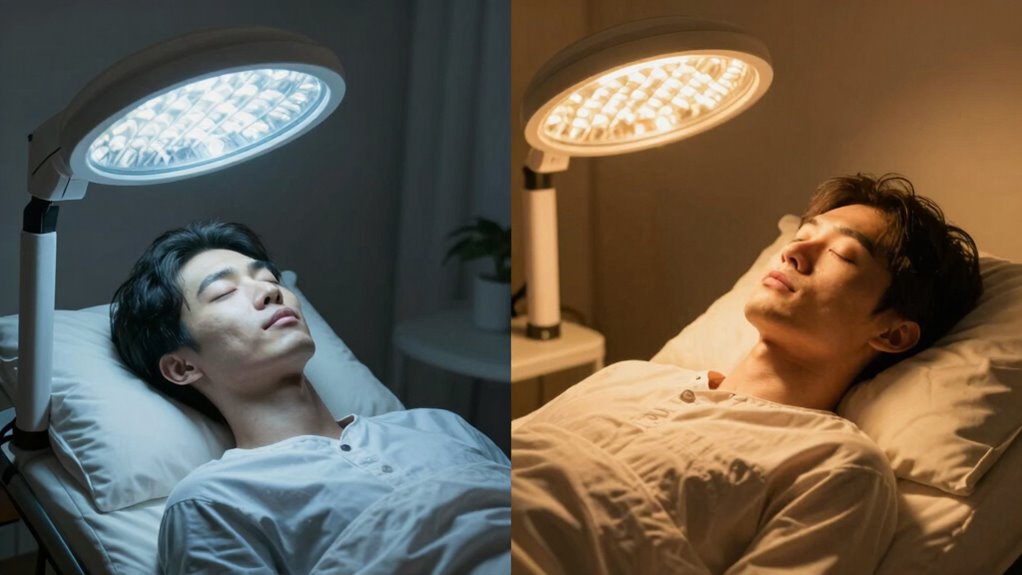
Choosing the right time and method to use light therapy can substantially improve your sleep quality. For best results, aim for a consistent schedule, either in the morning or evening, based on your sleep goals. The key is to use a light with the appropriate light intensity—around 10,000 lux works well—and stick to a set session duration, usually 20-30 minutes. Use the light at eye level, but avoid looking directly into it. Here’s a quick guide:
| When to Use | Key Tips |
|---|---|
| Morning | Bright light upon waking |
| Evening | Dimmer light before bed |
| Duration | 20-30 minutes per session |
| Consistency | Same time daily |
| Intensity | 10,000 lux for effective results |
Common Mistakes to Avoid With Light Therapy

To get the most benefits from light therapy, it’s essential to avoid common mistakes that can undermine its effectiveness. One key error is using incorrect timing, which can disrupt your circadian rhythm rather than support it. Second, overuse of light can lead to overstimulation, causing sleep difficulties or alertness when you need rest. To prevent these issues, keep these points in mind:
Avoid incorrect timing and overuse to maximize light therapy benefits and support your sleep cycle.
- Stick to recommended timing—morning for most, evening only if advised.
- Limit sessions to the suggested duration; longer isn’t better.
- Avoid continuous or excessive exposure throughout the day.
Personalizing Your Light Therapy Schedule for Your Sleep Needs
Since everyone’s sleep needs and routines differ, tailoring your light therapy schedule can maximize its benefits. For seasonal affective disorder or jet lag recovery, timing is key. Morning light therapy helps advance your sleep phase, while evening sessions can delay it. Consider your specific goals and daily routine to choose the best approach.
| Goal | Recommended Timing |
|---|---|
| Improve mood, SAD | Morning light therapy |
| Adjust sleep phase | Evening light therapy |
| Jet lag recovery | Morning or evening based on travel direction |
| Personal preference | Experiment with timing |
| Sleep quality | Consistent schedule |
Frequently Asked Questions
Can Light Therapy Improve Sleep Quality Without Affecting Circadian Rhythms?
Yes, light therapy can improve sleep quality without markedly affecting your circadian rhythms. If you use it at the right time, you can minimize circadian disruption and avoid melatonin suppression, which helps maintain your natural sleep-wake cycle. For example, exposure to bright light in the morning can boost alertness without disturbing nighttime melatonin production, leading to better sleep without compromising your circadian health.
How Does Light Therapy Impact Mood Aside From Sleep Regulation?
Light therapy boosts your mood by stimulating the production of serotonin, helping you feel more positive and energized. It also aids in stress reduction by regulating your body’s internal clock, which stabilizes your emotional responses. Regular exposure to bright light can combat feelings of depression and anxiety, making you feel calmer and more balanced throughout the day. This simple treatment can markedly enhance your overall emotional well-being beyond just improving sleep.
Is There a Risk of Dependency on Light Therapy for Sleep Issues?
You might worry about dependency concerns with light therapy, but it’s unlikely you’ll develop tolerance or become dependent if you use it appropriately. Light therapy is a tool to regulate your circadian rhythm, not a medication that causes reliance. To avoid issues, follow your healthcare provider’s guidelines, take breaks if needed, and don’t use it excessively. Proper use minimizes the risk of tolerance development and dependency concerns.
Can Light Therapy Be Effective for Shift Workers With Irregular Schedules?
Yes, light therapy can be effective for shift workers facing irregular schedules and shift work challenges. By using timed light exposure, you can help reset your circadian rhythm, making it easier to sleep during daylight hours and stay alert during night shifts. Incorporate light therapy as part of your irregular schedule solutions, but guarantee you follow a consistent routine and consult a healthcare professional to maximize benefits and avoid disruption.
What Are the Long-Term Effects of Daily Morning Versus Evening Light Therapy?
Long-term, morning light therapy helps reduce circadian disruption and supports your natural sleep-wake cycle, leading to better sleep quality. It minimizes melatonin suppression during the day, so you stay alert without disturbing your nighttime sleep. Evening light therapy, however, can cause ongoing circadian misalignment and increase melatonin suppression at night, potentially disrupting your sleep patterns over time. Consistent morning exposure generally offers more sustainable benefits for your circadian health.
Conclusion
Choosing morning light therapy can energize your day and set a healthy sleep rhythm, while evening sessions might disrupt your rest and leave you tossing. It’s a delicate balance—your body’s natural clock depends on timing. By understanding the impact of light at different times, you can harness its power to improve sleep or avoid unnecessary disruption. Your best sleep awaits when you align light therapy with your unique rhythm, not against it.
Flea & tick season Picks
flea and tick prevention
As an affiliate, we earn on qualifying purchases.