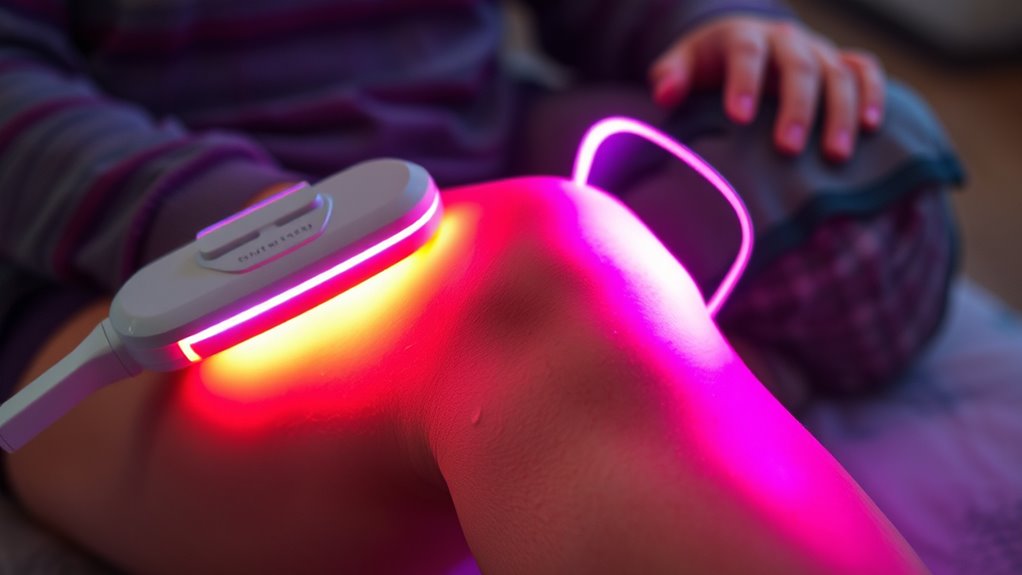

Near-infrared therapy uses specific light wavelengths to naturally boost your circulation, speed up healing, and ease pain. It works by activating your mitochondria, increasing cellular energy, and promoting tissue repair. This non-invasive treatment improves blood flow, reducing inflammation and enhancing overall tissue health. With proper device use and safety guidelines, you can experience soothing, healing benefits. If you’re interested in how this therapy can support your recovery, there’s more to discover below.
Key Takeaways
- Near-infrared therapy stimulates cellular activity by activating mitochondria, increasing ATP production, and promoting tissue repair.
- It improves circulation by enhancing blood flow, delivering oxygen and nutrients essential for healing.
- The therapy reduces inflammation and pain, supporting faster recovery of tissues.
- Safe devices incorporate features like automatic shutoff and proper wavelength controls for effective treatment.
- Regular use can accelerate healing, improve tissue health, and is a non-invasive, painless wellness option.
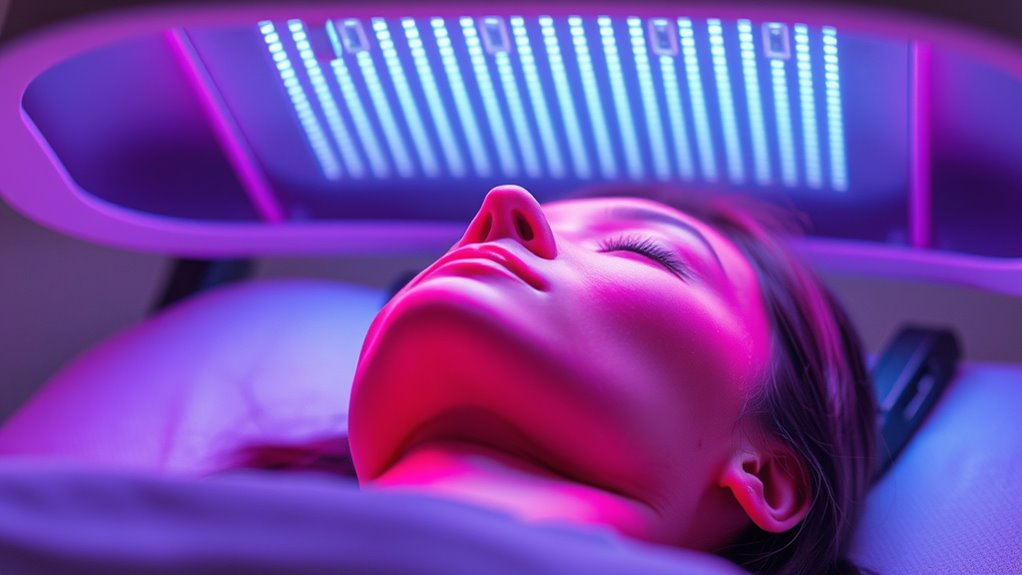
Ever wondered how near-infrared therapy can boost your health and well-being? This innovative approach uses light in the near-infrared spectrum to stimulate your body’s natural healing processes. Researchers have been delving into photobiomodulation research, which examines how specific wavelengths of light can influence cellular activity, reduce inflammation, and promote tissue repair. When you use a proper infrared device, you’re tapping into a scientifically backed method that encourages improved circulation and faster healing. But, it’s crucial to understand infrared device safety to guarantee you’re benefiting without risking harm. Reputable devices are designed with safety features, such as automatic shutoff and appropriate power levels, giving you confidence during use.
By applying near-infrared light to targeted areas, you activate your mitochondria—the energy powerhouses within your cells—leading to increased production of ATP, the molecule responsible for energy transfer. This boost in cellular energy helps your tissues recover more quickly from injury, reduces pain, and enhances blood flow. As circulation improves, you notice better oxygen and nutrient delivery to tissues, which can accelerate healing of wounds, reduce inflammation, and support overall tissue health. This process is non-invasive, painless, and can be easily integrated into your wellness routine. Many users report feeling a warm, soothing sensation during treatment, which adds to the relaxing experience.
It’s worth noting that current photobiomodulation research continues to shed light on how near-infrared therapy benefits various health conditions, from sports injuries to chronic pain. Scientific studies support its safety when used correctly, but you should always follow manufacturer instructions and consult healthcare providers if you have underlying health issues. Guaranteeing proper infrared device safety means choosing certified devices and avoiding overuse, which can sometimes lead to skin irritation or eye discomfort if not handled with care.
In essence, near-infrared therapy offers a promising, scientifically supported method to enhance your circulation and healing. By understanding the principles behind photobiomodulation research and prioritizing infrared device safety, you can confidently incorporate this therapy into your health regimen. With consistent use, many find that their recovery times shorten, pain diminishes, and their overall vitality improves. Just remember to stay informed, select quality devices, and listen to your body’s response to maximize benefits safely.
Frequently Asked Questions
Are There Any Known Side Effects of Near-Infrared Therapy?
You might experience potential skin irritation or eye safety concerns when using near-infrared therapy. Some users notice redness or discomfort on their skin after sessions, and there’s a risk if you look directly into the light without proper protection. To minimize side effects, follow safety guidelines, wear protective eyewear, and avoid overexposure. Always consult a healthcare professional if you have sensitive skin or eye conditions before starting therapy.
How Long Does Each Therapy Session Typically Last?
Each therapy session usually lasts about 15 to 30 minutes, depending on your treatment plan. You might have sessions multiple times a week initially, then reduce the frequency as you see improvements. It’s important to follow your healthcare provider’s recommendations for session duration and treatment frequency to get the best results and minimize any risks. Consistency and adherence to the prescribed schedule help optimize your healing process.
Can Near-Infrared Therapy Be Combined With Other Treatments?
Yes, you can combine near-infrared therapy with other treatments. Combining therapies often enhances healing and circulation benefits, making your recovery more effective. You might use complementary treatments like physical therapy, massage, or medication alongside near-infrared sessions. Just consult your healthcare provider to guarantee these treatments work well together and to customize your plan for maximum results without any risks.
Is Near-Infrared Therapy Suitable for All Age Groups?
Did you know that nearly 60% of adults report benefits from near-infrared therapy? It’s generally safe for most age groups, but you should consider age considerations and pediatric suitability. While adults often experience improved circulation and healing, children’s developing bodies require careful assessment before treatment. Always consult a healthcare professional to determine if near-infrared therapy is appropriate for your age or your child’s specific health needs.
How Soon Can I Expect to See Results From the Therapy?
You can typically expect to see visible improvements within a few sessions, usually after about 1 to 3 weeks of treatment. The treatment timeline varies depending on your condition and response, but many people notice increased circulation, reduced pain, or faster healing early on. Consistent sessions are key, so stay committed to your therapy schedule to achieve the best results and monitor your progress over time.
Conclusion
As you embrace near-infrared therapy, you open better circulation and faster healing. Imagine the relief of renewed vitality, yet also recognize the struggles you’ve faced with slow recovery. This technology offers hope where despair once lingered, bridging the gap between discomfort and comfort. By harnessing the power of light, you take control of your well-being, turning pain into progress. It’s not just therapy; it’s a chance to reclaim your life and restore hope.