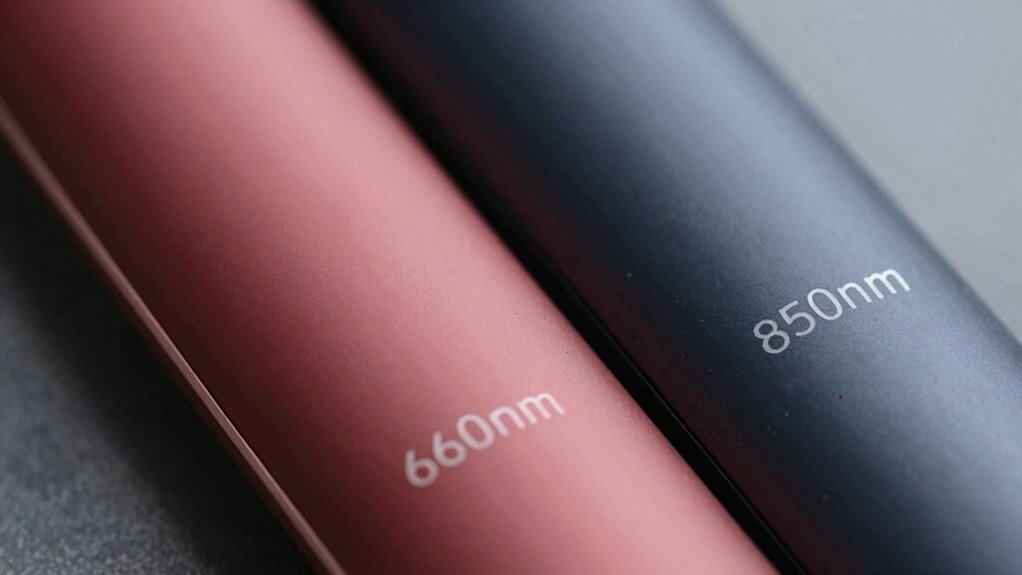

Choosing the right combo of 660nm and 850nm wavelengths isn’t as simple as it looks because each targets different tissues. The 660nm works best for surface treatments like skin issues, while 850nm penetrates deeper into muscles and joints. Your decision depends on whether you’re aiming at surface or internal problems. Understand these differences to optimize your therapy—stay with us to discover how to make the perfect choice for your needs.

Get wellness gear delivered free with Prime
- Fast, free delivery on millions of items
- Prime Video, Amazon Music and more included
- Member-only deals all year
Key Takeaways
- Combining wavelengths offers versatility, but selecting the right one depends on whether surface or deep tissue treatment is needed.
- 660nm is ideal for superficial skin issues, while 850nm targets deeper tissues like muscles and joints.
- Consider treatment depth requirements; deeper penetration favors 850nm, while surface issues benefit from 660nm.
- Compatibility of the device with single or dual wavelengths influences treatment flexibility and effectiveness.
- Clarify your specific treatment goals to choose the wavelength or combination that best targets your condition.
When choosing between 660nm and 850nm wavelengths for your device, the decision may seem straightforward at first glance. Both are common in light therapy and laser devices, but their differences can significantly influence your results. The key factors to consider are laser penetration and wavelength compatibility with your specific needs. The 660nm wavelength, which falls in the red light spectrum, is well-known for its superficial laser penetration. It targets surface-level tissues, making it ideal for skin conditions, surface wounds, and cosmetic applications. Its effectiveness diminishes as you go deeper, so it’s less suited for reaching internal structures. Conversely, the 850nm wavelength, part of the near-infrared spectrum, penetrates much deeper into tissues. This feature makes it more suitable for targeting muscles, joints, and other internal areas that require deeper laser penetration. When you need to treat deeper layers, 850nm is often the better choice because of its superior wavelength compatibility with internal tissues.
Additionally, laser penetration depth plays a crucial role in determining the effectiveness of your treatment, especially when addressing specific medical or cosmetic concerns. The decision isn’t just about how deep the laser can go; it’s also about what you’re aiming to achieve. If your goal is to improve skin tone, reduce surface inflammation, or enhance superficial healing, the 660nm wavelength might be enough. Its laser penetration is sufficient for these purposes, and it tends to be more effective at stimulating surface cells. On the other hand, if you’re dealing with chronic joint pain, muscle injuries, or deeper tissue inflammation, the 850nm wavelength’s deeper laser penetration will likely deliver better results. It can reach the internal tissues that need treatment, making it more versatile for complex or stubborn conditions.
Compatibility with your device is another critical factor. Wavelength compatibility refers to how well your device’s laser output matches the specific tissues or conditions you want to treat. Some devices combine both wavelengths precisely for this reason, giving you flexibility. If you’re choosing a single-wavelength device, consider what your primary needs are. The 660nm is excellent for superficial work, while the 850nm excels in penetrating deeper tissues. Understanding these distinctions helps you make a more informed choice, ensuring that your device delivers laser penetration where it’s needed most. Additionally, considering device versatility can help you adapt to different treatment scenarios more effectively.
In the end, your choice hinges on your treatment goals and the depth of laser penetration required. Recognizing the importance of wavelength compatibility and laser penetration depth ensures you select the right device for your specific needs. It’s not just about the simplicity of the combo, but about how well each wavelength aligns with your intended outcomes.
As an affiliate, we earn on qualifying purchases.
Frequently Asked Questions
How Do I Determine the Best Wavelength Combo for My Application?
You determine the best wavelength combo by considering your application’s versatility and the required wavelength precision. Think about the target tissue or material—660nm offers deeper penetration, while 850nm provides better signal clarity. Assess your specific needs, such as depth or resolution, and match them with these wavelengths. Testing different combinations helps guarantee you select the ideal blend for your application, balancing precision and versatility effectively.
Are There Differences in Durability Between 660NM and 850NM Devices?
Think of device durability as a sturdy ship steering through rough seas. Generally, 850nm devices often boast greater material resistance, leading to longer device longevity under harsh conditions. While 660nm devices may be more sensitive to environmental factors, the choice depends on your application’s demands. Consider the environment’s stressors, and you’ll find the device with the right material resilience to keep your project sailing smoothly for the long haul.
What Safety Precautions Should I Consider When Using These Wavelengths?
When using 660nm and 850nm devices, prioritize laser safety by always wearing appropriate eye protection designed for these wavelengths. Avoid direct eye exposure and never point the laser at people or reflective surfaces. Confirm your workspace is clear, and follow manufacturer instructions carefully. Regularly check safety equipment and keep unauthorized personnel away. These precautions help prevent eye injuries and ensure safe, effective use of your laser devices.
Can These Wavelengths Be Used Together in the Same Device?
Yes, these wavelengths can be used together in the same device. Combining 660nm and 850nm LEDs enhances color contrast and improves power efficiency, making your device more effective. You’ll want to guarantee proper calibration and safety measures, but integrating both wavelengths allows for versatile applications. Just keep in mind that managing heat and ensuring consistent output are key to maintaining peak performance with this combo.
How Does Ambient Lighting Affect the Performance of 660NM and 850NM LEDS?
Like a lighthouse piercing through fog, ambient lighting can substantially impact your LED performance. It causes light interference, reducing the contrast between the LED’s emitted light and surrounding illumination. For 660nm and 850nm LEDs, this diminishes effectiveness, especially in environments with strong or inconsistent lighting. To optimize performance, control ambient light or use shielding, ensuring your device maintains clear color contrast and reliable operation.
Conclusion
Choosing between 660nm and 850nm might seem straightforward at first, like picking between two familiar paths. But once you’re in the thick of it, you’ll realize it’s more like maneuvering a complex maze—each turn holds new surprises. Trust your needs as your compass. Remember, the right choice isn’t just about the specs; it’s about finding the perfect fit for your journey. Stay confident—you’re steering your own course through this luminous labyrinth.
Halloween Picks
halloween
As an affiliate, we earn on qualifying purchases.