
Blue-light therapy targets acne by penetrating your skin to reach bacteria like Propionibacterium acnes, producing reactive oxygen species that kill these bacteria. It also reduces inflammation, swelling, and redness, making your skin look clearer and calmer. This treatment is safe, non-invasive, and suitable for sensitive skin, with minimal side effects. Regular sessions can lead to noticeable improvements, so if you keep exploring, you’ll discover how this innovative approach can help manage your acne effectively.
Key Takeaways
- Blue-light therapy penetrates skin to target Propionibacterium acnes bacteria, reducing their growth and bacterial load on the skin.
- It produces reactive oxygen species that kill bacteria and decrease inflammation associated with acne.
- The treatment offers a safe, non-invasive, and chemical-free option suitable for sensitive skin with minimal side effects.
- Regular sessions help diminish redness, swelling, and future breakouts by reducing bacteria and inflammation.
- Blue-light therapy can be an effective, gentle adjunct or alternative to traditional acne treatments with consistent use.

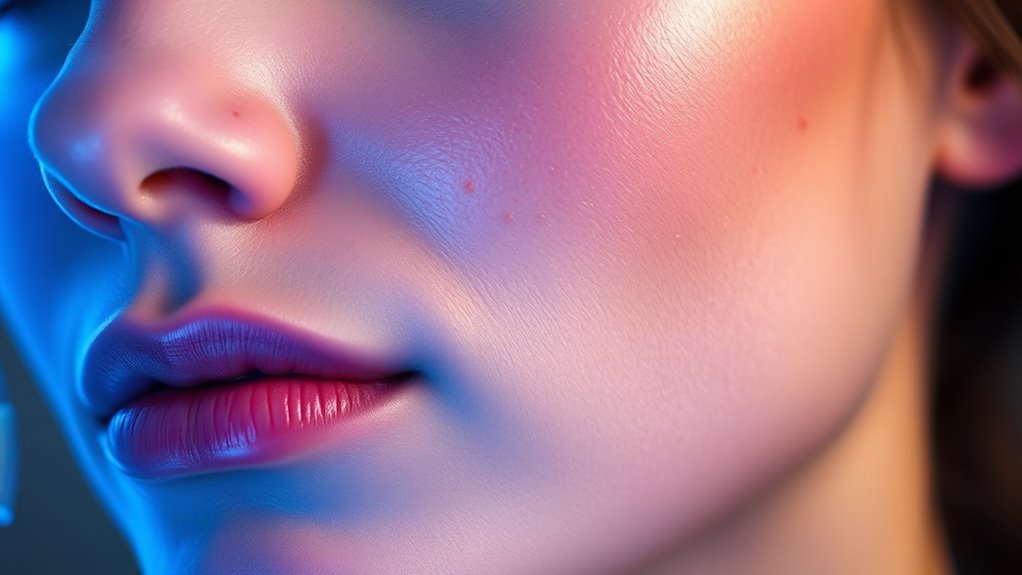
If you’re struggling with acne, blue-light therapy offers a promising, non-invasive treatment option. This approach leverages specific wavelengths of blue light to target the root causes of acne, making it an appealing alternative or complement to traditional medications. One of the main reasons blue-light therapy is effective is due to its proven blue light efficacy in reducing acne-causing bacteria. When you undergo treatment, the blue light penetrates your skin and reaches the sebaceous glands where acne bacteria, particularly Propionibacterium acnes, thrive. These bacteria produce substances that contribute to inflammation and pus formation. The blue light interacts with these bacteria, producing reactive oxygen species that effectively kill or inhibit their growth. This process reduces the bacterial load on your skin, which is often a significant factor in acne development.
The beauty of blue-light therapy lies in its ability to specifically target acne bacteria without harming surrounding tissue. Unlike some topical treatments that can cause irritation or drying, blue light is gentle and doesn’t involve chemicals. It’s a safe, drug-free option for many people, especially those with sensitive skin or who prefer to avoid harsh medications. Regular sessions can lead to noticeable improvements over time by decreasing the number of bacteria and, consequently, the inflammation they cause. This reduction in inflammation not only lessens redness and swelling but also helps prevent future breakouts, making blue-light therapy a proactive measure for managing persistent acne.
Moreover, blue-light therapy’s benefits extend beyond bacterial eradication. It also has an anti-inflammatory effect, which can calm existing pimples and reduce overall skin redness. This dual action — killing bacteria and reducing inflammation — makes it effective for mild to moderate cases of acne. You might see some results after just a few sessions, but consistent treatment is key to maintaining clearer skin. Many clinics recommend a series of sessions spaced out over several weeks to maximize benefits. One of the advantages of blue-light therapy is its minimal side effects; you’re unlikely to experience dryness or irritation typical of some topical medicines.
Frequently Asked Questions
How Does Blue-Light Therapy Compare to Topical Acne Treatments?
Blue-light therapy often provides faster bacterial reduction and deeper light penetration compared to topical treatments. While topical medications target acne-causing bacteria and reduce inflammation directly on the skin surface, blue light penetrates more deeply, effectively targeting bacteria beneath the skin. This non-invasive approach minimizes side effects and can complement topical treatments, giving you an all-encompassing acne management plan. However, results vary, so consult your dermatologist for personalized advice.
Are There Any Side Effects From Blue-Light Therapy?
You might experience some potential skin irritation after blue-light therapy, but serious side effects are rare. Notably, studies show over 80% of users report minimal discomfort. However, eye safety concerns are valid; it’s recommended to wear protective glasses to prevent eye damage. Overall, blue-light therapy is generally safe, but you should follow safety guidelines to avoid potential side effects like skin irritation and protect your eyes.
Can Blue-Light Therapy Prevent Future Breakouts?
Blue-light therapy can help prevent future breakouts by reducing bacteria and inflammation, offering notable preventative benefits. Regular treatments may improve your skin’s health over time, leading to fewer pimples and less severe flare-ups. While long-term effects vary, consistent use can strengthen your skin’s resilience against acne triggers. Keep in mind, combining therapy with good skincare habits maximizes these preventative benefits, helping you maintain clearer skin longer.
How Long Does Each Blue-Light Therapy Session Typically Last?
Surprisingly, your blue-light therapy session usually lasts about 15 to 30 minutes. You’ll want to stick to a consistent treatment frequency—often a few times a week—to see results. While it might seem like a quick fix, don’t expect miracles overnight. Each session is brief, but the real magic happens with regularity, targeting bacteria and inflammation. So, patience and commitment are your best allies in this skincare journey.
Is Blue-Light Therapy Suitable for All Skin Types?
Blue-light therapy is generally suitable for most skin types, but if you have sensitive skin or conditions like rosacea, you should consult your dermatologist first. They can assess your skin sensitivity and recommend an appropriate treatment frequency to minimize irritation. While many people tolerate blue-light therapy well, individual responses vary, so monitoring your skin’s reaction after sessions is vital to guarantee safe and effective acne treatment.
Conclusion
Now that you know how blue-light therapy can target bacteria and reduce inflammation, aren’t you curious about trying it? This non-invasive treatment offers a promising option for clearer skin without harsh chemicals. By incorporating blue-light therapy into your skincare routine, you could see significant improvements over time. Isn’t it worth exploring new ways to combat acne and boost your confidence? Take the first step toward healthier skin today—your future self will thank you!