To get the best results, choose post-workout recovery devices based on the specific body area you’re targeting. For legs, use massage guns and compression sleeves to boost circulation and reduce soreness. For arms and shoulders, rely on vibration or handheld massagers for precise relief. Back recovery benefits from foam rollers and electric massagers, while core muscles respond well to vibration therapy. Keep exploring to discover which devices suit your needs best and maximize your recovery efforts.
Prime for Young Adults — start your free trial
Fast free delivery, streaming and member deals for eligible 18–24 year olds.
As an affiliate, we earn on qualifying purchases.
Key Takeaways
- Select devices tailored to specific muscle groups for targeted relief and more effective recovery.
- Use massage and compression tools designed for the legs to reduce swelling and muscle knots.
- Choose handheld or focused devices for upper body muscles like arms and shoulders to ensure precision.
- Opt for foam rollers and deep-tissue massagers for back muscles to release tightness and improve circulation.
- Incorporate vibration or localized therapy devices for core muscles to enhance blood flow and stability recovery.
After a tough workout, your muscles need proper recovery to repair and strengthen, and that’s where post-workout recovery devices come into play. These devices are designed to target specific areas of your body, helping reduce muscle fatigue and promote circulation enhancement. Choosing the right device for each body part can considerably improve your recovery process, making your workouts more effective and minimizing downtime.
Post-workout recovery devices target specific muscles to reduce fatigue and speed up healing.
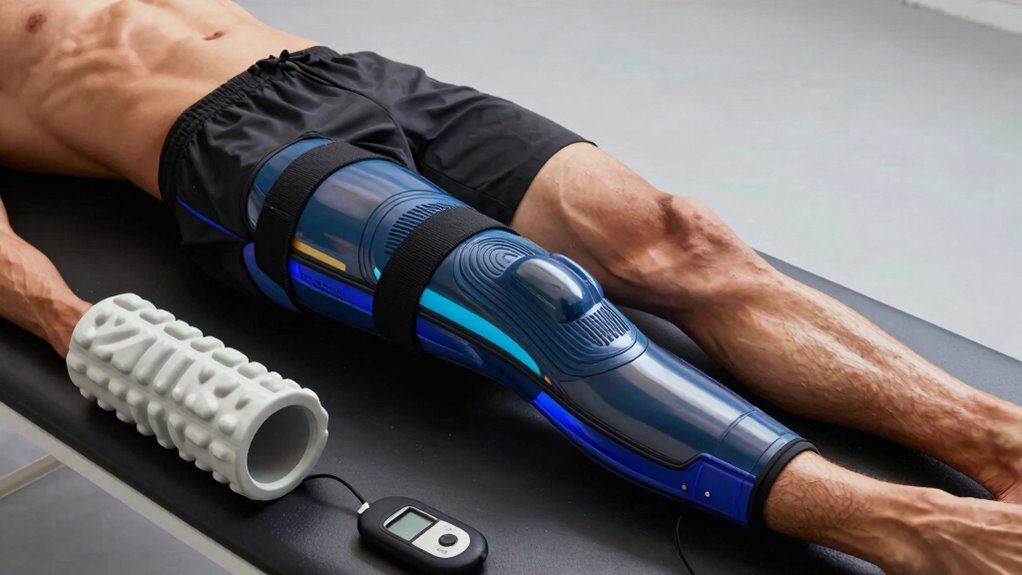
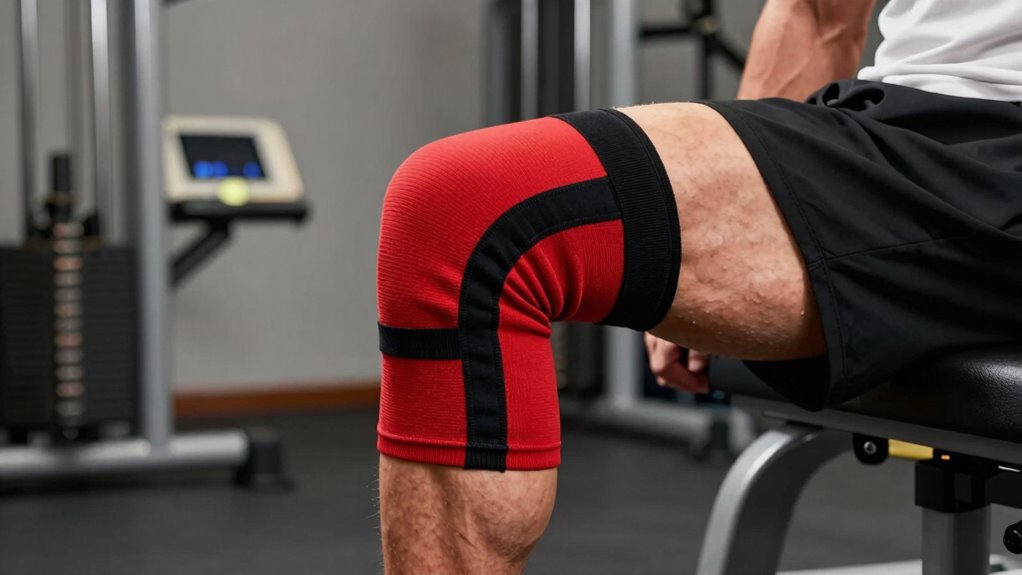
When it comes to your legs, for example, massage guns and compression sleeves are excellent options. Leg muscles often experience the most strain during cardio or weight training, leading to soreness and tightness. Using a massage gun on your quads, hamstrings, and calves can break up knots and improve blood flow, easing muscle fatigue. Similarly, compression sleeves apply gentle pressure, which helps boost circulation and reduce swelling, speeding up recovery. These devices focus on large muscle groups, guaranteeing that your legs recover quickly and are ready for your next session.
For your arms and shoulders, targeted massage and vibration devices work well to alleviate muscle fatigue caused by lifting or pushing exercises. These devices can be used on biceps, triceps, and shoulder muscles to stimulate blood flow, which enhances circulation and supplies more oxygen and nutrients to fatigued tissues. This not only reduces soreness but also accelerates muscle repair. Compact, handheld devices are ideal here because they allow you to focus on smaller, more precise areas, guaranteeing that every muscle fiber gets the attention it needs. Incorporating body area-specific recovery strategies can also help prevent injuries and imbalances. Recognizing the importance of muscle recovery techniques can further optimize your overall training and prevent long-term issues.
Your back, often a neglected area, benefits from specific recovery tools like foam rollers and electric massagers. Back muscles can tense up after heavy lifting or long periods of sitting, leading to stiffness and discomfort. Using foam rollers helps release muscle tightness and improve circulation. Electric massagers with multiple settings can penetrate deeper tissues, encouraging blood flow and reducing muscle fatigue. These devices help loosen tight muscles, prevent injury, and support overall recovery. Incorporating muscle tension relief techniques into your routine can optimize your results and prevent future issues.
Finally, for your core and abdominal muscles, vibration plates or localized massage devices can be effective. These areas often don’t get as much attention but are vital for overall strength and stability. Vibration therapy stimulates circulation and helps muscles recover faster by increasing blood flow to the area. Choosing devices that focus on the core ensures balanced recovery and prepares you for your next workout.
As an affiliate, we earn on qualifying purchases.
Frequently Asked Questions
How Do Recovery Devices Differ for Various Body Parts?
Recovery devices differ for various body parts because they target specific issues like muscle fatigue or joint mobility. For example, compression sleeves work well on legs to reduce swelling and improve circulation, while massage tools help relax tight muscles in the back. You should choose devices based on the body area, focusing on what you need most—whether it’s easing muscle fatigue or enhancing joint mobility—to maximize your recovery.
Are There Specific Devices for Injury Prevention?
Yes, there are specific devices for injury prevention that you can use. Foam rollers, compression sleeves, and targeted braces help improve muscle stability and reduce injury risk. These devices are effective because they promote proper alignment, enhance circulation, and support vulnerable areas. Using the right injury prevention device guarantees you stay safe during activity, and its effectiveness depends on matching the device to your specific needs and body area.
Can Recovery Devices Replace Traditional Stretching Routines?
Recovery devices can’t fully replace traditional stretching routines, but they complement them well. While stretching promotes muscle relaxation and improves flexibility, recovery devices enhance circulatory health and accelerate healing. Combining both approaches offers a balanced post-workout strategy, ensuring muscles stay relaxed and blood flow remains ideal. So, instead of replacing, view recovery devices as an essential addition that amplifies the benefits of your stretching routine.
How Often Should I Use Recovery Devices?
You should use recovery devices as often as recommended, usually 2-3 times a week, to optimize benefits. Thanks to technology advancements, these devices now offer enhanced user experience, making recovery sessions more effective and comfortable. Pay attention to your body’s responses, and adjust frequency accordingly. Consistent use helps reduce soreness and improve performance, but overuse can cause discomfort, so balance is key for best results.
Are Recovery Devices Suitable for All Fitness Levels?
Recovery devices suit all fitness levels, whether you’re a beginner or pro. Just like mindfulness techniques help manage stress, these tools support your body’s healing process. Combining recovery devices with proper nutritional supplements maximizes results. If you’re new, start gently, and gradually increase intensity. With consistent use, you’ll notice benefits, proving that recovery tools are adaptable and valuable regardless of your fitness journey.
Conclusion
Choosing the right recovery device for your body area makes a real difference in how quickly you bounce back. Did you know that improper recovery can increase injury risk by up to 30%? By focusing on targeted devices, you’ll not only speed up healing but also prevent setbacks. So, invest wisely in body-specific tools—they’re your best allies for staying strong and injury-free in the long run. Your body will thank you!
Fall yard work Picks
leaf blowers
As an affiliate, we earn on qualifying purchases.