The most practical way to add light therapy to a recovery day is to use an affordable light therapy box each morning. Place it where you can comfortably spend 20-30 minutes, with your eyes open but not staring into the bulb. Try to do this at the same time every day, ideally during the first hour after waking. Incorporating outdoor walks in natural light further boosts benefits. Keep these habits simple, and you’ll discover effective ways to support your recovery journey.
Key Takeaways
- Use a light therapy box for 20-30 minutes each morning during the first hour after waking.
- Place the box at eye level without staring directly into the light.
- Incorporate outdoor walks in natural sunlight for added benefits.
- Maintain a consistent schedule to regulate your circadian rhythm.
- Combine light therapy with outdoor activities to maximize mood and alertness.
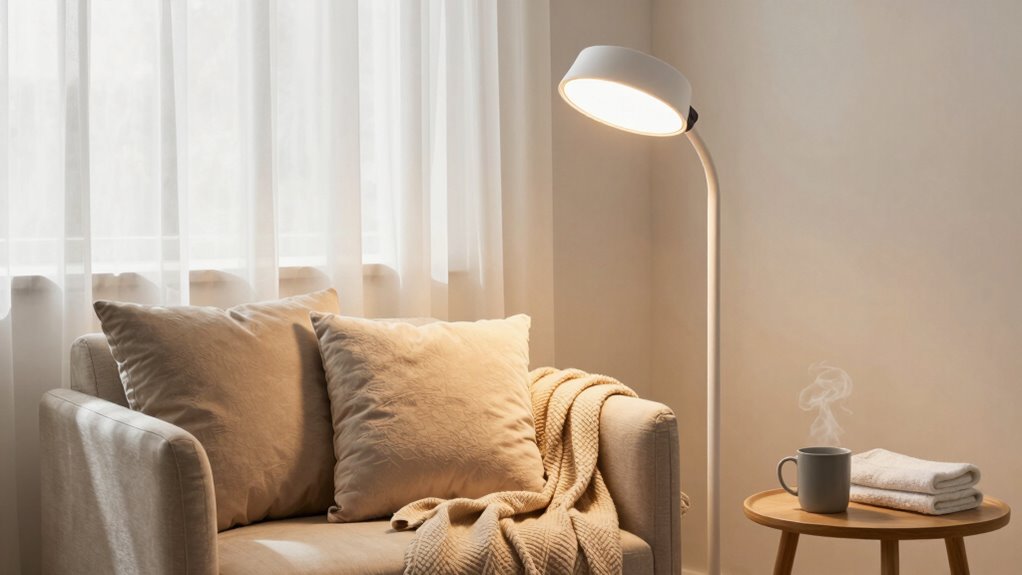
If you’re looking to boost your recovery day, adding light therapy can be a simple yet effective step. Light therapy is known for its ability to improve sleep quality and mental clarity, making it a valuable addition when you’re focusing on rest and rejuvenation. Unlike more complicated treatments, incorporating light therapy into your routine doesn’t require much time or equipment—just a commitment to consistency.
The most practical way to do this is to use a light therapy box, which mimics natural sunlight. Place it in a spot where you’ll spend at least 20-30 minutes each morning. When you sit in front of the light, guarantee your eyes are open, but you don’t need to stare directly into the bulb. The goal is to expose your eyes to the light, which signals your brain to regulate your internal clock more effectively. This setup helps regulate your circadian rhythm, leading to better sleep quality at night, especially if you’ve been feeling groggy or restless. Over time, this can help you wake up feeling more refreshed and alert, ready to make the most of your recovery day.
Beyond sleep quality, light therapy also boosts mental clarity. When you get enough exposure to bright light during the day, your brain produces more serotonin, which enhances mood and focus. This can be particularly beneficial if your recovery day involves gentle activities like stretching, meditation, or light walking. The increased mental clarity helps you stay present and engaged, reducing any foggy or sluggish feelings that sometimes accompany rest days. Incorporating biodiversity-conscious practices such as outdoor walks in natural light can further enhance these benefits by connecting you with nature’s restorative environments. Additionally, understanding the importance of light exposure and how it influences your circadian rhythms can help you optimize your routine for better results.
To maximize benefits, try to stick with a consistent schedule. Use your light therapy box at the same time each morning—preferably during the first hour after waking. Consistency helps your body adapt to a new rhythm, making sleep improvements more sustainable. If you’re sensitive to light, start with shorter sessions and gradually increase the duration. Incorporating light therapy devices into your routine is a safe and effective way to support your overall recovery. Recognizing how natural sunlight plays a crucial role in this process can motivate you to spend more time outdoors, complementing your indoor light therapy sessions.
Incorporating light therapy into your recovery routine is straightforward and cost-effective. It requires minimal effort but offers significant benefits for sleep quality and mental clarity. By making it a daily habit, you’ll support your body’s natural rhythms, enhance your mood, and wake up feeling more rested and focused—perfect for making your recovery day truly restorative.

SUXIO Light Therapy Lamp – 10000 Lux Therapy Light, 3 Timing & Mode Happy Lamp, Touch Control Daylight Lamp with Memory Function, Portable Light Therapy Box for Home/Office Use As Lift Mood
- 3 Light Modes: Adjustable 4000-10000 Lux levels
- 3 Timer Settings: 30, 60, 90-minute options
- Memory Function: Remembers last used settings
As an affiliate, we earn on qualifying purchases.
As an affiliate, we earn on qualifying purchases.
Frequently Asked Questions
Can Light Therapy Improve Sleep Quality During Recovery?
Yes, light therapy can improve your sleep quality during recovery by regulating your circadian rhythm. Exposure to bright light at specific times helps reset your body’s internal clock, making it easier to fall asleep and wake up refreshed. Additionally, light therapy boosts mood enhancement, which can reduce stress and anxiety that often disrupt sleep. Incorporating light therapy into your routine can support better sleep and overall recovery.
Is Light Therapy Safe for All Skin Types?
Is light therapy safe for all skin types? Absolutely, but beware—like a double-edged sword, it can pose risks if misused. People with sensitive skin should approach it cautiously, as increased UV exposure may cause irritation or redness. Always start with shorter sessions and consult a professional to guarantee your skin sensitivity doesn’t turn into a problem. Proper use makes light therapy a safe, effective tool for recovery.
How Long Should Each Light Therapy Session Last?
You should aim for light therapy sessions lasting about 10 to 20 minutes, depending on your skin’s response and the device’s light intensity. Start with shorter sessions to see how your skin reacts, then gradually increase the duration if needed. Always follow the manufacturer’s guidelines and consult a professional if you experience any discomfort. Modifying session duration guarantees you get effective benefits without overexposure.
Are There Any Side Effects From Daily Light Therapy Use?
While daily light therapy is generally safe, you might experience mild skin irritation or need to watch your eye safety. These side effects are usually temporary and manageable, especially if you follow recommended guidelines. To reduce risks, avoid overexposure, wear eye protection if advised, and keep the light at the proper distance. If you notice persistent discomfort, consult a healthcare professional to guarantee safe and effective use.
Can Light Therapy Replace Other Recovery Methods?
Light therapy can’t fully replace other recovery methods, but it can be a helpful supplement. Alternative methods like proper rest, hydration, and recovery supplements address different aspects of healing. Incorporating light therapy into your routine boosts energy and mood, enhancing overall recovery. Use it alongside these methods for a well-rounded approach, but don’t rely on it solely—diversity in recovery strategies is essential for the best results.
Conclusion
Adding light therapy to your recovery day is simple and effective. Just a few minutes under a light box can boost your mood and enhance healing. Did you know that light therapy can increase serotonin levels by up to 50%, helping you feel more energized and balanced? Incorporate this easy practice into your routine, and you’ll support your recovery while improving your overall well-being. It’s a practical step toward feeling better, faster.