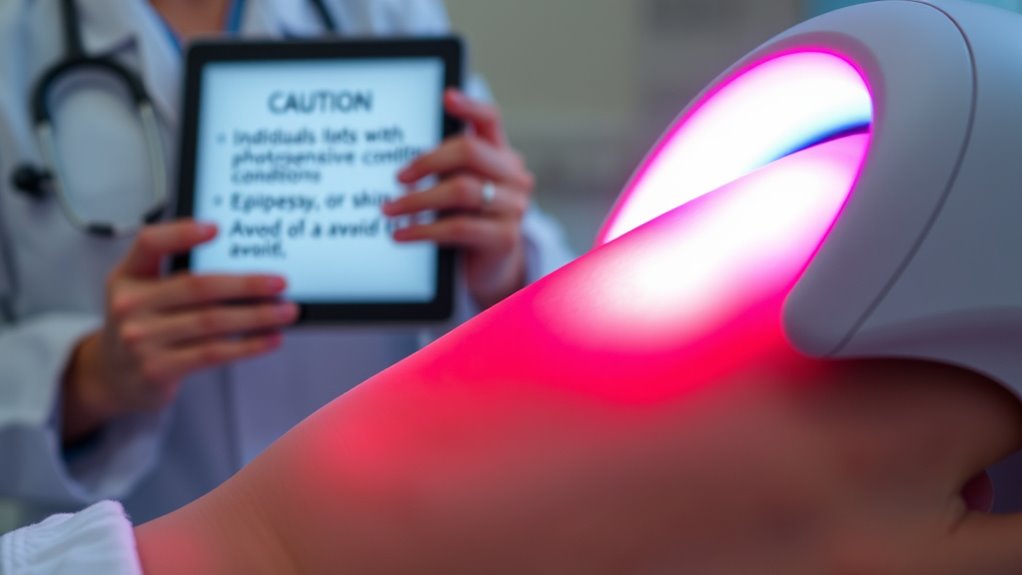

If you’re pregnant, have photosensitive skin conditions, or take photosensitizing medications, it’s best to avoid red and blue light therapy. People with active skin infections, open wounds, or a history of skin cancer should also steer clear. Those with eye issues or prone to skin irritation need to take extra precautions. Understanding these safety considerations can help you determine if this therapy is right for you; exploring further will provide more helpful insights.

Get wellness gear delivered free — and shop member deals
- Fast, free delivery on millions of items
- Access to Prime Big Deal Days deals on October 6–7
- Prime Video, Amazon Music and more included
Key Takeaways
- Pregnant individuals should consult healthcare providers before undergoing red or blue light therapy.
- Those with photosensitive skin conditions like lupus must avoid light therapy unless cleared by a doctor.
- Patients taking photosensitizing medications should seek medical advice prior to treatment.
- People with active skin infections, open wounds, or severe skin conditions should wait until healed.
- Individuals with eye issues or suspicious skin growths should use protective measures or avoid therapy altogether.
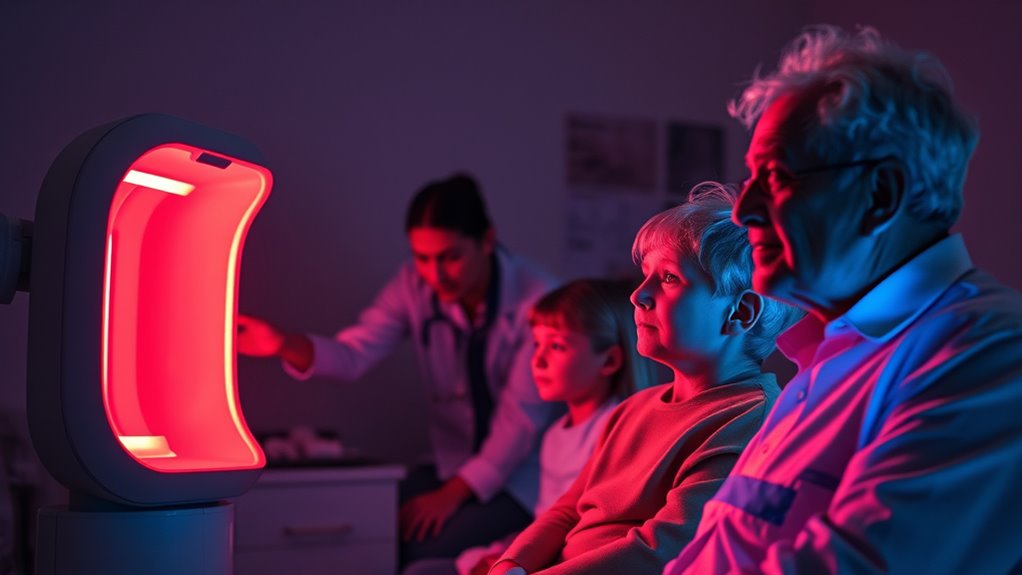
Have you ever wondered why safety considerations are essential before starting any project or activity? When it comes to red and blue light therapy, understanding who should avoid these treatments is indispensable to ensure your safety and well-being. Not everyone is suitable for this type of therapy, and ignoring contraindications can lead to unwanted side effects or even harm. Before you schedule a session, it’s important to know whether you fall into a category that may experience adverse effects or complications.
Certain health conditions make red and blue light therapy contraindicated. For example, if you’re pregnant, it’s advisable to consult your healthcare provider before proceeding. While these treatments are generally safe, there’s limited research on their effects during pregnancy, and caution is always recommended. People with photosensitive conditions, such as lupus or certain skin disorders, should avoid light therapies because exposure might exacerbate symptoms or trigger flare-ups. If you’re taking medications that increase photosensitivity—like some antibiotics, retinoids, or antidepressants—you may be at higher risk for side effects such as skin irritation or burns. These medications can make your skin more vulnerable to light exposure, so discussing your medication list with a professional beforehand is wise.
Avoid light therapy if pregnant, have photosensitive conditions, or take photosensitizing medications.
Individuals with active skin infections, open wounds, or severe eczema should also refrain from light therapy until their skin heals. Applying light therapy to compromised skin might cause irritation or worsen the condition. Similarly, if you have a history of skin cancer or suspect any abnormal skin growths, it’s best to get a thorough evaluation from a healthcare provider before undergoing treatment. This precaution helps prevent potential stimulation of abnormal cells, which could increase risks.
While side effects from red and blue light therapy are rare, they do exist. Some individuals might experience mild redness, dryness, or temporary swelling after sessions. In sensitive cases, these effects are usually short-lived, but persistent irritation should prompt you to seek medical advice. Overexposure or improper use can lead to burns or skin discoloration, especially if safety guidelines aren’t followed. People with certain eye conditions need to protect their eyes during treatment, since the light could cause discomfort or damage if not used with appropriate eye protection.
red and blue light therapy safety goggles
As an affiliate, we earn on qualifying purchases.
As an affiliate, we earn on qualifying purchases.
Frequently Asked Questions
Can Children Safely Use Red and Blue Light Therapy?
Children can use red and blue light therapy, but you should prioritize pediatric safety and consult a healthcare professional beforehand. Kids have more sensitive skin and eyes, increasing light exposure risks. Always guarantee the device is suitable for children and follow recommended guidelines. Avoid prolonged sessions, and monitor for any adverse reactions. Proper supervision minimizes potential risks, making therapy safer for children when used responsibly.
Is Red and Blue Light Therapy Suitable During Pregnancy?
Like a knight in shining armor, you want to safeguard yourself during pregnancy. Red and blue light therapy isn’t typically recommended because of potential pregnancy safety concerns. Light therapy contraindications include hormonal changes and skin sensitivity, which can be heightened during pregnancy. Always consult your healthcare provider before trying these treatments while pregnant to ensure safety for both you and your baby. Better safe than sorry!
Are There Skin Types That Should Avoid Light Therapy?
You should be cautious if you have very sensitive skin or are prone to sun sensitivity, as these factors can impact skin compatibility with light therapy. People with darker skin tones or existing skin conditions might experience less effective results or irritation. It’s best to consult a dermatologist beforehand, especially if you have any skin concerns, to ensure that light therapy is safe and suitable for your specific skin type.
Can Individuals With Photosensitivity Use Red and Blue Light?
Did you know that up to 8% of the population has photosensitivity risks? If you have photosensitivity, you should steer clear of red and blue light therapy or consult your healthcare provider first. Light therapy precautions are essential because the exposure could worsen your condition or cause discomfort. Always discuss your photosensitivity with a professional, and consider alternative treatments to ensure your safety and effectiveness.
What Are the Long-Term Effects of Repeated Light Therapy Sessions?
Repeated sessions of red and blue light therapy can lead to long-term effects like skin sensitivity or irritation, but serious issues are rare with proper use. You might notice improved skin texture, reduced inflammation, or clearer complexion over time. However, consistency and duration matter—overdoing it could cause adverse reactions. Always follow recommended guidelines and consult a professional to minimize risks and maximize benefits from your repeated light therapy sessions.
Conclusion
If you ignore these safety tips, you could release chaos on your skin and health like a superhero gone rogue! Some folks, like pregnant women, those with certain medical conditions, or photosensitive individuals, should steer clear of red and blue light therapy altogether. Don’t risk turning your wellness routine into a full-blown disaster. Play it safe, follow the guidelines, and keep your health superhero status intact—because a little caution saves you from a world of trouble!
Cold & flu season Picks
humidifiers
As an affiliate, we earn on qualifying purchases.