
To build a 12-week hair-growth routine you’ll stick to, start by setting clear goals and evaluating your hair and scalp type. Choose targeted, quality products suited to your needs, and create a simple, flexible schedule that fits your lifestyle. Incorporate regular scalp massages, scalp treatments, and track your progress to stay motivated. Consistency and adjusting your routine based on results are key—keep going, and you’ll see real progress over time.
Key Takeaways
- Set clear, realistic goals and assess your hair and scalp to tailor a routine that matches your hair type and lifestyle.
- Choose high-quality, suitable products with proven ingredients to ensure effective and consistent application.
- Create a flexible schedule by integrating simple, manageable daily and weekly treatments aligned with your routine.
- Incorporate scalp massages and track progress regularly to stay motivated and adjust your routine as needed.
- Maintain consistency over 12 weeks, adapt to your hair’s response, and celebrate milestones to stay committed.
Why Setting Clear Goals Is Key to Your 12-Week Hair Growth Routine
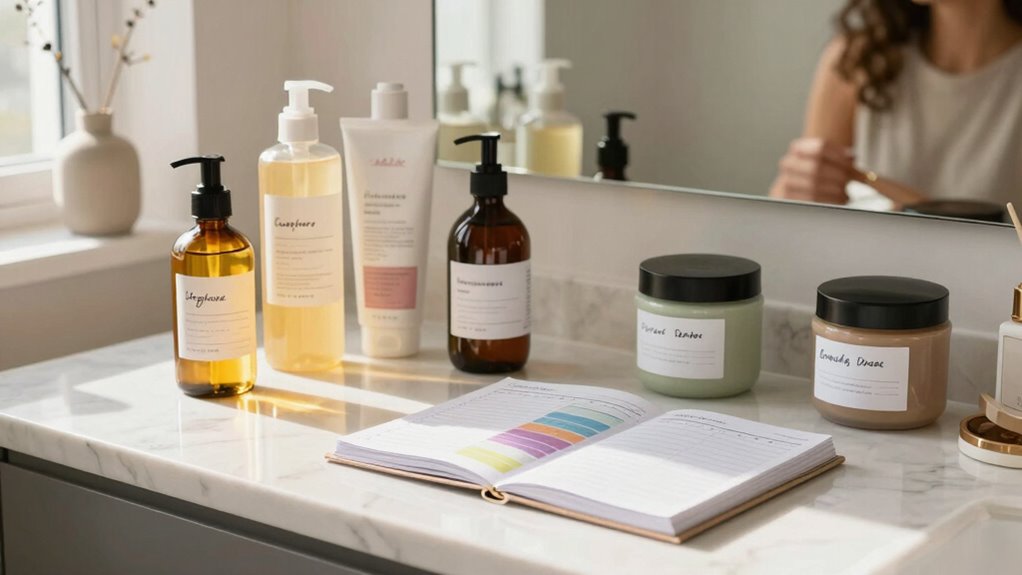
Setting clear goals is essential because it gives your 12-week hair growth routine a focused direction. Without specific objectives, you might fall prey to hair care myths or make common mistakes that hinder progress. For example, believing that frequent shampooing boosts growth or that cutting hair often accelerates length can set you back. By establishing realistic goals, you can avoid these pitfalls and tailor your routine effectively. Knowing what you want to achieve—like increased length, healthier scalp, or improved shine—helps you stay motivated and track progress. Clear goals also help you identify what to prioritize, whether it’s deep conditioning or scalp massage, ensuring you don’t waste time on ineffective practices. Understanding hair growth science can empower you to make informed decisions about your hair care strategies. This focused approach keeps your routine consistent and results-oriented. Additionally, recognizing individual hair types and conditions can help you customize your routine further, ensuring better results. Being aware of hair health fundamentals allows for more precise adjustments to your routine based on your unique needs.
How to Assess Your Hair Type and Scalp for Better Results
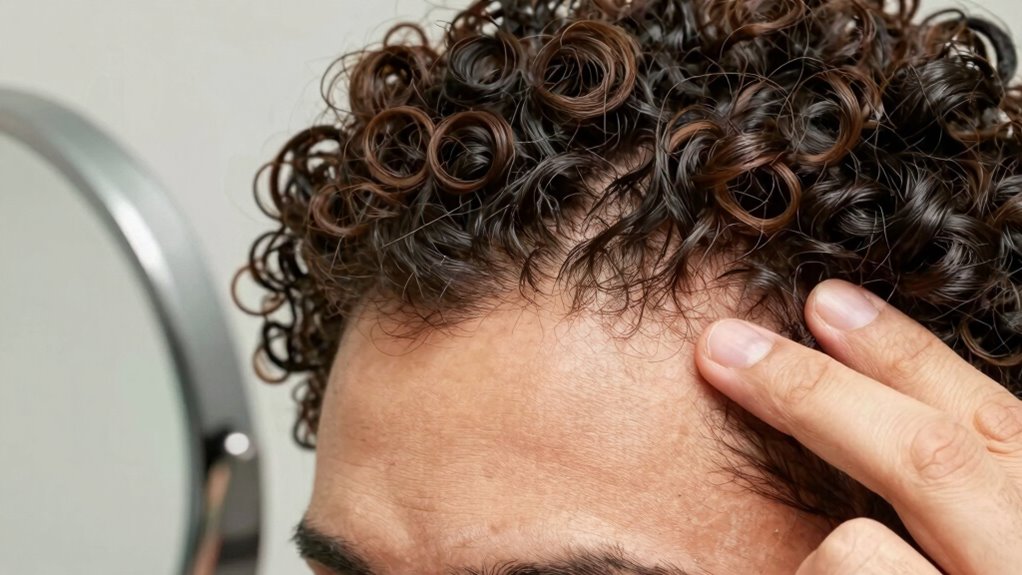
To get the most effective results, you need to understand your hair type and scalp condition clearly. This means identifying whether your hair is straight, wavy, or curly, and checking if your scalp feels dry, oily, or balanced. By accurately evaluating these factors, you can tailor your routine for ideal hair growth. Recognizing hair texture and scalp health can also help you choose the right products to support your hair’s unique needs. Paying attention to your Free Floating environment can contribute to maintaining a healthy scalp and hair, especially as outdoor conditions impact overall hair health. Additionally, being aware of cycling traffic and urban pollution levels can help you develop better protective measures for your hair and scalp during outdoor activities. Understanding the impact of environmental pollutants on scalp health is crucial for long-term hair growth and vitality. Incorporating knowledge about pollution protection strategies can further safeguard your scalp from harmful external factors.
Identify Hair Type Precisely
Understanding your hair type and scalp condition is essential for creating an effective hair-growth routine. To do this, you need to identify your hair porosity and scalp sensitivity accurately. Hair porosity affects how moisture enters and exits your hair, influencing your choice of products. Scalp sensitivity determines how your scalp reacts to different ingredients and treatments. To assess these, perform simple tests: pinch a strand of hair to check porosity, and observe how your scalp reacts to new products. Use the table below for clarity:
| Hair Porosity | Scalp Sensitivity | Hair Texture |
|---|---|---|
| Low porosity | Sensitive | Fine |
| High porosity | Non-sensitive | Coarse |
| Normal porosity | Mild sensitivity | Wavy |
| Very high porosity | Highly sensitive | Curly |
Additionally, understanding your scalp’s response can help you select suitable scalp care products and avoid irritation. Recognizing the importance of hair porosity can guide you in choosing the right moisturizing and sealing techniques to improve hair health.
Evaluate Scalp Condition Effectively
How can you accurately evaluate your scalp condition and hair type to optimize your hair-growth routine? Start by examining your scalp’s scalp health—look for signs of dryness, oiliness, flakiness, or irritation. Use a mirror or take photos to spot buildup or inflammation. Check your hair density by parting your hair in different areas; note if it feels thin or if there are visible scalp areas. Understanding your scalp health helps determine whether you need moisture, clarifying treatments, or scalp stimulation. Recognizing your hair type—curly, straight, fine, or coarse—also influences your product choices. Regularly assessing these factors ensures your routine targets your specific needs, promoting healthier scalp conditions and maximizing hair density over your 12-week journey. Additionally, staying informed about artificial intelligence advancements can help you explore innovative tools or apps designed to monitor scalp health more accurately. Incorporating scientific assessments can further enhance the precision of your evaluations and tailor your routine more effectively, especially as emerging diagnostic technologies become more accessible for at-home use. Being aware of a variety of diagnostic tools can help you identify underlying issues that may affect your hair growth, and utilizing body piercing aftercare tips can be useful if you have a piercing on your scalp or nearby areas that require special attention.
Choosing the Best Hair Care Products for Hair Growth

Choosing the right products starts with identifying ingredients that promote hair growth, like biotin or caffeine. You also want to pick products suited for your hair type, whether curly, straight, or fine. Doing so guarantees your routine supports healthy, faster-growing hair. Additionally, using products designed to minimize cable failures can help maintain a consistent hair-care routine without interruptions. Incorporating preventative maintenance strategies can further ensure your products work effectively over time. Being aware of regional influences on hair health can also guide you in selecting products that cater to your specific environment and hair needs. Understanding product longevity and proper storage can preserve product efficacy and support sustained hair growth. Being mindful of hair porosity can also help you choose products that better penetrate and nourish your hair strands.
Choosing Growth-Boosting Ingredients
Selecting the right ingredients is essential for boosting hair growth, as not all products deliver the same results. Look for herbal extracts like rosemary or saw palmetto, which can stimulate follicles. Essential oils such as peppermint or lavender improve scalp circulation and promote growth. To help you choose, here’s a quick comparison:
| Ingredient Type | Benefits |
|---|---|
| Herbal extracts | Nourish scalp, reduce inflammation |
| Essential oils | Stimulate circulation, invigorate scalp |
| Proteins | Strengthen hair strands |
| Vitamins (e.g., B7) | Support follicle health |
| Natural oils | Moisturize and prevent breakage |
Prioritize products containing these ingredients to maximize growth potential and maintain scalp health. Understanding ingredient efficacy can help you make more informed choices for your hair-care routine. Additionally, paying attention to product formulation quality can further enhance results. Choosing products with clinically proven ingredients ensures you are using formulations that have demonstrated effectiveness in promoting hair growth. Incorporating consistent application into your routine is equally important for achieving noticeable improvements over time.
Selecting Suitable Hair Types
To effectively promote hair growth, it’s essential to find products that match your specific hair type. Whether you have straight, wavy, curly, or coily hair, choosing the right products enhances hair health and guarantees better results. For instance, lightweight formulas work well for fine hair, preventing buildup, while richer creams nourish thicker textures. Pay attention to product compatibility with your hair’s needs—look for ingredients that target your scalp’s condition and hair strength. Using incompatible products can lead to dryness, breakage, or slow growth. By selecting hair care tailored to your hair type, you support overall hair health and create a solid foundation for your 12-week routine. Remember, the right match boosts your chances of sticking to your plan and seeing real progress.
How to Create a Weekly Hair Care Schedule That Fits Your Life
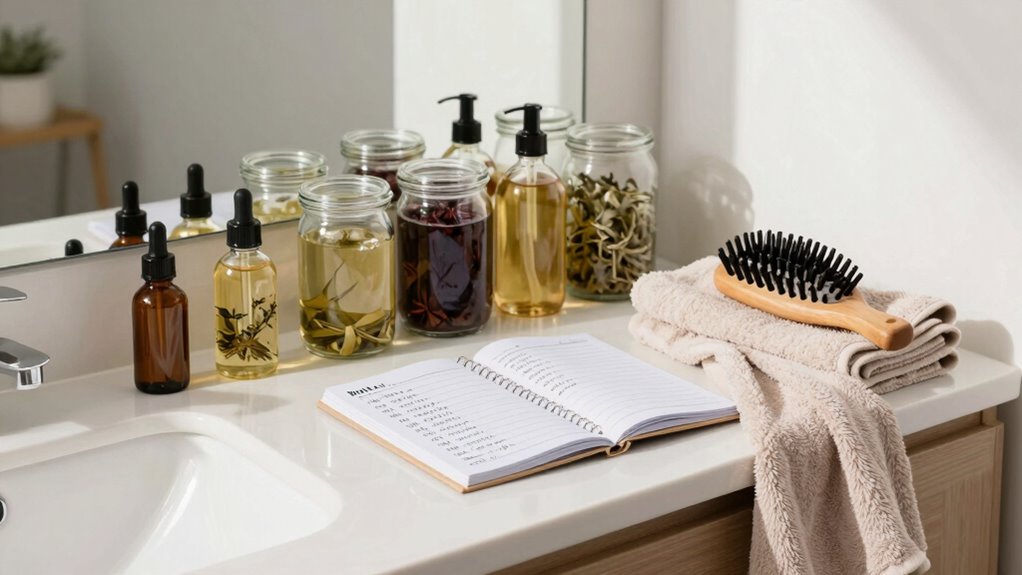
Creating a weekly hair care schedule that fits your lifestyle might seem challenging at first, but it becomes easier once you assess your routine and priorities. The key is integrating simple, consistent hair care routines into your daily and weekly activities. Consider your schedule and identify when you can realistically dedicate time for washing, conditioning, or applying treatments. Use the table below to plan your routine based on your lifestyle integration:
| Lifestyle Type | Suggested Hair Care Routine |
|---|---|
| Busy professional | Wash twice a week, minimal styling, quick treatments |
| Active/athletic | Wash after workouts, deep conditioning weekly |
| Minimalist | Simplify with gentle cleansing, occasional treatments |
| Luxury-focused | Weekly deep treatments, regular scalp massages |
| Low-maintenance | Co-wash, light leave-in, and protective styles |
How Often Should You Use Hair Growth Products?
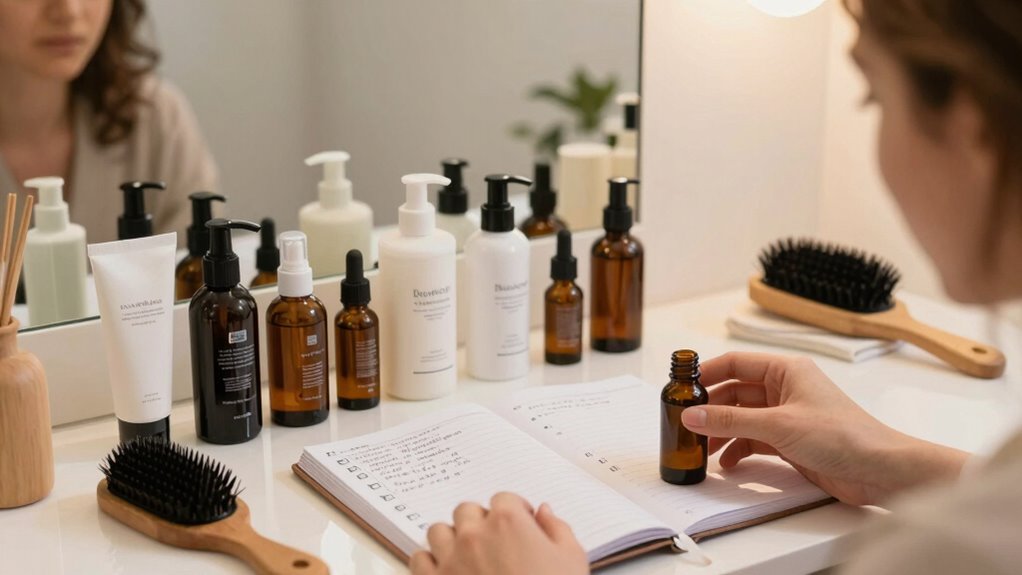
Determining how often to use hair growth products depends on your hair type, goals, and the specific products you’re applying. Many hair care myths suggest using products daily, but overdoing it can cause buildup or irritation. Generally, follow the instructions on each product; some are best used every few days, while others may be daily. If you’re considering salon treatments, keep in mind that they often focus on scalp health rather than frequent product application. Consistency is key, but so is listening to your hair’s response. Avoid the trap of thinking more products mean faster growth; this isn’t true and can lead to damage. Finding the right balance helps you maximize results without risking unnecessary harm to your hair.
Adding Scalp Massages and Treatments for Faster Growth

Adding scalp massages and targeted treatments can substantially boost your hair growth efforts. Incorporate effective scalp massage techniques, like gentle circular motions with your fingertips, to stimulate blood flow and activate hair follicles. Regular massages help loosen buildup, improve circulation, and promote healthier growth. Using specific hair treatments, such as scalp serums or oils rich in nutrients, can enhance these benefits. The hair treatment benefits include strengthening strands, reducing breakage, and nourishing your scalp at the root. Consistency is key—spend a few minutes daily on scalp massages and include treatments a few times a week. This approach not only encourages faster growth but also supports overall scalp health, making it a crucial part of your 12-week routine.
Tracking Your Progress and Adjusting Your Routine
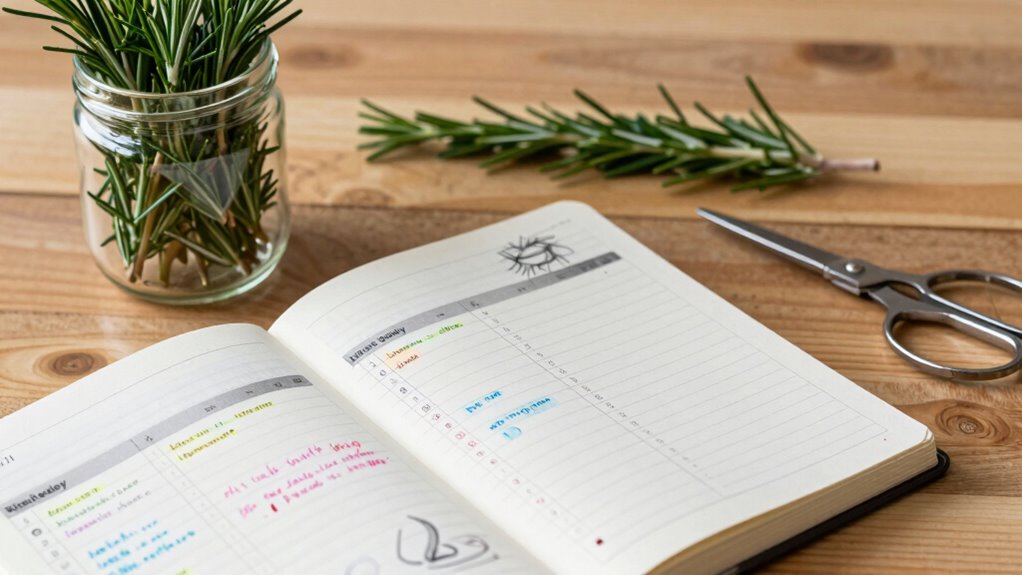
Tracking your progress is essential to make certain your hair-growth routine stays effective. Keep a journal or photos to monitor changes in length, texture, and overall health. Note any adjustments you make to your styling techniques or hair color, as these can impact growth. If you notice your hair color fading or your styling methods causing breakage, tweak your approach accordingly. Regularly assess how your hair responds to treatments and whether your routine feels sustainable. By staying attentive, you can identify what works best and make informed adjustments. This proactive approach helps you stay motivated, avoid setbacks, and ensures your 12-week plan leads to noticeable, healthy growth.
Tips to Stay Motivated and Build Consistency

Staying motivated and maintaining consistency are key to seeing real results from your 12-week hair-growth routine. To keep yourself on track, employ motivational strategies like setting small, achievable goals and celebrating progress. Habit formation is essential—make your routine a non-negotiable part of your day. To help, try creating a visual reminder or schedule that reinforces your commitment. Use this chart to stay organized:
| Motivation Tip | Habit-Forming Strategy |
|---|---|
| Track progress regularly | Establish a specific daily time |
| Reward yourself for milestones | Pair routine with another habit |
These simple tools keep your focus sharp and your routine sustainable, turning healthy hair growth into a lasting habit.
Frequently Asked Questions
Can My Hair Grow Faster With Supplements or Vitamins?
Taking supplements or vitamins can support faster hair growth, but they mainly provide essential nutrients your hair needs. Hair supplement benefits include improving overall health and potentially boosting growth, especially if you’re deficient. To maximize results, guarantee good vitamin absorption by taking them with a healthy diet. While they won’t drastically speed up growth alone, they help your hair grow stronger and healthier, complementing your routine effectively.
How Do I Prevent Hair Breakage During Growth?
Sure, you can prevent hair breakage during growth—just avoid the temptation to yank, twist, or pull your hair like you’re trying to start a lawnmower. Instead, opt for protective styles that shield your strands and practice gentle detangling to minimize stress. Keep your hair moisturized, avoid harsh chemicals, and handle your hair with care. With patience and TLC, your hair will thank you by growing strong and healthy.
Are Natural Oils More Effective Than Commercial Products?
Natural oils often provide better oil benefits for your hair because they nourish deeply and are gentle, helping prevent damage and breakage. Commercial products can be effective too, but their effectiveness varies based on ingredients and formulation. If you want consistent results, choose oils like argan or coconut, which boost moisture and strength naturally. Combining natural oils with commercial products can maximize hair health and support your growth routine.
Should I Trim My Hair During the 12-Week Routine?
Yes, you should trim your hair during the 12-week routine! Think of your trimming schedule as the secret weapon for unstoppable growth. By sticking to a consistent haircut frequency, you’ll banish split ends and boost hair strength—like giving your strands a superhero cape! Regular trims keep your hair looking fresh, healthy, and ready to grow longer, faster, and more fabulous than ever before.
How Do Weather Changes Affect My Hair Growth Plan?
Weather changes can impact your hair growth plan considerably. Seasonal humidity may cause your hair to become frizzy or limp, affecting your routine’s effectiveness. Temperature fluctuations can dry out your scalp or increase oil production, making it harder to maintain consistent growth. Adjust your hair care by using hydrating products during dry, cold months and lightweight formulas in humid seasons. Staying flexible helps you adapt and stay on track with your routine year-round.
Conclusion
Sticking to your 12-week hair growth routine really pays off. Think of Sarah, who committed consistently and saw noticeable length gains in just a few months. The key is persistence—adjust as needed, celebrate small wins, and stay motivated. Remember, your routine is unique to you, so trust the process. With dedication and patience, you’ll be amazed at what your hair can achieve. Keep going—you’re closer than you think!