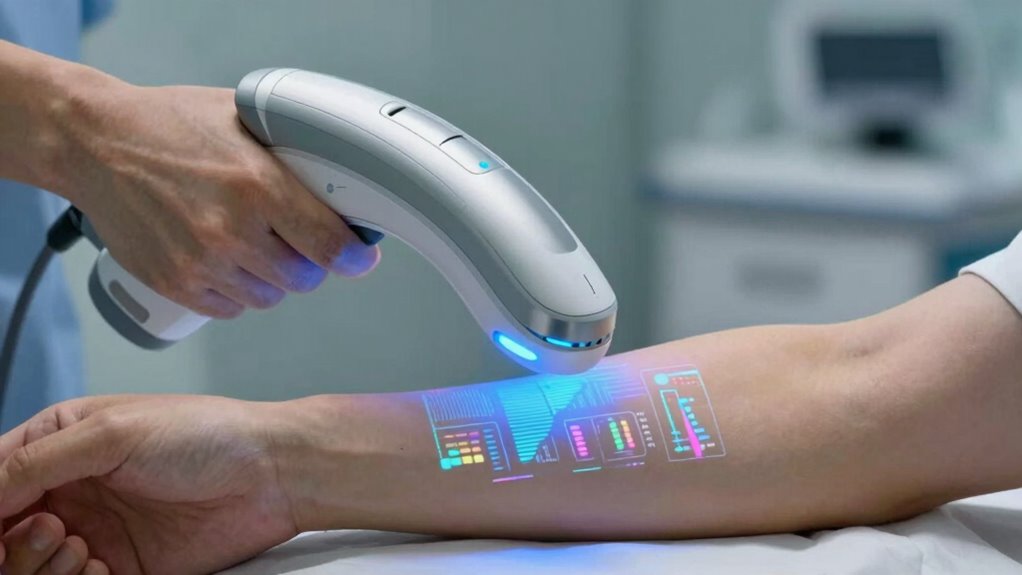

To use AI skin scanner data responsibly, remember it’s a helpful tool, not a diagnosis. Focus on trends over time and avoid jumping to conclusions from minor or ambiguous results. Always consider the scanner’s limitations, like lighting and device accuracy, and consult professionals for serious concerns. Keep realistic expectations, and don’t let fear or minor findings cause unnecessary stress—if you keep exploring, you’ll discover how to interpret results effectively and protect your skin health.
Key Takeaways
- Remember that AI skin scans provide insights, not definitive diagnoses; interpret results with caution and avoid immediate concern.
- Focus on long-term skin health indicators like hydration and tone rather than reacting to isolated or minor findings.
- Use scan data to track changes over time, but always consult professionals for any suspicious or persistent issues.
- Be aware of the scanner’s limitations and avoid overreacting to false positives or ambiguous results.
- Prioritize professional medical advice for significant concerns and maintain realistic expectations about what AI scans can reveal.
How Do AI Skin Scanners Work and What Skin Issues Can They Detect?

AI skin scanners analyze your skin using advanced imaging technology and machine learning algorithms. They can detect variations in skin pigmentation, helping identify uneven tones or discoloration. These devices also assess sun damage, revealing areas where UV exposure has affected your skin, even if these spots aren’t visible to the naked eye. By capturing high-resolution images, AI can analyze patterns that indicate potential issues like hyperpigmentation or early signs of skin aging caused by sun exposure. This comprehensive analysis can be influenced by color accuracy, and the device’s calibration, affecting the reliability of the results. Additionally, software updates and regular maintenance are essential to ensure consistent performance and accurate readings. Furthermore, device calibration and environmental conditions can impact the consistency of the scan outcomes. Ensuring proper lighting conditions during scans helps improve the accuracy of the results. Regularly reviewing calibration protocols can help maintain the device’s precision over time. This information allows you to understand your skin’s condition better and take targeted steps for protection or treatment. Keep in mind, these scanners provide insights based on the data they collect, but they don’t replace professional dermatologist evaluations.
What Are the Limitations of AI Skin Scanners?

AI skin scanners can sometimes make errors due to technology limitations, leading to misdiagnoses or missed issues. You also face challenges in interpreting results accurately, which can increase the risk of incorrect conclusions. Understanding these limitations helps you use the technology more effectively and cautiously. Additionally, being familiar with the basics of how diagnostic tools work—similar to car repair basics—can improve your ability to evaluate their findings critically. Developing a foundational understanding of diagnostic device mechanics allows you to better assess the reliability of the results and avoid unnecessary concern. Recognizing the technical constraints of AI skin scanners is essential for making informed decisions about their use and trusting their insights appropriately. Gaining awareness of technology limitations enables users to maintain a balanced perspective and avoid overreliance on AI diagnostics. Being aware of these performance factors can help you interpret results more judiciously and reduce the risk of overreaction.
Technology Limitations and Errors
Though AI skin scanners offer promising insights, they still face significant limitations and errors. Algorithm bias can skew results, especially if the training data isn’t diverse enough, leading to misdiagnoses or overlooked issues. Hardware inaccuracies also pose challenges; imperfect sensors or lighting conditions can affect image quality, reducing reliability. These technical flaws may cause inconsistent readings or false positives, making it harder to trust the data fully. Additionally, AI models may struggle with atypical skin conditions or rare skin types, further complicating accurate assessments. While technology continues to improve, understanding these limitations helps you avoid overreacting to scanner results. Recognizing potential errors ensures you interpret the data critically and seek professional advice when needed. curiosity can also play a role in understanding the nuances of these limitations, encouraging a more informed perspective. Gold IRA markets have shown how important transparency and understanding limitations are in financial decisions, much like interpreting AI skin scanner data.
Interpretation Challenges and Risks
Interpreting the results from skin scanners can be challenging because these tools often have limitations that affect their accuracy. Subjective bias can influence how you perceive the data, leading to misinterpretations. Data misinterpretation may cause unnecessary worry or false reassurance. Keep in mind that AI skin scanners aren’t perfect and should be used as a guide, not a definitive diagnosis. To avoid pitfalls, consider these points:
- Results may vary based on skin tone and texture
- AI algorithms can misclassify benign features as concerning
- Human bias can shape how you interpret ambiguous data
- Overreliance on scanner results may lead to ignoring clinical signs
- Regular professional assessments remain essential
- Understanding algorithm limitations is crucial for accurate interpretation and responsible use of skin scanner data. Recognizing the impact of skin tone and texture variations can improve your understanding of scanner accuracy and limitations. Additionally, algorithm bias can further influence outcomes and should be taken into account. Being aware of these risks helps you use skin scanner data responsibly without overreacting. Moreover, research indicates that dreams of deceased loved ones can influence emotional well-being, reminding us that interpretations should be approached with care and mindfulness. Understanding the accuracy challenges associated with AI tools can help users develop a more balanced perspective on the results.
How to Interpret Your Skin Scan Results and What They Mean for Your Skin Health
When you review your skin scan results, it’s important to understand what each indicator reveals about your skin health. Keep in mind that these readings offer insights, but they shouldn’t set impossible expectations. By knowing what to look for, you can make informed choices to improve your skin over time. Paying attention to skin health indicators can help you better interpret your results and take appropriate actions. To enhance your understanding, learning how to detect passive voice can also improve your overall communication about your skin concerns. Regularly assessing piercing care and hygiene can also contribute to healthier skin and reduce the risk of complications. Additionally, understanding Free Floating skin issues can help you recognize subtle changes and seek appropriate care when necessary. Familiarity with vetted – 1st Home Theatre Projector information can further support your efforts in managing skin health effectively.
Understanding Skin Health Indicators
Have you ever wondered what your skin scan results really reveal about your skin’s health? Understanding these indicators helps you interpret your data accurately. For example, high skin hydration usually signals healthy, plump skin, while large pore size might suggest excess oil or aging. Keep in mind:
- Skin hydration levels show moisture balance
- Pore size can indicate oiliness or loss of elasticity
- Uneven skin tone may point to pigmentation issues
- Texture irregularities reveal aging or damage
- Redness or inflammation signals sensitivity or irritation
- The presence of electric dirt bikes and their performance features is unrelated but highlights the importance of understanding detailed data sources.
Additionally, being aware of common skin health indicators enables you to make informed decisions about skincare routines and when to consult a dermatologist. Recognizing skin condition patterns can help you identify early signs of skin issues before they worsen. Awareness of skin aging signs can also guide you in choosing appropriate anti-aging treatments and preventive measures.
Setting Realistic Expectations
Understanding your skin scan results is essential for setting realistic expectations about your skin’s health. Remember, these tools provide valuable insights, but they’re just one part of your beauty enhancement journey. Results can highlight areas for skin improvement, yet they don’t guarantee overnight change. Focus on gradual progress rather than perfection.
| Skin Concerns | Possible Outcomes |
|---|---|
| Dryness or oiliness | Adjust skincare routine for better balance |
| Pigmentation | Targeted treatments may improve tone |
| Wrinkles or fine lines | Lifestyle changes can reduce appearance |
| Texture issues | Consistent care enhances overall look |
Stay patient and celebrate small wins. Setting realistic expectations helps you use data constructively without overreacting.
When Should You Talk to a Dermatologist About Your Skin Scan?
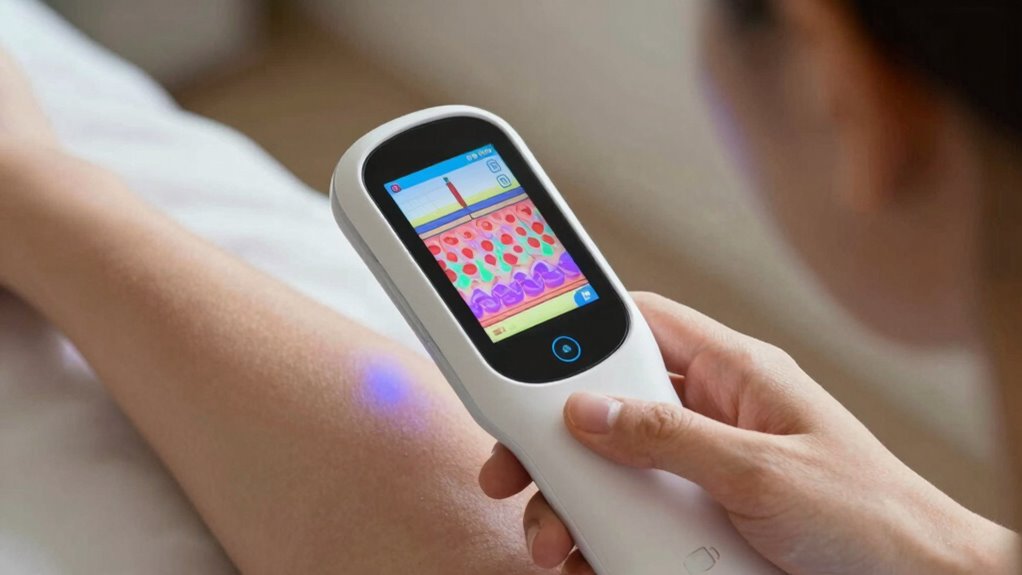
While AI skin scans can be helpful tools for monitoring your skin health, it’s important to know when to seek professional advice. You should consult a dermatologist if you notice any of these signs:
- A mole or spot that changes in size, shape, or color
- New growths that look suspicious
- Persistent skin irritation or bleeding
- A mole that itches, hurts, or becomes tender
- Any lesion that resembles skin cancer symptoms
These indicators warrant a dermatologist consultation to rule out skin cancer or other issues. Relying solely on AI scans isn’t enough; professional evaluation guarantees accurate diagnosis and appropriate treatment. When in doubt, always prioritize expert advice over self-assessment. Remember, early detection of skin cancer saves lives.
What Should You Do If Your Skin Scanner Finds Something Suspicious?
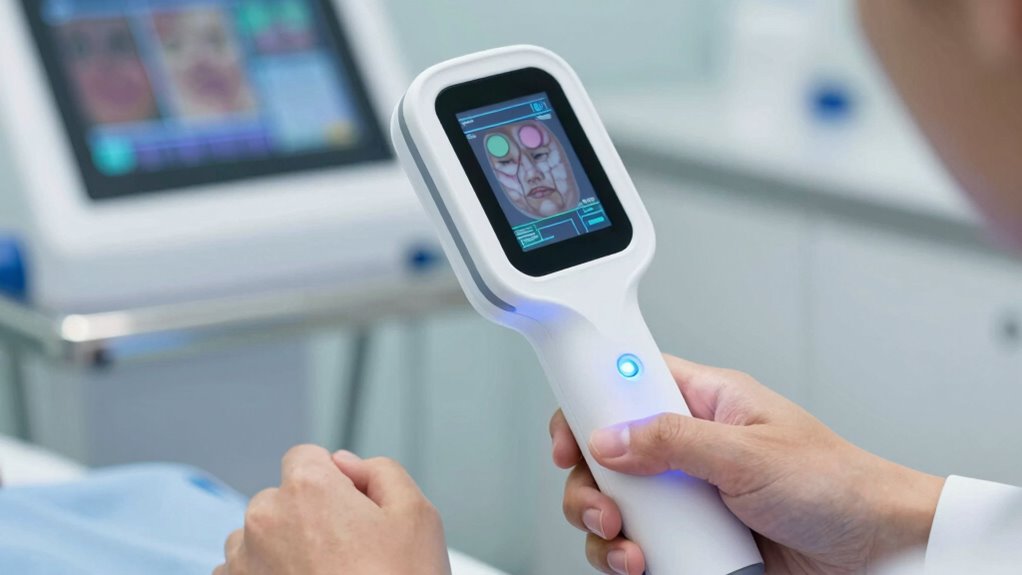
If your skin scanner detects something suspicious, you should take immediate steps to protect your health. Early detection is essential for effective treatment, so don’t ignore the warning signs. Stay calm and avoid letting emotional reactions cloud your judgment; overreacting can cause unnecessary stress. Instead, note the details of what was flagged and schedule a visit with a dermatologist promptly. Remember, an abnormal scan isn’t a diagnosis but a prompt for further examination. Trust the technology to alert you, but rely on medical professionals for confirmation. Taking swift action ensures you address potential issues early, reducing risks and giving you peace of mind. Keep a clear head, prioritize professional advice, and don’t delay seeking expert care.
How to Use AI Skin Scanners Responsibly and Avoid False Alarms
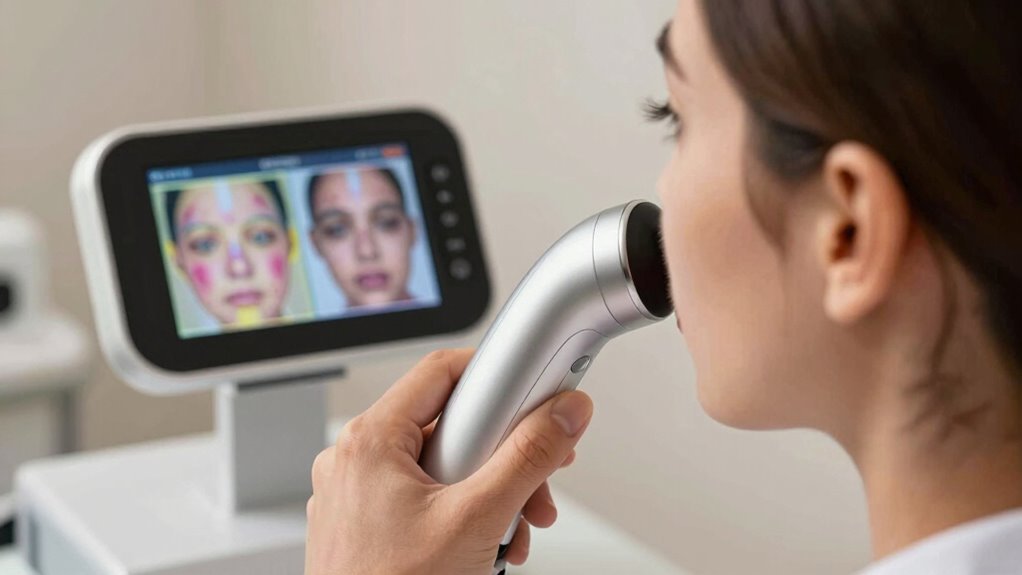
To use AI skin scanners responsibly, you need to understand their limitations and never rely solely on their results. These tools can help identify skin issues but aren’t perfect, especially if you have sensitive skin or concerns about data privacy. False alarms can cause unnecessary worry, so it’s vital to interpret results carefully. Always consult a healthcare professional for definitive advice. Keep these points in mind:
- Recognize that skin sensitivity varies and affects scanner readings
- Avoid panicking over minor or ambiguous results
- Protect your data privacy by using secure apps and ignoring unnecessary data sharing
- Use AI scans as a supplementary tool, not a diagnosis
- Follow up with a dermatologist for any suspicious findings
Staying informed and cautious helps you use AI skin scanners responsibly without overreacting.
Setting Realistic Expectations for Skin Monitoring With AI Tools
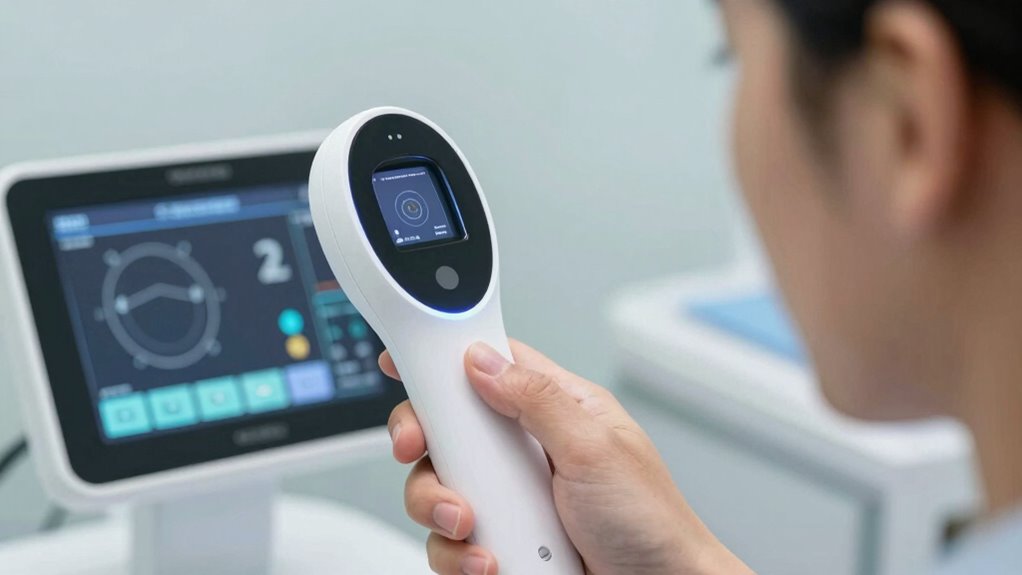
AI skin monitoring tools can be valuable for tracking changes over time, but it’s important to set realistic expectations about their capabilities. These tools can help you observe skin hydration levels and monitor pigmentation concerns, yet they’re not diagnostic devices. They might highlight potential issues, but they won’t replace professional evaluations. Don’t assume that a single scan provides a full picture—skin conditions fluctuate daily, and AI assessments have limitations. Use the data as a helpful guide, not a definitive answer. Avoid overreacting to minor changes or false alarms. Instead, focus on patterns over time and consult healthcare professionals for any significant concerns. Setting realistic expectations ensures you use AI tools effectively without unnecessary worry or misinformation.
Comparing Top AI Skin Scanner Apps: Features, Accuracy, and Reliability

When choosing among the top AI skin scanner apps, it’s important to compare their features, accuracy, and reliability to find the best fit for your needs. Look for apps that offer detailed skin analysis and check their compatibility with your device. Keep in mind that some apps excel in providing extensive insights, while others focus on simplicity. Reliability is key—select apps with positive user reviews and consistent results. Features like real-time feedback, personalized recommendations, and easy-to-understand reports can enhance your experience. Remember, no app is perfect; understanding their limitations helps prevent overreaction.
- Skin analysis depth varies across apps
- App compatibility with your device is vital
- Accurate results depend on image quality
- Consistent updates improve dependability
- User reviews reveal real-world performance
Common Mistakes to Avoid When Relying on Skin Scan Data
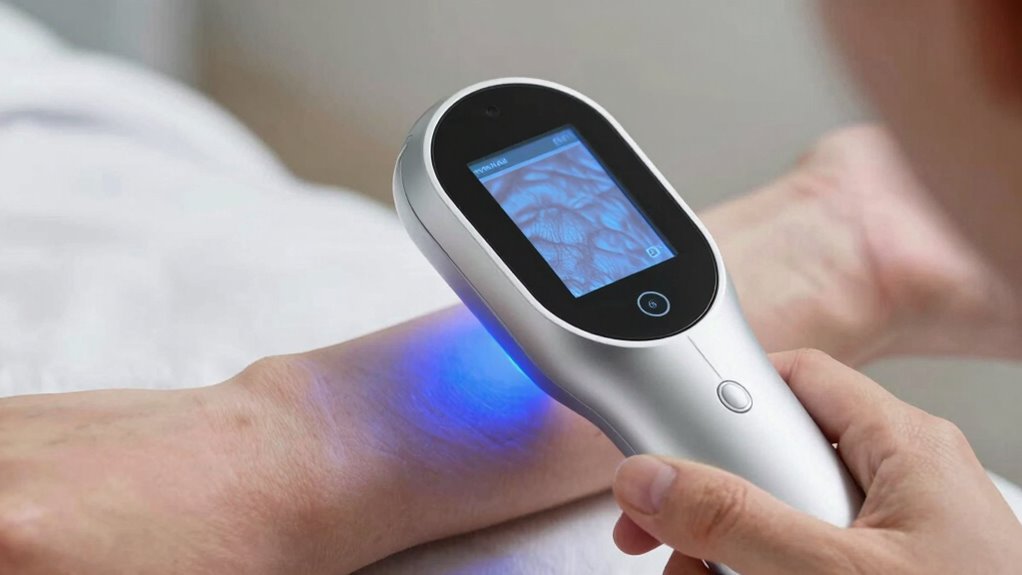
While comparing different skin scanner apps helps you choose the best option, relying solely on their data can lead to mistakes. One common error is misinterpreting skin tone results, which can vary due to device calibration issues. If your device isn’t properly calibrated, the skin tone data may be inaccurate, causing unnecessary concern or false reassurance. Always ensure your scanner is correctly calibrated before use, and don’t assume the data is perfect. Remember, skin scans provide helpful insights but aren’t definitive diagnoses. Avoid overreacting to minor fluctuations in scan results—skin conditions can change naturally, and readings can be affected by lighting or skin hydration. Use the data as a guide, not a final verdict, and consult a dermatologist for professional advice when needed.
Frequently Asked Questions
Can AI Skin Scanners Replace Professional Dermatological Assessments?
AI skin scanners can’t fully replace professional dermatological assessments, especially for serious concerns like skin cancer or significant skin aging. While they offer helpful insights and early detection, they lack the expertise to interpret complex skin conditions accurately. You should use AI data as a supplement, not a substitute, and always consult a dermatologist for a thorough evaluation, especially if you notice unusual skin changes or suspect skin cancer.
How Often Should I Use an AI Skin Scanner for Accurate Monitoring?
You should use your skin scanner once a month to maintain monitoring consistency and get accurate results. This frequency allows you to track any changes over time without overreacting to minor fluctuations. Regular use helps you identify genuine concerns early, but avoid overdoing it, as excessive scanning might lead to unnecessary worry. Stick to a consistent schedule, and consult a dermatologist for professional advice if you notice significant changes.
Are There Privacy Concerns With Storing My Skin Data Digitally?
Did you know that over 80% of users worry about data security? Privacy concerns are valid when storing your skin data digitally. You should check if the device follows strict data security protocols and transparent consent procedures. Always read privacy policies carefully, and only share data with trusted providers. Your skin data is personal, so ensuring it’s protected gives you peace of mind while benefiting from AI insights.
Can AI Skin Scanners Detect Skin Conditions Early Before Symptoms Appear?
Yes, AI skin scanners can help with early detection and symptom prediction of skin conditions before symptoms become visible. By analyzing data patterns, they identify subtle changes that might escape the naked eye, allowing you to catch issues early. This proactive approach enables you to seek treatment sooner, potentially improving outcomes. Just remember, these tools are aids, so consult a dermatologist for accurate diagnosis and personalized advice.
Do Different Skin Tones Affect the Accuracy of AI Skin Scanners?
Different skin tones can impact the accuracy of AI skin scanners. You might notice that scanners perform better on lighter skin tones, while darker tones could lead to less precise results. To get the most accurate assessment, it’s important to choose devices designed to account for diverse skin tones and to interpret the data cautiously. Always consider consulting a dermatologist for a thorough evaluation, especially if your skin tone might affect scanner accuracy.
Conclusion
Remember, AI skin scanners can be helpful, but they’re not infallible. While they might spot potential issues, overreacting could lead to unnecessary worry. Stay informed, interpret results cautiously, and consult a dermatologist when in doubt. The real question is—what hidden skin concerns could these scans reveal, and are you truly prepared to face what they might uncover? Stay vigilant, but don’t forget—your next move could change everything.