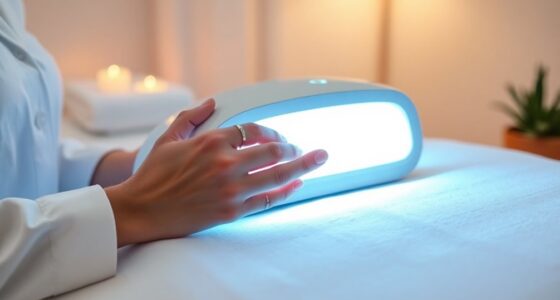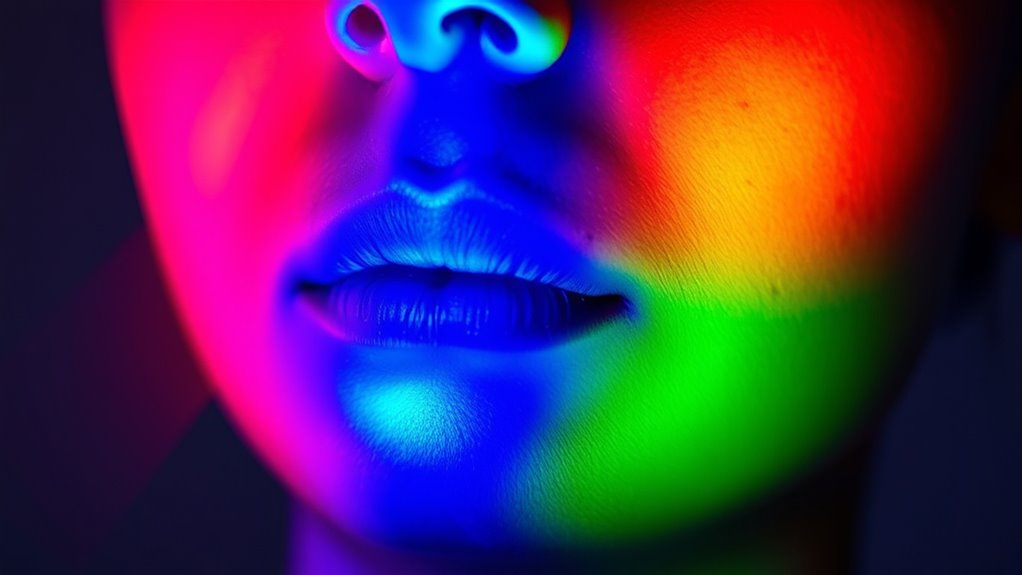

To decide between red, blue, or green wavelengths for your skin concerns, understand their benefits. Red light penetrates deep to boost collagen and reduce wrinkles, making it ideal for anti-aging. Blue light targets surface bacteria to treat acne effectively and gently. Green light addresses pigmentation issues like age spots by targeting melanin. Knowing how each wavelength interacts with your skin helps you make smarter choices—keep exploring to learn more about how to select the best treatment for your needs.
Key Takeaways
- Red light penetrates deeper, effectively boosting collagen and reducing wrinkles for aging skin concerns.
- Blue light targets superficial layers, killing acne-causing bacteria for clearer skin.
- Green light addresses pigmentation issues like age spots by selectively absorbing melanin.
- Choosing the appropriate wavelength depends on your specific skin concern and professional guidance.
- Proper safety measures, such as eye protection, are essential regardless of wavelength used.

Wavelengths are the distances between successive peaks of a wave, and understanding them is key to grasping how different forms of energy travel through space. When it comes to choosing the right laser treatment for your skin concern, knowing how wavelength influences its effectiveness and safety is vital. Different wavelengths penetrate the skin to varying depths and target specific skin issues, making it essential to select the appropriate one for your needs.
Understanding wavelengths helps select the safest, most effective laser treatments for your skin concerns.
Red, blue, and green wavelengths each have unique properties that affect how they interact with your skin. Red light, with a longer wavelength, penetrates deeper into the skin layers. This makes it particularly effective for stimulating collagen, reducing wrinkles, and promoting healing. Because of its deeper reach, red light is often used in anti-aging treatments and scar reduction. However, with any laser treatment, laser safety should always be a priority. Proper precautions, such as wearing protective eyewear and ensuring the treatment is performed by trained professionals, help prevent potential side effects like burns or eye injuries.
Blue light operates at a shorter wavelength, which means it mainly targets the upper layers of the skin. It’s most commonly used for acne treatment because it can kill bacteria responsible for breakouts. Blue light treatments are generally safe and well-tolerated, but you should still follow safety guidelines. Excessive or improper use can cause skin irritation or dryness, especially if your skin is sensitive.
Green wavelengths fall somewhere in the middle and are often used for addressing pigmentation issues like age spots or hyperpigmentation. They are absorbed by melanin, the pigment responsible for skin color, making green light effective for lightening dark spots without affecting surrounding tissue. This targeted approach minimizes risks and enhances treatment safety, but always adhere to laser safety standards to avoid adverse effects.
Choosing the right wavelength depends on your specific skin concern and your skin’s response to different energies. Consulting with a skincare professional ensures that your treatment plan is tailored to your needs, maximizing benefits while minimizing risks. Remember, understanding how each wavelength interacts with your skin helps you make informed choices about your skin health. Always prioritize laser safety—protect your eyes, follow professional protocols, and use treatments as directed. With proper knowledge and precautions, you can safely harness the power of different wavelengths to improve your skin’s appearance and health.
Frequently Asked Questions
How Do Wavelength Choices Affect Skin Tightening Results?
Wavelength choices directly impact skin tightening results because they determine the level of wavelength precision needed for your skin type. Blue light targets bacteria and reduces inflammation, while red light stimulates collagen for tightening. By personalizing your treatment, you guarantee the right wavelength matches your skin concern, maximizing effectiveness. When you select the appropriate wavelength, your skin responds better, leading to firmer, smoother results with minimized risks.
Are Certain Wavelengths Better for Sensitive Skin Types?
If you have sensitive skin, some wavelengths are better suited for you. For example, a person with skin sensitivity might find blue light more compatible, as it’s gentle and reduces inflammation. By choosing wavelengths tailored to your skin sensitivity, you minimize irritation and improve results. Always consult a specialist to guarantee the wavelength compatibility, so your treatment is both safe and effective, giving you confidence in your skincare routine.
Can Multiple Wavelengths Be Combined in One Treatment?
Yes, multiple wavelengths can be combined in one treatment to enhance results. Wavelength compatibility allows you to customize treatments based on your skin concerns, targeting different issues simultaneously. By blending red, blue, and green light, your provider can address inflammation, bacteria, and pigmentation more effectively. This treatment customization offers a thorough approach, maximizing benefits while minimizing discomfort, making it an efficient choice for diverse skin needs.
How Long Does It Take to See Results From Different Wavelengths?
Think of your skin as a garden that needs time to bloom. Depending on the wavelength used, you might see results in as little as a few sessions or take several weeks. Red wavelengths penetrate deeply, often showing improvements after 4-6 treatments, while blue and green may take a bit longer. Always prioritize laser safety and remember that patience allows the wavelength penetration to work its magic effectively.
What Are the Risks of Incorrect Wavelength Selection?
Choosing the wrong wavelength can pose risks to your skin, including burns, hyperpigmentation, or scarring. It’s essential to follow laser safety guidelines and treatment protocols carefully to avoid these issues. Incorrect wavelength selection may also reduce treatment effectiveness, leading to wasted time and money. Always consult a trained professional who understands the specific wavelengths and adheres to safety standards, ensuring safe, successful results tailored to your skin concern.
Conclusion
By now, you see how each hue offers its own gentle touch for your skin concerns. Whether you opt for the warm reassurance of red, the calming whisper of blue, or the vibrant energy of green, you’re guided by subtle signals of nature. Trust your instincts and choose what feels right—sometimes, the most delicate shades bring the brightest results. Embrace the journey with patience and a soft touch, knowing your skin’s best care is just a wavelength away.