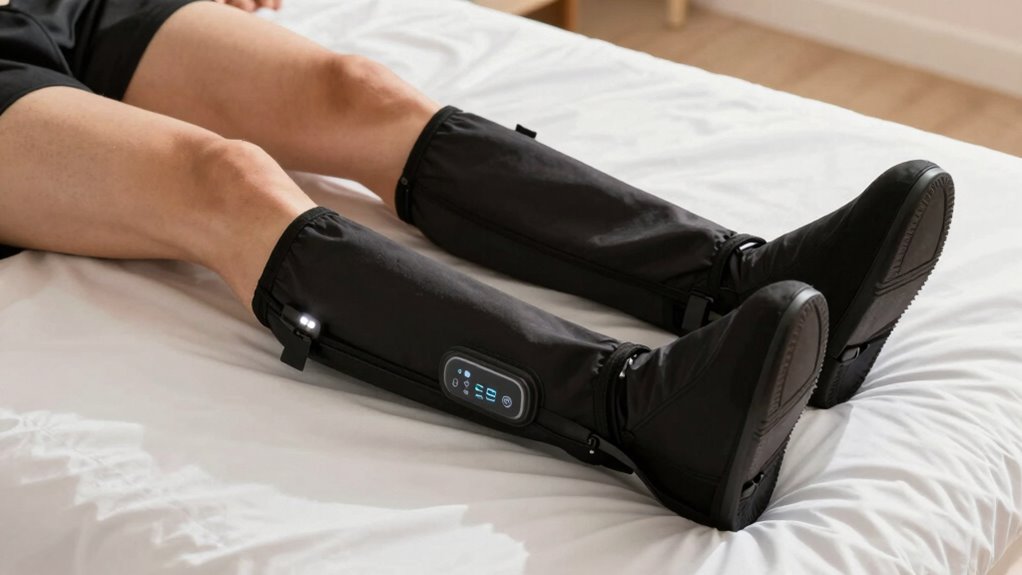

To start with compression boots, set the pressure low and opt for gentle modes like “massage” or “sequential.” Begin with 20-30 minute sessions a few times a week, ensuring the fit is snug but comfortable. Monitor for any tingling or numbness, and gradually increase pressure as your body adjusts. Proper fit and cautious adjustments make recovery safe and effective. Keep exploring for tips to optimize your use and get the most benefits.
Key Takeaways
- Begin with low-pressure settings to ensure comfort and avoid overcompression.
- Use gentle, sequential modes like “massage” or “pulsing” to promote circulation safely.
- Limit initial sessions to 20-30 minutes, gradually increasing duration as tolerated.
- Adjust pressure gradually based on muscle response, reducing if discomfort or numbness occurs.
- Confirm proper fit with snug but comfortable sleeves, ensuring even inflation without gaps.

Musugy Sequential Leg Compression Massager for Circulation : Full Leg Air Compression Boots for Massage Therapy & Fatigue Relief – 9 Intensity, 6 Modes, 3 Timers for Athletes, Runners, Gym (Medium)
- Professional Full-Leg Recovery System: Advanced air compression technology with 5 chambers
- Sequential Compression with Smart Sensors: Auto-balances pressure for a comfortable fit
- Multiple Pressure Levels and Modes: 9 levels, 6 modes, 3 timers for customization
As an affiliate, we earn on qualifying purchases.
As an affiliate, we earn on qualifying purchases.
What Are Compression Boots and How Do They Help Recovery?
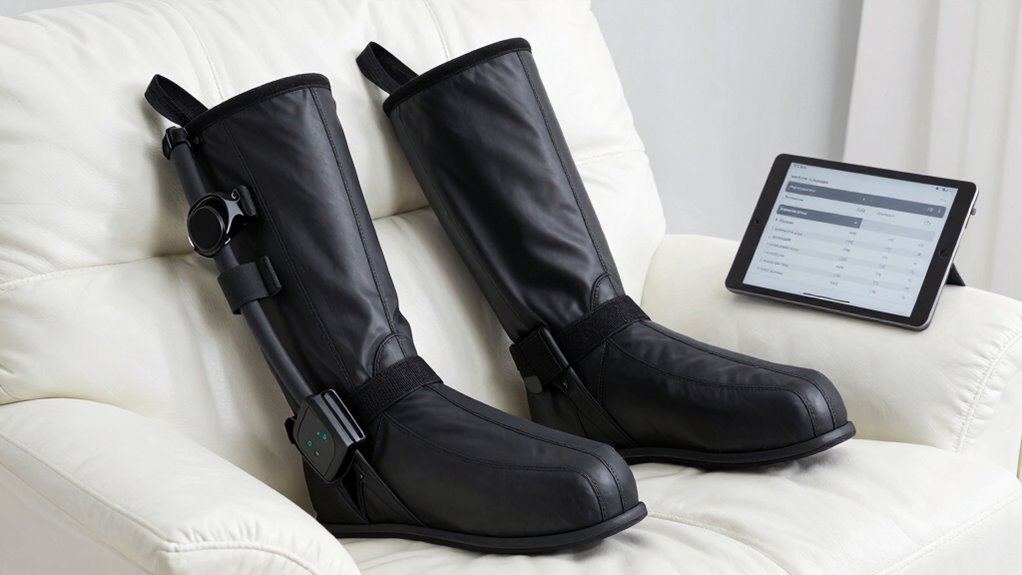
Compression boots are specialized devices designed to improve circulation and reduce muscle soreness by applying controlled pressure to your legs or arms. When you use them, they promote muscle relaxation, helping your muscles unwind after intense activity. This targeted pressure encourages blood flow, which enhances circulation improvement throughout your limbs. Better circulation delivers oxygen and nutrients more efficiently, speeding up recovery. Additionally, the rhythmic compression helps flush out metabolic waste products, like lactic acid, that contribute to soreness. As a result, you experience quicker muscle recovery and less discomfort. Circulation enhancement is a key benefit that supports overall recovery and athletic performance. Compression boots are an effective way to support your body’s natural healing process, making them popular among athletes and active individuals. They provide a safe, non-invasive method to boost recovery and keep you feeling your best. Accessibility features can also enhance the usability of these devices for individuals with specific needs. Incorporating proper device settings can optimize your recovery experience and prevent potential discomfort. Proper pressure levels are essential to ensure comfort and effectiveness during use, especially for beginners. Adjusting the compression intensity appropriately can help prevent discomfort and maximize benefits.
How to Choose the Right Compression Settings for Beginners

When starting with compression boots, it’s important to understand different compression levels and choose a setting that feels comfortable. Begin with low settings to see how your body responds and avoid discomfort. Keep track of how you feel during and after each session to adjust the settings for ideal recovery. Incorporating gear care tips can also help maintain the effectiveness of your compression boots over time. Additionally, monitoring system performance during use can ensure your device operates smoothly and safely. To optimize your experience, paying attention to skin health can prevent irritation and enhance recovery outcomes. Recognizing proper fitting techniques can further improve comfort and effectiveness during therapy. Understanding body signals can further help tailor the therapy to your individual needs.
Understanding Compression Levels
Choosing the right compression level can substantially impact your recovery, but it might seem confusing at first. To get it right, focus on pressure customization and comfort optimization. Here’s a simple guide:
- Start with low pressure to gauge comfort and avoid discomfort.
- Adjust pressure based on how your muscles feel during use.
- Increase gradually if you don’t experience discomfort or pain.
- Always prioritize comfort; if it feels too tight or causes numbness, reduce the pressure.
- Remember that individual tolerance varies, so listening to your body is essential for effective recovery.
Starting With Low Settings
Starting with low settings is the best way to guarantee comfort and safety as you begin using compression boots. By starting slow, you allow your body to adjust to the sensation, promoting muscle relaxation without feeling overwhelmed. Low-pressure settings help improve blood circulation gently, reducing the risk of discomfort or adverse reactions. As you become more familiar with how your body responds, you can gradually increase the settings for more effective recovery. Keep in mind that a gentle approach encourages better blood flow and muscle relaxation, which are essential for maximum recovery. Starting low ensures you experience the benefits of compression therapy safely and comfortably, setting a solid foundation for more advanced use later on. Additionally, monitoring your heart rate variability (HRV) can help you gauge how your body responds to different compression levels and optimize your recovery routine. Incorporating proper pressure levels can further enhance your comfort and recovery outcomes, and understanding pressure adjustment techniques can help you customize your experience for better results. Considering individual tolerance is also crucial to tailor the therapy to your personal needs and avoid overexertion. Recognizing the importance of gradual progression allows you to increase compression settings safely over time, maximizing benefits while minimizing risks.
Monitoring Comfort and Response
Monitoring how your body responds during compression therapy is essential to find the most comfortable and effective settings. Pay attention to signals like discomfort, numbness, or excessive pressure. Adjust the settings accordingly for ideal muscle relaxation and recovery. Here are key steps to guide you:
- Check for tightness – ensure compression isn’t too tight, avoiding numbness or tingling.
- Note comfort levels – aim for a snug but comfortable fit that promotes muscle relaxation.
- Observe response over time – if you feel pain or discomfort, decrease the pressure. Understanding how compression levels influence your recovery can help you tailor sessions more effectively.
- Track recovery progress – notice improvements in muscle relaxation and reduced soreness after sessions.
- Understand equipment features – familiarize yourself with the compression settings to optimize your therapy. Additionally, understanding how different compression settings affect blood flow can help enhance your recovery process and overall results. Paying attention to your body’s feedback signals ensures safer and more personalized use of compression boots, especially for beginners.
- Being aware of your body’s feedback signals allows for better adjustment and safer use of compression boots, especially for beginners.
How Long Should You Use Compression Boots and How Often?

You should typically use compression boots for about 20 to 30 minutes per session to maximize recovery without overdoing it. Most people find that using them 3 to 4 times a week works well, but listen to your body and adjust as needed. If you notice discomfort or swelling, it’s time to modify your session duration or frequency. Incorporating proper workspace setup can also help prevent discomfort during recovery routines. Additionally, integrating connected fitness technology can provide real-time feedback to optimize your recovery sessions. Being mindful of appropriate session duration ensures you avoid overstimulation and get the most benefit from your compression therapy. Remember to use essential DIY tools safely to maintain your equipment and avoid any mishaps during your recovery routine. Regularly cleaning and inspecting your devices with basic maintenance supplies can extend their lifespan and ensure safe operation.
Recommended Session Duration
A typical compression boot session usually lasts between 20 to 30 minutes, providing enough time for effective muscle relaxation and circulation improvement without overuse. During this period, your muscles benefit from increased blood flow, aiding recovery. To optimize your sessions:
- Start with 20 minutes if you’re new to compression therapy.
- Increase duration gradually up to 30 minutes as your body adapts.
- Avoid exceeding 30 minutes to prevent overstimulation or discomfort.
- Use sessions post-workout or during rest days for consistent recovery.
Keeping sessions within this timeframe ensures you get the benefits of enhanced circulation and muscle relaxation, without risking overuse or fatigue. Stick to these guidelines to maximize recovery and maintain comfort.
Optimal Usage Frequency
To maximize recovery benefits and prevent overuse, it’s important to establish a balanced frequency for using compression boots. Typically, using them 3 to 4 times a week supports muscle relaxation and circulation enhancement without overdoing it. Consistent use helps improve blood flow and reduces soreness, but excessive sessions may lead to diminishing returns or discomfort. Here’s a quick guide:
| Frequency | Benefits | Recommendations |
|---|---|---|
| Daily | Max circulation, quick recovery | Not recommended unless advised |
| 3-4 times/week | Ideal muscle relaxation | Ideal for most users |
| Weekly | Maintenance and gentle recovery | Suitable during off days |
Adjust based on how your body responds, but regular, moderate use is key to effective recovery.
Signs to Adjust Settings
Monitoring how your body responds to compression therapy helps determine the most favorable duration and frequency of each session. If you experience discomfort, tingling, or numbness, consider adjusting your settings or reducing session length. Watch for signs like persistent swelling or pressure points that cause pain, which indicate the need for changes. To optimize circulation enhancement, start with shorter sessions and gradually increase as your body adapts. Here are key signs to tweak settings:
- Discomfort or pain during use
- Persistent numbness or tingling
- Excessive swelling after sessions
- Inadequate circulation improvement over time
Pay attention to these indicators, and don’t hesitate to modify pressure levels or duration to ensure safe, effective recovery.
What’s the Best Compression Pattern and Mode for New Users?

For new users, selecting the right compression pattern and mode is essential to guarantee effective recovery without discomfort. Start with a gentle, sequential pattern that targets your legs or arms, promoting blood flow without overwhelming your muscles. Many devices offer modes like “massage” or “sequential,” which are ideal for beginners. These modes gently mimic compression therapy techniques proven to improve circulation and reduce soreness. Avoid intense, full-cycle patterns initially—stick to the basics until you’re comfortable. Below is a helpful guide:
| Pattern Mode | Description |
|---|---|
| Sequential | Gradually inflates from bottom to top |
| Pulsing | Alternates pressure for a massage feel |
| Static | Maintains consistent pressure |
| Gentle | Light compression for sensitive users |
| Custom | Personalizable settings for comfort |
Choosing the right mode helps optimize blood flow and recovery.
How to Adjust Fit and Pressure for Comfort and Effectiveness
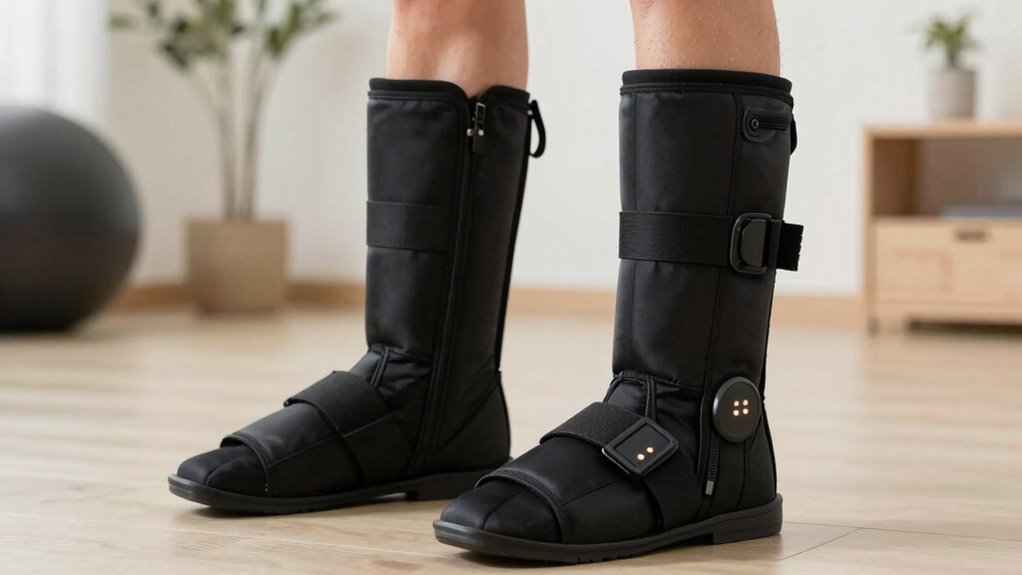
Ensuring a comfortable and effective recovery session starts with properly adjusting the fit and pressure of your compression boots. Proper fit customization and pressure adjustment guarantee ideal circulation and comfort. To achieve this:
- Check that the sleeves are snug but not too tight, avoiding restricted blood flow.
- Use the fit customization options to tailor the compression zones to your body shape.
- Adjust the pressure settings gradually, starting low and increasing until you feel relief without discomfort.
- Confirm that the boots are evenly inflated, with no gaps or uneven pressure points.
How to Track Your Recovery and Know When to Adjust Settings
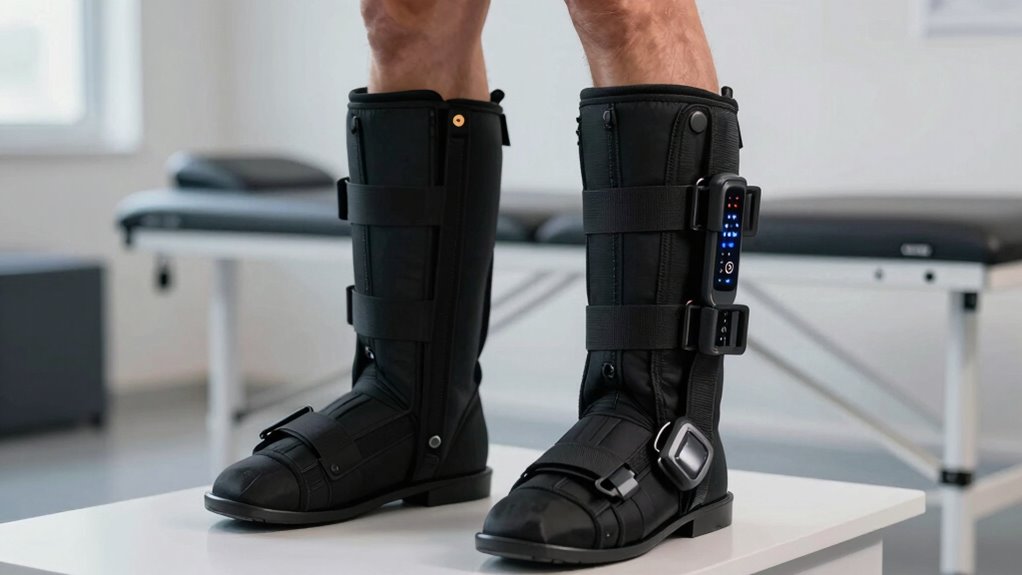
To track your recovery effectively, pay close attention to how your body responds during and after each session. Notice if you experience increased muscle relaxation or feel less tightness in your muscles. Improved circulation should make your skin feel warmer or look more vibrant. Keep track of these signs to gauge whether the current settings are effective. If you notice persistent soreness or discomfort, it might be time to adjust the pressure or duration. Regularly monitoring your body’s response helps you understand when to tweak the settings for ideal circulation improvement and recovery. Remember, everyone’s body reacts differently, so personal observation is key. By staying attentive, you’ll find the right balance that promotes effective recovery without overdoing it.
Common Mistakes Beginners Make With Compression Boot Settings
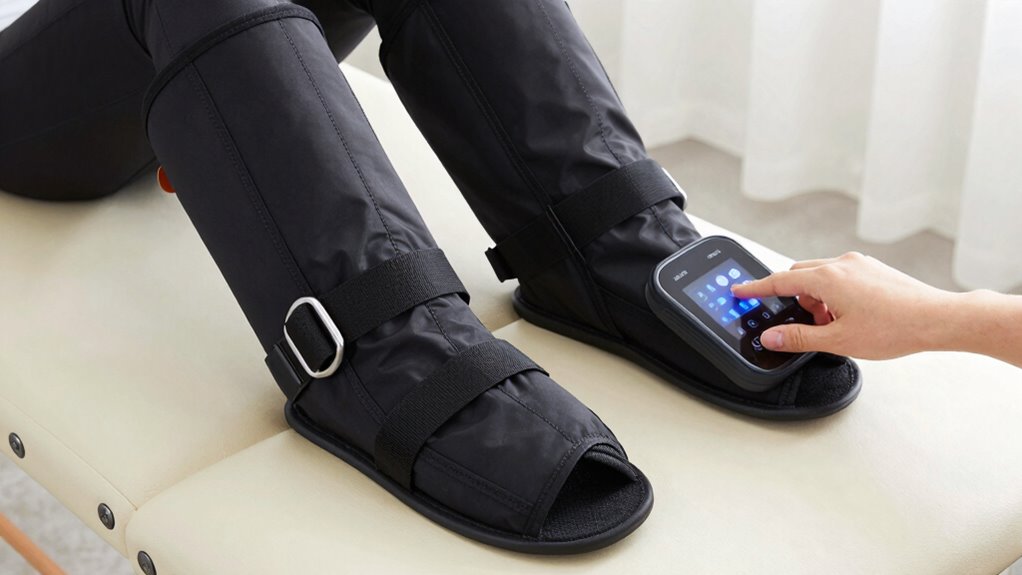
Many beginners overlook how important it is to start with the right compression settings, often leading to less than ideal recovery results. Common mistakes include neglecting pressure customization, which can cause discomfort or ineffective treatment. Additionally, ignoring user feedback can lead to persistent soreness or reduced circulation. Here are four mistakes to avoid:
- Setting pressure too high without gradual adjustment
- Ignoring the importance of personalized pressure levels
- Failing to monitor how your body responds during sessions
- Overlooking the value of adjusting settings based on comfort and feedback
How to Incorporate Compression Boots Into Your Recovery Routine
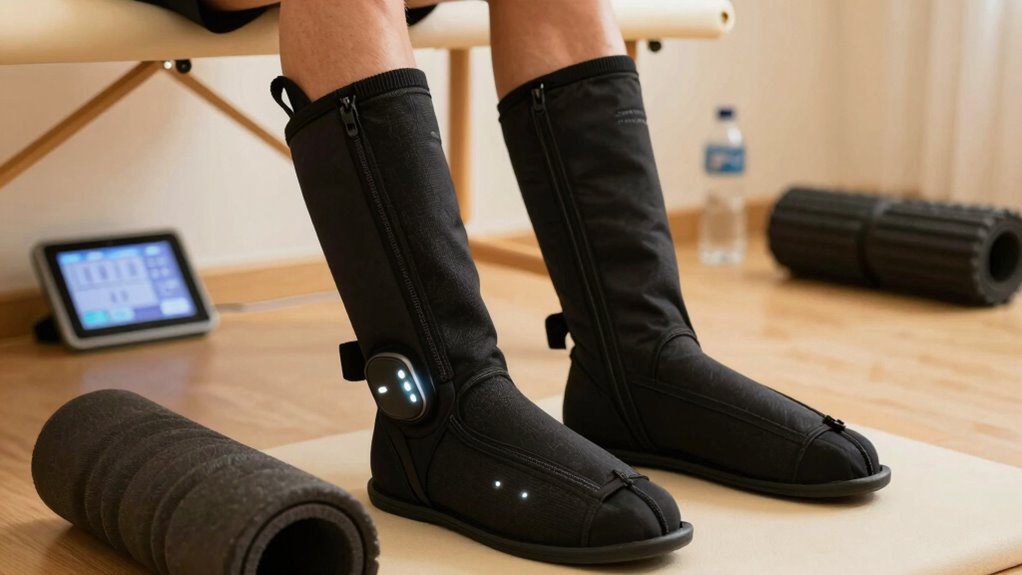
Incorporating compression boots into your recovery routine can substantially enhance muscle relaxation and circulation, but it’s essential to integrate them thoughtfully. Start by scheduling sessions post-workout or during rest days to maximize benefits. Use the recommended settings to promote a circulation boost without discomfort, especially if you’re new to compression therapy. Begin with shorter durations, around 15-20 minutes, and gradually increase as your body adjusts. Combining compression boots with gentle stretching or massage can further improve muscle relaxation. Make sure you stay hydrated before and after treatments to support circulation. Consistency is key—regular use helps your muscles recover faster and reduces soreness. By thoughtfully incorporating compression boots, you optimize their effectiveness, making recovery faster and more comfortable.
Frequently Asked Questions
Can Compression Boots Help With Specific Injuries or Only General Recovery?
Compression boots can help with specific injuries and chronic conditions by providing targeted relief, but they’re mainly designed for general recovery. If you’re dealing with a targeted injury, like a muscle strain, using the boots with customized settings might offer additional support. However, for chronic conditions, consistent use can improve circulation and reduce discomfort. Always consult a healthcare professional to determine if compression therapy fits your particular needs.
Are There Any Safety Concerns or Contraindications for Beginners?
You might think using compression boots is as simple as pressing a button, but proper usage and contraindication awareness are essential, especially as a beginner. Safety concerns include avoiding use if you have blood clots, circulation issues, or skin infections. Always start with moderate settings, and consult a healthcare professional if you’re unsure. Ignoring these precautions can turn a recovery tool into a risk, so stay informed and cautious.
How Do Compression Boots Differ From Other Recovery Methods?
Compression boots differ from other recovery methods by actively promoting blood flow and muscle relaxation through controlled pressure. Unlike stretching or ice baths, they provide targeted compression that enhances circulation, reduces soreness, and speeds up recovery. You can easily adjust the settings to suit your needs, making them a convenient, effective option. This personalized approach helps you recover faster and feel more refreshed after intense workouts.
Is It Necessary to Consult a Professional Before Using Compression Boots?
You should definitely seek professional advice before using compression boots to guarantee safety precautions are met. Consulting a healthcare provider helps you understand proper usage, especially if you have existing health conditions. A professional can guide you on the right settings and duration, reducing risks like blood flow issues. Prioritizing expert input ensures you get the most benefit from your recovery routine while staying safe.
What Signs Indicate That I Should Stop or Adjust Therapy Immediately?
If you feel discomfort warning signs like increased pain, numbness, or tingling, stop or adjust the therapy immediately. Also, watch for device malfunction, such as irregular inflation or deflation, which indicates you should pause use and check the device. Trust your body’s signals; if anything feels wrong, don’t hesitate to stop and consult a professional before resuming. Your safety always comes first.
Conclusion
Remember, patience is a virtue—especially when it comes to recovery. As you start using compression boots, trust the process and listen to your body. Stick with recommended settings, monitor how you feel, and adjust as needed. Over time, you’ll find what works best for you. Consistency is key, and as the saying goes, “Rome wasn’t built in a day.” Stay committed, and you’ll optimize your recovery journey.