
By 2025, DIY skincare trends are falling out of favor because natural ingredients can cause allergic reactions, irritation, or burns if not used properly. Without standardized safety guidelines, you risk contamination, improper formulations, and unforeseen chemical reactions that could harm your skin. Plus, poor storage increases bacteria growth. If you keep exploring, you’ll discover how these hazards can impact your skin health and what safer alternatives exist.
Key Takeaways
- Natural ingredients can cause allergic reactions, irritation, or photosensitivity, posing health risks in DIY skincare.
- Lack of standardized safety guidelines increases the chance of contamination and harmful chemical reactions.
- Incorrect formulations and ingredient ratios can reduce effectiveness or lead to skin damage.
- Unregulated DIY recipes may contain ingredients that react unpredictably with skin or other products.
- Improper storage and contaminated tools elevate infection risks, making DIY skincare unsafe over time.
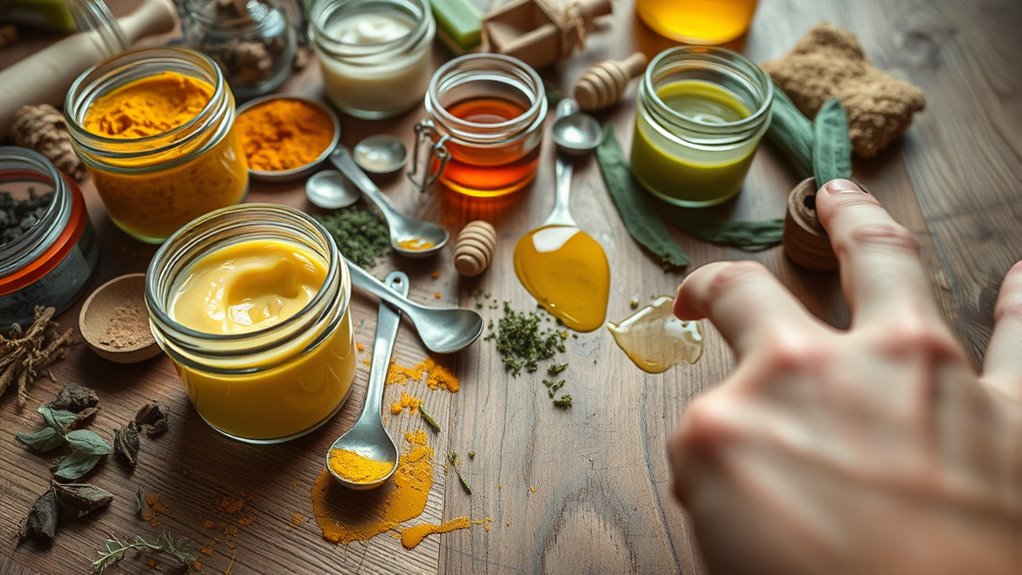
While DIY skincare can seem like a fun and cost-effective way to improve your skin, it also carries significant risks. One major concern is the potential hazards associated with natural ingredients. Just because something is labeled as “natural” doesn’t mean it’s safe or suitable for everyone. Natural ingredients like honey, lemon, or essential oils can cause adverse reactions, especially if you have sensitive skin or allergies. These natural ingredient hazards can range from mild irritation to severe burns or dermatitis if used improperly. Without proper knowledge or testing, you might unknowingly introduce harmful substances into your skincare routine. This is why understanding natural ingredient hazards is *vital* before mixing your own remedies.
Another important aspect is allergic reaction prevention. When you create skincare products at home, you might overlook the possibility of allergies. Some natural ingredients, despite their popularity, are common allergens. For example, citrus oils can cause photosensitivity, leading to skin burns when exposed to sunlight. Essential oils like tea tree or eucalyptus can trigger allergic reactions in sensitive individuals. To prevent such issues, it’s essential to perform patch tests before applying any homemade product to your face or body. Applying a small amount of the mixture on your inner forearm and waiting 24 hours can help you gauge your skin’s response. If redness, itching, or swelling develops, it’s a sign to avoid using that ingredient altogether.
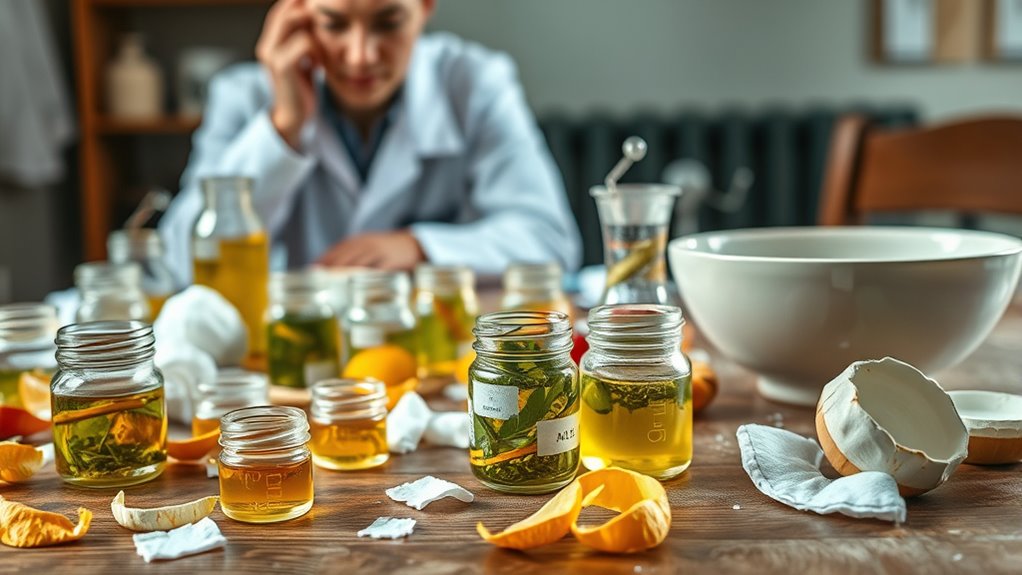
Many DIY recipes lack proper safety guidelines, increasing the risk of unintended reactions. Without regulated ingredients and standardized formulations, you could inadvertently combine substances that react negatively with each other or with your skin’s natural oils. Additionally, incorrect storage or contamination can lead to bacterial growth, which might cause infections or worsen skin conditions. To minimize these risks, always use sterilized tools and containers, and follow tested recipes when possible.
Frequently Asked Questions
Can DIY Skincare Remedies Cause Long-Term Skin Damage?
Yes, DIY skincare remedies can cause long-term skin damage. When you experiment with untested ingredients, you risk disrupting your skin barrier, leading to irritation and sensitivity. Improper use or harsh substances can cause chemical burns, which may leave scars or worsen skin conditions over time. Always be cautious and consult a dermatologist before trying DIY treatments, as they can prevent long-term damage and keep your skin healthy.
Are Natural Ingredients Always Safe for DIY Skincare?
Natural ingredients aren’t always safe for DIY skincare because they can contain organic contaminants or lack natural preservatives, which may lead to bacterial growth or skin irritation. You should research each ingredient thoroughly and consider potential allergic reactions. Just because something is natural doesn’t mean it’s risk-free. Always test small amounts first, and prioritize ingredients with known safety profiles to avoid adverse effects on your skin.
How Do I Identify Allergic Reactions to Homemade Skincare Products?
Think of your skin as a delicate garden; allergy symptoms are like weeds that can suddenly appear. To spot reactions, always do a patch test first—apply a small amount of your homemade product on your wrist or behind your ear and wait 24-48 hours. If you notice redness, swelling, or itching, it’s a sign of an allergic reaction. Stop using the product immediately and consult a dermatologist if needed.
Is There a Legal Regulation for DIY Skincare Products?
There’s limited legal regulation for DIY skincare products because regulatory oversight mainly targets commercially sold cosmetics. You might not face product liability issues unless you sell or distribute your creations, but risks remain. It’s crucial to understand that homemade skincare lacks the same safety standards, increasing your risk of adverse reactions. Stay cautious, and if you plan to sell, familiarize yourself with regulations to avoid legal trouble and ensure consumer safety.
What Are the Best Professional Alternatives to Risky DIY Trends?
Think of professional skincare like a skilled captain guiding your ship through stormy waters. To avoid risky DIY trends, you should see licensed dermatologists or visit reputable skincare clinics. They offer personalized treatments, expert advice, and safe procedures that protect your skin’s health. These professionals understand your unique needs and use science-backed methods, ensuring you achieve glowing results without the dangers of unregulated DIY skincare experiments.
Conclusion
So, next time you’re tempted to mix up your own skincare potion, remember: those trendy DIY recipes might just turn your glow into a disaster. Sure, it’s tempting to save a buck or get creative, but the risks of irritation, infections, or worse aren’t worth the Instagram likes. Sometimes, sticking to trusted products and professionals is the real genius move—because, after all, a flawless face isn’t worth playing chemist in your kitchen.