To fix jet lag with bright light like a pro traveler, strategically expose yourself to natural morning light if traveling east, or evening light if heading west, to shift your internal clock. Use light therapy devices with adjustable settings for personalized exposure times—usually 30 to 60 minutes. Avoid bright light near bedtime, and combine this with creating a sleep-friendly environment. If you want to master these techniques and minimize jet lag, there’s more to learn.
Key Takeaways
- Use morning bright light exposure to advance your body clock when traveling east and evening light to delay when traveling west.
- Aim for 30-60 minutes of blue-enriched light at optimal times, using devices with adjustable timers for precise scheduling.
- Prioritize natural sunlight during the day, supplement with artificial light to align your circadian rhythm with your destination.
- Avoid bright light close to bedtime to prevent disrupting sleep; tailor exposure timing based on your travel direction.
- Combine strategic light therapy with good sleep hygiene and other jet lag remedies for faster, more effective adaptation.
Why Bright Light Is Essential for Resetting Your Body Clock
Bright light plays a crucial role in resetting your internal body clock, especially when you’re adjusting to a new time zone. Your circadian rhythm, the natural cycle that regulates sleep and wakefulness, depends heavily on light cues. Exposure to bright light signals your brain to shift its clock, helping you feel alert during the day and sleepy at night. Proper light exposure can improve sleep quality by aligning your sleep patterns with the local time. Without enough light, your body struggles to synchronize, leading to fatigue and poor rest. By strategically using bright light, you tell your body when to wake up and wind down, easing the transition and reducing jet lag symptoms. This simple step can make a significant difference in your travel recovery. Additionally, understanding the contrast ratio of your environment can enhance the effectiveness of light therapy by minimizing unwanted shadows and glare. Optimizing ambient lighting conditions can further improve your body’s response to light cues, making your adjustment smoother. Monitoring the light exposure duration can help you maximize the benefits and avoid overexposure, which might disrupt your sleep cycle. Incorporating proper timing of light exposure can also accelerate your adjustment process by aligning with your body’s natural rhythm. Using light intensity measurements can help tailor your exposure for optimal results, ensuring effective circadian adjustment.
How to Use Natural Light to Beat Jet Lag
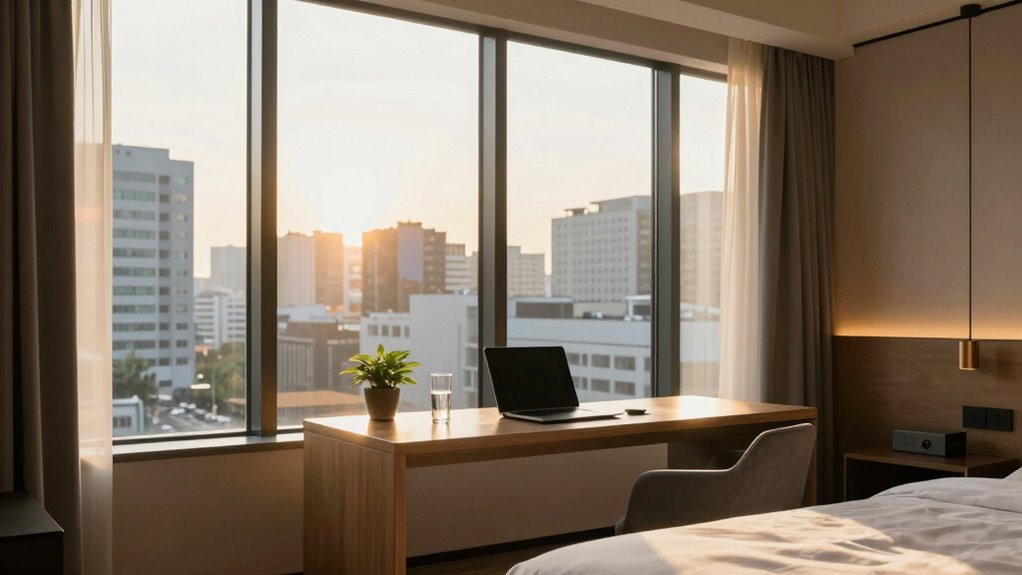
To effectively use natural light to beat jet lag, you need to time your outdoor exposure strategically. Start your mornings with sunrise routines by stepping outside soon after waking. This exposes you to natural light early in the day, helping reset your internal clock to the new time zone. Engaging in outdoor activities during daylight hours also maximizes your light intake, boosting your alertness and adjusting your circadian rhythm faster. Aim to spend at least 30 minutes outside during the morning, especially when the sun is rising. Avoid waiting too long to get sunlight, as late-morning or afternoon exposure can delay your adjustment. Consistent outdoor light exposure aligns your body clock with local time, reducing jet lag symptoms and helping you feel more energized. Incorporating well-timed outdoor light exposure with diligent soil and sun exposure maximizes your chances of a quick adjustment. Additionally, understanding the timing of natural light can further enhance your circadian reset process. Recognizing the importance of light intensity can help optimize your exposure for faster adaptation. Being aware of the best times for sunlight in your new location can also improve your recovery from jet lag more efficiently. To further optimize your adaptation, consider how geographical location and seasonality influence natural light availability and intensity.
How Artificial Light Can Help You Adjust Faster
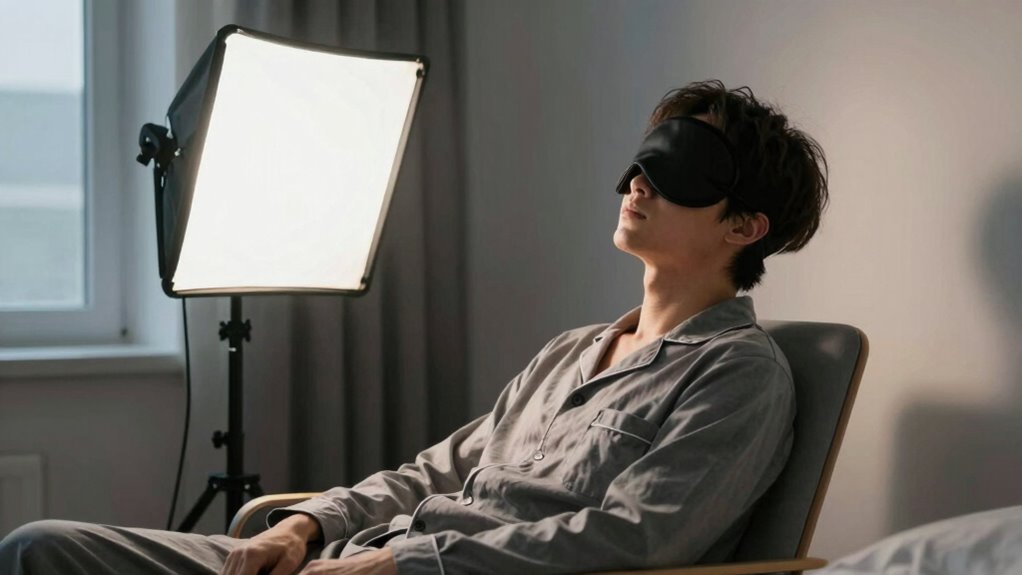
Artificial light can be a powerful tool to help you adjust your internal clock more quickly after crossing time zones. By carefully timing exposure to specific light spectrum wavelengths, you can influence your circadian rhythms to match your new local time. Blue-enriched light, which mimics natural daylight, can suppress melatonin production and signal your body to wake up, making mornings easier. Conversely, using warmer, dimmer light in the evening encourages melatonin release, helping you feel sleepy sooner. Manipulating your exposure to artificial light allows you to reset your internal clock faster, reducing jet lag symptoms. Focusing on the right light spectrum at suitable times can effectively synchronize your circadian rhythms, helping you adapt more swiftly to your destination’s schedule. Additionally, understanding the biological effects of light can further improve the effectiveness of your light exposure strategy. Recognizing how light influences melatonin production can help you plan your exposure more effectively. Light therapy timing plays a crucial role in optimizing your adjustment process, ensuring you maximize the benefits of artificial light. Incorporating personalized light exposure plans can further enhance your adaptation, tailoring the approach to your unique responses and schedule.
How to Create a Personalized Light Exposure Plan
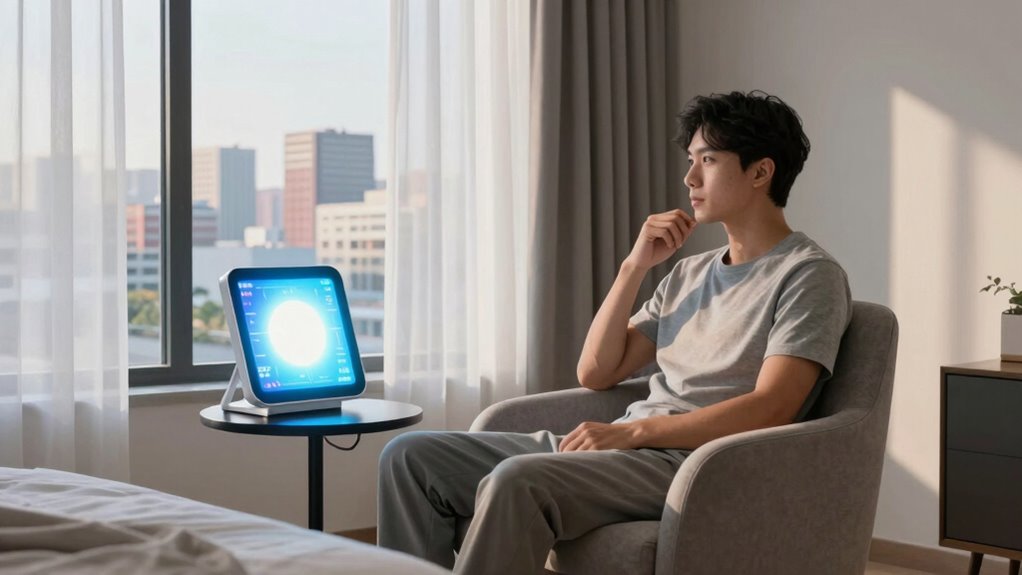
Creating a personalized light exposure plan starts with understanding your travel schedule and sleep patterns. To optimize your adjustment, consider these key steps: 1. Determine the ideal light intensity and timing based on your destination’s time zone. Bright light exposure in the morning can help advance your clock, while evening exposure delays it. 2. Decide on exposure duration, typically 30 to 60 minutes, depending on how much adjustment you need. 3. Schedule your light exposure to align with your target sleep and wake times, ensuring you get enough light without overexposing yourself. Additionally, understanding how sound waves influence brainwave patterns can enhance your overall adaptation process. Incorporating natural light cycles into your routine can further support your circadian rhythm adjustment and improve sleep quality during travel. Recognizing the role of light therapy devices can also help you deliver consistent and controlled light exposure to optimize your jet lag recovery. Moreover, managing light intensity levels can prevent overstimulation and help your body adjust more smoothly, especially when using supportive sleep environments to reinforce your circadian cues.
How to Choose and Use Light Therapy Devices and Apps

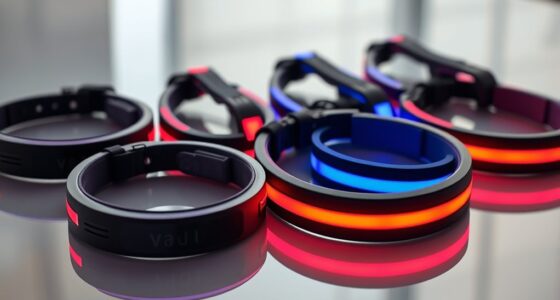
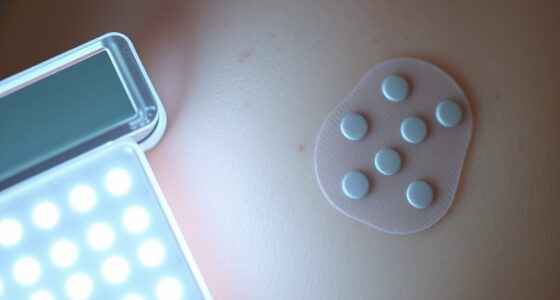
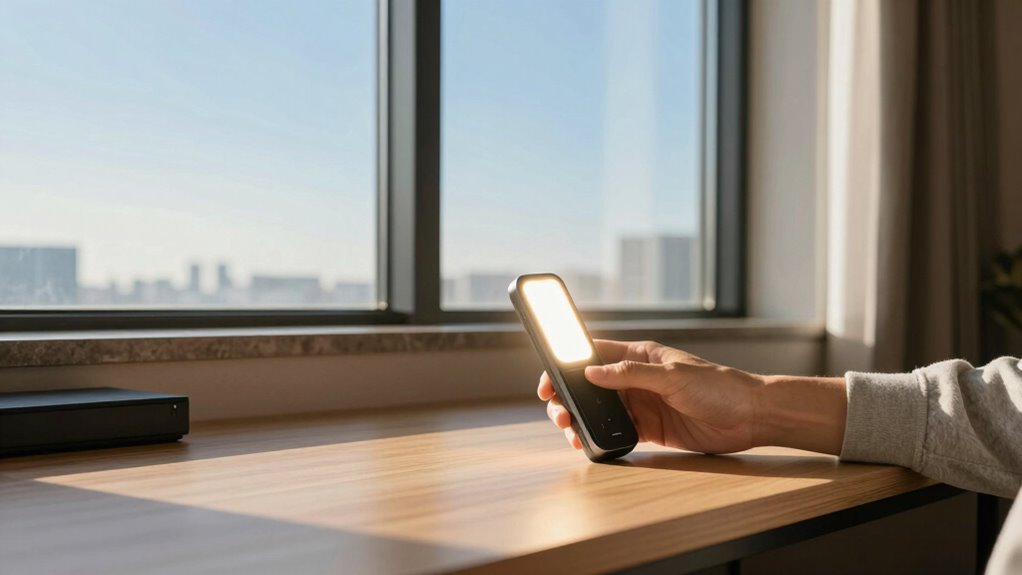
Choosing the right light therapy device or app is essential for effectively adjusting your internal clock. When selecting light therapy devices, look for ones that emit the appropriate brightness—usually around 10,000 lux—and have adjustable timers. Portable devices are convenient for travel, while larger models may offer more consistent exposure. Light therapy apps can guide you through personalized schedules, helping you time your light exposure precisely. Guarantee the app provides clear instructions and customizable settings for duration and timing. Both devices and apps should have UV filters for safety and be user-friendly. Remember, the goal is to deliver the right light intensity at the right time, so choose options that fit your travel plans and lifestyle for ideal jet lag relief. Understanding light intensity is crucial for maximizing effectiveness and avoiding potential eye strain or discomfort.
When to Expose Yourself to Light During Different Travel Scenarios
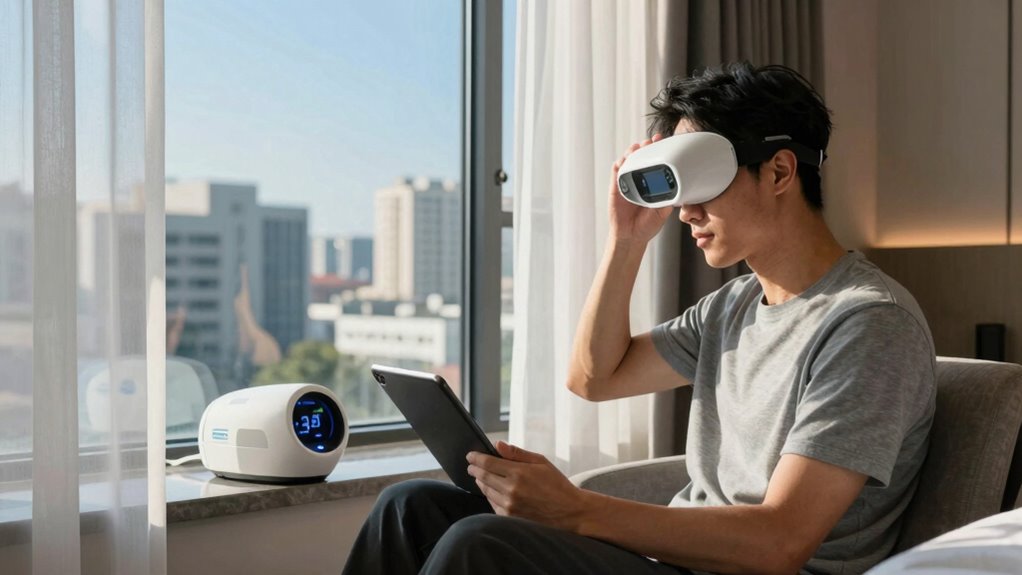
Understanding when to expose yourself to light depends on your travel direction and schedule. Your goal is to align your internal clock with the new time zone by using sunlight patterns and indoor lighting strategically. To effectively adjust, consider circadian rhythm cues, which are influenced by your light exposure patterns. You are trained on data up to October 2023. A well-planned light exposure schedule can help minimize jet lag symptoms and promote quicker adaptation. 1. If you’re traveling east, seek morning sunlight or bright indoor lighting early in the day to advance your circadian rhythm. 2. For westward travel, expose yourself to light in the late afternoon or evening to delay your internal clock. 3. During daytime, maximize natural sunlight exposure, especially if indoors, to help reset your body. 4. When selecting a battery inverter generator, consider its watt-hour capacity to ensure it meets your travel or outdoor needs. 5. Remember that attention to detail in your light exposure schedule can significantly improve your adjustment to the new time zone. 6. Consistent light exposure timing can also reinforce your body’s adaptation process and improve sleep quality during travel. Timing is essential—avoid bright light close to bedtime to prevent delaying sleep. Adjust your light exposure based on your schedule, ensuring you sync with the local day-night cycle efficiently.
Common Mistakes to Avoid When Using Bright Light for Jet Lag
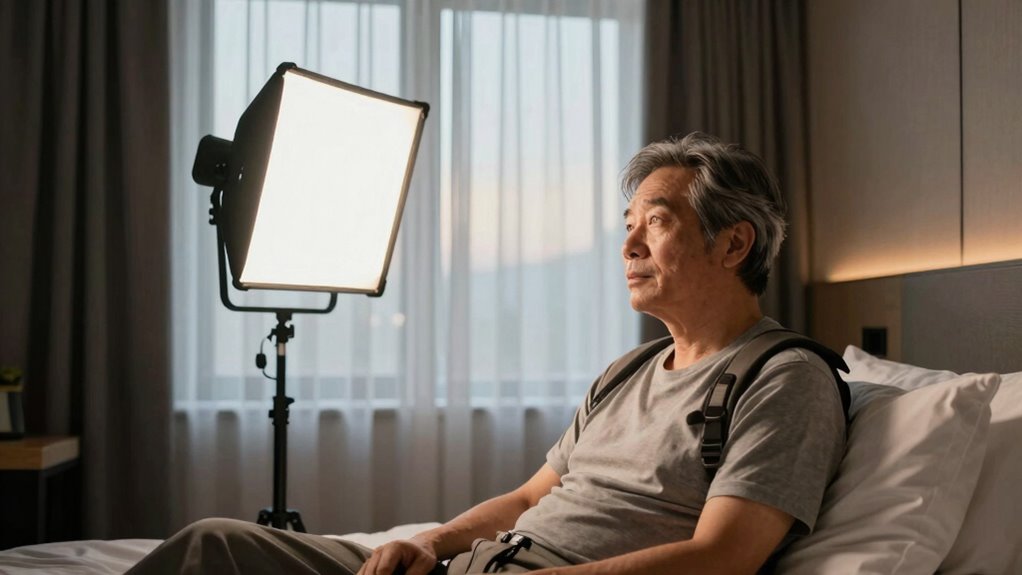
One common mistake is ignoring the importance of timing when using bright light, which can make your jet lag worse. Overusing bright light can also throw off your internal clock rather than help it adjust. Being mindful of when and how much light you use is key to avoiding these pitfalls.
Ignoring Timing Strategies
Ignoring timing strategies is a common mistake that can undermine your efforts to reset your internal clock with bright light. If you don’t align light exposure with your travel schedule, you risk prolonging jet lag. Be mindful of these pitfalls:
- Exposing yourself to bright light at the wrong times, which can worsen sleep deprivation and disrupt your circadian rhythm.
- Relying on caffeine intake to stay awake instead of using light strategically, leading to poor sleep quality.
- Neglecting to adjust light exposure based on your destination’s time zone, making it harder for your body to adapt smoothly.
Overusing Bright Light
While bright light can help reset your internal clock, overusing it can backfire and hinder your jet lag recovery. Excessive exposure increases the risk of light pollution, which can confuse your body’s circadian signals instead of helping them align. If you expose yourself to too much bright light, especially during daytime or late in the day, it may worsen jet lag symptoms rather than alleviate them. Additionally, overusing light therapy can trigger seasonal affective tendencies, causing mood swings or fatigue. To avoid these pitfalls, follow a targeted schedule and limit your light exposure to recommended times. Remember, more isn’t always better—strategic use is key to resetting your internal clock effectively.
Combining Bright Light With Other Jet Lag Strategies for Better Results

Combining bright light therapy with other jet lag strategies can substantially enhance your recovery. To maximize results, focus on three key approaches.
- Maintain good sleep hygiene by sticking to a consistent sleep schedule, even on travel days, to reinforce your body’s internal clock.
- Adjust melatonin timing appropriately; take melatonin supplements at the right time to support your sleep-wake cycle and complement light exposure.
- Use strategic naps wisely—short naps can reduce fatigue without disrupting your nighttime sleep.
Frequently Asked Questions
Can Bright Light Therapy Be Harmful or Cause Side Effects?
Bright light therapy can cause side effects like light sensitivity or eye discomfort if not used properly. To stay safe, follow the recommended duration and distance, and avoid staring directly into the light. If you have eye issues or are sensitive to light, consult a healthcare professional first. Proper eye safety measures help prevent potential harm, ensuring you get the benefits of bright light without unnecessary risks.
How Long Should Each Light Exposure Session Last for Optimal Results?
Your bright light therapy session should last about 20-30 minutes for the best results, and you might need to do it daily or every few days depending on your jet lag severity. Stick to the duration guidelines, as longer sessions don’t necessarily mean better outcomes and could cause discomfort. Consistency is key, so follow your recommended session frequency to reset your internal clock effectively.
Is Natural Sunlight More Effective Than Artificial Light for Jet Lag Adjustment?
Natural sunlight is generally more effective than artificial light for jet lag adjustment because it offers full-spectrum benefits that boost your mood and regulate your circadian rhythm. Sunlight’s natural benefits include higher intensity and better timing, helping you reset faster. While artificial light can work, especially when natural sunlight isn’t available, it often lacks the depth and quality of natural light, making sunlight your best option for effective jet lag relief.
Can Using Bright Light Delay or Disrupt My Sleep Schedule?
Think of light as a conductor guiding your body’s orchestra. Using bright light at the wrong time can delay or disrupt your sleep schedule, causing sleep disruption. With high light intensity, you may confuse your internal clock, making it harder to fall asleep or wake up on time. To avoid this, time your exposure carefully, matching light to your desired schedule, so your internal rhythm stays harmonious and your sleep remains undisturbed.
How Do I Adapt Light Therapy When Traveling to Multiple Time Zones?
When traveling across multiple time zones, you adapt light therapy by adjusting the light intensity and timing to match your new schedule. Use bright light during mornings or afternoons, depending on whether you need to advance or delay your sleep cycle. Gradually shift your exposure times, and guarantee the light is intense enough—around 10,000 lux—to influence your circadian rhythm effectively. This approach helps you acclimate faster to your new local time.
Conclusion
By mastering mindful, measured light management, you can minimize jet lag and maximize your momentum. Embrace bright light boldly, blend natural and artificial sources wisely, and build a balanced, personalized plan. Avoid common mistakes, and synchronize your schedule seamlessly. With these practical, proactive strategies, you’ll travel smarter, smoother, and more energized—turning travel turbulence into triumphant shifts. Light your way to a lively, lag-free journey and let the adventures begin!