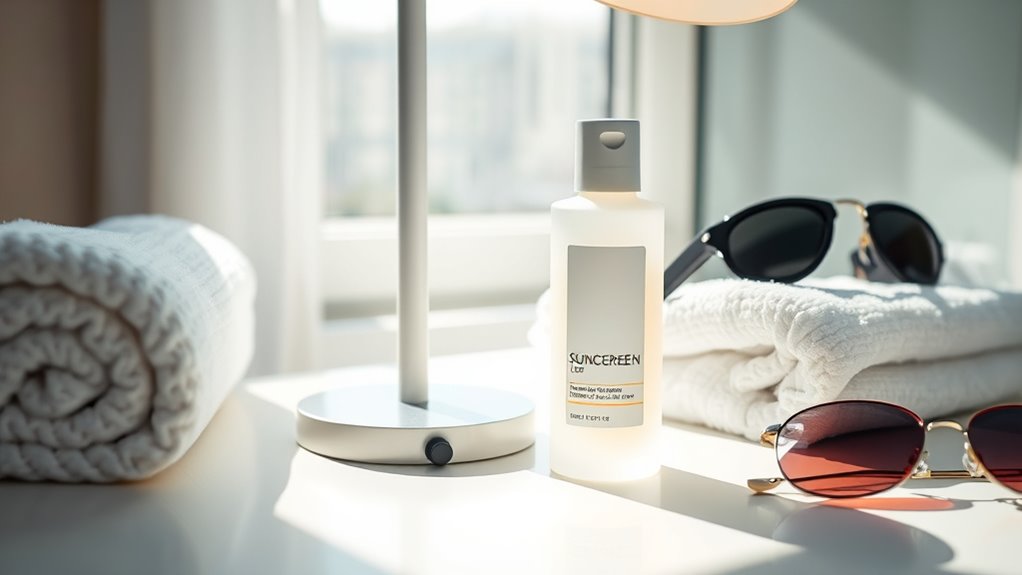

To protect your skin daily from blue light emitted by LED devices, apply a broad-spectrum sunscreen each morning that shields against UVA, UVB, and high-energy visible light. Reapply every two hours if you’re spending extended time in front of screens or outdoors. Consider sunscreens with added ingredients like iron oxides or niacinamide for extra blue light defense. Combining this with screen filters, limiting screen time, and using antioxidants can boost your protection—learn more about staying safe in our modern light-filled world.
Key Takeaways
- Apply a broad-spectrum sunscreen every morning to block UVA, UVB, and blue light from LED devices.
- Reapply sunscreen every two hours during prolonged screen time or outdoor exposure for continuous protection.
- Use sunscreens containing ingredients like iron oxides and niacinamide that specifically shield against high-energy visible light.
- Combine sunscreen use with antioxidants such as vitamin C and E to enhance skin defense against LED-induced free radicals.
- Incorporate additional protective measures like screen filters or blue light glasses to reduce skin exposure from LED devices.

As LED technology becomes increasingly common in everyday devices, many people wonder how it might affect their skin and overall health. While LEDs are widely used in screens, lighting, and even medical treatments, there’s growing interest in understanding how exposure might influence your skin over time. Despite their benefits, LEDs emit blue light, a high-energy visible light that can penetrate deep into your skin layers. This raises questions about potential damage, such as premature aging, pigmentation, or even possible skin inflammation. Fortunately, you can take practical steps, like wearing sunscreen daily, to protect yourself from these effects.
LEDs emit blue light that can penetrate skin; daily protection like sunscreen helps prevent damage and aging.
Wearing sunscreen is more than just a summer habit; it’s a daily essential, especially with the increasing use of LED devices. Broad-spectrum sunscreens protect against both UVA and UVB rays, but blue light from LEDs requires additional consideration. Look for sunscreens containing iron oxides or ingredients like niacinamide, which can help shield your skin from high-energy visible light. Applying sunscreen generously every morning, even on cloudy days, ensures a protective barrier that minimizes blue light penetration. It’s best to reapply every two hours if you’re spending extended periods in front of screens or outdoors. Consistent use creates a defense against potential skin aging and pigmentation caused by blue light exposure. Understanding blue light effects can help you make informed choices about your skincare routine.
In addition to sunscreen, you can adopt other protective habits. Limiting screen time when possible reduces blue light exposure, especially before bed, as blue light can interfere with your sleep patterns. Using screen filters or glasses that block blue light can also be effective. These accessories create an extra layer of defense, reducing how much blue light reaches your skin and eyes. It’s also important to maintain a good skincare routine that includes antioxidants, which help neutralize free radicals generated by blue light exposure. Ingredients like vitamin C and E can reinforce your skin’s resilience against environmental stressors, including LED emissions.
Remember that your skin’s health depends on consistent, detailed care. While sunscreen is essential, combining it with smart device habits and antioxidant-rich skincare enhances your protection. As LED technology becomes more integrated into daily life, staying informed and proactive ensures you minimize potential risks. By making these simple yet effective adjustments, you can enjoy the benefits of modern lighting and screens without compromising your skin’s health. Protecting yourself today helps prevent unwanted skin issues tomorrow, keeping your skin youthful, vibrant, and healthy in our increasingly digital world.
broad spectrum sunscreen for blue light protection
As an affiliate, we earn on qualifying purchases.
As an affiliate, we earn on qualifying purchases.
Frequently Asked Questions
Can LED Lights Cause Premature Skin Aging?
LED lights generally don’t cause premature skin aging. They emit low-energy visible light, which isn’t strong enough to damage your skin like UV rays do. However, prolonged exposure to high-intensity LED lights might contribute to skin issues over time, especially if you don’t protect your skin properly. To stay safe, wear sunscreen and limit direct exposure, particularly with intense or prolonged LED use.
How Often Should I Reapply Sunscreen When Using LED Devices?
You should reapply your sunscreen every two hours when using LED devices, especially if you’re exposed to light for extended periods. The clock’s ticking, and the risk of skin damage increases with time. Even if the device seems gentle, UV rays can still penetrate and harm your skin. Stay vigilant—frequent reapplication keeps you protected, ensuring your skin stays youthful and healthy amidst your daily routine.
Are There Specific Sunscreens Recommended for LED Users?
Yes, you should look for broad-spectrum sunscreens with SPF 30 or higher, specifically those labeled as non-comedogenic and gentle on the skin. Mineral sunscreens containing zinc oxide or titanium dioxide are excellent choices because they offer effective protection without clogging pores or causing irritation. Always choose a sunscreen suited for your skin type and apply it generously 15 minutes before LED treatments for ideal protection.
Do LED Screens Emit Harmful UV Rays?
You might be surprised, but LED screens don’t emit harmful UV rays like the sun does. Instead, they produce blue light, which can cause eye strain and disrupt sleep if you’re exposed for long periods. While UV rays are a concern outdoors, indoors, your screen’s blue light is the main issue. Protect your eyes with good habits and consider blue light filters or glasses to reduce strain and maintain healthy vision.
Is There a Sunscreen Safe for Sensitive Skin When Using LED?
Yes, there are sunscreens safe for sensitive skin when using LED screens. Look for mineral-based options with zinc oxide or titanium dioxide, as they tend to be gentler and free from irritating chemicals. Always choose a fragrance-free, hypoallergenic formula, and do a patch test first. Applying sunscreen daily helps protect your skin from potential irritation caused by prolonged exposure to LED light, ensuring your skin stays healthy and comfortable.
Conclusion
Remember, sunscreen is your shield against the sun’s relentless rays, while LEDs are the guiding lights illuminating your daily path. Together, they symbolize balance—protection and awareness—helping you navigate life’s brightness safely. Keep your defenses strong and stay lit from within, because embracing these habits is like tending a garden of vitality. Protect your skin, nourish your spirit, and let your inner light shine brightly, always prepared for whatever shadows or radiance come your way.