
TL;DR

Get wellness gear delivered free with Prime
- Fast, free delivery on millions of items
- Prime Video, Amazon Music and more included
- Member-only deals all year
A programmer has developed a BASIC interpreter capable of booting on UEFI systems, offering a retro programming environment on modern hardware. The project aims to combine old-school simplicity with current technology standards.
A developer has successfully built a BASIC interpreter that boots directly on UEFI systems, making it possible to run a classic programming environment on modern hardware without relying on traditional operating systems. This development demonstrates the feasibility of low-level programming environments tailored for contemporary firmware standards, attracting interest from hobbyists and retro computing enthusiasts alike.
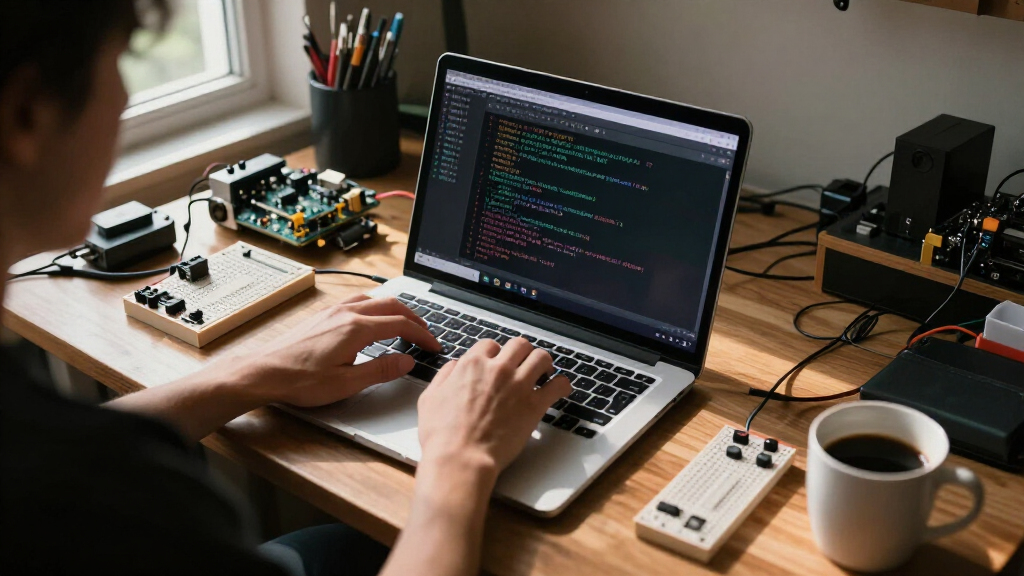
The project, shared on Show HN, involves creating a minimal BASIC interpreter capable of initializing directly from the UEFI firmware interface. Unlike conventional interpreters that run within an OS, this implementation loads during system boot, bypassing the need for an operating system. The developer aimed for a nostalgic, simple environment reminiscent of early personal computing, with features such as line numbers, immediate mode, basic graphics, strings, and arrays.
The implementation leverages UEFI’s boot services to load and execute the interpreter, which then provides a BASIC programming environment accessible immediately after power-on. The developer stated that the project was motivated by a desire for a lightweight, easily portable programming tool that embodies the simplicity of early computing systems, but on modern hardware.
While the project is still in early stages, the developer reports that it successfully boots on several UEFI-compatible machines, including standard PCs and laptops. The code is publicly available, and the developer has shared detailed documentation on how to compile and deploy the interpreter on compatible systems. The project does not yet support all features of traditional BASIC dialects but aims to expand functionality over time.
Potential Impact on Retro Computing and Firmware Development
This development matters because it demonstrates that classic programming environments can be adapted to modern firmware standards, opening new avenues for hobbyists and educators interested in low-level programming. It also showcases the flexibility of UEFI as a platform for custom environments beyond its typical use for bootloading operating systems. For retro computing enthusiasts, this offers a way to run familiar BASIC programs natively on current hardware, bridging the gap between vintage software and modern firmware.
Furthermore, the project highlights possibilities for creating lightweight, self-contained programming tools that operate independently of operating systems, which could have applications in embedded systems, secure boot environments, or specialized hardware configurations. It also serves as an educational resource for understanding UEFI’s capabilities and low-level programming techniques.
As an affiliate, we earn on qualifying purchases.
Background of UEFI and Early Computing Environments
UEFI (Unified Extensible Firmware Interface) has become the standard firmware interface for modern PCs, replacing the traditional BIOS. It provides a flexible, modular environment for initializing hardware and booting operating systems, with support for custom applications and drivers. While UEFI is primarily used for boot management, it also allows developers to write and execute custom code during startup, enabling projects like this BASIC interpreter.
The idea of running BASIC interpreters on early computers dates back to the 1970s and 1980s, when BASIC was a popular language for personal and educational computing. These interpreters typically ran within operating systems like MS-DOS or early versions of Windows. The current project revives this concept but adapts it to the modern UEFI environment, which has not traditionally been used for such purposes.
Previous efforts have focused on creating minimal bootloaders or small operating systems, but few have explored embedding interpreters directly into firmware. This project marks a novel approach, combining retro programming with modern firmware standards, and demonstrates the potential for firmware-level programming environments.
“My goal was to create a small, simple environment where you could write and run BASIC programs immediately after booting, without any operating system overhead.”
— the developer
Limitations and Compatibility Challenges
It is not yet clear how broadly compatible the interpreter is across different UEFI implementations or hardware configurations. The developer reports successful tests on several systems, but comprehensive testing on diverse hardware remains ongoing. Support for advanced graphics, sound, or complex programs is still under development, and stability under various firmware versions is unconfirmed.
Additionally, the security implications of running custom code at firmware level are not fully explored, raising questions about potential vulnerabilities or system stability issues that could arise from such low-level environments.
Upcoming Development Goals and Community Involvement
The developer plans to expand the interpreter’s features, including support for more complex graphics, sound, and file I/O. They also aim to improve compatibility across a wider range of hardware and UEFI firmware versions. Future updates will include detailed documentation and tools to facilitate community contributions.
Community engagement is encouraged, with the developer inviting others to test, modify, and extend the project. The goal is to create a versatile, lightweight programming environment that can serve educational, hobbyist, and experimental purposes.
Key Questions
Can I run this BASIC interpreter on my UEFI system?
If your system supports UEFI and you follow the provided instructions, you should be able to test the interpreter. Compatibility may vary depending on hardware and firmware versions.
What features does the interpreter currently support?
It supports basic line numbers, immediate mode execution, simple graphics, strings, and arrays. More advanced features are planned for future updates.
Is this safe to run on my computer?
The project is experimental and runs at firmware level, which can pose risks if not properly tested. Users should proceed with caution and back up data before testing on primary systems.
Will this project become a full-fledged operating system?
No, the goal is to create a simple, bootable programming environment, not a complete OS. It is intended for educational and hobbyist use.
Source: hn
Cold & flu season Picks
humidifiers
As an affiliate, we earn on qualifying purchases.