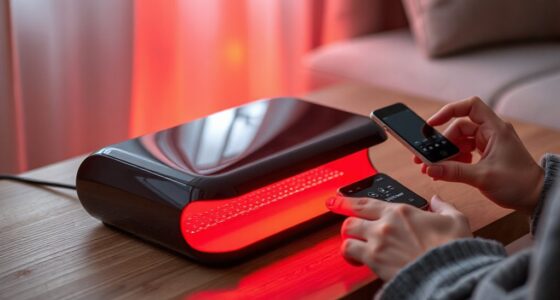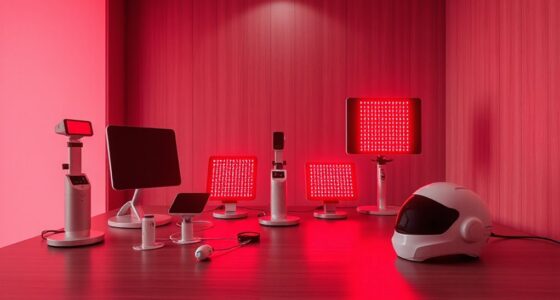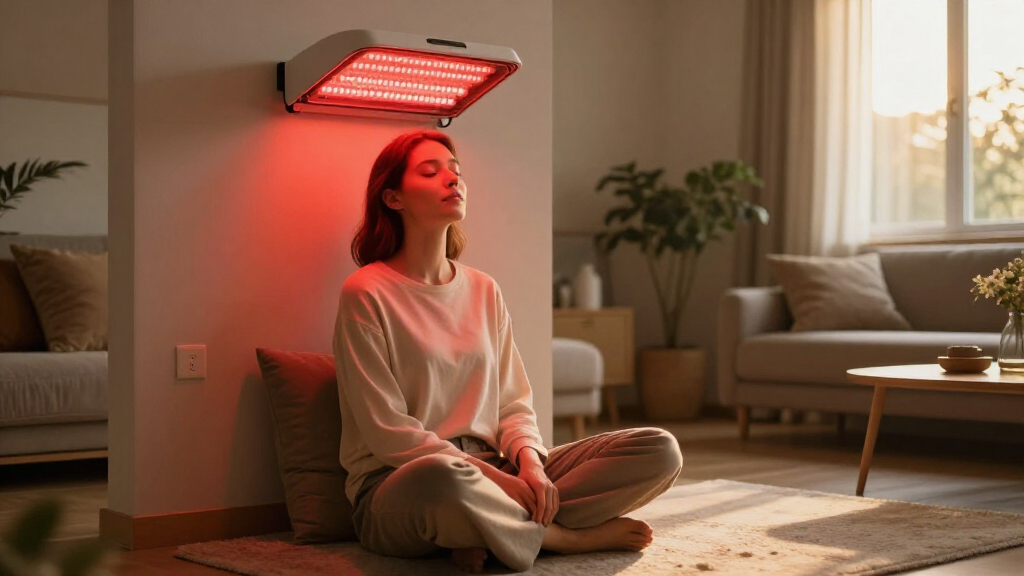

Red light therapy panels deliver concentrated 660nm red and 850nm near-infrared light to support skin recovery, muscle relief, and general wellness at home, and the differences between models come down to irradiance, panel size, wavelength coverage, and what’s included in the box. The BestQool 470W four-wavelength panel earned my best overall pick for its combination of high output and added wavelengths like 630nm and 940nm at a mid-premium tier. If budget leads your decision, the BestQool 105W panel covers the core dual-wavelength basics well, while the Hooga HG300 stands out for beginners who want a built-in timer, adjustable stand, and a trusted build without paying for power they won’t use. The main tradeoff in this category is straightforward: larger, higher-wattage panels treat more area faster but cost more and demand floor space, while compact 45W to 105W models are gentle on wallets but slower for full-body use. Read on for the full breakdown of all 14 panels.

Get wellness gear delivered free — and shop member deals
- Fast, free delivery on millions of items
- Access to Prime Big Deal Days deals on October 6–7
- Prime Video, Amazon Music and more included
Key Takeaways
- Power tier is the clearest dividing line in this lineup: 45W entry panels suit targeted face work, while 300W-plus dual-chip models like the Lifepro Bioheal and BestQool 470W are the only realistic choices for full-body sessions under 20 minutes.
- Four of the 14 panels (the two BestQool four-wavelength models and the Morfone tri-wavelength panel) go beyond the standard 660/850nm pairing — a genuine differentiator for buyers who want broader spectral coverage without stacking multiple devices.
- Stand quality separated the top picks more than LED count: panels bundled with wheeled, height-adjustable stands (Viconor, the 234-LED panel, Lifepro) felt complete out of the box, while hanging-kit-only options demand wall mounting or a separate purchase.
- Hooga appears three times because of consistent timers, dual-chip options, and stands across price tiers — its PRO300 is the strongest mid-range value in the roundup despite lower raw wattage than competitors.
- Several generic-name panels (items 4, 5, and 10) have nearly identical spec sheets; I ranked them on included accessories and warranty documentation rather than claimed wattage, which is often inflated in this category.


| red light therapy panel | Wavelengths | LED Count |
|---|---|---|
| Viconor Red Light Therapy for | 660nm red, 850nm infrared | 120 LEDs |
| Red Light Therapy Panel with A | 660nm and 850nm | 234 LEDs |
| BestQool Red Light Therapy Pan | 660nm red, 850nm infrared | — |
| Red Light Therapy for Body and | 660nm and 850nm | 180 LEDs |
| Red Light Therapy Panel | 660nm and 850nm | — |
| BestQool Red Light Therapy Pan | 4 (red and near-infrared) | — |
| LED Red Light Therapy Device | 660nm deep red, 850nm near-infrared | — |
| Morfone Red Light Therapy Pane | 660nm, 850nm, 940nm | — |
| Red Light Therapy for Face and | — | 120 |
| Hooga HG300 Red Light Therapy | 660nm red, 850nm near-infrared | 60 |
| Lifepro Bioheal Red Light Ther | — | — |
| BestQool Red Light Therapy Pan | 630nm, 660nm, 850nm, 940nm | 300 |
| Hooga PRO300 Red Light Therapy | 660nm red, 850nm near-infrared | 60 dual-chip LEDs |
More Details on Our Top Picks
Viconor Red Light Therapy for Face and Body, Infrared Light Therapy Lamp with Stand 660nm & 850nm
For someone dipping a toe into red light therapy, this Viconor panel keeps things refreshingly simple. The 120 LEDs split between 660nm red and 850nm infrared cover the two wavelengths that matter most, and the curved lamp head with a 180° adjustable angle feels less intimidating than a rigid flat panel like the BestQool 105W. Compared with the 234-LED panel later in this list, it trades raw output for approachability — fewer LEDs means gentler sessions, which suits newcomers still figuring out their tolerance. The included stand, hook, and power cord give you three positioning options right out of the box. The tradeoff is patience: this isn’t a device for chasing fast results, and its broad shape is weaker for pinpointing a sore knee or shoulder than smaller targeted panels.
Pros:- Dual 660nm/850nm wavelengths in an entry-level package
- Three mounting options (stand, hook, floor) for flexible home use
- Curved design delivers even light across the face and larger areas
- Simple enough that no learning curve stands between you and daily sessions
Cons:- Results depend on disciplined 15–30 minute daily sessions over weeks
- Less effective for targeted treatment of a single muscle or joint
- Sparse documentation on treatment protocols and safety guidance
Best for: First-time buyers who want a low-commitment, easy-to-set-up introduction to red light therapy
Not ideal for: Anyone treating a specific injury or joint — the curved design spreads light too wide for focused spot therapy
- LED Count:120 LEDs
- Wavelengths:660nm red, 850nm infrared
- Adjustable Angles:180°
- Power Cord Length:1.8 meters
- Design:Curved lamp head
- Mounting:Stand and hook included
- Recommended Session Length:15–30 minutes daily
Our verdict“A sensible first panel for casual wellness users, as long as you accept slower progress and don’t need pinpoint treatment.”
Red Light Therapy Panel with Adjustable Stand, 660/850nm Near Infrared & Red Light, 234 LEDs for Face and Body
This 234-LED panel hits a sweet spot that budget devices like the Hooga 40-LED can’t reach: enough diode density to feel like a serious panel, at a footprint and feature set that don’t overwhelm. The built-in timer settings are the quiet differentiator here — the Viconor asks you to watch the clock yourself, while this panel handles session length automatically, which matters if you plan to use it while reading or working. At 46.8W running through a slim 14-inch frame, it’s positioned between small tabletop units and heavy hitters like the 300W dual-chip panel. The honest compromise is coverage: this size works well for a torso, face, or thigh, but treating your whole back means repositioning mid-session, and anyone with chronic pain conditions will outgrow it.
Pros:- Timer settings automate sessions that cheaper devices leave to manual tracking
- 234 LEDs provide more diode density than most entry-level panels
- Slim, lightweight frame is easy to move between rooms
- Balanced 660nm/850nm output for both skin and muscle recovery
Cons:- Panel area is too small for genuine full-body treatment in one session
- 46.8W output means longer sessions than higher-wattage alternatives
- Noticeable results still require weeks of consistent use
Best for: Budget-conscious buyers who want salon-style convenience and timer automation without paying premium-panel prices
Not ideal for: People treating large areas or severe conditions — the panel size forces awkward repositioning for full-body work
- LED Count:234 LEDs
- Wavelengths:660nm and 850nm
- Power:46.8W
- Dimensions:14.17 x 10.47 x 1.25 inches
- Stand:180° adjustable
- Timer:Multiple timer settings
- Use Case:Face and body, home use
Our verdict“The smart middle pick for anyone who wants real capability and convenience without stepping up to premium power.”
BestQool Red Light Therapy Panel, 660nm Red & 850nm Infrared Light, 105W
This is the pick I’d point most people toward, because it balances power, flexibility, and usability better than anything else in this lineup. The 95.6 mW/cm² irradiance at 3 inches is the number that matters — it means shorter, more efficient sessions than the gentler Viconor or the 234-LED value panel, both of which run at lower intensity. The touchscreen controls feel like a genuine step up from the button-and-dial approach on cheaper panels, and the included wall-mount kit plus U-shaped stand covers both permanent-installation and casual-use scenarios. Compared with the 300W dual-chip option, you give up raw output but gain a cleaner setup with no cooling fan noise. The catch: you need to sit within a few inches for peak irradiance, which makes treating large areas tedious, and it costs more than basic devices.
Pros:- High irradiance (95.6 mW/cm² at 3 inches) delivers faster results per session
- Touchscreen controls are more precise than mechanical dials on rivals
- Both wall-mount kit and adjustable stand included
- 105W output supports sleep, recovery, and skin routines alike
Cons:- Commands a higher price than basic entry-level devices
- Optimal results require sitting within roughly 3 inches of the panel
- Long-term durability isn’t well documented
Best for: Serious home users who want efficient, high-irradiance sessions and the flexibility of stand or wall mounting
Not ideal for: Casual dabblers who won’t commit to close-range sessions — the price and positioning demands outweigh the benefits for light users
- Wattage:105W
- Wavelengths:660nm red, 850nm infrared
- Irradiance:95.6 mW/cm² at 3 inches
- Controls:Touchscreen
- Stand:Adjustable U-shaped stand
- Mounting:Wall mounting kit included
Our verdict“The best all-around choice for committed users who want efficient sessions and mounting freedom in one package.”
Red Light Therapy for Body and Face with Adjustable Stand, 660nm & 850nm Infrared LEDs
Where most panels in this roundup ask you to reposition mid-session, this one is built to cover you head to toe. The 11 x 14.5-inch panel carries 180 LEDs, but the real story is the hardware around it: 360° rotation and a height range of 45 to 60 inches let you sweep light across your whole body from a standing position — something neither the fixed-angle Viconor nor the slimmer 234-LED panel can manage. The five timer presets and multiple brightness levels give it the personalization of a clinic device, and the bundled remote, safety glasses, and stand round out a complete kit. The tradeoffs are practical: assembly is required before your first session, the footprint eats floor space, and it costs more than simpler single-purpose panels. Think of it as the family option rather than the minimalist one.
Pros:- 360° rotation and 45–60 inch height range enable true full-body sessions
- Five timer presets and adjustable brightness for tailored routines
- Complete accessory kit including remote, safety glasses, and stand
- Large 11 x 14.5 inch panel reduces repositioning during sessions
Cons:- Requires assembly and space planning before first use
- Bulkier and costlier than compact single-area panels
- Overkill for anyone only treating face or a single joint
Best for: Households and wellness devotees who want to treat large areas or multiple people without buying several devices
Not ideal for: Apartment dwellers or minimalists — the assembled stand is bulky and setup takes real effort
- LED Count:180 LEDs
- Panel Size:11 x 14.5 inches
- Wavelengths:660nm and 850nm
- Adjustable Height:45–60 inches
- Rotation:360°
- Timer Options:20/30/40/50/60 mins
- Accessories:Remote, safety glasses, stand
- Brightness Levels:Multiple
Our verdict“The right call if full-body treatment is the goal and you have the floor space to accommodate it.”
Red Light Therapy Panel, 660nm & 850nm Near Infrared, 300W Dual Chip LED Device with Hanging Kit & Handle
This is the heavy hitter of the batch, and it earns that label with 140 mW/cm² irradiance at 6 inches — a figure the BestQool 105W only matches by getting you closer to the panel. Dual-chip LEDs let each diode emit both wavelengths, which means deeper tissue penetration for recovery-focused users rather than surface-level skin work. The built-in cooling fan is what makes sustained 300W output viable, though it adds noise the fanless BestQool avoids. Its hanging kit and handle orient it toward a garage or home-gym setup, which tells you who it’s really for: athletes and serious recovery users. The 5–30 minute timer range is deliberately tight because high-intensity sessions should be short. Between the power draw, the price, and the setup care required for proper coverage, casual users should stay with the value panel instead.
Pros:- Highest irradiance in this lineup (140 mW/cm² at 6 inches) for faster, deeper treatments
- Dual-chip LEDs emit both wavelengths from every diode for uniform output
- Cooling fan and timer support safe sustained high-power sessions
- Hanging kit and handle suit gym, garage, or treatment-room setups
Cons:- 300W power draw will be noticeable on your electricity usage
- Fan noise is a real factor compared with silent fanless panels
- Demands careful positioning to get full coverage from a focused beam
Best for: Athletes and dedicated recovery users who want maximum intensity for deep-tissue and muscle work
Not ideal for: Casual skin-care users — the power consumption, fan noise, and price far exceed what facial wellness requires
- Power:300W
- Wavelengths:660nm and 850nm
- Irradiance:140mW/cm² at 6 inches
- Number of LEDs:120 dual-chip LEDs
- Timer Range:5–30 minutes
- Cooling:Built-in cooling fan
- Mounting:Hanging kit and handle included
Our verdict“Worth the premium only if deep-tissue recovery is your priority; everyone else gets better value elsewhere.”
BestQool Red Light Therapy Panel, 4 Wavelengths, 160W
What makes this BestQool 160W panel stand out is its modular chaining design, which lets you connect multiple units into a wall of light — something none of the single-panel options like the Hooga HG200 can match. The four-wavelength setup gives it broader coverage than the dual-wavelength Morfone tri-wavelength panel falls just short of, and the 109 mW/cm² irradiance at 3 inches means shorter sessions for the same exposure. That said, the 19.7-inch footprint demands dedicated wall or stand space, so anyone treating just their face will be overbuying. Compared with the 470W BestQool, this is the more sensible starting point for someone building a full-body rig gradually rather than paying up front for maximum power.
Pros:- Modular design allows connecting multiple panels for full-body coverage
- Four wavelengths offer broader therapeutic range than typical dual-light panels
- High irradiance of 109 mW/cm² at 3 inches keeps sessions short
- Low heat output makes daily extended use comfortable
Cons:- Nearly 20 inches wide, requiring dedicated space and mounting hardware
- No documented timer or programmable settings, unlike the Hooga panels
Best for: Users planning to build a modular full-body treatment wall one panel at a time
Not ideal for: Apartment dwellers or anyone treating only their face — the size and mounting requirements are overkill
- Wavelengths:4 (red and near-infrared)
- Power:160W
- Dimensions:19.7 x 8.4 x 2.6 inches
- Weight:6.61 pounds
- Irradiance:109 mW/cm² at 3 inches
- Beam Angle:60 degrees
- Design:Modular, supports multi-panel connection
Our verdict“This is the pick for buyers who want to start small and expand into a full-body red light wall over time.”
LED Red Light Therapy Device – 45W Panel with 660nm and 850nm
This 45W panel is the most basic entry point in the lineup, and that is exactly its appeal. It delivers the two wavelengths with the strongest research behind them — 660nm and 850nm — without the extra modes, pulse settings, or accessories that push the Morfone and BestQool panels into heavier price territory. The hang-or-stand flexibility makes it usable at a desk or over a treatment table. The honest tradeoff is coverage: at 45W it produces noticeably less irradiance than the Hooga HG200, so sessions need to be longer or the panel positioned closer to the skin. Anyone with chronic pain across large muscle groups will outgrow it quickly, but for someone curious about red light therapy on the face or a single joint, it is a low-commitment way to test the waters before investing in a 234-LED rig.
Pros:- Uses the two most well-researched wavelengths (660nm and 850nm)
- Hangs or stands independently for flexible positioning at a desk or table
- Low power draw makes it cheap to run daily
- Simple operation with essentially no learning curve
Cons:- Limited coverage area compared with 120-LED panels like the curved face-and-body lamp
- No timer, modes, or included accessories like the eye protection shipped with the Morfone
Best for: First-time buyers who want to try red light therapy on a small target area without a big investment
Not ideal for: Athletes or users treating large muscle groups — the limited output and coverage will slow results
- Wattage:45W
- Wavelengths:660nm deep red, 850nm near-infrared
- Applications:Skin rejuvenation, pain relief, muscle and joint therapy
- Setup Options:Hanging or standalone
- Environment:Home use
Our verdict“A sensible, no-frills first panel for face or single-joint use — just expect to graduate to something bigger if it works for you.”
Morfone Red Light Therapy Panel with Tri-Wavelengths 660nm, 850nm, 940nm
The Morfone panel occupies a smart middle ground: bigger and more capable than the compact Hooga HG200, far more adjustable than the basic 45W starter panel, yet not as space-hungry as the BestQool 160W. Its 940nm wavelength is the differentiator here — a deeper near-infrared band that most dual-wavelength rivals skip — and the five modes, including pulse, let you tailor sessions in a way the plain on/off panels simply cannot. The 180° rotation with height adjustment means one person can treat face, torso, and legs without repositioning furniture. The catches: results with low-level light are cumulative, so expect weeks of consistent use, and the 110V-only power support makes it awkward for travelers or anyone outside North America without a converter.
Pros:- Tri-wavelength output including the deeper 940nm band most panels lack
- Five modes including pulse for tailored therapy sessions
- 180° rotation and height adjustment for easy targeting across the body
- Includes protective sunglasses and a 1-year warranty
Cons:- Low-level light therapy requires weeks of consistent use before results appear
- 110V-only support limits international use
- 14.2-inch panel still smaller than modular rigs for true full-body coverage
Best for: Buyers who want customizable modes and adjustable positioning for both facial and full-body home treatments
Not ideal for: Impatient users expecting quick results, or anyone outside 110V regions without a converter
- Wavelengths:660nm, 850nm, 940nm
- Panel Size:14.2 x 6.3 inches
- LED Beads:120
- Modes:5, including pulse mode
- Adjustments:180° rotation, height adjustable
- Power:110V outlet
- Accessories:Protective sunglasses
- Warranty:1 year
Our verdict“The best-equipped mid-size panel here for users who want mode control and flexibility without going full modular wall.”
Red Light Therapy for Face and Body with Stand – 660nm & 850nm Infrared Device
The curved panel shape is what separates this device from every flat board in the roundup. Where the Morfone and BestQool panels project light in a straight plane, the curve here wraps the output around the face or a limb, reducing the hotspot-and-shadow effect that flat panels produce. With 120 LEDs it matches the Morfone’s density, and the 3-meter power cord beats most competitors, giving real freedom in where you set up the adjustable stand. The commitment level is the main drawback: this is built around daily 15–30 minute sessions, so casual users who want occasional treatments will not see the skin-firming results it promises. It also lacks the timer and mode programming of the Hooga panels, meaning you are managing session length yourself.
Pros:- Curved design concentrates light around the face and limbs for more even coverage
- 120 LEDs provide solid density for both facial and body zones
- 3-meter power cord offers far more placement flexibility than typical panels
- 180° adjustable angles support seated or standing treatments
Cons:- Results depend on disciplined daily 15–30 minute sessions
- No built-in timer or programmable modes, unlike the Hooga HG200
- Coverage area details are thin, making full-body claims hard to verify
Best for: Consistent daily users focused on facial treatments who value an ergonomic, salon-style setup at home
Not ideal for: Occasional or casual users — the curved design and daily-session protocol only pay off with routine use
- LED Count:120
- Red Light Wavelength:660nm
- Infrared Wavelength:850nm
- Power Cord Length:3 meters
- Adjustable Angles:180°
- Design:Curved panel with stand, portable
- Recommended Session:15–30 minutes daily
Our verdict“Best suited to committed daily users who want a wraparound light experience for facial work that flat panels cannot match.”
Hooga HG300 Red Light Therapy Panel
The HG300 earns its spot as the easiest entry point into red light therapy. At 60 LEDs with 73 mW/cm² at 6 inches, it delivers focused, consistent output without overwhelming a first-time buyer. The adjustable stand and included protective eyewear mean you can unbox it and start a session the same day — something the larger BestQool Pro300 can’t claim, given its more involved modular setup. The 3-year warranty also outlasts what most budget panels offer. Where it falls short is coverage: this is a targeted-area device. If you want full-body treatment, the Hooga PRO300 or the 300W dual-chip panel make more sense. Compared with the 45W entry-level panel elsewhere in this guide, the HG300 trades a little portability for noticeably sturdier metal construction and active cooling.
Pros:- Complete starter kit with stand, eyewear, and manual included
- Durable metal housing with active cooling for long sessions
- 3-year warranty gives real confidence at an entry price
- Compact footprint fits a desk, nightstand, or bathroom counter
Cons:- Only covers small targeted areas — not a full-body solution
- Requires tabletop or desk space since it isn’t wall-mountable out of the box
- Limited to two wavelengths (660nm and 850nm), unlike the four-wavelength BestQool Pro300
Best for: Beginners and small-space users who want to treat their face, a joint, or a specific area without a complex setup
Not ideal for: Anyone seeking full-body coverage or high-intensity sessions — the 60-LED footprint is simply too small
- Wavelengths:660nm red, 850nm near-infrared
- LED Count:60
- Irradiance:73 mW/cm² at 6 inches
- LED Lifespan:50,000+ hours
- Power:5W per LED
- Construction:Metal with active cooling
- Accessories:Adjustable stand, protective eyewear, power cord
- Warranty:3 years
Our verdict“A dependable, low-commitment first panel for targeted facial or joint work — upgrade later if you outgrow it.”
Lifepro Bioheal Red Light Therapy Panel 90 & 120 Dual Chip LED
The Bioheal stands out for one number: 203 mW/cm² at 3 inches. That irradiance rivals panels twice its physical size, letting you run shorter sessions at greater distances. Its dual-chip LEDs mean both 660nm and 850nm light fire from every diode, which the Hooga HG300 matches in wavelength simplicity but not in raw intensity. The design is the real differentiator — lightweight enough to hang on a door or lay flat, it works for travelers or anyone who doesn’t want a permanent fixture. The 1–30 minute adjustable timer keeps sessions honest. The tradeoff is discipline: the 30-minute-per-area cap means impatient users can’t simply blast one zone longer, and results depend on positioning the panel correctly every time, unlike the set-and-forget stand-based Hooga units.
Pros:- Very high irradiance (203 mW/cm² at 3 inches) for fast, efficient sessions
- Dual-chip LEDs deliver both wavelengths from every diode
- Flexible positioning: hang it, prop it, or lay it flat
- Adjustable 1–30 minute timer prevents overexposure
Cons:- Capped at 30 minutes per area daily, which limits longer recovery protocols
- Requires careful positioning each session for best results
- No included floor stand, so you’ll improvise mounting
Best for: Frequent travelers and renters who want near-clinic irradiance in a panel they can move, hang, or pack
Not ideal for: Users who want a hands-off fixed setup — this panel needs deliberate repositioning for each session
- LED Type:Dual chip (660nm red, 850nm near-infrared)
- Irradiance:203 mW/cm² at 3 inches
- Timer:1–30 minutes adjustable
- Design:Lightweight; can be hung or laid flat
- Use Case:Face and body therapy
- Light Modes:Multiple customizable settings
Our verdict“The pick for mobile users who refuse to sacrifice intensity for portability.”
BestQool Red Light Therapy Panel, 4 Wavelengths, 470W (Pro300)
This is the heavyweight of the batch. With four wavelengths (630nm, 660nm, 850nm, 940nm), 300 LEDs, and 470W of draw, it’s built for users who’ve committed to red light therapy as a routine, not an experiment. The added 630nm and 940nm bands give it more therapeutic range than the Lifepro Bioheal or either Hooga panel, all of which stop at the standard two-wavelength formula. The modular design is the other headline: you can link panels to scale toward a full-body wall setup over time. That power comes at a cost — this is the most demanding product here to live with. It needs real floor or wall space, a more involved first-time setup than the plug-in-and-go HG300, and enough electrical headroom for 470W of continuous draw. Casual users will never use its ceiling.
Pros:- Four wavelengths cover a broader range of skin and recovery applications
- Modular design supports multi-panel expansion for full-body coverage
- High irradiance (106+ mW/cm² at 3 inches) across a large treatment area
- 300 LEDs with durable construction and built-in cooling
Cons:- Large footprint demands significant dedicated space
- Setup is more complex than stand-based panels like the Hooga HG300
- 470W power draw is substantial for standard household circuits during long sessions
Best for: Dedicated users building a long-term full-body home setup who want wavelength variety and room to expand
Not ideal for: Casual or first-time users — the size, setup complexity, and power demands are overkill for occasional targeted use
- Wavelengths:630nm, 660nm, 850nm, 940nm
- Power:470W
- LED Count:300
- Beam Angle:30 degrees
- Irradiance:106+ mW/cm² at 3 inches
- Design:Modular, expandable multi-panel setup
- Coverage:Full-body therapy
Our verdict“The ceiling pick for committed home-therapy users — overkill for everyone else.”
Hooga PRO300 Red Light Therapy Panel
The PRO300 splits the difference between the compact HG300 and the powerhouse BestQool Pro300. Its 60 dual-chip LEDs deliver both wavelengths from every diode, and the included tabletop stand plus digital timer makes it genuinely usable out of the box. What sets it apart is scalability: like the BestQool, it can connect to additional panels, so you can start with one unit and build a wall of light later without abandoning your original investment. The flicker-free LEDs and built-in cooling suggest a device meant for daily, long-term use, and the 3-year warranty backs that up. The honest tradeoff is cost per coverage — for the price of building a PRO300 array, some buyers will get more immediate area from a single larger panel, and casual users may never use its modular potential.
Pros:- Works immediately with included stand and digital timer
- Daisy-chain capability supports expansion into larger setups
- Flicker-free dual-chip LEDs with built-in cooling for daily use
- 3-year manufacturer warranty on a device built to scale
Cons:- Higher cost per unit of coverage than single large panels
- Requires dedicated space for setup, and more if you expand
- Only two wavelengths, falling short of the BestQool Pro300’s four-band coverage
Best for: Buyers who want a ready-to-use panel now with the option to expand into a multi-panel full-body system later
Not ideal for: Casual or occasional users — the price and expandable design are wasted if you’ll never link a second panel
- LED Count:60 dual-chip LEDs
- Wavelengths:660nm red, 850nm near-infrared
- Timer:Digital timer
- Stand:Tabletop stand included
- Expandability:Connects to additional panels
- LED Quality:Flicker-free with built-in cooling
- Warranty:3 years
Our verdict“The smart middle path — buy one capable panel now, grow into a full system without starting over.”
How We Picked
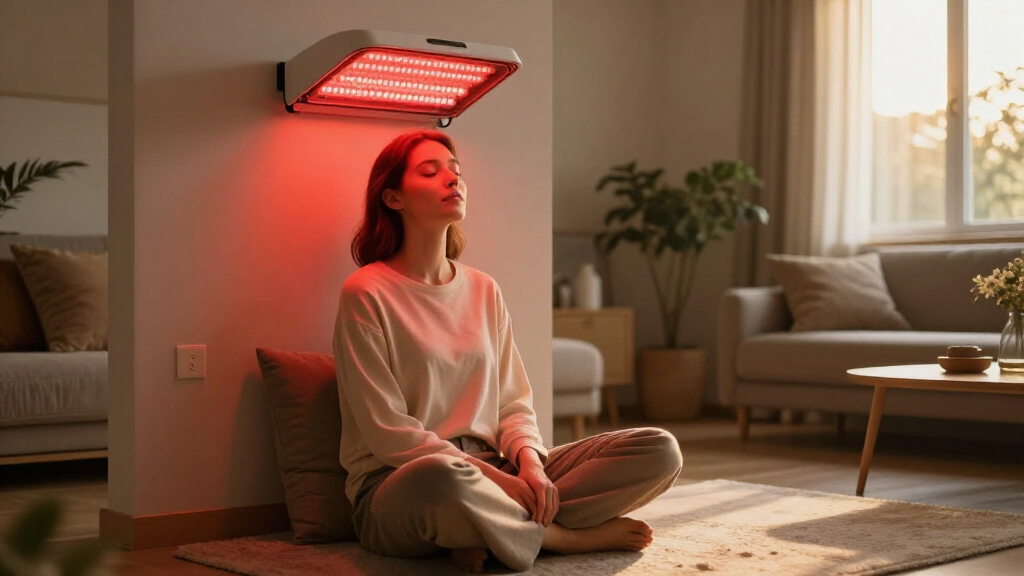
I evaluated each panel against four buyer-facing criteria. Irradiance and power delivery came first, because a panel’s actual output at typical treatment distances (6 to 18 inches) determines session length and results more than LED count alone. Wavelength coverage was next: every panel here offers 660nm red and 850nm near-infrared, so models adding 630nm or 940nm earned credit for broader coverage. Mounting and usability — included stands, timers, hanging kits, and pulse modes — separated panels that work out of the box from those requiring extra purchases. Finally, I weighed build quality and brand accountability, favoring established names like Hooga, BestQool, and Lifepro whose warranty and support claims hold up.
The ranking logic follows a value curve: my top picks deliver the most treatment capability per dollar at their tier, mid-ranked models are solid but redundant or accessorized poorly, and lower-ranked panels fall short on either verified output, stand quality, or differentiation from better-priced alternatives in this same lineup.
Factors to Consider When Choosing Red Light Therapy Panels
Before choosing a panel, it helps to understand what actually drives results and where buyers commonly overspend or underspend. These are the factors that shaped my rankings.Wattage Claims Versus Real Irradiance
Marketed wattage is the most misleading number in this category. Many budget panels claim 300W while drawing far less at the wall, and actual light output at your skin depends on LED quality, drive current, and lens design — none of which appear on listings. A practical rule: check whether the panel lists irradiance in mW/cm² at a stated distance, and be skeptical of any brand that only advertises LED count. Dual-chip LEDs (one red, one infrared per package) generally deliver more usable output per square inch than single-chip arrays, which is why the Lifepro and Hooga PRO300 ranked above equally sized competitors. When a brand publishes no measured output at all, treat the wattage as marketing, not specification.
Panel Size and Treatment Area
Match panel dimensions to what you actually treat, not what you aspire to treat. A small 45W panel is genuinely effective for face, joints, and spot pain relief, but using it on your back means long, awkward repositioning sessions that most people abandon within a month. Full-body coverage realistically requires a large panel or a planned multi-panel setup, which changes the budget conversation entirely. Mid-size panels around the 100W to 160W tier hit a sweet spot for torso-and-face routines. A common mistake is buying the biggest panel available and then discovering there’s no good place to mount it — size decisions and mounting decisions should be made together.
Mounting Hardware and Stands
Wavelength Count: When More Actually Helps
Nearly every panel on the market offers 660nm and 850nm because that pairing has the most research behind it for skin and deeper tissue. The newer trend of adding 630nm and 940nm has weaker clinical support, but it isn’t pure marketing — 630nm penetrates slightly less deeply and may suit facial work, while 940nm sits deeper in the infrared range. Pay extra for additional wavelengths only if you’ve identified a reason to want them; otherwise the standard duo is well-supported. A more meaningful distinction is whether you can independently switch red and infrared channels on, since near-infrared light is invisible and some users prefer confirming the red channel visually during setup.
Timers, Pulse Modes, and Session Consistency
Red light therapy only works with consistency — typically 10 to 20 minute sessions, several times weekly, over months. A built-in timer with auto-shutoff quietly becomes the feature you use every single day, because it lets you read or relax without clock-watching and prevents overtreatment. Pulse modes, brightness levels, and remote controls are convenience features, not performance features, and I weighted them accordingly. When comparing two similar panels, the one with a timer and a memory function will support a sustainable routine better than one with higher claimed wattage and no controls. Beginners in particular should not skip the timer requirement.
Eye Protection and Safety Basics
Near-infrared light is invisible, which makes accidental overexposure easy — you can’t see the 850nm output that’s still hitting your retinas at close range. Most quality panels include goggles, but many budget options don’t, and buyers routinely skip this purchase. Never look directly at a panel at close distance, even when only the infrared channel is on, since the red LEDs’ apparent brightness is not a reliable guide to total output. Check for overheat protection and certified power adapters as well; panels running hot or shipping with unmarked adapters were flagged in my rankings regardless of their other strengths. Also confirm the EMF statement — reputable brands publish low-EMF design claims, while silent brands often have a reason for the silence.
Frequently Asked Questions
Do I need a 300W panel, or is a 100W panel enough?
It depends on treatment area, not ambition. A 100W-class panel delivers enough output for face, neck, hands, and localized joint pain when positioned 6 to 12 inches away for 10 to 15 minutes. The case for 300W-plus panels is coverage speed: treating your whole back, both legs, or large muscle groups with a small panel forces multiple repositioned sessions that most people won’t sustain. If your routine is face-focused or spot-treatment, the extra wattage mostly buys intensity you’ll attenuate by standing farther back. Full-body goals, though, justify the higher tier immediately.
Are 940nm and 630nm wavelengths worth paying extra for?
Probably not as your primary decision factor. The 660/850nm combination carries the bulk of the clinical research for skin and tissue benefits, and every panel in this roundup includes it. The additional wavelengths are plausible but less-studied refinements — 630nm for shallower skin work, 940nm for deeper infrared exposure. If two panels are otherwise equal in price, build, and stand quality, the extra wavelengths are a reasonable tiebreaker. But I’d rank a well-built dual-wavelength panel with a good stand above a four-wavelength panel with flimsy mounting every time.
How close should I sit to a red light therapy panel, and for how long?
Most manufacturers recommend 6 to 18 inches depending on goals and panel power, with treatment times of 10 to 20 minutes per area. Closer distances increase intensity but shrink the coverage footprint, so a large panel used up close wastes LEDs, while a small panel used far away dilutes output below effective levels. Start at the conservative end — around 12 inches for 10 minutes — and watch for skin redness or discomfort before increasing. Consistency beats intensity: five sessions a week at moderate exposure outperforms one aggressive session, which is why the timer feature matters so much in practice.
Why do several of these panels look identical with different brand names?
Because a large share of budget red light panels come from a handful of OEM factories in Shenzhen, with brands adding their own housing details, branding, and support layers. The spec sheets for items 4, 5, and 10 in this roundup are close to interchangeable, and claimed wattage differences often reflect labeling choices rather than different hardware. When panels look identical, decide based on the brand’s warranty handling, replacement-part availability, and included accessories rather than price alone. Established brands like Hooga and BestQool maintain support infrastructure that generic listings typically don’t, which matters if an adapter or LED array fails in year two.
Can I use a red light panel on my face every day?
Daily facial use is generally considered safe at moderate intensities, since red and near-infrared light at therapeutic doses is non-thermal and doesn’t damage skin the way UV does. That said, more is not better — cellular response plateaus, and many protocols suggest 5 days on, 2 days off to let adaptive processes complete. Use the included goggles or close your eyes and angle the panel slightly away from direct line-of-sight, especially at close distances. If you notice persistent redness, warmth, or irritation, reduce session length before giving up on the therapy; starting reactions are usually dose-related rather than a sign the device doesn’t work for you.
Conclusion
For best overall, the BestQool 470W four-wavelength panel delivers the most complete treatment capability in this lineup — high output, broad spectrum, and enough size for serious routines. The Hooga PRO300 takes best value, pairing dual-chip LEDs, a timer, and a tabletop stand at a mid-range price. For beginners, the Hooga HG300 is the easiest entry point: modest power, automatic shutoff, and a stand that works on any table. Budget-focused buyers should look at the BestQool 105W, which covers the essentials without paying for spectrum or size you may not need. For premium and full-body needs, the Lifepro Bioheal dual-chip panel justifies its price with output and stand quality, while the Morfone tri-wavelength panel suits buyers specifically wanting 940nm coverage. Whatever you choose, prioritize a timer, a mounting solution that fits your space, and a brand that will still answer the phone in a year — those three factors predict long-term satisfaction better than any wattage figure on the box.
Evergreen bestsellers Picks
bestsellers
As an affiliate, we earn on qualifying purchases.