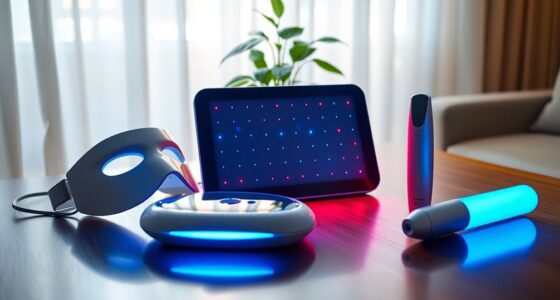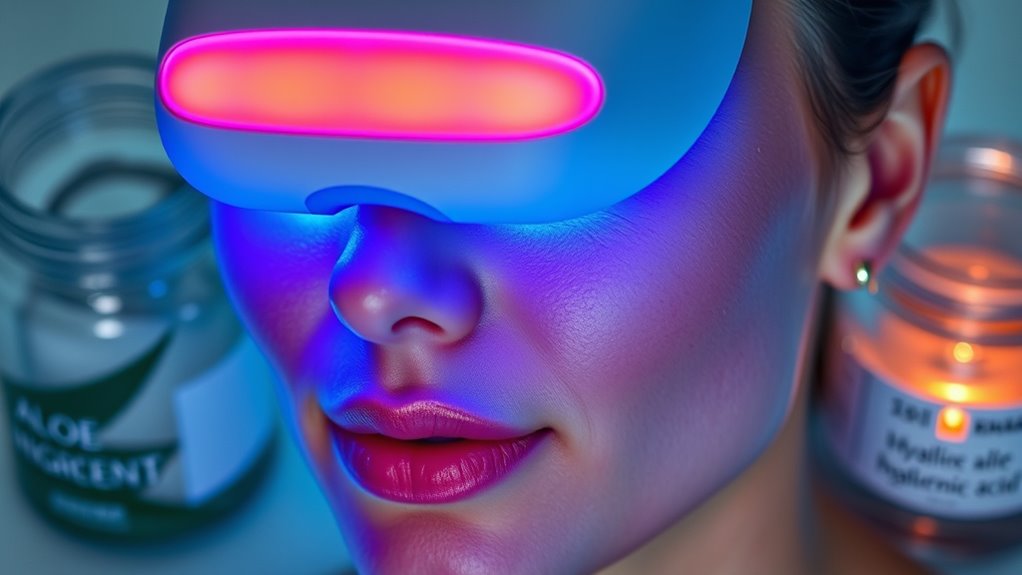

To effectively combine LED therapy with skincare, focus on using stable, compatible products that enhance light penetration. Look for ingredients like stabilized vitamin C, hyaluronic acid, and niacinamide, which support skin barrier health and don’t degrade under light or heat. Avoid unstable ingredients that can hinder light absorption or cause irritation. When you choose the right formulations, your skin can respond better, maximizing LED treatment results—more details can help you optimize your skincare routine for this combination.
Key Takeaways
- Use stable, light-compatible skincare ingredients like stabilized vitamin C and hyaluronic acid to maintain efficacy during LED treatments.
- Prioritize products that enhance skin barrier function, such as niacinamide, to improve light penetration and treatment results.
- Avoid ingredients prone to degradation or irritation under LED exposure to prevent barrier disruption and ensure optimal light absorption.
- Select formulations designed for compatibility with LED therapy to prevent interference and maximize treatment effectiveness.
- Consistently apply compatible skincare products to support deeper light penetration and improve overall LED therapy outcomes.

LED therapy has gained popularity for its ability to improve skin health, but combining it with specific skincare ingredients can enhance its benefits even further. When you incorporate certain ingredients into your routine, you can maximize the effects of light therapy by promoting better light penetration and maintaining ingredient stability. Light penetration is vital because LEDs work by delivering specific wavelengths of light into the skin to stimulate cellular activity. If your skincare products aren’t compatible, they can create barriers that hinder this process, reducing the therapy’s effectiveness. That’s why selecting ingredients that are stable under LED exposure is indispensable. Some ingredients tend to degrade when exposed to light or heat, which diminishes their potency and, consequently, their benefits during your treatment.
For ideal results, you want ingredients that can withstand the light energy delivered during LED sessions. For example, antioxidants like vitamin C are popular for their brightening and anti-aging properties, but they’re notoriously unstable when exposed to light and air. To prevent degradation, opt for stabilized forms of vitamin C, such as magnesium ascorbyl phosphate or sodium ascorbyl phosphate, which remain effective even after exposure to LED light. Similarly, hyaluronic acid is a stable, hydrating ingredient that enhances skin plumpness and helps your skin absorb light more effectively. When your skincare products contain ingredients with proven stability, you ensure they remain active during your LED treatments, allowing the light to work synergistically with these components.
Another key point is that certain ingredients can actually improve light penetration. For instance, niacinamide not only offers anti-inflammatory and brightening benefits but also helps strengthen the skin barrier. A stronger barrier allows for better light delivery into deeper skin layers. However, if your products contain unstable ingredients or those that cause irritation, you might compromise the skin’s ability to absorb light effectively. Always choose formulations that prioritize ingredient stability and compatibility with light therapy. Using products designed to be stable under LED exposure guarantees that you’re not just applying skincare for the sake of it but actively enhancing the treatment’s efficacy.

Plant Therapy Vitamin C Face Serum & Hyaluronic Acid 1 oz
- Vitamin C & Hyaluronic Acid: Promotes a radiant glow and reduces UV damage
- Evens Skin Tone: Smooths skin and diminishes fine lines and wrinkles
- Hydrates Skin: Provides extra moisture and improves skin retention
As an affiliate, we earn on qualifying purchases.
As an affiliate, we earn on qualifying purchases.
Frequently Asked Questions
Can LED Therapy Replace Traditional Skincare Treatments?
LED therapy can’t fully replace traditional skincare treatments like chemical peels or microdermabrasion, but it can complement them effectively. While LED therapy targets skin issues with light-based healing, chemical peels and microdermabrasion offer deeper exfoliation and resurfacing. You might choose LED therapy for gentle, non-invasive improvement or combine it with other treatments for ideal results. It’s not a complete substitute but a valuable part of your skincare routine.
Are There Any Side Effects From Combining LED Therapy With Skincare Products?
Sure, you might think combining LED therapy with skincare products is perfectly safe, but watch out for side effects like increased laser sensitivity or unexpected ingredient interactions. Sometimes, your skin reacts with redness or irritation, making the treatment less effective. It’s ironic—what’s meant to enhance your skin can cause issues if ingredients aren’t compatible. Always consult a professional to avoid these pitfalls and protect your skin’s health.
How Long Should I Wait Between LED Sessions and Applying Skincare Ingredients?
You should wait about 30 minutes between your LED therapy sessions and applying skincare ingredients. This timing guideline guarantees your skin fully benefits from the LED treatment without interference. Always consider ingredient compatibility; avoid harsh acids or retinoids immediately after LED sessions, as they can cause irritation. Giving your skin time to recover helps maximize results and minimizes potential side effects.
Is It Safe to Use Active Ingredients Like Retinol With LED Therapy?
Did you know over 60% of skincare users combine treatments? Yes, you can use retinol with LED therapy, but ingredient compatibility and safety considerations matter. Retinol is generally safe during LED sessions, but it can increase skin sensitivity. Always consult with a dermatologist, especially if you have sensitive skin, and follow recommended guidelines to prevent irritation. Proper timing and understanding ingredient interactions guarantee safe, effective results.
Can LED Therapy Improve Skin Conditions Like Rosacea or Eczema?
Yes, LED therapy can improve skin conditions like rosacea and eczema by providing LED benefits such as reducing inflammation and calming irritated skin. It promotes skin improvement by enhancing blood circulation and encouraging cell repair. You’ll notice a reduction in redness and discomfort with regular treatments. Just make certain you use the therapy under professional guidance, especially for sensitive conditions, to maximize benefits and avoid any adverse effects.
Conclusion
Think of combining LED therapy with skincare ingredients as blending a powerful symphony—you get the perfect harmony for your skin. When done right, it amplifies your results, like adding the final brushstrokes to a masterpiece. Just remember to consult with a professional to guarantee you’re using the right ingredients and treatments together. With patience and the right approach, you’ll reveal a radiant, healthier glow that’s as stunning as a sunrise.