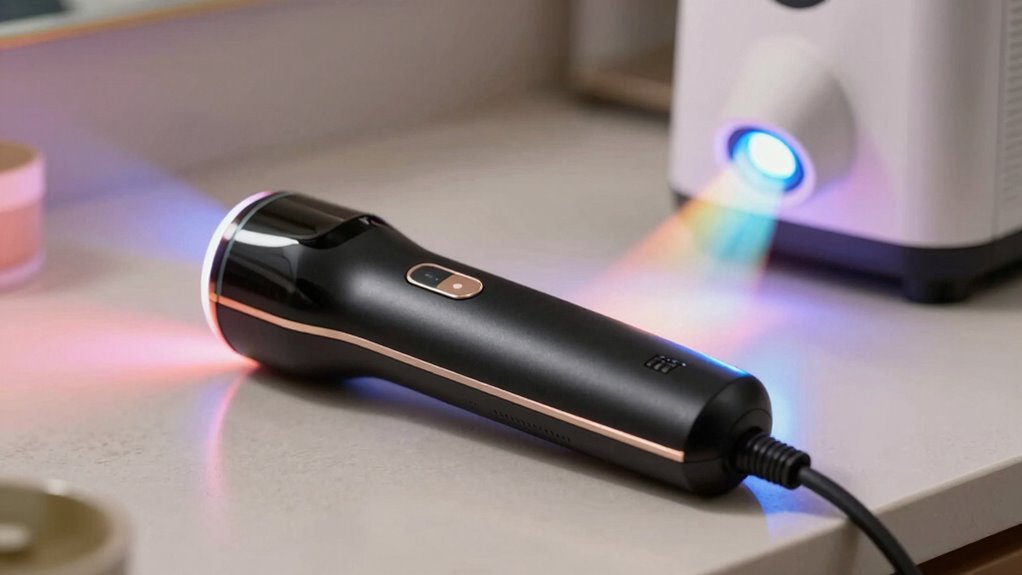

IPL and laser devices for home use differ mainly in how they target hair and skin. IPL uses broad-spectrum light, which is less precise but easier to operate, making it more convenient. Laser devices emit focused, single wavelengths for faster, more effective results on suitable skin and hair types. Safety depends on proper use and device quality. If you want to know which option fits your skin and hair, explore the key differences and find the best match for you.
Key Takeaways
- Laser devices emit concentrated, single-wavelength light for targeted treatment; IPL uses broad-spectrum light covering multiple wavelengths.
- Laser systems require precise calibration and are often more complex, while IPL devices are typically user-friendly for home use.
- Laser treatments generally offer faster, more effective results but tend to be more expensive and complex to operate.
- IPL devices are safer and more convenient for non-professional users, with features designed for easy, regular home application.
- Skin and hair type significantly influence device suitability and treatment effectiveness, with lasers often better for darker skin and IPL for lighter skin with darker hair.

INNZA IPL Hair Removal with Ice Cooling Care Function for Women,Long-Lasting Results,999,999 Flashes Painless Hair Removal, Hair Removal Device for Armpits Legs Arms Bikini Line
【Effective IPL Hair Removal】They zap away unwanted hairs at their roots, which significantly slows down regrowth for smoother…
As an affiliate, we earn on qualifying purchases.
As an affiliate, we earn on qualifying purchases.
How Do IPL and Laser Hair Removal Devices Work?
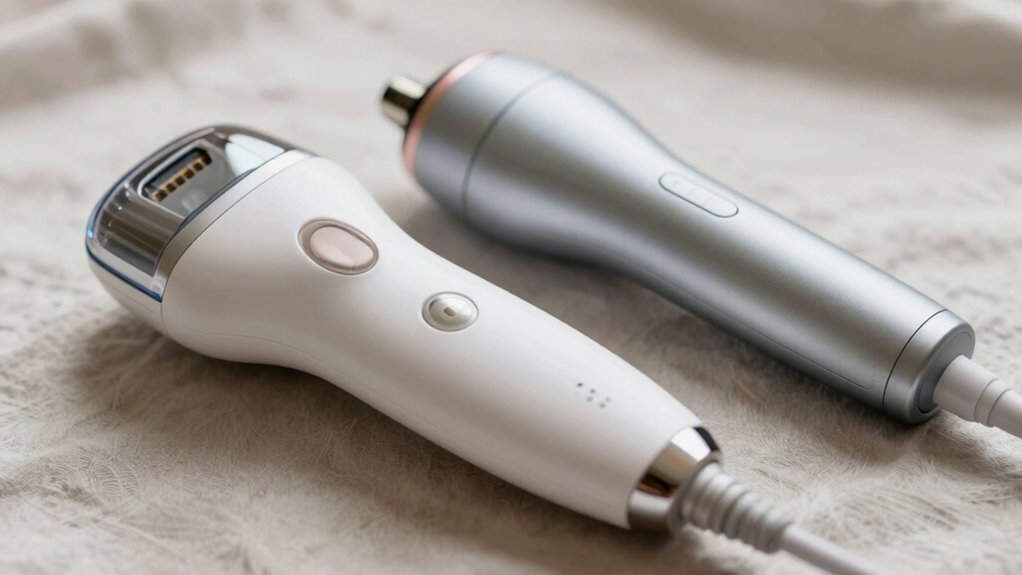
Both IPL (Intense Pulsed Light) and laser hair removal devices target hair follicles with focused light energy, but they do so using different technologies. In a technology comparison, IPL uses broad-spectrum light pulses, which scatter and cover multiple wavelengths, while laser devices emit a single, concentrated wavelength. This difference affects how effectively each method targets hair. IPL devices often require more frequent use and more careful device maintenance, since they use filters to block unwanted wavelengths and need cleaning to keep the light consistent. Laser devices, on the other hand, tend to be more precise, with less fuss over maintenance. Understanding these technology differences helps you choose the right option for your hair removal needs and guarantees ideal device performance over time. Additionally, the wavelength specificity of lasers allows for targeted treatment with minimal impact on surrounding skin, enhancing safety and efficiency. The light spectrum used in IPL devices can sometimes lead to less precise targeting, which may influence treatment outcomes. Moreover, device calibration is essential for both types to ensure optimal performance and safety during treatments.
INNZA IPL Hair Removal with Ice Cooling Care Function for Women,Long-Lasting Results,999,999 Flashes Painless Hair Removal, Hair Removal Device for Armpits Legs Arms Bikini Line
【Effective IPL Hair Removal】They zap away unwanted hairs at their roots, which significantly slows down regrowth for smoother…
As an affiliate, we earn on qualifying purchases.
As an affiliate, we earn on qualifying purchases.
Are Home IPL and Laser Devices Safe to Use?

You might wonder if home IPL and laser devices are safe, and it’s important to consider their certification standards and proper usage instructions. Using them incorrectly can lead to skin irritation or burns, so following guidelines is essential. Always check for certified devices and understand the potential skin risks before trying them at home. Additionally, understanding support versus boundaries can help ensure safe and effective use of these devices. Regularly reviewing the device’s regulatory compliance can also help minimize safety concerns and ensure reliable performance. Being aware of device safety standards can further help users make informed choices and prevent adverse effects during use. Considering the electric power output of devices can also influence their safety and efficiency during use. Moreover, being knowledgeable about device maintenance practices can prolong device lifespan and maintain safety during repeated use.
Device Certification Standards
While home IPL and laser devices can be effective for hair removal, their safety largely depends on whether they meet established certification standards. Device certification guarantees that these products comply with strict safety standards set by regulatory bodies, reducing risks like burns or skin damage. Reputable devices undergo extensive testing to verify their safety, such as proper energy levels and effective safety features. When choosing a device, always check for certifications from recognized organizations like the FDA or IEC. Certified devices have been evaluated for quality control and safety, giving you greater confidence in their use at home. Additionally, understanding the importance of device technology can help users select safer and more effective options. Proper regulatory compliance ensures devices meet essential safety benchmarks. Incorporating testing protocols into the certification process further enhances device reliability and user safety. Ensuring that a device adheres to safety standards is crucial for minimizing potential hazards. Always prioritize certified devices to ensure safe and effective hair removal. Moreover, being aware of performance testing procedures can help consumers identify devices that truly meet safety and efficacy expectations.
Proper Usage Guidelines
Proper usage of home IPL and laser devices is essential to guarantee safety and achieve effective hair removal. Before each session, verify device maintenance by checking for any damage or malfunction. Follow the manufacturer’s instructions carefully, including proper skin preparation and treatment area selection. Adhere to user safety tips such as wearing protective eyewear if recommended and avoiding overuse. Never skip pre-treatment patch tests to check for adverse reactions. Keep the device clean and stored properly after use to maintain its performance. Using the device correctly minimizes risks and maximizes results. Remember, consistent and cautious application is key to safe home hair removal. By following these proper usage guidelines, you can enjoy safe, effective results without compromising your skin’s health. Additionally, understanding best mattress toppers and bedding can help ensure a comfortable sleep environment, which supports overall skin health and recovery.
Potential Skin Risks
Although home IPL and laser devices are generally safe when used correctly, they do carry potential skin risks if misused or if your skin isn’t suitable for treatment. You might experience skin irritation, including redness, swelling, or discomfort, especially if you use the device improperly. There’s also a risk of infection if the skin isn’t cleaned properly before use or if you break the skin during treatment. To minimize risks:
- Avoid using on broken or irritated skin.
- Follow the recommended treatment schedule.
- Use the correct settings for your skin type.
- Keep the device and skin clean to reduce infection risk.
- Proper device maintenance and understanding of how to operate the device can further enhance safety and effectiveness. Additionally, being aware of the skin suitability guidelines can help prevent adverse reactions and ensure safer use. Being cautious and adhering to proper usage protocols helps protect you from potential skin irritation and infection, ensuring a safer, more effective hair removal experience.

Oreeth IPL Laser Hair Removal Device for Women & Men – Home 45°F Ice-Cooling Contact for Painless & Long-Lasting Results, 86% Hair Reduction in 3 Weeks for Full Body & Bikini Line, Gold
❄️ PAINLESS & EFFECTIVE: Advanced IPL tech glides smoothly with cooling contact, safe, effective & nearly painless hair…
As an affiliate, we earn on qualifying purchases.
As an affiliate, we earn on qualifying purchases.
Which Skin and Hair Types Are Best for IPL or Laser?
Your skin tone and hair color play a big role in how effective IPL or laser treatments will be. Generally, people with lighter skin and darker hair see the best results, since the devices target pigment. If you have darker skin or lighter hair, you might need specialized options or alternative treatments. Additionally, indoor air quality and humidity can impact skin health, so maintaining optimal conditions indoors may support overall treatment outcomes. Moreover, understanding the individual response to treatments can help tailor the most effective approach for each person. Recognizing how environmental factors like indoor air quality influence skin condition can further optimize treatment results, highlighting the importance of a comprehensive approach to skincare. Proper skin preparation is also essential to maximize treatment effectiveness and minimize side effects. Being aware of performance-enhancing procedures can also help in selecting the best options for your skin type and desired results.
Skin Tone Compatibility
When it comes to skin tone compatibility, both IPL and laser treatments tend to work best on lighter skin tones with darker hair. Skin pigmentation affects how well the device targets hair follicles; darker skin can increase risk of skin damage. For essential results, you should consider:
- Light skin tones with minimal pigmentation offer the best outcomes and device longevity.
- Darker skin tones may require specialized devices to prevent skin damage.
- Hair color plays a role, but skin tone is vital for safety and effectiveness.
- Proper device calibration helps preserve device longevity and guarantees safe usage.
In general, lighter skin with darker hair provides the safest and most effective experience, reducing risks related to skin pigmentation and maximizing device longevity.
Hair Color Suitability
For IPL and laser hair removal to work effectively, your hair color and skin tone must be compatible. Generally, these treatments target pigment in hair, so high contrast between hair and skin enhances results. Dark hair on light skin offers the best color contrast, allowing laser or IPL devices to focus energy effectively. Blonde, gray, red, or white hair often responds poorly due to low pigment. Treatment frequency depends on hair color; darker hair typically needs fewer sessions. The table below highlights suitability:
| Hair Color | Best Suitability | Treatment Frequency |
|---|---|---|
| Black/Dark brown | Excellent | Fewer sessions |
| Light brown | Good | Moderate sessions |
| Blonde/Red | Poor | More sessions |
| Gray/White | Not suitable | N/A |
INNZA IPL Hair Removal with Ice Cooling Care Function for Women,Long-Lasting Results,999,999 Flashes Painless Hair Removal, Hair Removal Device for Armpits Legs Arms Bikini Line
【Effective IPL Hair Removal】They zap away unwanted hairs at their roots, which significantly slows down regrowth for smoother…
As an affiliate, we earn on qualifying purchases.
As an affiliate, we earn on qualifying purchases.
What Results Can You Expect From IPL and Laser Treatments?
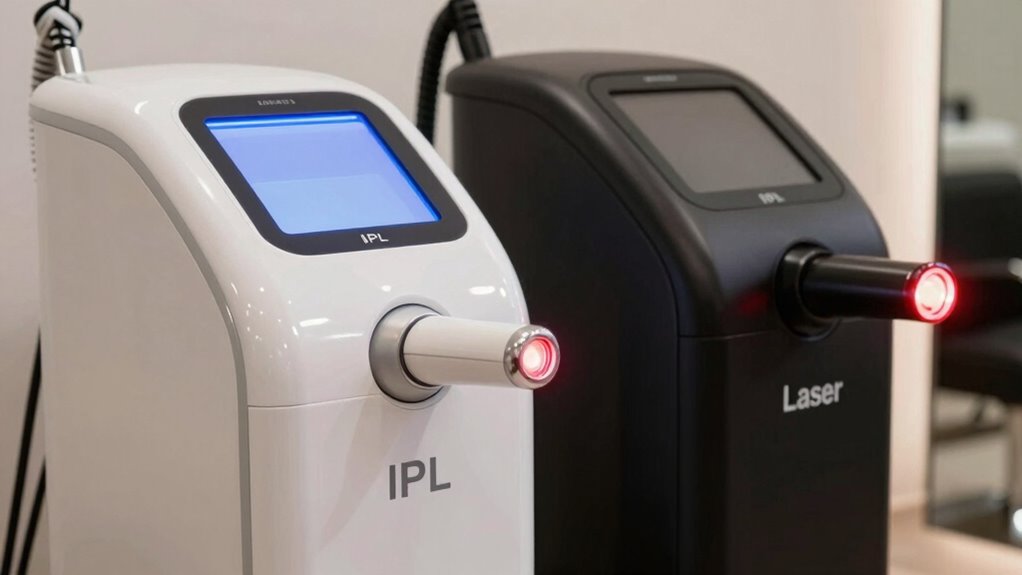
Both IPL and laser treatments can produce noticeable improvements in skin appearance, but the results vary depending on the condition being treated and individual skin type. For those managing ongoing skin concerns, caregiver emotional health is crucial to maintaining patience and resilience during treatment. For hair reduction, you can expect significant improvements in hair reduction efficacy over time, especially with consistent treatments. Typically, laser treatments offer faster results due to their higher precision. Keep in mind that the treatment duration differs: IPL sessions may take longer, but both methods require multiple sessions for ideal results. Here’s what you can expect:
- Visible reduction in hair growth after several treatments
- Smoother, clearer skin with fewer blemishes or spots
- Long-lasting results, though maintenance may be needed
- Improved skin texture and tone over time
- Selective wavelength allows for targeted treatment that minimizes damage to surrounding tissue and enhances efficacy. Understanding wavelength specificity is essential for choosing the right treatment for your skin type and condition.
Your results will depend on your specific skin and hair type, as well as your treatment plan.
How Many Sessions Will I Need, and What’s the Cost?
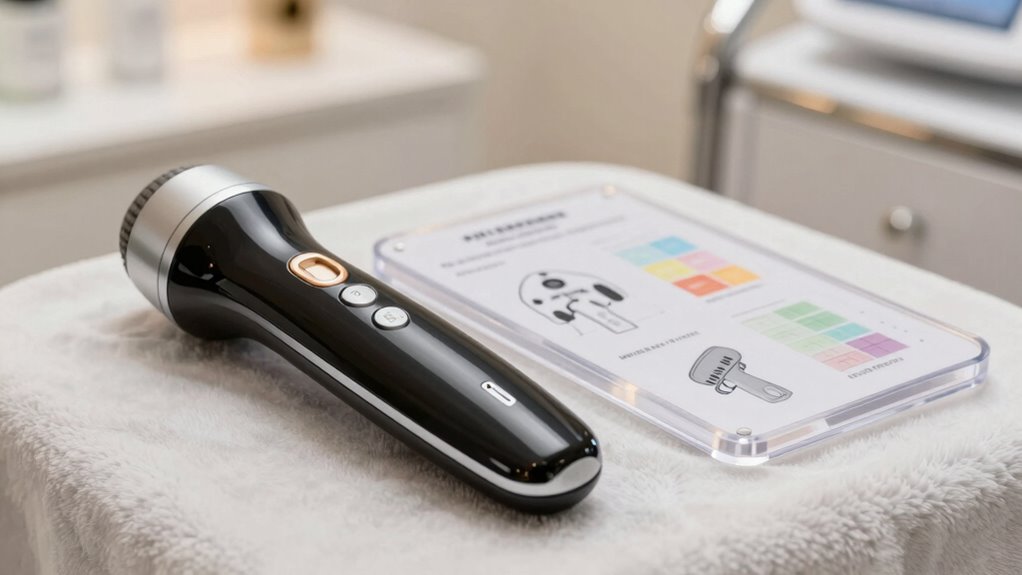
The number of sessions you’ll need depends on your treatment goals, skin type, and hair color, but most people require multiple treatments to see ideal results. Typically, expect 6 to 8 sessions, spaced about 4 to 6 weeks apart, to target hair growth effectively. When considering the cost comparison between IPL and laser devices, keep in mind that laser treatments often cost more per session but may require fewer treatments overall. Session frequency is important because more frequent treatments can lead to quicker results, but over-treatment can cause skin irritation. At home devices usually need consistent use over several months, making the total cost vary widely. Additionally, choosing environmentally friendly craft patterns can help reduce waste and promote sustainable practices. Ultimately, your choice depends on balancing initial investment, ongoing session frequency, and your desired results.
Is IPL or Laser More Convenient and Easy to Use at Home?

When it comes to convenience and ease of use at home, IPL devices generally stand out as user-friendly options designed for non-professionals. They often feature intuitive controls and straightforward operation, making them accessible even for beginners. Plus, their device portability allows you to use them comfortably anywhere, whether at home or while traveling.
Here’s why IPL might be more convenient for you:
- Compact, lightweight design for easy handling
- Simple interface with minimal settings
- No professional skills needed for safe use
- Quick setup and minimal preparation
Laser devices tend to be more complex, often requiring more precise handling and calibration. For ease and user friendliness, IPL devices are typically the better choice for home use.
Key Factors to Help You Choose Between IPL and Laser Devices
Choosing between IPL and laser devices depends on several key factors that align with your skin type, hair color, and personal preferences. Device longevity is vital; some devices are built to last longer and may offer better durability over time. Consider how much use you’ll get and whether the device is backed by solid customer support, which guarantees help if issues arise. Laser devices often have a more targeted approach, which can mean fewer treatments and quicker results, but may require more investment upfront. IPL devices tend to be more versatile for different skin tones and hair colors. Ultimately, weigh the longevity of the device and the quality of customer support to make an informed choice that suits your needs and promotes effective, safe hair removal.
Frequently Asked Questions
Can I Use IPL or Laser Devices on All Body Areas?
You can’t use IPL or laser devices on all body areas because of body areas suitability and device limitations. Some areas, like the face or sensitive skin regions, may require specific settings or are not recommended due to risk factors. Always read the manufacturer’s instructions and consult a professional if unsure. Using the device correctly guarantees safety and effective results while avoiding potential skin damage.
Are There Any Side Effects or Risks Associated With Home Devices?
Using home devices may cause potential skin irritation or a risk of burns if not used properly. Always follow the instructions carefully, start with the lowest setting, and avoid overlapping treatments. If you notice redness, swelling, or discomfort, stop using the device and consult a dermatologist. Being cautious helps minimize risks and guarantees safe, effective results while avoiding potential side effects.
How Long Does Each Treatment Session Typically Last?
Imagine the clock ticking as you start your treatment session. Typically, each session lasts about 10 to 30 minutes, depending on the area you’re treating. Smaller areas like the upper lip may take just a few minutes, while larger zones like legs could extend closer to half an hour. Your device’s treatment duration and session length are designed for efficiency, fitting comfortably into your schedule.
Do IPL and Laser Devices Require Regular Maintenance or Replacements?
Your IPL and laser devices generally require minimal maintenance, but their longevity depends on usage and care. Regular maintenance includes cleaning the device as instructed and avoiding exposure to extreme conditions. Maintenance frequency varies, but you should check the manufacturer’s guidelines for replacement parts like bulbs or cartridges. Proper care guarantees peak device longevity, so staying attentive to recommended upkeep helps prolong its effectiveness and prevents unnecessary replacements.
Can I Use IPL or Laser Devices if I Have Tattoos or Skin Conditions?
Using IPL or laser devices is like walking a tightrope—you need to be careful. If you have tattoos, avoid treating over them, as tattoo safety is compromised and you could cause skin damage. For skin conditions, consult a dermatologist first, because skin condition considerations mean treatment might worsen your condition. Always prioritize safety and get professional advice to guarantee you’re making the right choice for your skin.
Conclusion
Choosing between IPL and laser at home really depends on your skin type, hair color, and how much effort you’re willing to invest. While some swear by IPL for affordability, others find laser more effective for stubborn hair. The truth? No one device is perfect for everyone, so do your research, set realistic expectations, and remember—consistent use is key. With patience, you’ll find the best fit and enjoy smoother skin in the long run.