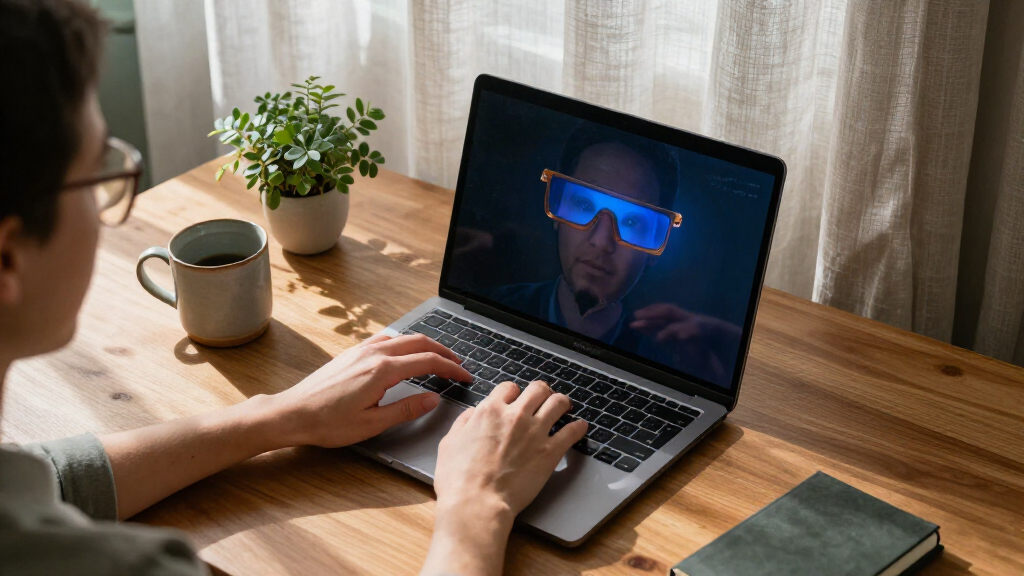

People comparing blue light blocking glasses are usually choosing between lenses they can wear all day without changing how a screen looks and tinted lenses intended to filter more short-wavelength light, especially in the evening. Clear lenses suit work, study, and color-sensitive tasks; amber lenses trade color accuracy for stronger filtering and may be more practical for a wind-down routine. Neither type has strong evidence behind broad promises to prevent digital eye strain or protect healthy eyes from screen damage. The useful decision is narrower: how much tint can you tolerate, and does it help you manage light exposure before bed?

Get wellness gear delivered free with Prime
- Fast, free delivery on millions of items
- Prime Video, Amazon Music and more included
- Member-only deals all year

livho Blue Light Blocking Glasses
- ✔ Lens type: Non-prescription, transparent
- ✔ Lens features: Blue light blocking, anti-glare, UV protection
- ✔ Frame material: Nylon

Gaoye Blue Light Blocking Square Glasses
- ✔ Lens type: Non-prescription polycarbonate
- ✔ Lens coating: Anti-reflective
- ✔ UV protection: UV400

livho Blue Light Blocking Gaming Glasses
- ✔ Lens type: Non-prescription
- ✔ Lens features: Blue light blocking, anti-glare
- ✔ Frame material: Nylon
At a Glance
| Criteria | Clear-lens blue light glasses | Amber-lens blue light glasses | Winner |
|---|---|---|---|
| Light filtering | Varies by coating; typically less visible tint and less aggressive filtering | Usually filters more short-wavelength light, with strength varying by lens | B |
| Color accuracy | High; screens and surroundings look close to their normal colors | Lower; amber tint shifts whites and other colors | A |
| Daytime screen work | Usually easier to wear for general office or study tasks | Can feel distracting for general work, design, photo editing, or color checks | A |
| Evening use | May offer limited filtering; depends on lens specifications | A more plausible fit for reducing evening light exposure before bed | B |
| Evidence for eye comfort | No reliable proof that clear blue light lenses prevent digital eye strain | No strong proof that amber lenses relieve screen-related eye strain | Tie |
| Evidence for sleep support | Limited evidence that lightly filtered clear lenses improve sleep | Some studies suggest evening filtering may help some people, but results are mixed | B |
| Typical cost and value | Available at many price points; paying extra for a clear coating rarely guarantees better results | Can cost more; added spend makes sense only if the tint suits an evening routine | Depends |
livho Blue Light Blocking Glasses
For a buyer who wants one pair for mixed screen use, the livho Blue Light Blocking Glasses make the most balanced case. Their transparent, non-prescription lenses are described as blue light blocking, anti-glare, and UV protective, while the lightweight, flexible nylon frame is intended for longer wear. That combination gives this pair a broader everyday role than the gaming-focused livho model, whose description emphasizes lightness but says less about its lens features.The product description also identifies the fit as suitable for women and men and places the casual style in both work and leisure settings. That makes it easier to picture as a general screen-use option than the Gaoye square pair, whose listing gives helpful coating and lens-material details but little about style or fit. Still, “women’s and men’s” is not a substitute for frame measurements, so buyers with a narrow, wide, or otherwise particular fit should seek dimensions before deciding.There are limits to what we can infer from the listing. The lenses are transparent, but the description does not state a filtering percentage or explain how their blue light blocking compares with the other two pairs. They are also not vision-correcting. Choose them for their flexible frame and versatile positioning; skip them if you require prescription lenses or need quantified filtering data to compare performance.
Pros:
- Lightweight, flexible nylon frame is intended for comfortable extended wear.
- Transparent lenses are described as blue light blocking and anti-glare.
- UV protection is listed as a lens feature.
- Casual style is positioned for work or leisure and for women and men.
Cons:
- Non-prescription lenses do not correct vision.
- No frame dimensions or quantified blue light filtering level are provided.
Best for: Screen users seeking a flexible, casual pair for work and leisure, without prescription correction.
Not ideal for: Buyers who need corrective lenses, frame measurements, or a stated blue light filtering percentage.
Bottom line: We rank livho first for its well-rounded everyday description, while recognizing that fit measurements and filtering data are missing.
“We rank livho first for its well-rounded everyday description, while recognizing that fit measurements and filtering data are missing.”
Gaoye Blue Light Blocking Square Glasses
Gaoye is the choice for shoppers who want more concrete information about lens construction before settling on a screen-use pair. Its polycarbonate lenses have an anti-reflective coating and UV400 protection, details that make this listing more specific about lens material and treatment than either livho description. Polycarbonate sets it apart on materials; the coating details distinguish it from the everyday livho pair, which lists anti-glare but does not name its lens material.The lightweight frame is presented as suitable for extended wear, but the description stops short of naming the frame material, flexibility, or measurements. That leaves a buyer with less basis to predict fit than they might want, especially compared with livho’s stated nylon construction. Its square styling may appeal to someone who prefers that shape, though the supplied details do not establish who will find the fit comfortable.Gaoye’s care guidance is straightforward: clean the lenses with a soft, dry cloth and store the glasses in a protective case. That gives buyers a practical maintenance instruction, alongside its clearest lens specification in this group. The tradeoff is that its non-prescription lenses do not correct vision, and the listing still gives no quantified blue light blocking level. Pick Gaoye when its stated lens material and coatings matter most; consider livho instead if flexible nylon construction is the deciding factor.
Pros:
- Polycarbonate lens material is specified.
- Anti-reflective coating is listed for screen use.
- UV400 protection is stated.
- Care instructions recommend a soft, dry cloth and protective case.
Cons:
- Non-prescription lenses do not provide vision correction.
- Frame material, dimensions, and flexibility are not specified.
- A protective case is recommended for storage but is not detailed as included.
Best for: Buyers who prioritize a specified polycarbonate lens, anti-reflective coating, and UV400 protection.
Not ideal for: Shoppers who need prescription correction or detailed frame material and fit measurements.
Bottom line: Gaoye is our lens-detail pick, though its sparse frame information makes fit harder to assess than livho’s nylon models.
“Gaoye is our lens-detail pick, though its sparse frame information makes fit harder to assess than livho’s nylon models.”
livho Blue Light Blocking Gaming Glasses
The gaming version of livho is most appealing when a very lightweight, flexible frame is the priority. It is described for extended screen use and casual wear at work or during gaming, so the intended role is clearer than Gaoye’s more general screen-use positioning. Compared with the first livho pair, however, this listing is less specific about lens benefits: it names blue light blocking and anti-glare but does not mention UV protection or say that the lenses are transparent.Its nylon frame shares the flexible construction of the overall pick, while the “ultra-lightweight” description makes reduced frame weight the headline distinction. That may suit someone who wants glasses for a long gaming session, but buyers should not treat a comfort intention as a guarantee: frame fit and dimensions are not supplied. Gaoye at least identifies its square style, and the first livho description names a fit intended for women and men, giving those two options more context for a buyer comparing shape and fit.As with the other picks, these are non-prescription glasses, and the provided information does not quantify the blue light filtering level. The listing is therefore strongest as a use-case choice rather than a demonstrably higher-performing filter. Choose it if a flexible, ultra-light frame and gaming-oriented positioning match your priorities. If lens material, UV protection, or more fit context matters more, the other livho pair or Gaoye gives you additional stated details.
Pros:
- Ultra-lightweight, flexible nylon frame is intended for extended wear.
- Blue light blocking and anti-glare lenses are specified.
- Positioned for gaming, work, and casual use.
Cons:
- Non-prescription lenses do not correct vision.
- Frame dimensions and fit details are not provided.
- Lens material and UV protection are not specified.
Best for: Gamers and other long-session screen users who prioritize a flexible, ultra-lightweight nylon frame.
Not ideal for: Buyers who need vision correction, fit dimensions, or a specified lens material and UV protection.
Bottom line: We recommend the gaming pair for its frame-first screen-use positioning, with the caveat that its fit and lens specifications are limited.
“We recommend the gaming pair for its frame-first screen-use positioning, with the caveat that its fit and lens specifications are limited.”
As an Amazon Associate we earn from qualifying purchases.
Key Differences
The visible tint is the practical dividing line. Clear lenses preserve color and are easier to wear through a full workday, but their filtering may be modest and varies across products. Amber lenses generally block a larger share of blue and other short wavelengths, though the amount depends on the lens rather than its color alone. That filtering comes with a clear cost: colors look warmer, and fine color judgments become less dependable.
Claims about eye strain and sleep need a careful reading. Digital eye strain is commonly linked to long periods of near focus, reduced blinking, glare, dry eyes, and ergonomics. Research has not established that blue light glasses reliably relieve it or protect eyes from ordinary screen exposure. Evening light can affect the body’s sleep timing, so reducing bright light late at night may be useful; evidence for amber glasses specifically is mixed, and results do not make them a substitute for a consistent sleep routine. If the main problem is tired eyes, screen breaks, adjusted brightness, and addressing dryness have a stronger practical case than either lens type.
Value depends on the reason for buying. A low-cost clear pair can be a comfortable accessory if the fit and prescription are right, but expensive coatings are hard to justify on health claims alone. Amber glasses cost more in some ranges and make sense only for people who will use them in the evening and accept the tint. For many buyers, spending nothing on a filter and changing screen habits is the better value.
Detailed Comparison
Light filtering (Amber-lens blue light glasses wins — moderate)
Amber lenses generally block more short-wavelength light than clear lenses, though performance differs by product and should be checked in the manufacturer’s specifications. This is a moderate advantage if reducing evening light exposure is the goal. A clear lens that looks untinted should not be assumed to provide the same filtering as a visibly amber one.
Color accuracy (Clear-lens blue light glasses wins — major)
Clear lenses win clearly: they leave whites, skin tones, and interface colors much closer to their original appearance. Amber lenses give everything a warm cast. This is a major difference for graphic work, photography, shopping for color-sensitive products, or anyone who dislikes tinted vision; for casual evening viewing, the shift may be acceptable.
Daytime work and study (Clear-lens blue light glasses wins — moderate)
Clear lenses are the easier everyday choice because they suit mixed tasks and do not noticeably alter the display. Amber lenses can be worn during the day, but their tint can impair color judgment and may feel distracting. The gap is moderate for general office work and major for design or other color-critical tasks.
Evening use (Amber-lens blue light glasses wins — moderate)
Amber lenses have the more relevant filtering profile for people trying to limit bright, short-wavelength light before bed. Clear lenses may filter some light, but often less visibly and less strongly. This is a moderate edge, not a guaranteed sleep benefit: dimming lights and reducing screen brightness are simpler steps that address the same exposure.
Relief from digital eye strain (major difference)
Neither lens type has a clear evidence-based advantage for reducing tired or dry eyes from screens. Clear lenses may feel less intrusive, but that is a comfort preference rather than proof of treatment. Blinking, taking distance breaks, managing glare, and checking corrective prescriptions are more direct ways to address common causes.
Sleep support (Amber-lens blue light glasses wins — moderate)
Amber lenses are the more plausible option because they typically filter more blue light, and some research suggests evening filtering may help certain people. Findings are mixed, however, and clear lenses have even less reason to be expected to change sleep. The difference is moderate, with no dependable guarantee for either product.
Price and value (moderate difference)
Both types come in inexpensive and premium versions, so the lens color alone does not settle price. Clear glasses are often the safer purchase for everyday wear because their main benefit is not disrupting color; amber glasses justify added cost only when stronger evening filtering is a specific, useful part of a routine. Neither deserves a premium based solely on claims to prevent eye damage.
Clear-lens blue light glasses: Pros and Cons
Pros:
- Natural color appearance for screens and surroundings
- More comfortable for daytime, mixed-task wear
- Often available at low prices
Cons:
- Filtering may be limited and varies by product
- No reliable proof of protection from screen-related eye strain or damage
- Less suited to buyers seeking strong evening light reduction
Amber-lens blue light glasses: Pros and Cons
Pros:
- Typically filters more short-wavelength light
- More aligned with an evening light-reduction routine
- May be a reasonable option for people sensitive to bright evening screens
Cons:
- Amber tint changes colors and can interfere with color-sensitive tasks
- Sleep benefits are uncertain and vary between people
- Can cost more without delivering proven eye-strain relief
Who Should Choose What
Choose Clear-lens blue light glasses if:
- You need glasses for daytime work, study, or mixed screen use and want natural colors.
- You prefer a subtle lens and want an inexpensive pair for comfort or style.
- You edit images, review design work, or do other color-sensitive tasks.
Choose Amber-lens blue light glasses if:
- You specifically want stronger filtering in the hours before bed and are comfortable with a warm tint.
- You can reserve a separate pair for evening use and have found reduced light exposure helpful.
- You understand that possible sleep support is uncertain and are not buying them as treatment for eye strain.
Skip both if: Skip both if your main goal is proven relief from digital eye strain or protection from screen damage; take regular distance breaks, reduce glare, blink often, and seek an eye-care assessment for persistent symptoms.
Value for Money
Pay more for amber lenses only if you intend to wear them in the evening, the tint does not bother you, and the product states its filtering characteristics clearly. That purchase buys a stronger filter profile, not a guaranteed improvement in sleep or eye comfort. For daytime use, a well-fitting clear pair is generally the better-value choice if you want glasses anyway; expensive coatings rarely warrant a premium based on broad health claims. If you are buying only to stop tired eyes, neither option is compelling value compared with screen breaks, a comfortable viewing distance, reduced glare, and appropriate vision correction.
Final Verdict
Choose clear-lens glasses for daytime screens, natural color, and general-purpose wear. Choose amber lenses only if evening light reduction is your specific goal and you accept that the tint changes what you see. The biggest deciding factor is whether stronger filtering matters enough to sacrifice color accuracy. For most screen users seeking an everyday pair, clear lenses are the more practical pick, but neither type is a proven fix for digital eye strain. If eye comfort is the priority, address viewing habits and persistent symptoms before paying extra for a filter.
Frequently Asked Questions
Do blue light glasses prevent digital eye strain?
Research has not shown reliable relief from blue light glasses. Screen-related discomfort is often associated with sustained near focus, glare, dry eyes, or an outdated prescription. Taking breaks, blinking regularly, adjusting brightness, and checking vision needs are more direct steps.
Are amber lenses better than clear lenses before bed?
Amber lenses usually filter more short-wavelength light, so they are the more relevant of the two for reducing evening exposure. Studies of sleep effects show mixed results, though. Dimming room lights and screens also helps reduce bright light before bed.
Can I wear amber glasses all day?
You can, but their warm tint changes color perception. That can be inconvenient for design, photography, and any task where accurate color matters. Many people who use amber lenses reserve them for evening.
Are expensive blue light glasses worth the price?
Usually not for health claims alone. Paying more may buy a frame or coating you prefer, but it does not establish that the glasses will prevent eye damage or relieve strain. For amber lenses, extra cost is reasonable only when their evening filtering fits a routine you will use.