TL;DR

Get wellness gear delivered free with Prime
- Fast, free delivery on millions of items
- Prime Video, Amazon Music and more included
- Member-only deals all year
Fit&Well published a beginner-friendly, no-equipment Pilates routine designed by instructor Andrew Griffiths. The six exercises take about 10 minutes and use controlled movement, breathing and optional modifications; Griffiths recommends doing the routine three times a week with a rest day between sessions.
Fit&Well has published a 10-minute, no-equipment Pilates routine for beginners, created by instructor Andrew Griffiths. It includes six floor-based exercises—from pelvic tilts to child’s pose—and offers adjustments for some movements, making it an accessible starting point for readers seeking a short home workout.
The routine begins with pelvic tilts, performed for eight to 10 repetitions, to practise moving the pelvis while lying on the back with knees bent. It then moves to the hundred, with a suggested starting target of 40 to 50 arm pulses rather than the full 100. Griffiths says beginners can keep their head and shoulders on the floor or leave their feet down if the standard version feels too challenging.
The middle exercises are dead bugs, glute bridges and bird dogs. The dead bug and bird dog are prescribed for two sets of eight to 10 repetitions per side; the bridge is two sets of 10 to 12 repetitions. The instructions emphasize steady breathing, a controlled pace and keeping the lower back or hips stable where specified. The routine finishes with a 30- to 60-second child’s pose.
Griffiths recommends repeating the session three times a week, with a day off between workouts. The article does not prescribe equipment, though it assumes enough clear floor space to lie down and move safely. Its guidance is a general exercise routine, not an individualized assessment of a reader’s fitness or health.
A Short Routine With Beginner Options
The routine gives beginners a defined sequence and modest starting targets instead of requiring a long class or equipment. Its suggested 10-minute duration may make it easier to fit into a regular schedule, while modifications—such as keeping the head down during the hundred—allow people to reduce the challenge of that particular movement.
Griffiths describes the exercises as work for core control, stability and movement awareness. He also says the glute bridge and bird dog strengthen glutes and muscles that support the back. Those are the instructor’s explanations of the routine’s purpose; the report does not provide clinical evidence that completing it will treat pain, improve a medical condition or produce a particular outcome for every participant.
As an affiliate, we earn on qualifying purchases.
Six Moves, From Pelvis to Stretch
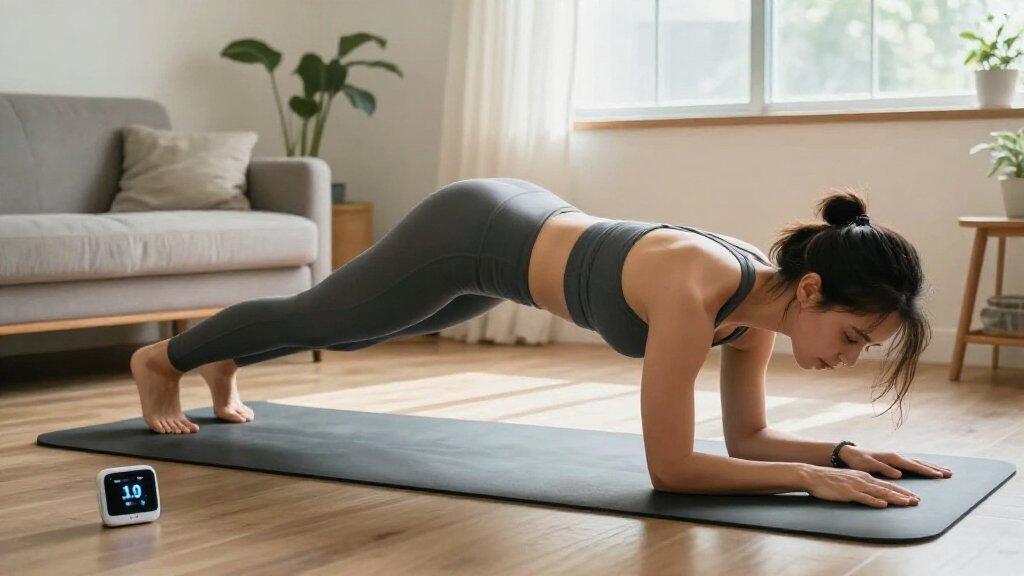
The sequence combines exercises performed on the back with one performed on hands and knees, then ends with a resting stretch. In the pelvic tilt, Griffiths stresses small movements initiated by the pelvis rather than the legs. For the dead bug, the instructions pair an opposite arm and leg movement while keeping the lower back connected to the floor. These cues emphasize control over speed.
For the bird dog, the participant reaches one arm forward and the opposite leg back while trying to keep the hips level. Griffiths uses the image of a glass of water balanced on the lower back to explain the aim of keeping the back steady. In the glute bridge, the hips rise until the body forms a line from shoulders to knees; the article advises against arching the lower back excessively.
The source presents Pilates as a way to practise breathing alongside deliberate movement. Griffiths says the breathwork may help with stress and anxiety, but the report does not establish a specific health effect or quantify results. Its practical focus is the exercise sequence and the instructor’s form guidance.
“Small and controlled is the aim. The movement comes from the pelvis, not the legs.”
— Andrew Griffiths, Pilates instructor and fitness expert at Net World Sports, as quoted by Fit&Well
Results Depend on the Individual
The report does not give a publication date, identify a study testing this specific six-move routine, or quantify expected changes in strength, posture or stability. It also does not set out adaptations for every injury, health condition or mobility limitation. Individual results and suitability are not established by the source, and the routine should not be read as medical advice.
Readers who have an existing injury or health concern, or who are unsure whether the movements are appropriate, may need guidance from a qualified health or fitness professional. The article’s modifications address selected exercises but do not amount to a personalized program.
Repeat Before Increasing Difficulty
Griffiths advises following the routine three times a week with a rest day between sessions. He suggests treating the exercises feeling easy as a cue to progress the program, but the source does not specify what progression should look like or set a timetable for increasing repetitions or difficulty. Beginners can start with the stated lower pulse target and the listed adjustments, then judge their comfort and control during each movement.
Key Questions
What exercises are in the 10-minute Pilates routine?
It includes pelvic tilts, the hundred, dead bugs, glute bridges, bird dogs and child’s pose, in that order.
Do I need equipment?
No equipment is specified. The routine is designed to be done on the floor, so readers need enough clear space to move safely.
How often does the instructor recommend doing it?
Andrew Griffiths recommends doing the routine three times a week, with a day off between sessions.
Can beginners make any movements easier?
Yes. For the hundred, Griffiths says beginners may keep their head and shoulders on the floor or keep their feet down. He also says 40 or 50 pulses can be a starting point instead of 100.
Does the report show that the routine will relieve back pain or anxiety?
No. The report describes the intended exercise focus and quotes Griffiths saying Pilates breathing may help with stress and anxiety, but it does not establish that this routine treats pain or a health condition. People with health concerns should seek qualified professional guidance.
Source: rss
Fall Picks
fall essentials
As an affiliate, we earn on qualifying purchases.