
TL;DR

Get wellness gear delivered free with Prime
- Fast, free delivery on millions of items
- Prime Video, Amazon Music and more included
- Member-only deals all year
SUNY Chancellor John B. King Jr. visited Stony Brook University on Oct. 30, 2026, touring an energy research center and meeting faculty and students at a research expo. The visit showcased projects spanning distributed quantum processing, nuclear and battery technologies, health research and clean water; no new funding or policy commitments were announced in the source report.
SUNY Chancellor John B. King Jr. visited Stony Brook University to tour research facilities and meet faculty and students working on projects in quantum computing, energy, health and environmental science. The Oct. 30 visit included the Advanced Energy Research and Technology Center and a research expo, putting a spotlight on Stony Brook’s role in the State University of New York’s research network.
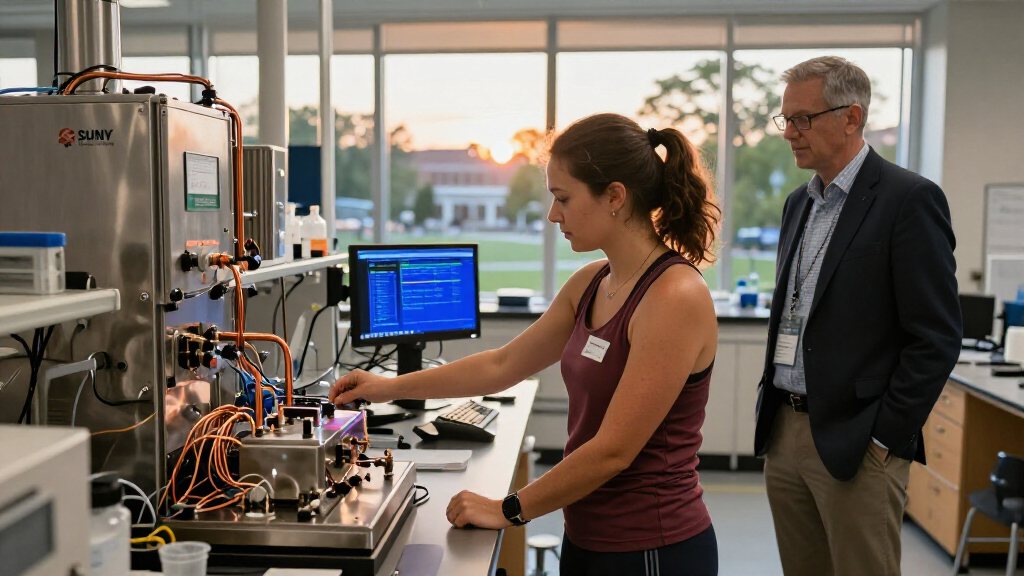
King was joined by SUNY Trustee Cary Staller for a tour of the Advanced Energy Research and Technology Center and conversations with researchers. The expo featured faculty and student work, while discussions ranged from nuclear energy and battery technology to healthy aging, mental health and clean water. The university’s research portfolio also includes artificial intelligence, according to the report, though it did not describe a specific AI project presented during the visit.
Among the researchers King met was Eden Figueroa, director of Stony Brook’s Quantum Research and Innovation Hub and the Center for Distributed Quantum Processing, with a joint appointment at Brookhaven National Laboratory. His work includes distributed quantum processing; the report says he and former students patented Qu-MEM, which was recently named one of TIME magazine’s Best Inventions. The report does not provide technical details about the patent or the product’s current deployment.
Energy research featured projects on materials for advanced nuclear systems. Lance Snead and David Sprouster study materials designed to withstand extreme conditions in nuclear fission and fusion systems. The visit also highlighted Esther Takeuchi’s battery research, as well as work at the New York State Center for Clean Water Technology on emerging contaminants such as PFAS, microplastics and pharmaceuticals. The source report listed additional research in cancer, infectious disease, neuroimaging and mental health.
Research Links to State Priorities
The visit brought attention to research areas with implications for New York’s energy systems, public health and water quality, as well as advanced computing. These fields can affect public services, industry and the preparation of students for technical careers. King said the work also creates opportunities for students and could contribute to economic growth in local communities; that is a stated expectation, not an outcome quantified in the report.
Stony Brook’s relationship with Brookhaven National Laboratory is part of the research picture. Figueroa holds appointments at both institutions, and the university’s quantum work is presented as one element of wider SUNY research activity. A chancellor’s visit can raise the visibility of this work across the state system, but the source does not report that the tour created new partnerships, grants, hiring plans or commitments to commercialize specific projects.
For residents, the projects highlighted are relevant because they address practical challenges, including energy materials that must function under demanding conditions and methods for detecting or removing contaminants from water. The report describes research goals and areas of focus; it does not supply performance results, timelines for public use or evidence that any project has already changed services or outcomes.
Products Worth Considering

Levoit Core 600S-P Smart Air Purifier for Large Rooms

Withings BPM Vision Blood Pressure Monitor with Wi-Fi and Bluetooth

Therabody Theragun Prime 6th Generation Deep Tissue Massage Gun, Navy
As an affiliate, we earn on qualifying purchases.
Stony Brook’s Research Network
Stony Brook is one campus in the State University of New York system, whose research activity spans multiple disciplines and institutions. This visit centered on the university’s facilities and research teams rather than a systemwide policy announcement. The source report describes the event as a tour, research expo and set of meetings with faculty.
Several highlighted projects connect to existing university and laboratory structures, including the Quantum Research and Innovation Hub, the Center for Distributed Quantum Processing, and the New York State Center for Clean Water Technology. The report also identifies researchers with appointments at Brookhaven National Laboratory. That institutional context helps explain how the visit brought together work from physics, engineering, medicine and environmental science.
The report names projects and researchers but gives limited information about budgets, milestones or the stages of development. Its account is based on a SUNY press release carried by The Quantum Insider, so claims about the research’s potential benefits should be read as institutional descriptions rather than independent evaluations.
“SUNY students and faculty are at the vanguard of vital research efforts for the public good.”
— SUNY Chancellor John B. King Jr.
Funding and Research Milestones
The report does not say whether the visit produced new funding, policy decisions or formal agreements. It also provides no project budgets, schedules, measurable results or expected dates for commercial or public deployment. The scope of the AI work mentioned in the brief is not specified, and the account does not detail which student projects were presented at the expo.
Descriptions of potential benefits, including economic growth and improved health outcomes, come from SUNY officials and institutional research summaries. The report does not independently evaluate the projects or establish that their intended outcomes have been achieved. More detail would be needed to assess the technologies’ readiness, costs and likely effects.
Research Continues After the Visit
The source report identifies no specific follow-up event or deadline tied to King’s visit. The next developments will depend on the individual research teams’ work and any future announcements from SUNY, Stony Brook or Brookhaven National Laboratory. Those could include new findings, project milestones, funding decisions or further information about research collaborations.
For now, the confirmed development is the visit itself and the range of projects presented. Readers can look for future university or laboratory updates for details on research results, timelines and practical applications; none were set out in the account of the tour.
Key Questions
What did SUNY Chancellor John B. King Jr. do at Stony Brook?
He toured the Advanced Energy Research and Technology Center, attended a research expo and met researchers working across several scientific fields. SUNY Trustee Cary Staller joined the visit.
Which research areas were highlighted?
The visit featured distributed quantum processing, nuclear and battery technology, health research and clean water. Researchers also discussed areas including healthy aging, mental health and environmental contaminants.
Was new funding or a policy initiative announced?
The source report describes a tour and research discussions but does not announce new funding, policy changes or formal agreements.
What is not yet known about the projects?
The report does not give project budgets, completion dates, detailed results or timelines for wider use. It also does not establish that the research has produced the anticipated health, economic or environmental outcomes.
Source: thequantuminsider.com