TL;DR

Get wellness gear delivered free — and shop member deals
- Fast, free delivery on millions of items
- Access to Prime Big Deal Days deals on October 6–7
- Prime Video, Amazon Music and more included
Trainer and liftCLINIC CEO Amanda Lim shared a sample week combining strength training, running, walking, yoga and postpartum core rehabilitation. She says people should assess health and fitness through measures such as strength and muscle mass, rather than relying on scale weight alone.
Trainer and liftCLINIC CEO Amanda Lim has shared a sample weekly workout routine that combines strength training, running, walking, yoga and postpartum core rehabilitation, alongside advice to judge progress by more than scale weight. The Fit&Well report presents Lim’s personal schedule and recommendations, not a clinical exercise prescription or evidence that the routine produces particular health outcomes.
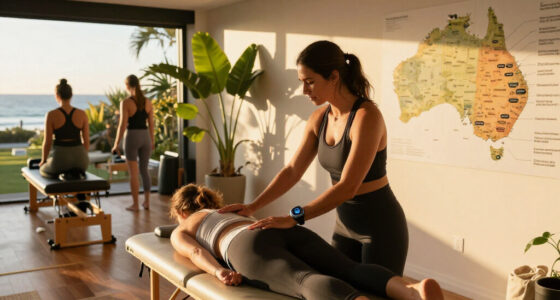
Lim, 43, has worked as a trainer for more than 20 years and is the mother of three. She described her approach as a balance of functional strength training, zone two cardio and daily steps, rather than a complicated program. Her example week includes lower-body strength on Monday, upper-body strength on Tuesday and postpartum core rehabilitation on Wednesday.
The rest of the schedule includes walking for active recovery on Thursday, running intervals and yoga on Friday, a power-focused workout on Saturday and a zone two run on Sunday. The report does not specify the duration or intensity of most sessions, or define the precise training methods behind each entry. Lim says she continues pelvic floor and deep core work after childbirth, describing it as part of her longer-term fitness routine.
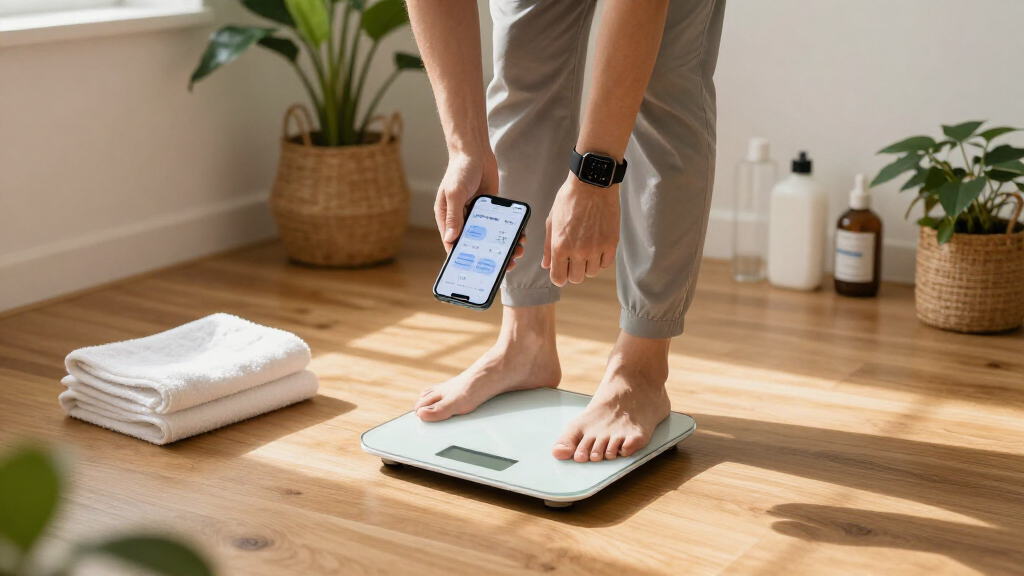
Her five suggestions are to track measures beyond body weight, make use of the early learning period as a beginner, practice a new physical skill, start with walking and show self-compassion when routines are disrupted. Lim said she monitors her own progress by tracking the weights she lifts and measuring muscle mass. These are her personal practices and guidance, rather than findings attributed to a new study.
Progress Beyond Scale Weight
Lim’s advice addresses a common point of confusion in fitness: body weight alone does not describe every aspect of health or training progress. Her recommendation is to look at other indicators, including strength and muscle mass. Those measures may help someone notice changes not reflected by the scale, but the report does not establish them as comprehensive health assessments or recommend a particular monitoring method for everyone.
The routine also illustrates how her week mixes different forms of movement rather than centering on a single workout style. For readers considering a new routine, the practical takeaway is the range of activities Lim includes—not that her exact schedule is necessary or suitable for every person. Her emphasis on beginning with a short walk and responding to setbacks with self-compassion frames consistency as something that can be built gradually.
adjustable dumbbell set for strength training
As an affiliate, we earn on qualifying purchases.
As an affiliate, we earn on qualifying purchases.
A Routine Built Around Multiple Needs
Lim runs liftCLINIC, a metabolic health center focused on longevity, according to the report. Her schedule reflects both general training and her own circumstances as a parent: alongside strength and cardiovascular sessions, she includes postpartum rehabilitation. She told Fit&Well that pelvic floor and deep core work are often associated with the period immediately after childbirth, but she considers them relevant to her longer-term fitness.
Lim also connects that work with her experience of approaching perimenopause. The report conveys her personal perspective; it does not provide medical evidence about how postpartum symptoms or rehabilitation needs change for all people during this period. Her comments should be understood as an account of her own routine, not a substitute for individualized advice from a qualified clinician or pelvic health professional.
In discussing habit-building, Lim refers to six commonly described pillars of lifestyle medicine: nutrition, sleep, physical activity, stress management, social connection and reducing exposure to harmful substances. She adds self-compassion as a “seventh pillar”, presenting that phrase as her own way of emphasizing persistence after setbacks.
““We have to separate the number on the scale—the weight of our bodies—from the assessment of our health, because those two things don’t typically track beautifully together.””
— Amanda Lim, trainer and liftCLINIC CEO, quoted by Fit&Well
What the Schedule Does Not Specify
The published schedule is an example of Lim’s own exercise week, not a tested program or a set of recommendations tailored to readers. The article does not provide session lengths, running distances, lifting loads, recovery requirements or criteria for progressing the workouts. It also does not report measured health outcomes from following this schedule.
There is no information in the source about how Lim’s routine might need to change for people with injuries, chronic conditions, different fitness levels or specific postpartum recovery needs. Her statements about beginner progress and the value of walking are attributed advice, not results from research presented in the report. Readers with medical concerns or a recent pregnancy should seek guidance from an appropriate health professional before taking up or changing exercise.
Applying the Advice Safely
The report does not announce a new program, event or follow-up research milestone. For readers interested in Lim’s approach, the next step is to treat the schedule as an illustration and choose activities that fit their circumstances. Starting with a manageable amount of movement, such as the short walk Lim suggests, may be more practical than attempting her full week at once.
People can decide which measures of progress are useful to them without relying on a single number. Anyone considering strength training, intervals or postpartum rehabilitation can adjust activity to their ability and seek professional guidance where needed. The source offers no further update on whether Lim plans to publish additional details or whether the routine will be evaluated independently.
Key Questions
What workouts are in Amanda Lim’s weekly routine?
Her example week includes lower- and upper-body strength sessions, postpartum core rehabilitation, a recovery walk, running intervals, yoga, a power-focused workout and a zone two run.
Does Lim say people should ignore the scale?
No. She says people should separate scale weight from an overall assessment of health and consider other measures, such as lifting progress or muscle mass. The report does not say those measures replace professional health assessments.
What does Lim recommend for beginners?
She suggests starting with walking, even for five minutes, and describes learning new skills as another way to build capability. These are her recommendations, not a requirement that suits every person.
Is Lim’s schedule a medical or postpartum exercise plan?
No. It is a description of Lim’s personal routine, and the report does not give individualized medical guidance. People recovering after childbirth or managing health conditions should consult a qualified professional about suitable activity.
Source: rss
Halloween Picks
halloween
As an affiliate, we earn on qualifying purchases.