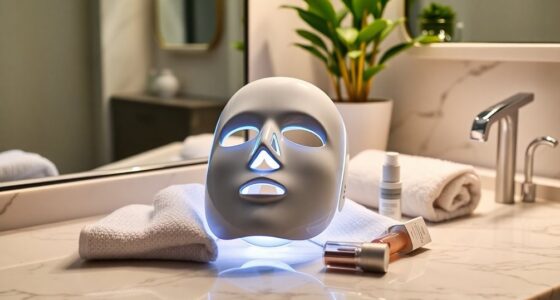
Night masks work better because they align with your skin’s natural repair and hydration cycle while you sleep. During the night, your skin becomes more permeable, allowing active ingredients to penetrate deeply and deliver better results. They also calm irritation and reduce photosensitivity, making treatments gentler. Plus, leaving masks on overnight gives your skin extended absorption time. Want to discover more about how these masks maximize your skincare? Keep exploring to reveal even more benefits.
Key Takeaways
- Night masks align with the skin’s natural repair and renewal processes, enhancing active ingredient effectiveness.
- Skin permeability is higher at night, allowing deeper penetration of nourishing ingredients.
- They contain soothing agents that reduce irritation and photosensitivity risks during sleep.
- Extended overnight contact improves nutrient absorption and overall skin benefits.
- Night masks better support skin hydration and oil regulation without environmental interference.
Many masks are designed to deliver their best results overnight, rather than in the morning, because they work with your skin’s natural nighttime processes. While some masks are suited for daytime use, many are formulated to maximize benefits when you sleep. During the night, your skin shifts into repair mode, making it more receptive to ingredients that promote hydration, oil control, and overall renewal. This is why certain masks provide a more noticeable hydration boost when used before bed—they harness your skin’s natural ability to absorb and retain moisture while you rest.
Many masks work best overnight, aligning with your skin’s natural repair and hydration processes while you sleep.
In the evening, your skin’s barrier becomes more permeable, allowing active ingredients to penetrate deeper. This heightened absorption means masks targeting hydration can deliver more intense nourishment, restoring moisture levels that might have been depleted during the day. If you’re dealing with oily skin, nighttime masks can also help regulate sebum production without the interference of environmental pollutants or makeup. These masks often contain ingredients like clay or salicylic acid, which work to control excess oil and prevent breakouts, giving you a clearer complexion by morning.
Using masks at night also reduces the risk of irritation. Many masks that focus on oil control or deep hydration are enriched with soothing agents that calm the skin. During the day, exposure to sun, pollution, and makeup can aggravate sensitive skin, making some active ingredients more likely to cause irritation or redness. Nighttime application allows these masks to work without interference, providing a gentler yet more effective treatment. Plus, you don’t have to worry about immediately exposing your skin to sunlight after applying certain active ingredients, which can sometimes cause photosensitivity.
Furthermore, leaving a mask on overnight gives your skin uninterrupted time to absorb nutrients. This extended contact enhances results, whether you’re aiming for a hydration boost or oil control. When you wake up, you often notice that your skin feels softer, plumper, and more balanced. This is because the ingredients had ample time to penetrate deeply and work synergistically with your skin’s natural renewal cycle. For those with natural nighttime processes, this means less midday shine and a more matte finish during the day.
As an affiliate, we earn on qualifying purchases.
Frequently Asked Questions
Do Different Skin Types Require Different Mask Formulations?
Yes, different skin types require different mask formulations. For example, if you have sensitive skin, you should choose masks with gentle ingredients that minimize irritation. Oily skin benefits from clay masks that absorb excess oil, while dry skin needs hydrating masks with nourishing ingredients. Always consider your skin sensitivity and ingredient compatibility to guarantee your mask provides the best results without causing adverse reactions.
Can Using Masks at Night Cause Skin Irritation?
Using masks at night can lead to skin irritation if you have sensitive skin, as about 60% of people report increased reactions to overnight products. Mask safety depends on choosing formulations suited to your skin sensitivity. If a mask contains harsh ingredients or is left on too long, it can cause irritation. Always patch-test new masks, follow recommended usage, and opt for gentle formulas to protect your skin while you sleep.
Are There Specific Ingredients Better Suited for Nighttime Masks?
Yes, certain ingredients are better suited for nighttime masks because of ingredient compatibility and skin repair needs overnight. Look for masks with hydrating ingredients like hyaluronic acid or nourishing oils, which work well while you sleep. To maximize benefits, use proper mask application techniques—apply evenly, avoid sensitive areas, and leave it on for the recommended time. This guarantees your skin absorbs nutrients effectively without irritation.
How Long Should I Leave a Mask on Overnight?
Leaving a mask on overnight is like giving your skin a gentle hug—just enough time for deep repair. Typically, you should wear it for 6-8 hours, ensuring it’s compatible with your skin type and mask ingredients. Check the product instructions for preferred duration. Sleep benefits come when your skin absorbs nutrients without irritation, so don’t exceed recommended time, and rinse thoroughly in the morning for a fresh, revitalized look.
Do Nighttime Masks Help With Skin Regeneration?
Yes, nighttime masks do help with skin regeneration. Sleep benefits your skin by allowing it to repair itself, and using a night mask enhances this process. These masks deliver concentrated ingredients while you rest, boosting skin repair and renewal. You wake up with healthier, more refreshed skin because your body’s natural repair mechanisms are working at their peak during sleep. Incorporate a night mask into your routine for better skin recovery overnight.
Conclusion
So, next time you slap on a mask in the morning, remember—it might be better suited for nighttime. Ironically, the very mask designed to boost your glow could be wasting its magic while you’re awake and active. Instead, save that fancy mask for when your skin truly needs a break. After all, sometimes the best skincare isn’t about morning routines but about recognizing when your skin actually wants to rest and rejuvenate.