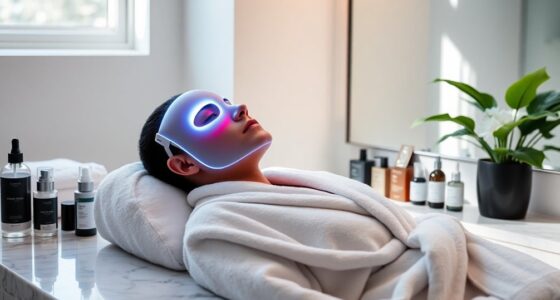
To test a new face mask without overhauling your routine, start with a patch test on a small, inconspicuous area, like behind your ear or jawline, for 24 hours to check for irritation. If no reaction occurs, apply the mask to a small section of your face, monitoring closely during and after use. Introduce it gradually once you’re confident it suits your skin. Keep in mind, there’s more to a safe testing process to guarantee the best results.

Get wellness gear delivered free with Prime
- Fast, free delivery on millions of items
- Prime Video, Amazon Music and more included
- Member-only deals all year
Key Takeaways
- Conduct a patch test on a small skin area 24 hours before full application.
- Cleanse your face thoroughly prior to testing the mask.
- Apply the mask to a limited section, avoiding sensitive areas.
- Observe skin reaction during and after the recommended duration.
- Introduce the mask gradually into your routine, once or twice weekly.

When you get a new face mask, verifying its effectiveness before regular use is crucial. Jumping straight into applying it as part of your skincare routine without testing can lead to unwanted reactions or ineffective results. The key is to introduce the product carefully, ensuring it suits your skin and won’t interfere with your existing routine. This way, you protect your skin and make the most of the new treatment without risking ingredient sensitivity or irritation.
Start by reading the label thoroughly. Look for ingredients you’re already familiar with and know don’t cause issues for your skin. If you’re someone with ingredient sensitivity, it’s especially important to identify potential irritants or allergens. Once you’ve checked the ingredients, do a patch test before full application. Take a small amount of the mask and apply it to an inconspicuous area, like behind your ear or on your jawline. Keep it there for 24 hours and observe any reaction. If you notice redness, itching, swelling, or irritation, it’s best to avoid using the mask on your face. If your skin reacts negatively, that’s a clear sign it’s not compatible with your skin or could disrupt your current skincare routine.
Check ingredient labels carefully and do a patch test to prevent reactions before full mask application.
If the patch test goes well, proceed with a cautious full-face test. Before doing so, cleanse your face thoroughly to remove makeup, dirt, and excess oils. Apply the mask to a small section of your face, avoiding sensitive areas like around your eyes. Keep it on for the recommended duration, then rinse off gently. During this process, pay close attention to how your skin reacts. If you experience burning, excessive redness, or irritation, remove the mask immediately. If your skin feels calm and looks normal afterward, you’re likely safe to incorporate the mask into your routine.
When integrating the new mask into your skincare routine, do it gradually. Don’t replace your entire regimen at once. Instead, add the mask once or twice a week, observing how your skin responds over time. This incremental approach helps prevent overwhelming your skin and allows you to catch any adverse reactions early. Being aware of *ingredient origins* and their potential impact on your skin can also guide you in choosing products that are both effective and environmentally friendly. Additionally, understanding the potential allergens in skincare products can help you avoid unnecessary irritation. Incorporating proper testing procedures into your routine is essential to maintaining your skin’s health. By testing carefully, you preserve your skin’s health and ensure the new product enhances your routine without causing setbacks.
Products Worth Considering

Levoit Core 400S-P Smart Air Purifier for Large Rooms

Oral-B iO Series 5 Rechargeable Electric Toothbrush with Travel Case, White

Fitbit Sense 2 Smartwatch – Blue Mist / Pale Gold
As an affiliate, we earn on qualifying purchases.
Frequently Asked Questions
How Long Should I Wear the Mask During Testing?
You should wear the mask for about 15 to 20 minutes during testing. Pay close attention to how your skin reacts, especially regarding product ingredients that might cause allergic reactions. If you notice any redness, itching, or irritation, remove the mask immediately. This duration helps you gauge its effects without risking adverse allergic reactions, ensuring you find out if it suits your skin before full application.
Can I Test Multiple Masks at Once?
You can test multiple masks at once, but be cautious—about 20% of people experience allergic responses or unexpected chemical reactions with new products. Testing several masks simultaneously might make it harder to identify which one caused a reaction, especially if symptoms overlap. To stay safe, test each mask separately and monitor your skin’s response closely, ensuring you can pinpoint any issues quickly and avoid potential allergic reactions.
What Skin Types Are Most Compatible With New Masks?
You’re most compatible with new masks if you have normal or oily skin, as they typically handle ingredients safely. If you have sensitive or allergy-prone skin, check the ingredient safety and avoid masks with potential irritants. Always do a patch test first to assess allergy sensitivity. This way, you minimize risks and find a mask suited to your skin type, ensuring a comfortable and effective experience.
Should I Test Masks on Different Parts of My Face?
Yes, you should test masks on different parts of your face. It’s essential because ingredient sensitivity and allergy risk vary across areas. Start with a small patch on your jawline or behind your ear—places less visible but revealing. Wait 24 hours to see if any irritation occurs. This cautious approach helps you avoid widespread reactions, ensuring your skin’s safety before applying the mask more broadly.
How Often Should I Test a New Face Mask?
You should test a new face mask once or twice to gauge ingredient safety and monitor allergy response. Start by applying a small amount to a discreet skin area, like behind your ear or on your jawline, and wait 24 hours. If no irritation or allergic reaction occurs, it’s generally safe to use. Regular testing guarantees you avoid adverse reactions while enjoying the benefits of your new mask.
Conclusion
Just like Icarus tested his wings before soaring, you should test your new face mask confidently. Remember, small steps lead to safer skies. By carefully trying it out, you guarantee your comfort and protection, avoiding any unexpected falls. So, take that initial plunge, embrace the process, and trust in your preparation. After all, every great journey begins with a cautious test—just like Daedalus’s careful flight, your safety depends on it.