LED therapy treats newborn jaundice by using specific blue-green light wavelengths, usually around 460-490 nm. When you place your baby under this light, it helps break down excess bilirubin in the skin into forms that your body can easily eliminate through urine and stool. The targeted light works efficiently and safely, minimizing side effects. If you want to understand how selecting the right wavelength makes this treatment more effective, keep exploring.
Key Takeaways
- LED therapy uses blue-green light (460-490 nm) to target bilirubin in the skin.
- The light penetrates the skin, chemically transforming bilirubin into water-soluble forms.
- These water-soluble bilirubin compounds are then excreted through urine and stool.
- LEDs provide a consistent, specific wavelength that enhances treatment efficiency and safety.
- The therapy is non-invasive, well-tolerated, and accelerates bilirubin clearance in newborns.
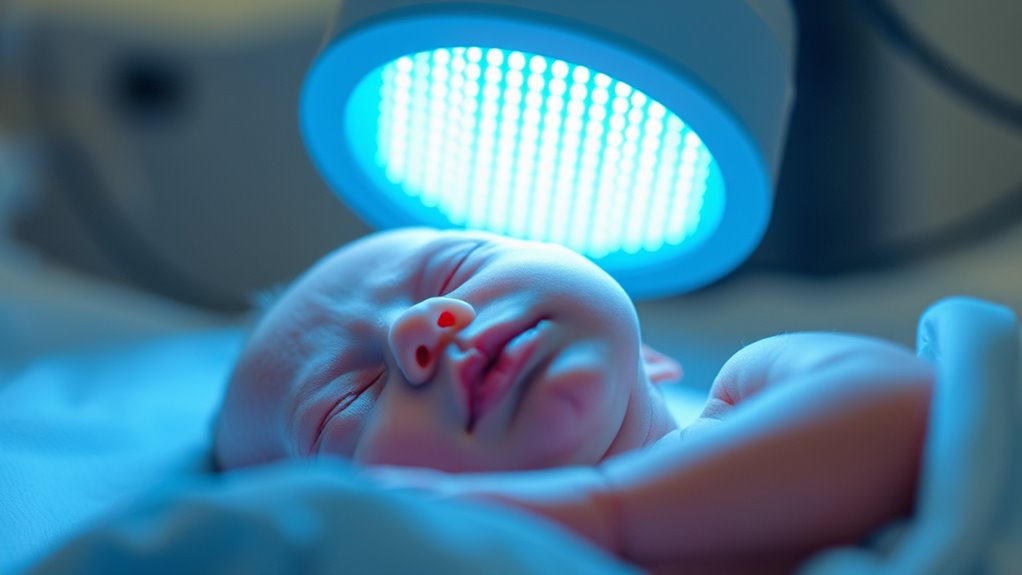
Jaundice is a common condition in newborns that occurs when their developing livers can’t efficiently process bilirubin, leading to a yellowing of the skin and eyes. When this happens, your baby’s body has an excess of bilirubin, a yellow pigment produced during the breakdown of red blood cells. The goal of LED therapy is to help your baby’s body clear this bilirubin more effectively. It works by exposing the skin to specific types of light that facilitate bilirubin breakdown, making it easier for the body to eliminate it through urine and stool.
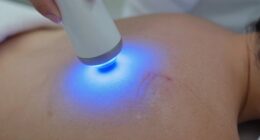
The core of this treatment lies in light wavelength selection. Not all light is equally effective in breaking down bilirubin. The LEDs used in therapy emit a narrow band of light, typically in the blue-green spectrum, around 460-490 nanometers. This particular wavelength is chosen because it penetrates the skin effectively and enhances the chemical transformation of bilirubin. When your baby is under LED phototherapy, the light penetrates the skin and reaches the bilirubin molecules. The energy from the light causes a chemical change, converting bilirubin into more water-soluble forms that your infant’s body can excrete more easily. This process accelerates bilirubin clearance, reducing jaundice symptoms.
The effectiveness of LED therapy depends on selecting the optimal blue-green light wavelength, around 460-490 nanometers, for bilirubin breakdown.
During LED therapy, you’ll notice your baby lying comfortably under the light source, often with protective eye coverings to shield their eyes from the bright light. The treatment is non-invasive and generally well-tolerated, with minimal discomfort. The selection of light wavelength is critical because it ensures maximum efficiency while minimizing potential side effects. Unlike traditional phototherapy that might use fluorescent lamps, LEDs produce a consistent, targeted wavelength that precisely matches the optimal range for bilirubin breakdown. This specificity not only enhances the treatment’s effectiveness but also reduces the risk of overheating or skin irritation.
LED therapy’s advantages are clear: it’s portable, energy-efficient, and capable of delivering consistent light intensity. As you observe your baby during treatment, you can feel reassured knowing that the targeted wavelength selection maximizes bilirubin breakdown without unnecessary exposure to other wavelengths. This specialized approach speeds up the process of reducing bilirubin levels, helping your baby recover faster. Overall, the success of LED phototherapy hinges on choosing the right light wavelength, which directly influences how efficiently bilirubin is broken down and eliminated from your newborn’s body.
Frequently Asked Questions
How Long Does Each LED Therapy Session Usually Last?
Each LED therapy session typically lasts about 30 minutes, but the duration can vary depending on your baby’s bilirubin levels and response. Your healthcare provider will monitor your newborn closely to determine the best session length, which may be adjusted as needed. It’s important to follow their instructions to guarantee your baby receives the right amount of light exposure, promoting safe and effective treatment for jaundice.
Are There Any Risks Associated With LED Therapy?
Like walking on thin ice, LED therapy generally has minimal risks, but you should still consider potential side effects. Some babies might experience skin irritation or rashes, though these are usually temporary. Long-term safety remains reassuring, with no evidence of harm from exposure to LED light. Always follow your healthcare provider’s guidance to keep your little one safe, and monitor for any unusual reactions during treatment.
Can LED Therapy Be Used Alongside Other Jaundice Treatments?
Yes, you can use LED therapy alongside other jaundice treatments, as it often serves as a supplementary therapy. Combining treatments like phototherapy with LED therapy can enhance effectiveness and speed up recovery. Always consult your healthcare provider before starting combination treatments, to guarantee they are safe and appropriate for your newborn’s specific condition. This approach can provide a more thorough strategy to manage jaundice effectively.
How Soon Can Parents Expect to See Improvements?
Think of it like waiting for dial-up internet to connect; you might see visible improvements within 24 hours, but sometimes it takes a couple of days. Generally, parents can expect to notice a reduction in jaundice symptoms within 1 to 2 days after starting LED therapy. Keep in mind, every baby is different, so timing expectations may vary, and your healthcare team can give you the most accurate guidance.
Is LED Therapy Suitable for All Newborns With Jaundice?
You should know that LED therapy isn’t suitable for all newborns with jaundice. Your healthcare provider assesses individual suitability and considers medical considerations, such as the baby’s age, severity of jaundice, and overall health. Some infants may need alternative treatments. Always consult your pediatrician to determine if LED therapy is appropriate for your baby, ensuring safe and effective care tailored to your child’s specific needs.
Conclusion
LED therapy acts like a gentle guiding light, helping your newborn’s body break down excess bilirubin. It’s a safe, effective way to clear up jaundice and get your little one back to their bright, healthy self. Think of it as shining a warm beacon of hope during a challenging time. With this gentle glow, you can feel confident that your baby is on the path to a healthier, happier future.