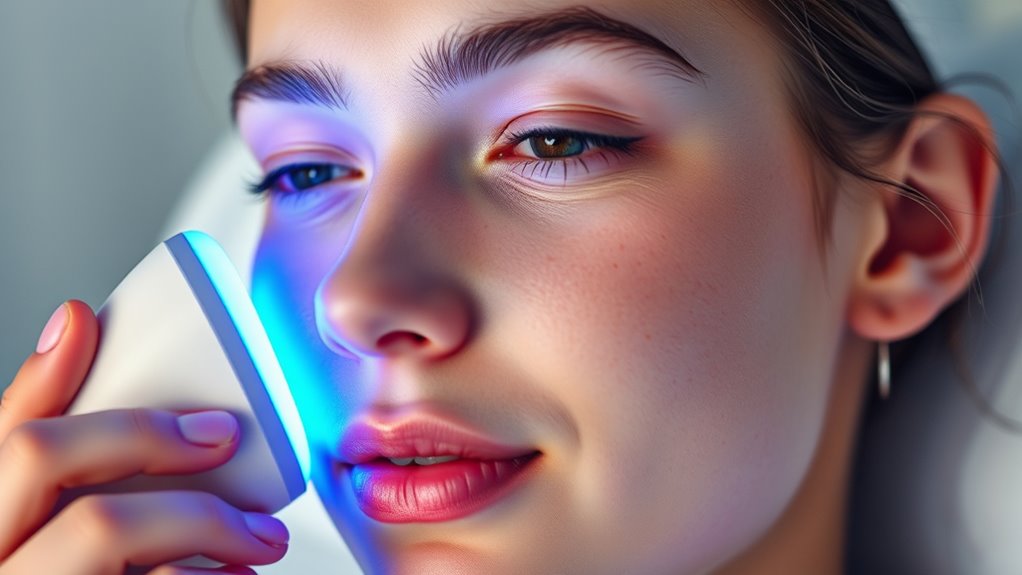
Blue-light therapy offers a safe, non-invasive way to tackle acne by targeting bacteria and reducing inflammation, helping clear your skin over time. It also regulates oil production, which lowers the chances of clogged pores and breakouts. Plus, it promotes skin rejuvenation, smoothing texture and even skin tone without discomfort or downtime. If you keep exploring, you’ll discover how this treatment can fit into your skincare routine and improve your overall skin health.
Key Takeaways
- Non-invasive treatment that targets acne-causing bacteria with minimal discomfort and no downtime.
- Reduces inflammation and helps prevent future breakouts by addressing root causes.
- Stimulates skin rejuvenation, improving texture, tone, and reducing scars for a healthier complexion.
- Regulates oil production, decreasing clogged pores and flare-ups.
- Can be combined with other treatments for comprehensive skin health and maintenance.
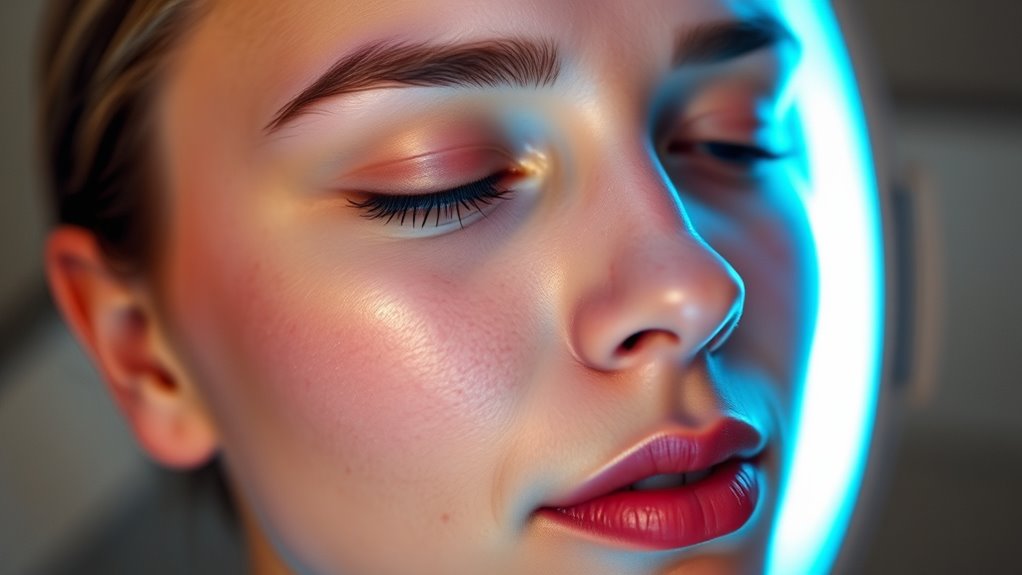
If you’re struggling with acne, blue-light therapy offers a promising, non-invasive treatment option. Unlike traditional methods that often involve medications or harsh skincare products, blue-light therapy targets the root causes of acne with minimal discomfort. This treatment uses specific wavelengths of blue light to penetrate the skin and destroy the bacteria responsible for breakouts, reducing inflammation and preventing future pimples. But beyond its acne-fighting capabilities, blue-light therapy also has benefits related to skin rejuvenation, making it an attractive choice if you’re looking to improve overall skin health.
Blue-light therapy is a non-invasive treatment that targets acne-causing bacteria and promotes skin rejuvenation.
Many people are familiar with laser treatments for skin concerns, usually opting for procedures like laser resurfacing or intense pulsed light (IPL) to address signs of aging, scars, or uneven tone. Blue-light therapy shares some similarities with these laser treatments in that it uses light energy to stimulate cellular activity, but it’s more targeted and gentle. It’s designed specifically to combat acne-causing bacteria without damaging the surrounding skin tissue. Over time, this targeted approach can lead to clearer skin and a more even complexion, which is often a goal of skin rejuvenation treatments. When used regularly, blue-light therapy can help reduce the appearance of acne scars and pigmentation, contributing to a smoother, healthier-looking surface.
One of the key advantages of blue-light therapy is that it doesn’t rely on harsh chemicals or invasive procedures. You can generally have sessions done in a dermatologist’s office with no downtime afterward. This convenience makes it easier to incorporate into your skincare routine, especially if you’re busy or prefer treatments that aren’t disruptive. Additionally, blue-light therapy can be combined with other skin rejuvenation methods, such as topical treatments or microneedling, to enhance overall results. It’s an effective way to boost your skin’s health and appearance without the risks associated with more aggressive procedures.
Furthermore, blue-light therapy helps regulate oil production, which is a major factor in acne development. By controlling excess sebum, it reduces the likelihood of clogged pores and future breakouts. This dual action—killing bacteria and controlling oil—makes it a holistic approach to managing acne. Over time, many users notice a significant decline in both active pimples and the frequency of flare-ups. The gentle nature of blue-light therapy also means it’s suitable for sensitive skin types, providing relief without irritation.
Frequently Asked Questions
How Quickly Will I See Results From Blue-Light Therapy?
You might see initial improvements in your skin within a few sessions, but it typically takes about 4 to 6 weeks of consistent blue-light therapy for noticeable results. Treatment duration varies based on your skin response, so you should follow your dermatologist’s advice. Keep in mind, patience is key—regular sessions help your skin respond better, leading to clearer, oil-free skin over time.
Are There Any Side Effects Associated With Blue-Light Therapy?
Think of blue-light therapy as a gentle superhero for your skin—though, like all heroes, it has its side effects. You might experience potential skin irritation or photosensitivity reactions, especially if you have sensitive skin or don’t follow aftercare instructions. These side effects are usually mild and temporary. To minimize risks, consult with your dermatologist beforehand and use recommended sun protection during treatment.
Can Blue-Light Therapy Be Combined With Other Acne Treatments?
Yes, you can combine blue-light therapy with other acne treatments for better results. This approach enhances treatment synergy, as it targets different causes of acne simultaneously. Use it alongside topical treatments like benzoyl peroxide or retinoids, but always consult your dermatologist first. Combining therapies can improve oil control and reduce breakouts more effectively, giving you clearer skin faster while minimizing potential irritation.
How Often Should I Undergo Blue-Light Therapy Sessions?
You should typically undergo blue-light therapy sessions 2 to 3 times a week initially. After your skin improves, your dermatologist may recommend a maintenance schedule of once every 1 to 2 months. The exact session frequency depends on your skin’s response and severity of acne. Always follow your doctor’s advice to customize your treatment plan and guarantee ideal results while minimizing any potential side effects.
Is Blue-Light Therapy Suitable for All Skin Types?
Oh, of course blue-light therapy is perfect for everyone—said no dermatologist ever. In reality, it’s best for those with skin sensitivities or specific needs, but treatment is highly customizable. You should consult a skincare professional to determine if your skin type responds well. While generally safe, some skin types might need adjustments to avoid irritation. So, yes, it can suit all skin types, but only if tailored properly.
Conclusion
Imagine waking up tomorrow with clearer skin and newfound confidence. Blue-light therapy could be your secret weapon, but are you ready to take that first step? The benefits are promising, yet the true results depend on your commitment. Don’t let uncertainty hold you back—your journey to clearer, healthier skin might be just a decision away. Are you prepared to open the potential of blue light and see what’s possible? The choice is yours.