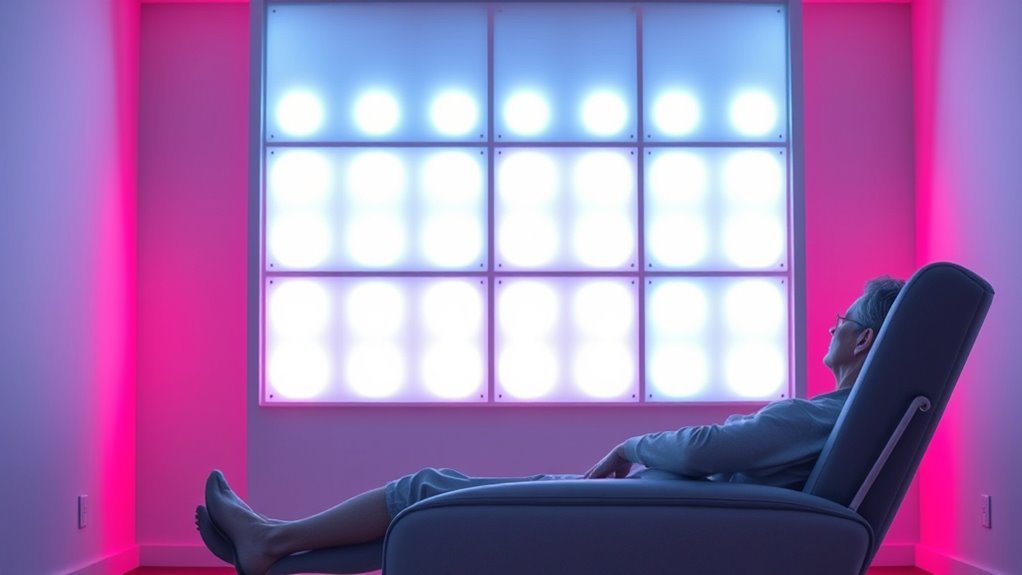

Light therapy is a safe, non-invasive way to ease joint pain and inflammation caused by arthritis. It uses specific wavelengths of light, like red and near-infrared, to target affected tissues, reduce swelling, and promote healing. Many people experience relief after several sessions, and the treatment can be combined with other therapies. Ongoing research supports its benefits, so exploring how it works could give you new options for managing pain effectively.
Key Takeaways
- Current evidence indicates that light therapy, especially low-level laser and LED treatments, can reduce inflammation and alleviate pain in joint conditions.
- Clinical studies demonstrate improvements in pain levels and functional mobility after consistent light therapy sessions.
- Red and near-infrared wavelengths effectively penetrate tissues to target underlying inflammatory processes at the cellular level.
- Light therapy is a safe, non-invasive option that can complement traditional treatments like medications and physical therapy.
- Ongoing research aims to optimize protocols and confirm long-term benefits for joint pain and arthritis management.

If you’re battling joint pain or arthritis, light therapy offers a promising, non-invasive treatment option. Recent phototherapy advances have opened new avenues for managing chronic pain without relying solely on medications or invasive procedures. Light therapy works by exposing affected areas to specific wavelengths of light, which penetrate the skin and stimulate cellular activity. This process can reduce inflammation, promote tissue repair, and alleviate pain, making it an appealing addition to your pain management strategies. Unlike traditional treatments, light therapy is generally safe, with minimal side effects, and can be performed at clinics or even at home with portable devices.
Light therapy offers a safe, non-invasive way to reduce joint pain and promote healing.
The core idea behind phototherapy advances is that different wavelengths of light target various biological processes. For joint pain and arthritis, low-level laser therapy (LLLT) and LED light therapy are most commonly used. These modalities deliver red or near-infrared light, which can reach deeper tissues. Studies suggest that this targeted approach helps modulate inflammatory responses and enhances blood flow to the affected joints. As a result, you may notice reduced swelling, improved joint mobility, and less discomfort over time.
Incorporating light therapy into your pain management strategies can be particularly beneficial if you’re seeking alternatives to pharmaceuticals or invasive procedures. Many users report feeling relief after several sessions, with some experiencing sustained benefits after completing a series of treatments. Because light therapy is non-invasive and painless, it’s easy to fit into your routine without significant disruption. It also offers the advantage of being used alongside other treatments, such as physical therapy or medication, to enhance overall effectiveness.
While ongoing research continues to refine the understanding of phototherapy’s mechanisms, current evidence supports its role in reducing joint pain. Clinical trials have demonstrated improvements in pain scores and functional capacity among arthritis sufferers who undergo light therapy. However, it’s important to set realistic expectations and consult with healthcare professionals to develop a personalized treatment plan. Not all types of joint pain respond equally, and factors like the severity of your condition and underlying health can influence outcomes.
Ultimately, light therapy represents a promising addition to your toolkit for managing joint pain and arthritis. Its basis in phototherapy advances offers a scientifically supported approach that addresses inflammation and tissue repair at a cellular level. As more evidence emerges, it’s likely to become an integral part of complete pain management strategies, providing relief in a safe, drug-free manner.
Frequently Asked Questions
Can Light Therapy Prevent the Progression of Arthritis?
Light therapy may help reduce inflammation and improve joint function, but current evidence isn’t strong enough to confirm it can prevent arthritis progression. You might experience some relief and possibly slow down worsening symptoms, but it shouldn’t replace established treatments. While it offers potential preventive benefits, more research is necessary to determine if light therapy can truly stop or slow the progression of arthritis effectively.
Are There Any Long-Term Side Effects of Light Therapy?
Imagine you undergo light therapy regularly for joint pain; you wonder about potential risks. Currently, evidence suggests that light therapy is generally safe with long-term safety, but rare side effects like skin irritation or eye strain could occur. While serious long-term side effects aren’t well-documented, it’s wise to consult your healthcare provider to monitor for any issues, ensuring you benefit safely from this treatment.
How Does Light Therapy Compare to Traditional Pain Medications?
You might find that light therapy offers a safer alternative to traditional pain medications, which often come with side effects like nausea or dependency. It’s generally less invasive and can be used alongside other treatments. When considering expense, light therapy devices can be an upfront investment, but they may save you money over time compared to ongoing medication expenses. Overall, it’s a promising option worth exploring for pain relief.
Is Light Therapy Suitable for All Types of Arthritis?
If you’re considering light therapy for arthritis, know it’s not suitable for all types. For example, a patient with osteoarthritis might benefit, but someone with rheumatoid arthritis may find limited relief. As an alternative treatment, light therapy works best when tailored to individual needs. Always consult your healthcare provider to assess patient suitability, ensuring this treatment complements your overall arthritis management plan.
What Is the Recommended Duration and Frequency of Treatment Sessions?
You should aim for treatment scheduling of about 2 to 3 sessions per week, with each session lasting around 15 to 30 minutes. Consistency is key, so stick to this routine for several weeks to see potential benefits. Adjust the session duration based on your response and your healthcare provider’s advice. Regular, moderate treatment sessions help optimize the effectiveness of light therapy for joint pain relief.
Conclusion
Imagine your joints as tired muscles after a long day. Light therapy acts like a gentle sunrise, awakening and soothing them. Recent studies show it can reduce pain and improve mobility for many with arthritis. One person I know found relief after just a few sessions, like a dark room filling with morning light. While it’s not a miracle cure, light therapy offers hope—like turning on a dimmer switch to brighten your day and ease your pain.