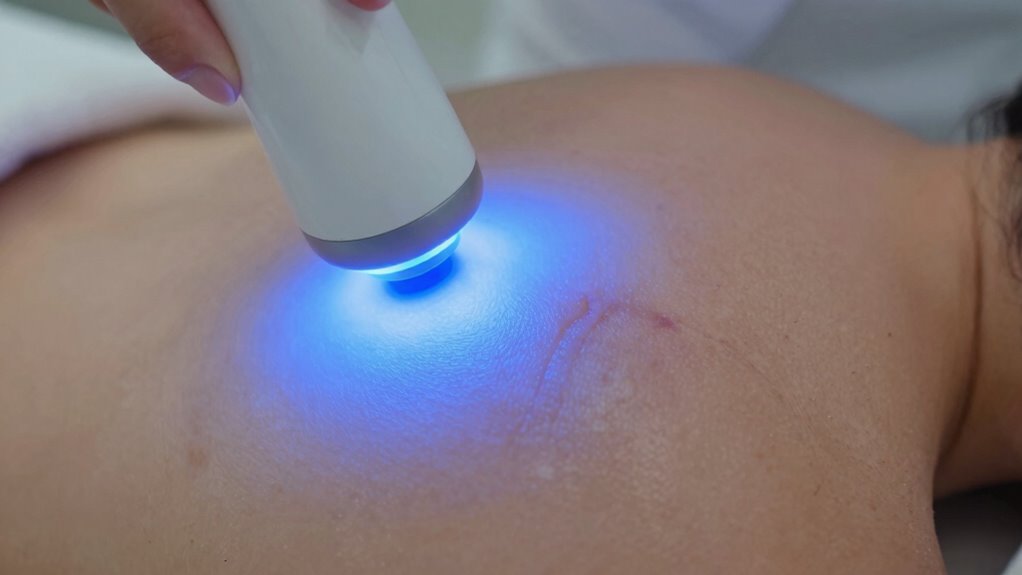
When it comes to scar healing with light therapy, timing is vital. Starting treatment during the early proliferation phase helps guide collagen formation and reduce inflammation, leading to better results. Wait until your scar’s redness diminishes and discomfort eases before beginning sessions. Delaying can cause the scar to harden and reduce effectiveness. Ensuring proper timing speeds recovery and minimizes complications. Keep exploring to discover how to optimize your treatment schedule for the best possible outcome.
Key Takeaways
- Initiate light therapy during the proliferation or early remodeling phase for optimal collagen formation.
- Wait until the scar’s redness diminishes and discomfort subsides before starting treatment.
- Early intervention guides proper tissue remodeling and reduces excess scarring.
- Consistent timing, such as weekly sessions, enhances healing outcomes and scar appearance.
- Personalize timing based on individual healing progress and medical advice for best results.
Understanding How Scars Heal and When to Use Light Therapy

Understanding how scars heal is essential to knowing when to use light therapy effectively. When your skin is injured, your body forms scar tissue to repair the damage. This process occurs in distinct healing phases: inflammation, proliferation, and remodeling. During the inflammation phase, your body works to stop bleeding and clear debris. In the proliferation phase, new tissue, including collagen, forms to close the wound. Additionally, the phases of healing influence how well light therapy can penetrate and affect the scar tissue, making timing even more critical. The rate of healing can vary based on individual factors, which further emphasizes the importance of precise timing for treatment. The metabolic processes involved in skin repair continue throughout these phases, impacting how treatments are absorbed and utilized by the tissue. Finally, during remodeling, the scar tissue strengthens and matures, which can take months or even years. Light therapy can influence these phases, especially during the proliferation and remodeling stages, to promote healthier collagen production and reduce excessive scar tissue. Additionally, timing of treatment plays a crucial role in maximizing light therapy’s effectiveness. Knowing these phases helps you time your treatment for ideal results, ensuring you support your skin’s natural healing process.
Why Starting Light Therapy Early Can Make a Difference

Starting light therapy early in the healing process can markedly improve scar outcomes because it helps guide collagen formation and reduce inflammation before the scar tissue becomes too dense. Initiating treatment during the initial stages of your healing timeline supports proper tissue remodeling and minimizes excessive scar formation. Early intervention influences how your scar tissue develops, leading to a flatter, less noticeable scar. Delaying therapy allows scar tissue to harden, making light therapy less effective. By starting sooner, you harness the body’s natural healing window, encouraging healthier collagen alignment and reducing inflammation. This proactive approach can shorten recovery time and improve overall scar appearance. Understanding healing stages helps clarify why timing is crucial for optimal results. Recognizing the healing timeline allows for better planning of intervention strategies to maximize effectiveness. Additionally, early therapy can positively impact the inflammatory response, which plays a significant role in scar development and healing quality. Initiating light therapy during the early healing phase can significantly influence the overall quality of the scar, leading to better long-term results. Properly timing interventions aligns with the body’s natural healing signals, ensuring that therapy supports the body’s own repair mechanisms for optimal outcomes.
How to Recognize When Your Scar Is Ready for Light Therapy
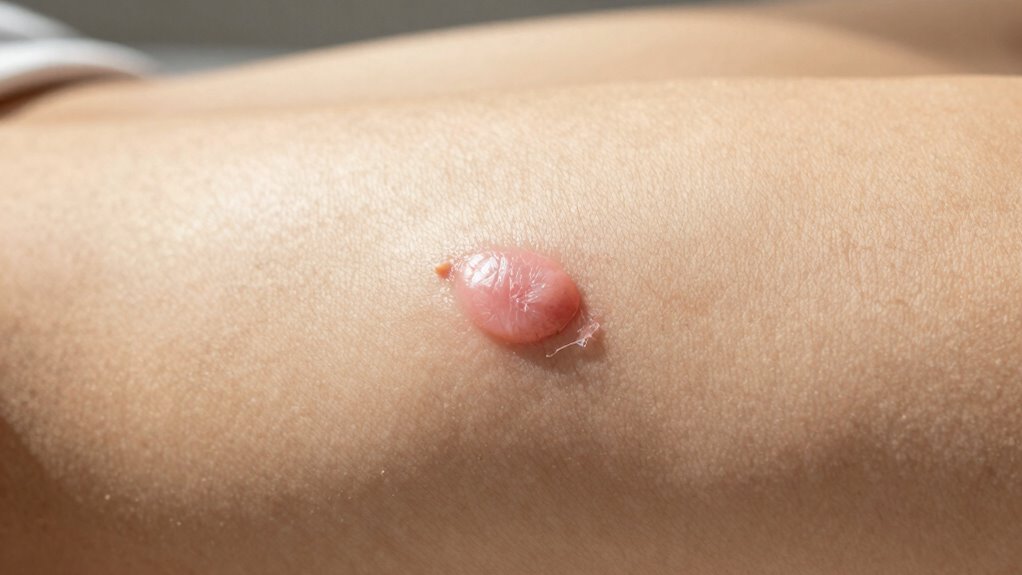
Knowing when your scar is ready for light therapy is essential to maximize its benefits. Look for changes in scar color; once the scar has shifted from red or purple to a softer pink or light brown, it’s a good sign it’s healing well. Additionally, assess your pain levels—if the scar no longer causes significant discomfort or sensitivity, it indicates that the tissue has stabilized. Avoid starting light therapy too early when the scar remains inflamed or tender, as this can hinder healing. Wait until redness diminishes and pain subsides before beginning treatments. These signs show your skin has matured enough for light therapy to be effective, helping to promote ideal healing and reduce the risk of complications. Proper wound healing stages are crucial for determining the appropriate timing for therapy. Recognizing the natural progression of healing can also prevent over-treatment that might impede recovery. Incorporating healing timelines based on individual responses can optimize results and prevent setbacks. Understanding the healing process can guide you in making informed decisions about treatment timing. Be sure to consult with a healthcare professional to verify that your skin has fully recovered before beginning treatment to avoid potential risks and complications.
What Are the Risks of Delaying Light Therapy?

Delaying light therapy can slow down your scar’s healing process and increase the risk of complications. When you wait too long, your scar may not mature properly, leading to uneven texture and prolonged redness. Additionally, pigment changes can become more pronounced, making the scar more noticeable over time. The delay could also cause the scar to become less responsive to light therapy, reducing its effectiveness. Understanding the importance of timing in treatment can help you accept and address scars in a way that promotes confidence and self-care. Be aware that:
- Scar maturation may take longer, extending recovery.
- Pigment changes can become permanent without early intervention.
- You might need more intensive treatments later on.
Proper scar management and awareness of healing timelines are essential for optimal results. Recognizing the history of scar healing can guide you in choosing the optimal time to begin therapy for better results. Prompt treatment helps optimize healing and minimizes unwanted cosmetic effects. Ignoring timing may hinder your progress and leave you with a less desirable scar appearance. Furthermore, understanding the healing timeline can help set realistic expectations and improve treatment planning.
Tips for Timing Your Scar Light Therapy for Best Results
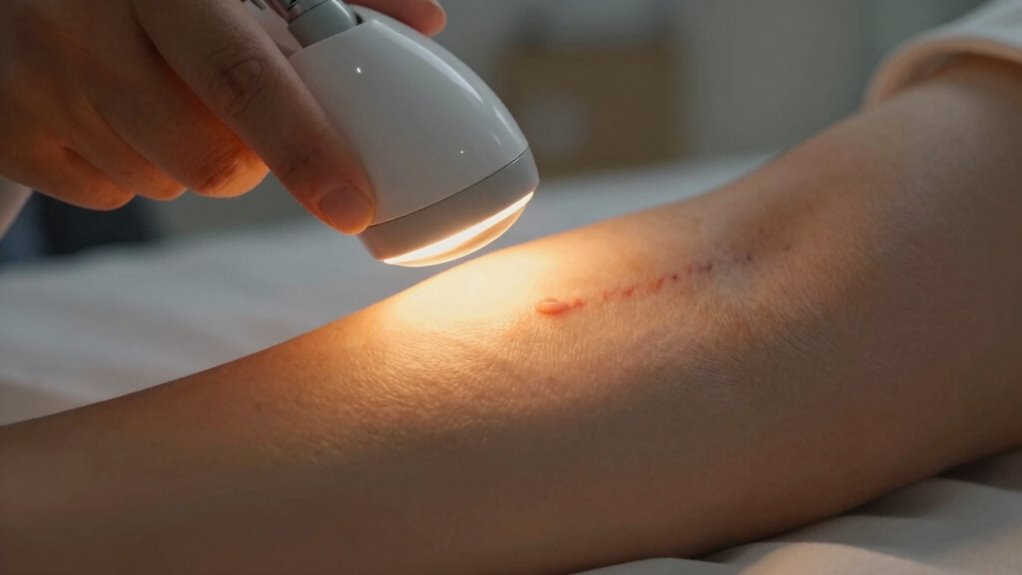
Timing your scar light therapy correctly can substantially improve your chances of achieving ideal healing and minimizing visible scars. The key is to start treatment during the optimal window when your body is actively undergoing skin regeneration. Usually, this means beginning therapy once the initial wound has closed but before scar tissue becomes too dense. Early intervention promotes better remodeling of scar tissue and encourages healthier skin regeneration. You should also be aware of the skin’s natural healing stages to better identify the best time to start treatment. Avoid delaying therapy, as waiting too long can lead to increased collagen buildup, making scars more prominent. Consistency matters—regular sessions at the right time can enhance your results. Keep in mind that individual healing timelines vary, so consult your healthcare provider to determine the best timing for your specific situation. Proper timing maximizes healing potential and minimizes long-term scarring. Additionally, understanding your body’s natural healing response can help you better identify the ideal window for treatment. Being aware of your natural healing phases can further optimize treatment outcomes. Recognizing the critical healing periods allows for more effective scheduling of light therapy sessions.
Frequently Asked Questions
Can Light Therapy Completely Erase Scars or Just Improve Their Appearance?
Light therapy can improve the appearance of scars, but it won’t completely erase them. It helps by reducing scar tissue, promoting collagen production, and minimizing pigment changes. You might notice smoother skin and better color match over time, but some scars, especially deep or extensive ones, may still be visible. Consistent treatments and proper care enhance results, but full removal isn’t guaranteed.
How Long Does It Typically Take to See Results From Light Therapy?
You’ll usually start seeing visible improvements within 4 to 6 weeks of consistent light therapy sessions. The treatment duration varies depending on your scar’s size and severity, but regular sessions are key. As you continue, your skin responds gradually, and noticeable changes become more evident over time. Patience is essential, and many see significant results with ongoing treatment, leading to smoother, less noticeable scars.
Is Light Therapy Suitable for All Types of Scars?
Light therapy can be effective for many scars, but it’s not suitable for all types. If your scar has thick scar tissue or significant skin pigmentation changes, this treatment might not work as well. You should consult a specialist to evaluate your specific scar and skin tone. They can determine if light therapy will help improve your scars or if other treatments might be more appropriate for your skin’s unique needs.
Are There Any Age Restrictions for Using Scar Light Therapy?
You might think age restrictions limit scar light therapy, but safety considerations often mean it’s suitable for most ages. While children and seniors should consult a healthcare professional first, generally, light therapy is safe when properly administered. It’s essential to follow guidelines and discuss your age with a specialist to guarantee safety. This approach helps you avoid risks and maximizes healing potential, regardless of your age.
What Should I Do if My Scar Worsens After Starting Light Therapy?
If your scar worsens after starting light therapy, stop the treatment immediately. You should consult your healthcare provider to discuss the scar worsening and determine if light therapy adjustments are necessary. They may recommend reducing the session intensity or frequency, or trying a different approach. Don’t ignore the signs; professional guidance ensures safe and effective scar healing without further complications.
Conclusion
Starting light therapy at the right time can considerably improve your scar’s appearance. Research shows that early treatment can reduce scar tissue formation by up to 30%, making your healing smoother and less noticeable. Don’t wait too long—delaying could mean missing out on these benefits. By paying attention to your scar’s readiness and timing your sessions wisely, you give yourself the best chance for a lighter, less visible scar. Your skin’s healing potential is worth the right timing.