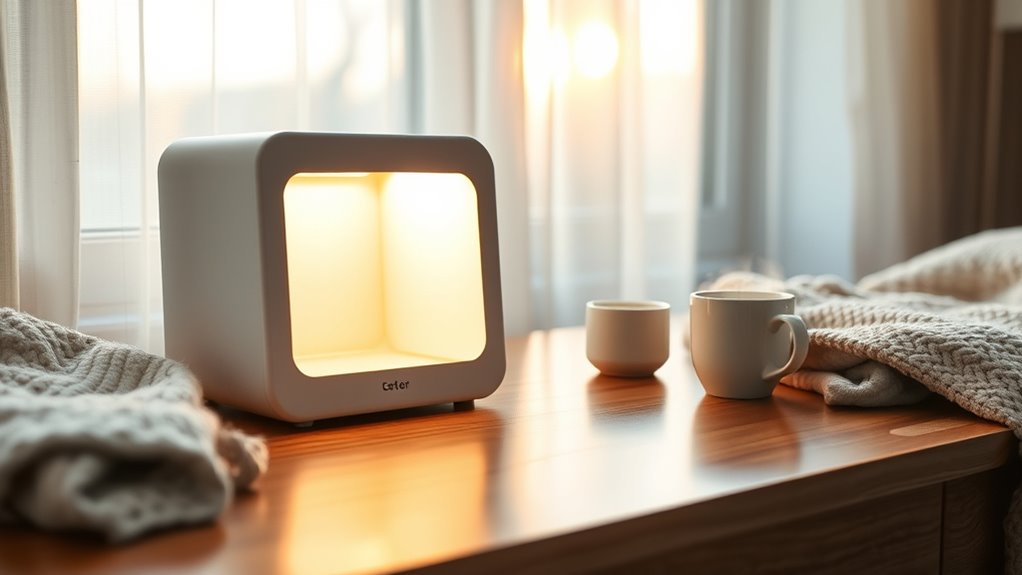

To effectively manage seasonal affective disorder with light therapy, choose a light box that emits at least 10,000 lux and provides full-spectrum light. Use it daily, preferably in the morning within the first hour of waking, for 20-30 minutes while keeping your eyes open but not staring directly into the light. Consistency is key, and combining this with healthy habits can boost results. Keep exploring to discover more strategies that could brighten your mood all winter long.
Key Takeaways
- Use a 10,000 lux full-spectrum, UV-filtered light box daily, preferably in the morning, for 20-30 minutes.
- Maintain consistency and integrate light therapy into your morning routine for optimal results.
- Combine light therapy with good sleep hygiene and outdoor activities to enhance mood benefits.
- Consult a healthcare provider before starting if you have eye or skin sensitivities.
- Choose an easy-to-use, adjustable light box that fits your lifestyle for sustainable long-term use.

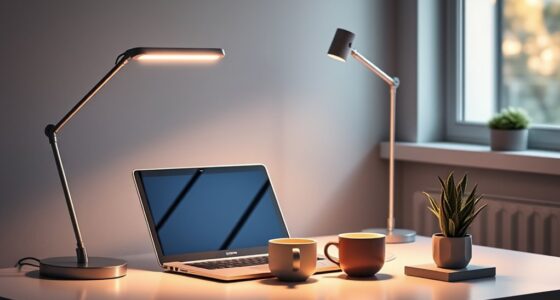
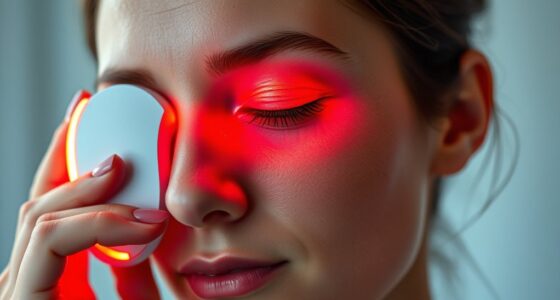
As winter days grow shorter and sunlight becomes scarce, many people experience symptoms of Seasonal Affective Disorder (SAD), a type of depression linked to seasonal changes. One of the most effective ways to combat these symptoms is through light therapy, which involves exposing yourself to bright light that mimics natural sunlight. To make this work, you need to pay attention to your sunlight exposure and choose the right light box. Ensuring you get enough bright light each day can help regulate your circadian rhythms, improve your mood, and boost your energy levels. During the darker months, simply spending more time outdoors might be challenging due to weather or limited daylight hours, so a light box becomes a practical alternative. When selecting a light box, look for one that emits at least 10,000 lux, which is the standard intensity recommended for SAD treatment. The device should provide full-spectrum or broad-spectrum light to closely resemble natural sunlight, and it should be UV-filtered to protect your eyes and skin. You’ll want a light box that’s easy to use, portable, and adjustable in terms of height and angle, so you can position it comfortably in your daily routine. Consistency is key, so aim to use your light box daily, ideally in the morning within the first hour of waking up, to help reset your internal clock and improve your mood throughout the day. When you sit in front of the light, keep your eyes open but avoid staring directly into it to prevent discomfort or eye strain. The duration of exposure can vary, but most people find that 20 to 30 minutes each session is sufficient. If you have any eye conditions or skin sensitivities, consult your healthcare provider before starting light therapy. Remember, sunlight exposure isn’t just about shining a light into your eyes; it’s about creating a daily routine that maximizes your body’s natural response to light. Combining this with good sleep habits, regular outdoor activity when possible, and other healthy lifestyle choices can enhance your results. The key to success with light therapy is consistency and choosing the right equipment to suit your needs. By making a conscious effort to incorporate proper sunlight exposure and selecting an effective light box, you can markedly reduce the impact of Seasonal Affective Disorder and bring more brightness into your winter days.
Frequently Asked Questions
Can Light Therapy Be Safely Combined With Medication?
Yes, you can safely combine light therapy with medication, but you should always check for potential medication interactions and follow safety precautions. Consult your healthcare provider before starting, so they can advise you on any risks or adjustments needed. Monitoring your response is vital, especially if you experience side effects. With proper guidance, combining these treatments can be effective and safe for managing seasonal affective disorder.
What Are the Long-Term Effects of Light Therapy?
You might experience long-term benefits from light therapy, such as sustained mood improvement and better sleep patterns, especially if you continue treatment as recommended. However, it’s important to stay aware of potential risks like eye strain or headaches, which could persist with prolonged use. Regular check-ins with your healthcare provider help guarantee that the therapy remains effective and safe over time, minimizing any adverse effects.
How Do I Choose the Right Light Box?
To choose the right light box, consider its features like at least 10,000 lux brightness and UV filters for safety. Look for adjustable brightness and size for your comfort. You should use the light box in the morning, typically within 30 minutes of waking, to maximize benefits. Make sure it’s designed for light therapy and fits your space, ensuring consistent use and better mood regulation during darker months.
Is Light Therapy Effective for All Types of Depression?
You might think light therapy works wonders for every depression type, and honestly, it’s pretty close! While its efficacy shines brightest for seasonal affective disorder, many find it helps with other depression types too. But remember, not everyone responds the same way. For some, it’s a game-changer; for others, it’s just a helpful tool. Always chat with your healthcare provider to see if light therapy suits your specific depression.
What Should I Do if Light Therapy Causes Side Effects?
If light therapy causes side effects, you should stop using it and consult your healthcare provider. Managing discomfort involves adjusting the light intensity, shortening your session time, or changing the time of day you use it. Keep track of your light therapy side effects and share them with your doctor. They can help determine if you need an alternative treatment or modifications to your current routine to minimize side effects.
Conclusion
As you consider light therapy, remember its potential to transform your seasons of gloom into periods of renewed energy. But will it work for you? The answer hinges on your unique needs and how you approach it. Don’t wait too long—discover the power of light and release a brighter future. Your journey toward better mood and vitality might just be a light away. Are you ready to take that step?