
Emerging research shows that advancements in light therapy for vitiligo and hyperpigmentation make treatments safer, more precise, and personalized. New devices offer targeted wavelengths and adjustable settings, which improve comfort and reduce side effects. Faster sessions and real-time feedback help guarantee better results with fewer visits. Combining light therapy with other treatments enhances effectiveness further. If you’re curious about how these innovations can benefit you, there’s plenty more to explore.
Key Takeaways
- Emerging research explores new wavelengths and delivery systems for more effective, personalized light therapy in treating vitiligo and hyperpigmentation.
- Advances include integration of skin monitoring and real-time feedback to optimize treatment safety and outcomes.
- Combination therapies pairing light treatment with topical agents show promise for enhanced skin repigmentation and pigmentation correction.
- Innovative, less invasive devices aim to improve patient comfort, compliance, and treatment accessibility.
- Ongoing studies focus on expanding phototherapy applications and improving safety profiles for diverse skin conditions.
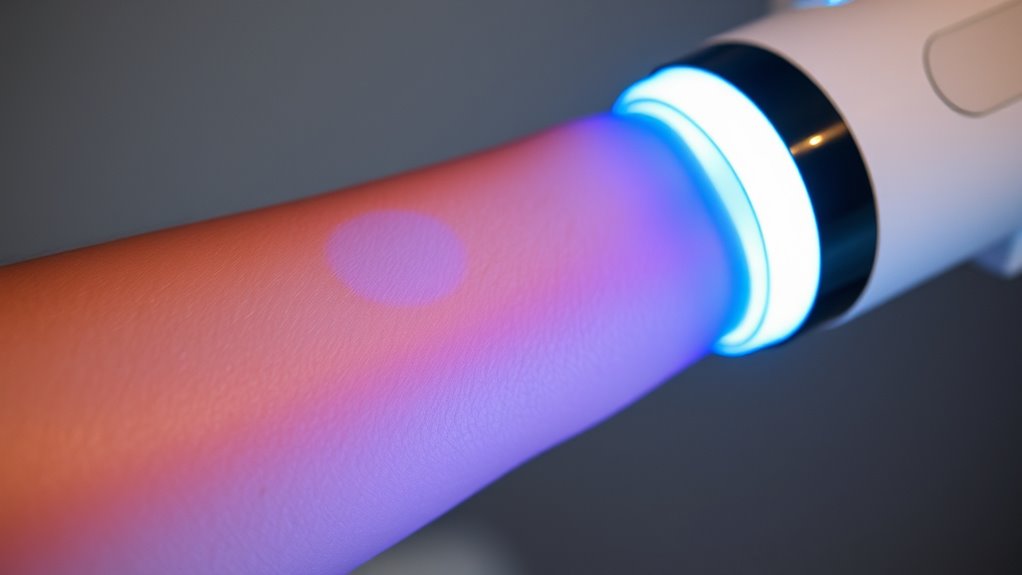
Light therapy has become a popular treatment option for managing conditions like vitiligo and hyperpigmentation because it can stimulate skin cells and promote a more even skin tone. Recent advances in phototherapy have considerably enhanced the effectiveness and safety of these treatments. Researchers and clinicians are continually refining protocols, utilizing targeted wavelengths and improved delivery systems that minimize side effects while maximizing results. These phototherapy advancements mean you can expect more precise treatment options tailored to your specific skin concerns. For example, newer devices offer adjustable settings that allow your dermatologist to customize sessions based on your skin type and condition severity, leading to better outcomes.
As these technological improvements roll out, patient experience improvements are also at the forefront. Modern phototherapy devices tend to be more comfortable, faster, and user-friendly, reducing the discomfort often associated with older treatments. Many clinics now use handheld or compact units that make sessions less intimidating and more accessible. This comfort boost helps you stay consistent with your treatment plan, which is vital for achieving noticeable results. Additionally, advancements in skin monitoring and real-time feedback systems provide your healthcare provider with better insights during each session. This means your treatment can be adjusted promptly to optimize outcomes and reduce the risk of adverse effects.
Furthermore, the increased precision of current phototherapy options means fewer sessions are needed to see improvement, saving you time and reducing inconvenience. Some cutting-edge therapies even incorporate combination approaches, such as pairing light therapy with topical medications, to enhance efficacy further. These integrated methods are designed with your overall comfort and convenience in mind, making the treatment process less burdensome. As patient-centered care continues to evolve, clinicians prioritize clear communication and addressing your concerns, ensuring you’re fully informed and comfortable throughout your journey.
The ongoing research into phototherapy also aims to expand its applicability, making it an increasingly versatile option for various skin issues beyond vitiligo and hyperpigmentation. As these innovations develop, you can expect future treatments to be even more effective, personalized, and gentle. Overall, the combination of phototherapy advancements and patient experience improvements is transforming how skin conditions are managed, offering hope for clearer, more even skin with less hassle. With these emerging developments, you’re better equipped to pursue a treatment plan that fits your needs and lifestyle, all while benefiting from safer, more efficient therapies.
Frequently Asked Questions
Are There Any Long-Term Side Effects of Light Therapy?
You might wonder about long-term safety when considering light therapy. Generally, it’s safe when administered properly, but some people could experience side effects like skin aging or changes in pigmentation over time. To guarantee effective side effect management, follow your healthcare provider’s instructions and attend regular follow-up appointments. Staying informed helps minimize risks, giving you confidence in managing your treatment’s long-term safety.
How Does Light Therapy Compare to Other Treatment Options?
Think of light therapy as a trusted compass guiding you through a landscape of treatment options. Compared to alternatives like topical creams or surgical procedures, it often offers quicker results with fewer side effects. Its efficacy comparison shows promising potential, especially for vitiligo and hyperpigmentation. While not always the first choice, light therapy can be a powerful tool, especially when other treatments haven’t achieved desired outcomes.
Can Light Therapy Be Used at Home Safely?
Yes, you can use home devices for light therapy safely if you follow safety precautions. Make sure to choose FDA-approved devices and read the instructions carefully. Always start with shorter sessions and monitor your skin’s reaction. Avoid overusing the device, and consult with a healthcare professional beforehand. Proper safety precautions help minimize risks and guarantee effective treatment at home.
What Is the Cost of Light Therapy Treatments?
Think of light therapy costs as a garden’s watering needs—varying based on your size and type. Treatments typically range from $50 to $150 per session, with total costs dependent on your condition. A cost comparison shows some clinics offer package deals. Insurance coverage may help offset expenses, but it varies. Be sure to check with your provider to understand coverage options and plan your budget accordingly.
Are There Specific UV Wavelengths More Effective for Pigmentation?
You’ll find that specific UV wavelengths, particularly narrowband UVB around 311 nm, are most effective for pigmentation response. UV wavelength specificity matters because certain wavelengths penetrate the skin better and stimulate melanocyte activity, improving pigmentation. By targeting these ideal wavelengths, light therapy enhances treatment outcomes for conditions like vitiligo and hyperpigmentation, making the process more efficient and personalized for your skin’s response.
Conclusion
As you explore light therapy, think of it as a gentle sunrise awakening your skin’s true colors. Emerging research shines a hopeful light on its potential to restore even tones and fade stubborn patches. While it’s not a magic wand, this treatment offers a promising path through the cloudy sky of pigmentation issues. Embrace the journey, knowing that each bright session is a step closer to revealing your skin’s natural masterpiece.