
If you take certain medications like antibiotics, diuretics, or antidepressants, your skin may become more sensitive to light, increasing risks during light therapy. Skincare products with photosensitizing ingredients can also react with sunlight or indoor light, leading to burns, rashes, or long-term damage. Protecting yourself with clothing, sunscreen, and close monitoring helps prevent these reactions. To stay safe, it’s essential to understand which drugs pose risks and how to manage exposure—more details follow.
Key Takeaways
- Certain medications like antibiotics, diuretics, and antidepressants increase skin sensitivity to light therapy.
- Photosensitizing skincare products can react with light, raising the risk of burns and skin damage.
- Always check medication labels or consult healthcare providers to identify photosensitizing agents.
- Combining photosensitive drugs with light therapy can cause burns, rashes, or long-term skin issues.
- Proper monitoring and protective measures are essential to minimize risks during light therapy sessions.

Cetaphil Sheer Mineral Face Sunscreen, SPF 50, Zinc Oxide, 1.7 Fl Oz
- Product Name: Cetaphil Sheer Mineral Face Sunscreen SPF 50
- Protection Level: SPF 50 for sun protection
- Key Ingredient: Zinc Oxide
As an affiliate, we earn on qualifying purchases.
As an affiliate, we earn on qualifying purchases.
Is Light Therapy Safe When You’re Taking Photosensitizing Medications?

Is light therapy safe when you’re taking photosensitizing medications? Not necessarily. These medications can cause increased skin sensitivity, making you more vulnerable to adverse reactions from light therapy. Medication interactions can amplify photosensitivity, leading to burns, redness, or irritation if proper precautions aren’t taken. Before starting light therapy, you need to discuss your medications with your healthcare provider. They might recommend temporarily stopping the medication or adjusting the treatment schedule to reduce risks. It’s essential to understand that even minimal exposure can trigger skin reactions if your medication increases photosensitivity. Always be cautious, follow your provider’s advice, and monitor your skin closely during light therapy sessions to prevent any unwanted side effects related to medication interactions. Additionally, understanding the role of contrast ratio in image quality can help you better prepare your environment for safe light exposure during therapy sessions. Being aware of your photosensitivity level can also guide you in customizing your treatment plan for optimal safety. Recognizing the signs of adverse reactions early can help you seek prompt medical attention if needed. Moreover, regularly reviewing your medication list with your healthcare provider can help identify any potential interactions that may influence your photosensitivity and treatment safety. It is also important to know that individual variability can affect how your skin reacts, so personalized advice is crucial.
What Causes Photosensitivity and How Does Light Therapy Fit In?
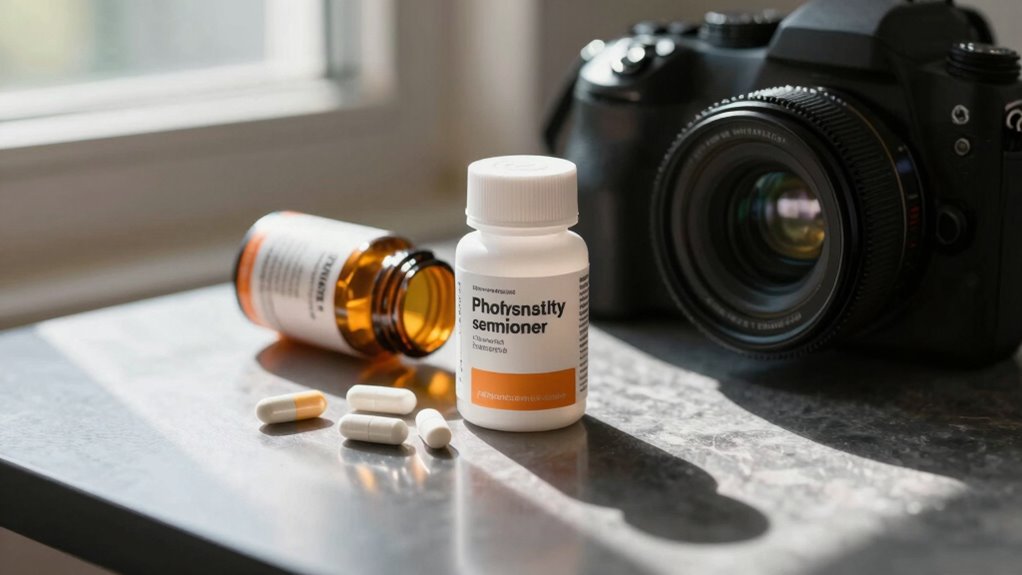
Photosensitivity occurs when your skin reacts abnormally to sunlight or artificial light, often caused by medication interactions, skin conditions, or genetic factors. Certain medications can increase your skin’s sensitivity, making you more prone to burns or rashes even with minimal sun exposure. Skin sensitivity varies from person to person, depending on genetics or underlying conditions that heighten the skin’s reaction to light. Light therapy, which exposes your skin to controlled amounts of artificial light, can sometimes trigger or worsen photosensitivity if your skin is already sensitive. Understanding what causes this reaction helps you manage risks. If your skin is prone to sensitivity, it’s essential to contemplate how light therapy might interact with your medications or skin condition to prevent adverse reactions.
Which Medications Make Your Skin More Sensitive to Light?

Certain medications can markedly increase your skin’s sensitivity to light, making you more prone to sunburns, rashes, and other reactions. These medication interactions often involve drugs like certain antibiotics, diuretics, and antidepressants that contain photosensitizing agents. When you take these medications, your skin reacts more intensely to UV rays and visible light, heightening the risk of adverse skin reactions. It’s essential to be aware of these potential effects and protect your skin accordingly. If you’re on any medication, check the label or talk to your healthcare provider about photosensitivity risks. Knowing which medications can increase your skin’s sensitivity helps you avoid dangerous reactions and makes light therapy safer, especially if you’re already vulnerable to skin issues. Additionally, understanding water-based therapies can offer alternative options for skin recovery and overall wellness. Being informed about photosensitivity can help you make better decisions regarding sun exposure and skin protection measures, especially when considering medication interactions that may exacerbate these sensitivities. For example, certain chemical properties of medications can contribute to increased photosensitivity and should be carefully considered when planning skin treatments. Moreover, staying vigilant about medication labels can help you recognize potential risks before exposure to sunlight or artificial light sources.
How Do Antibiotics and Skincare Products Cause Photosensitivity?

Antibiotics and skincare products can also increase your skin’s sensitivity to light through specific chemical reactions. When you use certain medications or skincare items, they can trigger a reaction called antibiotic photosensitivity, making your skin more vulnerable to damage from light. Similarly, some skincare products contain ingredients that react to sunlight, intensifying the risk. Proper disposal of empty or expired medication and skincare containers helps prevent environmental contamination that could affect the eco-friendly disposal process. Here are three ways these products affect you: 1. Certain antibiotics change your skin’s chemistry, causing a heightened reaction to UV rays. 2. Some skincare products contain photosensitizing agents that amplify light damage. 3. Combining these can lead to painful burns, redness, or long-term skin issues. Being aware of these risks helps you protect your skin during light therapy and daily sun exposure. Additionally, understanding medication interactions can help you better manage your treatment plans and minimize adverse effects.
Furthermore, some medications can alter your skin’s chemical composition, increasing susceptibility to light-induced damage.
What Are the Signs of Photosensitivity During Light Therapy?
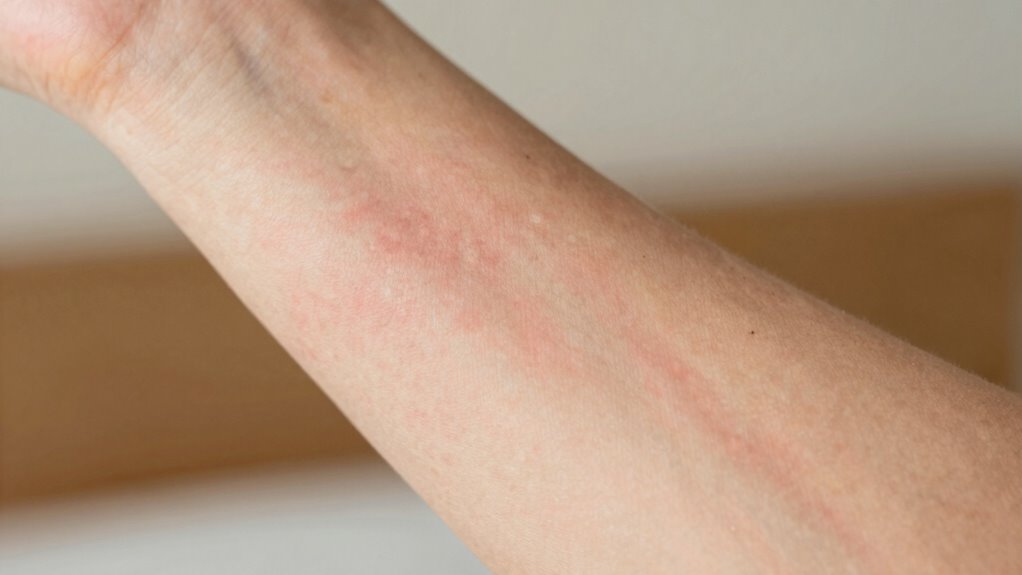
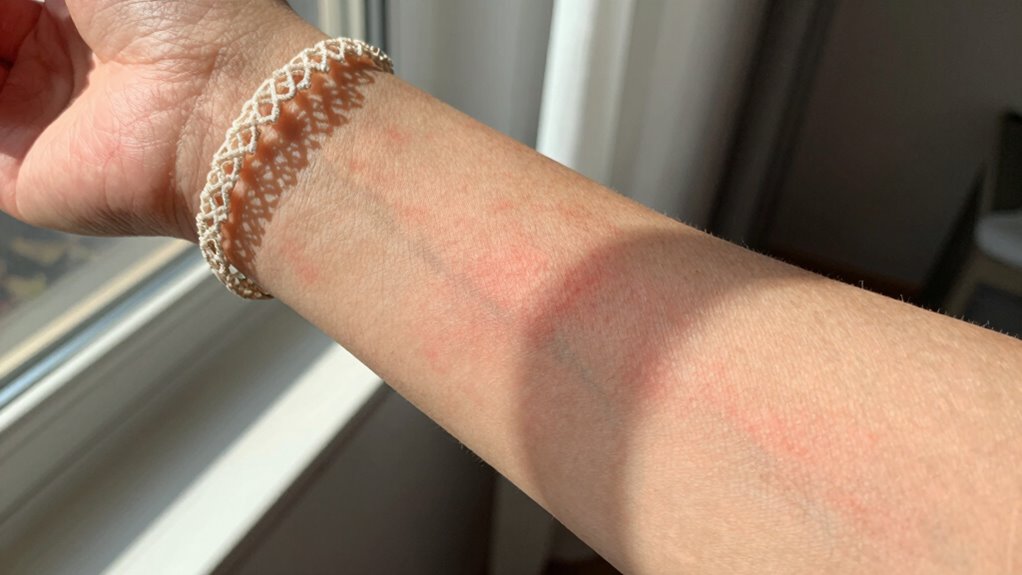
How can you tell if you’re experiencing photosensitivity during light therapy? One clear sign is sunburn symptoms, such as redness, warmth, or tenderness on your skin, even after minimal exposure. You might notice your skin feeling itchy or burning, similar to a mild burn. Skin irritation, including swelling, rash, or blisters, can also develop quickly. If you see these signs shortly after your light therapy session, it indicates your skin is reacting unusually to light exposure. Pay attention to any discomfort or unusual changes in color or texture. Recognizing these symptoms early helps prevent more serious reactions and ensures you can take appropriate steps to protect your skin during treatment. Additionally, understanding the power output of your device can help gauge the intensity of exposure and reduce adverse effects. Being aware of known medication triggers can also help you identify potential causes of increased photosensitivity and adjust your treatment accordingly. Staying informed about photosensitivity symptoms can further aid in early detection and management of adverse reactions.
How Can You Stay Safe While Using Light Therapy on Photosensitizing Drugs?
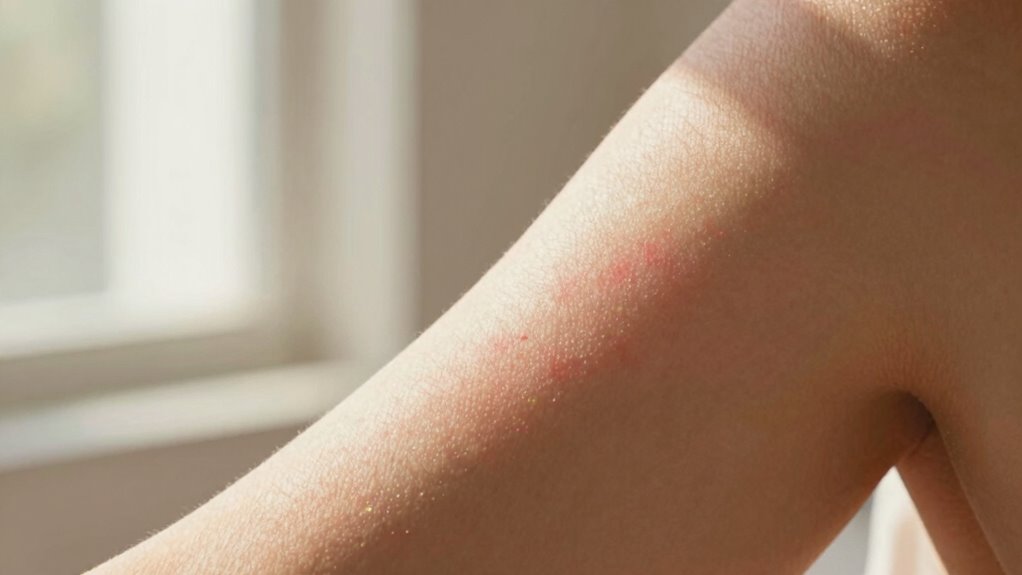
To stay safe while using light therapy on photosensitizing drugs, you should first talk to your healthcare provider about your treatment. Make sure to apply sun protection measures, like sunscreen and protective clothing, whenever you’re exposed to light. Keep a close eye on your skin for any unusual reactions and report them promptly. Additionally, using essential DIY tools can help you properly implement protective measures and monitor your skin effectively. Being aware of indoor air quality can also help reduce potential irritants that may exacerbate skin sensitivity during light therapy. Proper ventilation is crucial to prevent the buildup of airborne irritants that could worsen photosensitivity reactions, especially when using airless paint spraying equipment or other volatile substances indoors.
Consult Your Healthcare Provider
Because light therapy can increase the risk of skin reactions for those taking photosensitizing drugs, it’s crucial to consult your healthcare provider before starting treatment. Your provider can evaluate medication interactions and suggest safe options. They may recommend alternative treatments that don’t carry photosensitivity risks or adjust your current medication regime. Don’t skip this step—your provider’s guidance is essential to prevent adverse effects.
Here’s what you should do:
- Share your complete medication list to identify potential interactions.
- Ask about alternative treatments that pose less risk.
- Follow your provider’s advice on timing and precautions to stay safe.
- Ensure proper cabling and equipment setup to prevent accidental exposure or safety hazards during light therapy.
- Stay informed about photosensitivity to better understand how your medications may affect light therapy safety.
Taking these steps ensures you can enjoy light therapy safely without compromising your health.
Use Sun Protection Measures
While using light therapy while on photosensitizing medications, taking sun protection measures is essential to reduce your risk of skin damage. Prioritize sun safety by applying broad-spectrum sunscreen with at least SPF 30 whenever you’re outdoors, even on cloudy days. Wear protective clothing, such as long sleeves, wide-brimmed hats, and sunglasses, to shield your skin from UV exposure. Incorporate these practices into your skincare routines to minimize photosensitivity effects. Seek shade during peak sunlight hours, typically between 10 a.m. and 4 p.m., and avoid tanning beds. Staying vigilant about sun safety helps prevent burns, redness, and long-term skin damage, ensuring your light therapy sessions remain safe and effective. Consistent protection is key when managing photosensitivity risks. Understanding photosensitivity can help you better tailor your sun safety strategies.
Monitor Skin Reactions Carefully
Monitoring your skin reactions closely during light therapy is essential to guarantee safety while on photosensitizing medications. Regularly observe your skin for any unusual redness, swelling, or blistering. Before starting therapy, consider conducting skin patch tests to identify potential sensitivities. Always perform a thorough medication review with your healthcare provider to understand possible interactions and risks.
To stay safe:
- Keep a detailed record of your skin’s response after each session.
- Immediately report any adverse reactions to your doctor.
- Adjust your treatment plan based on ongoing skin assessments.
When Should You Consult Your Healthcare Provider or Stop Light Therapy?

If you notice unusual skin reactions or increased sensitivity, it’s time to talk to your healthcare provider. Changing medications or experiencing severe light sensitivity are signs you should stop therapy immediately. Always consult your provider before continuing if any of these issues arise. Additionally, be aware that certain medications can influence your skin’s response to light, making it essential to understand how performance parts like flywheels and engine upgrades might impact your overall health when combined with light therapy.
Noticeable Skin Reactions
Notable skin reactions during light therapy should never be ignored, as they can indicate your skin’s response is more intense than expected. If you notice signs like persistent skin irritation or allergic reactions, it’s vital to act promptly.
You should consider stopping or consulting your healthcare provider if you experience:
- Severe redness, swelling, or blistering that worsens over time.
- Intense itching or burning that doesn’t subside.
- Any allergic reaction, such as hives or difficulty breathing.
These reactions can signal that your skin is overly sensitive or reacting badly to the therapy, risking further harm. Prompt action helps prevent more serious issues and ensures your safety while continuing with light therapy.
New Medication Changes
When you start or change a medication, it’s essential to take into account how it might affect your skin’s sensitivity to light. Medication adjustments can considerably impact your risk of photosensitivity, so stay alert for any new or worsening skin reactions. Before beginning light therapy, inform your healthcare provider about recent medication changes. They can help determine if you need to modify your treatment plan to reduce risks or temporarily pause light therapy. If you notice increased redness, swelling, or discomfort after medication adjustments, consult your provider promptly. Proper treatment planning ensures your safety and effectiveness of light therapy while minimizing adverse reactions related to photosensitivity. Always communicate openly with your healthcare team about any medication changes or concerns.
Severe Light Sensitivity
How can you tell if your light sensitivity has become severe? Watch for intense photosensitivity symptoms like overwhelming eye pain, persistent headaches, or skin rashes after light exposure. Severe reactions may signal dangerous medication interactions or increased photosensitivity. If you experience any of these signs:
- You can’t tolerate even brief light exposure without discomfort.
- Your skin develops severe redness, swelling, or blistering.
- Your symptoms worsen despite reducing light therapy sessions.
In these cases, it’s vital to stop light therapy immediately and consult your healthcare provider. Ignoring severe photosensitivity symptoms can lead to lasting damage or complications. Don’t wait—your health and safety depend on recognizing when photosensitivity has escalated to a dangerous level.
Frequently Asked Questions
Can Photosensitivity Occur With Over-The-Counter Medications?
Yes, photosensitivity can occur with over-the-counter medications. You should be aware of potential medication interactions that increase your risk of photosensitivity symptoms, such as skin redness, itching, or rash. Always read labels carefully and consult your healthcare provider if you’re unsure whether an OTC drug might cause photosensitivity. Protect your skin by avoiding excessive sun exposure and using protective clothing or sunscreen when taking these medications.
Are Natural or Herbal Remedies Linked to Increased Light Sensitivity?
Did you know that around 20% of people using natural remedies report increased light sensitivity? Yes, herbal interactions can heighten photosensitivity, making natural remedies risky for light therapy. Some herbs, like St. John’s Wort or parsley, contain compounds that amplify your skin’s reaction to sunlight. Always check with your healthcare provider before combining herbal remedies with light-based treatments to avoid unwanted photosensitive reactions.
How Long Does Photosensitivity Last After Stopping Medication?
After stopping medication, your photosensitivity can last anywhere from a few days to several weeks, depending on drug duration and individual factors. Typically, sensitivity duration aligns with how long the drug stays in your system. To protect yourself, avoid prolonged sun exposure and use sun protection measures during this period. If you’re unsure, consult your healthcare provider to get personalized guidance on managing your photosensitivity recovery.
Does Age or Skin Type Affect Photosensitivity Risk?
Age considerations and skin type impact your photosensitivity risk. Younger individuals may have more resilient skin, but some age groups are more vulnerable to light sensitivity. Fair skin types, especially those with lighter hair and eyes, tend to react more strongly to light therapy, increasing risk. You should always discuss your age and skin type with your healthcare provider to tailor light therapy safely and minimize photosensitivity concerns.
Are There Specific Light Therapy Settings Safer for Photosensitive Individuals?
You should ask your healthcare provider about safe treatment settings for light therapy if you’re photosensitive. They may recommend lower intensity or shorter sessions as part of your light therapy precautions. Adjusting the light’s wavelength or duration can help diminish risk. Always follow prescribed guidelines, and inform your provider about any medications that increase photosensitivity, so they can tailor the treatment to ensure your safety.
Conclusion
While photosensitive medications can increase risks during light therapy, staying informed and working closely with your healthcare provider guarantees safe treatment. If you have concerns about your medication or skin reactions, don’t hesitate to seek professional guidance—your safety is worth it. Remember, with proper precautions, you can still benefit from light therapy without compromising your health. Trust the process and prioritize open communication for the best results.