
Using warm light in your LED routines can substantially boost your mood and promote relaxation. This soft, amber glow creates a calming environment that eases worries and makes you feel safe and comfortable. It helps your nervous system relax, reduces stress, and supports emotional stability. The soothing atmosphere makes your daily routines more enjoyable and can improve your overall mental well-being. Keep exploring, and you’ll discover even more ways warm lighting fosters your emotional health.

Get wellness gear delivered free — and shop member deals
- Fast, free delivery on millions of items
- Access to Prime Big Deal Days deals on October 6–7
- Prime Video, Amazon Music and more included
Key Takeaways
- Warm light creates a calming environment that reduces anxiety and promotes mental comfort during daily routines.
- Exposure to amber glow mimics sunset hues, aiding the brain’s transition to relaxation and winding down.
- Soft, warm lighting fosters feelings of safety and emotional stability, enhancing overall mood.
- Using warm LEDs helps lower cortisol levels and relax the nervous system, supporting stress reduction.
- Consistent use of warm lighting improves mood, mental clarity, and resilience over time through calming environmental cues.

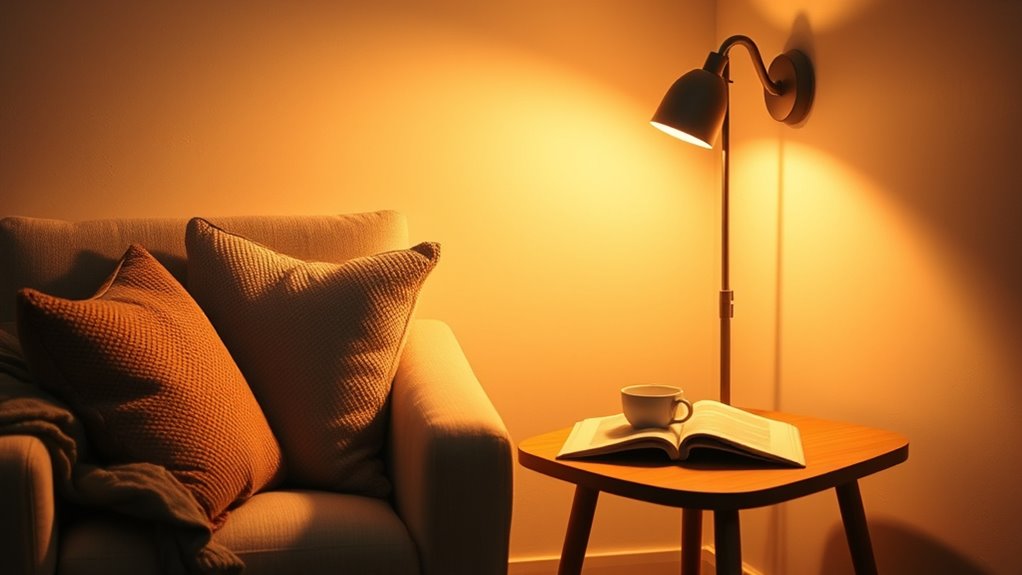
Warm light has a powerful effect on your mood and mental well-being, creating a calming atmosphere that can reduce stress and promote relaxation. When you incorporate warm LED lighting into your daily routines, you may notice a significant boost in your mood enhancement. The gentle, amber glow mimics natural sunset hues, which your brain associates with winding down and comfort. This connection helps you feel more at ease, making it easier to shift from a busy day to a peaceful evening. As you settle into spaces illuminated by warm light, you often find your worries easing, and your overall sense of well-being improving.
Warm light creates a calming atmosphere that eases worries and enhances overall well-being.
The soothing quality of warm light also plays an essential role in stress reduction. It encourages your nervous system to relax, lowering cortisol levels that spike during stressful moments. When your environment is bathed in warm, soft lighting, your body naturally responds by slowing your heart rate and calming your mind. This creates an environment where you can unwind more effectively after a hectic day, reducing feelings of anxiety or tension. Whether you’re reading, working, or simply resting, warm light fosters a peaceful ambiance that helps you disconnect from stressors and regain mental clarity.
Additionally, warm lighting influences your emotional state by fostering feelings of safety and comfort. It’s no coincidence that many people prefer dim, warm-lit spaces when they want to relax or feel more connected. The cozy atmosphere can improve your overall mental resilience, making it easier to cope with daily challenges. Because warm light is less harsh than cool, white LEDs, it minimizes eye strain and fatigue, which can contribute to feelings of frustration or irritability. As a result, your mood stays more stable, and your stress levels stay lower throughout the day.
Using warm light in your home or workspace isn’t just about aesthetics; it’s a strategic choice for mental health. By creating a warm, inviting environment, you actively support your psychological well-being. Over time, consistent exposure to this type of lighting can lead to a more balanced mood and a greater capacity to handle stress. Whether you’re winding down at night or creating a relaxing area for work, warm LED lighting can be an essential tool in enhancing your emotional health. It’s a simple yet effective way to foster calmness, improve your mood, and keep stress at bay, making your daily routines more enjoyable and less overwhelming.
As an affiliate, we earn on qualifying purchases.
Frequently Asked Questions
How Does Warm Light Influence Sleep Quality?
Warm light positively influences your sleep quality by supporting your circadian rhythms and melatonin regulation. When you use warm light in the evening, it signals your body it’s time to wind down, helping melatonin production increase. This synchronization makes it easier for you to fall asleep and enjoy deeper rest. Avoiding cool, blue light before bed guarantees your biological clock stays aligned, promoting healthier sleep patterns.
Can Warm Light Reduce Stress Levels Effectively?
Warm light can effectively reduce your stress levels by promoting relaxation and calming your mind. It enhances your mood, making you feel more comfortable and at ease after a hectic day. By creating a soothing environment, warm light encourages stress reduction and helps prevent anxiety. Incorporating warm lighting into your routine can boost overall well-being, allowing you to unwind more easily and enjoy a more balanced, peaceful state of mind.
What Are the Long-Term Mental Health Benefits?
You’ll experience long-term mental health benefits like improved mood regulation and cognitive enhancement by consistently using warm light in your routines. Warm lighting helps stabilize your emotions and reduces anxiety over time, fostering a sense of calm. It also supports better focus and mental clarity, making your daily tasks easier. Incorporating warm light into your environment can promote sustained emotional well-being and sharper thinking, benefiting your overall mental health in the long run.
Is Warm Light Suitable for All Age Groups?
Warm light is like a gentle hug for everyone, making it generally suitable across all age groups. It provides age-appropriate lighting that fosters comfort and relaxation. Its adaptability for seniors ensures easier navigation and reduced eye strain. Younger individuals also benefit from its calming effects. You should consider individual needs, but overall, warm light’s soothing qualities make it an excellent choice for every stage of life.
How Does Warm Light Compare to Natural Sunlight?
Warm light, with a lower color temperature, closely mimics natural sunlight during golden hours, enhancing your mood and creating a cozy atmosphere. While natural sunlight offers full-spectrum illumination that boosts alertness and vitamin D production, warm LED light provides a softer, more relaxing environment ideal for unwinding. Both serve different purposes—sunlight energizes you, whereas warm light emphasizes comfort and mood enhancement in your daily routines.
Conclusion
By choosing warm lighting in your daily routines, you create a soothing environment that promotes relaxation and comfort. For example, imagine someone winding down after a stressful day, dimming the lights to warm tones—research suggests this can lower cortisol levels and improve mood. Incorporating warm light isn’t just about aesthetics; it’s a simple, effective way to support your mental well-being. So, next time you want to unwind, opt for warm lighting and feel the difference.
Fall Picks
fall essentials
As an affiliate, we earn on qualifying purchases.