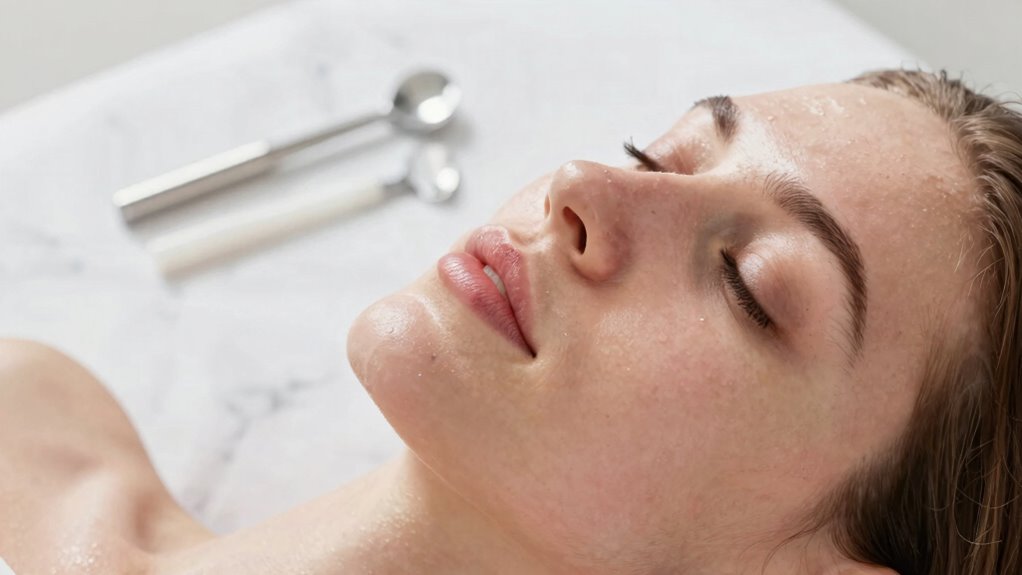

Your skin responds better to fewer treatments because overdoing it can damage the natural barrier, leading to inflammation, sensitivity, and hyperpigmentation. Pushing too hard risks irritation and long-term damage, which slows down healing. Proper spacing allows your skin to recover, adapt, and stay resilient, resulting in healthier, more balanced skin over time. If you want to discover how to optimize your skincare routine and avoid over-treatment, keep exploring these essential tips.

Get wellness gear delivered free — and shop member deals
- Fast, free delivery on millions of items
- Access to Prime Big Deal Days deals on October 6–7
- Prime Video, Amazon Music and more included
Key Takeaways
- Overdoing treatments can weaken the skin’s natural barrier, causing sensitivity, redness, and long-term damage.
- Fewer sessions allow the skin to recover and adapt, reducing the risk of irritation and hyperpigmentation.
- Proper spacing prevents overstimulation, dryness, peeling, and adverse reactions.
- Listening to skin signals ensures treatments are adjusted to avoid inflammation and trauma.
- A gentle, consistent approach supports natural repair, resulting in healthier, more resilient skin over time.

You might assume that more skincare sessions mean faster or better results, but your skin often prefers fewer treatments for ideal health. Overdoing it can lead to increased skin sensitivity, making your skin more reactive and prone to irritation. When you push your skin too hard with frequent treatments, you risk breaking down the skin’s natural barrier, which is vital for protecting against environmental stressors and maintaining overall health. This barrier acts as a shield, and when compromised, your skin becomes more sensitive, inflamed, and prone to redness. That’s why treatment frequency matters; giving your skin adequate time to recover between sessions helps preserve its integrity. Additionally, understanding how your skin responds to different treatments can help you develop a more sustainable skincare routine that promotes long-term health.
Fewer treatments actually allow your skin to adapt and respond more effectively. When you space out skincare sessions, your skin has a chance to rebuild and strengthen itself. This approach minimizes the risk of overstimulation, which can lead to adverse reactions like dryness, peeling, or heightened sensitivity. It also ensures that each session delivers its intended benefits without overwhelming your skin’s capacity to heal. For instance, if you’re undergoing laser therapy or chemical peels, spacing out appointments prevents excessive trauma and promotes healthier, more resilient skin over time. Recognizing the importance of treatment intervals can significantly impact your overall results and skin health. Moreover, giving your skin proper time to heal can help prevent over-treatment and potential damage from cumulative effects. A thoughtful schedule can also reduce the likelihood of hyperpigmentation, which is a common concern with aggressive routines.
You should also pay attention to how your skin reacts after each treatment. If you notice increased redness, tightness, or discomfort, it’s a sign your skin needs more time to recover. Adjusting your treatment frequency accordingly can help avoid setbacks and ensure long-term improvement. Remember, skincare isn’t a race; patience and consistency often lead to better, more sustainable results. Your skin’s sensitivity levels vary from person to person, so listening to your skin’s signals is essential. Over-treatment can cause inflammation and even lead to hyperpigmentation or scarring, which no one wants. In addition, adopting a gentle approach can enhance your skin’s natural ability to repair itself and maintain its youthful glow.
In the end, fewer sessions with proper spacing tend to be more effective than continuous, aggressive treatments. Your skin benefits most when treated gently and given the chance to recover. This approach not only minimizes discomfort and sensitivity but also encourages healthier, more balanced skin in the long run. So, instead of rushing into multiple treatments, focus on quality, patience, and understanding your skin’s unique needs. With the right treatment frequency, you’ll notice better results, fewer issues, and a more radiant complexion that’s truly healthy from within.
As an affiliate, we earn on qualifying purchases.
Frequently Asked Questions
How Does Skin Type Affect Treatment Frequency?
Your skin type considerably influences treatment frequency because sensitive skin requires gentler, less frequent sessions to prevent irritation. For resistant skin, you might tolerate more frequent treatments, but personalization is key. With proper treatment customization, you can find the right balance to achieve results without overtaxing your skin. Always listen to your skin’s responses and consult with professionals to tailor the schedule that best suits your skin sensitivity and type.
Can Overdoing Sessions Cause Skin Damage?
You might think more sessions mean better results, but overdoing it can cause skin damage. Skin sensitivity increases with treatment overuse, leading to redness, irritation, or even scars. It’s like overwatering a plant—you might think you’re helping, but you’re actually harming it. Stick to recommended sessions, listen to your skin, and give it time to recover. Balance is key to achieving the best results without risking damage.
What Are Signs My Skin Needs Fewer Treatments?
You should consider fewer treatments if your skin becomes red, irritated, or feels sensitive after sessions. Signs like increased dryness or peeling indicate your skin needs extra care, so prioritize sun protection and hydration significance. Giving your skin time to recover helps prevent damage and supports healing. Listening to these signs ensures you avoid overdoing it, keeping your skin healthy, balanced, and resilient throughout your treatment journey.
Does Age Influence Optimal Session Count?
Yes, age influences the ideal session count because older skin tends to be more sensitive. You should consider age sensitivity when planning your session scheduling, as your skin may require fewer treatments to avoid irritation or damage. Younger skin generally recovers faster and might handle more sessions, but it’s essential to listen to your skin’s response and consult with your specialist to tailor a safe, effective treatment plan.
Are There Specific Skin Conditions That Require Fewer Sessions?
Do you wonder if certain skin conditions need fewer sessions? If you have sensitive skin or low treatment tolerance, your skin may indeed require fewer sessions to prevent irritation or adverse reactions. Skin conditions like rosacea, eczema, or allergic dermatitis often respond better to gentler, less frequent treatments. By adjusting the number of sessions to match your skin’s sensitivity, you can achieve effective results while minimizing discomfort and maintaining your skin’s health.
Conclusion
Think of your skin as a delicate garden; overwatering can drown the roots, just like too many treatments can overwhelm your skin. Giving it space to breathe and recover allows your skin’s natural beauty to flourish. Less isn’t a shortcut—it’s the gentle rain that nurtures growth. Trust your skin’s wisdom, and remember, sometimes the best harvest comes from patience and restraint, not haste. Let your skin bloom naturally, in its own perfect timing.
Fall Picks
fall essentials
As an affiliate, we earn on qualifying purchases.