

If your mask isn’t working, you might be making simple errors like not fitting it snugly, not covering your nose and mouth completely, or touching it too often. Make sure your mask is secure and comfortable, handle it properly when putting it on or taking it off, and clean or replace it regularly. Choosing effective materials can also boost protection. Keep these tips in mind—discover more ways to improve your mask performance just ahead.
Key Takeaways
- Ensure your mask fits snugly, covering nose and mouth completely without gaps for effective filtration.
- Handle masks with clean hands and avoid touching the front to prevent contamination.
- Regularly wash cloth masks or replace disposable ones after each use for optimal protection.
- Use masks made of multi-layered, breathable materials that balance filtration and comfort.
- Adjust ear loops and nose wires to maintain a secure, comfortable seal that prevents slippage.
Make Sure Your Mask Fits Snugly and Comfortably

To guarantee your mask provides effective protection, it must fit snugly and comfortably on your face. The right mask material matters; breathable fabrics like cotton or specialized synthetics can assure comfort without sacrificing filtration. Your mask design also plays a vital role—ideally, it should contour to your face without gaps. A well-designed mask prevents air leaks that can let particles in or out. Choose a mask with adjustable straps or nose bridges to customize the fit. Avoid masks that are too tight, causing discomfort, or too loose, allowing air to escape. Remember, a proper fit enhances filtration efficiency and comfort, so prioritize both mask material and design when selecting your face covering. Proper mask fit is essential for maximizing protection and comfort, especially when considering tracking gear to monitor mask usage compliance. Additionally, understanding nail biology can inform proper hygiene practices, as clean and well-maintained nails reduce the risk of contaminant transfer. For optimal results, paying attention to the contrast ratio of your mask’s material can also improve visibility and confidence during use. Incorporating auditory cues or feedback mechanisms can further help ensure your mask stays properly positioned throughout the day.
Cover Your Nose and Mouth Completely When Wearing Your Mask

Make sure your mask covers both your nose and mouth completely to stay protected. Check for gaps or looseness that could let particles escape or enter. Comfort is key, so adjust your mask to fit snugly without causing discomfort. Proper fit can also prevent fogging of glasses and improve overall effectiveness mask fit. Additionally, ensure your mask is made of appropriate materials that provide sufficient filtration for better protection water filtration. Choosing masks with effective filtration media can further enhance safety by filtering out smaller airborne particles. Remember, a well-fitted mask can also help reduce exposure to microplastics in dust, improving indoor air quality and health. Incorporating masks with high-quality filtration layers can also significantly improve their protective capabilities.
Proper Mask Placement
Wearing your mask correctly is essential for effective protection. Proper mask placement starts with ensuring correct mask positioning over your face. You should align the mask with your facial features, covering both your nose and mouth completely. Avoid slouching or letting the mask sit too low, which can create gaps. Make sure the mask fits snugly against your facial alignment, with no spaces on the sides or top. Adjust the ear loops or ties to secure the mask firmly but comfortably. A well-placed mask not only covers your nose and mouth entirely but also stays in place as you move. Proper mask placement maximizes filtration and minimizes exposure, keeping you and others safer. Always double-check your mask’s positioning before heading out. Remember that a mask that fits well and covers all necessary areas is crucial for effective filtration and protection.
Avoid Gaps and Gaps
Ensuring there are no gaps between your mask and your face is key to effective protection. When mask gaps exist, airborne particles can easily enter or escape, reducing airflow restriction and compromising safety. To avoid gaps, adjust the mask snugly over your nose and mouth, ensuring it fits securely without causing discomfort. A loose mask creates airflow channels that bypass the filter, making the mask less effective. Check that the edges lie flat against your skin, especially around your nose bridge and cheeks. Remember, a well-fitted mask minimizes airflow restriction through proper sealing, preventing gaps that allow contaminants to pass. Proper mask fit techniques, such as adjusting the ear loops or nose wire, can significantly improve overall effectiveness. Additionally, ensuring a secure seal around all edges enhances the mask’s protective capabilities and prevents unfiltered air from entering or escaping. Incorporating proper mask fit techniques can significantly improve overall effectiveness.
Check for Comfort
Are you covering your nose and mouth completely when you wear your mask? If not, even a snug mask won’t protect you. Check for comfort to guarantee a proper fit, which also boosts mask fashion by preventing constant readjustments. An uncomfortable mask often causes gaps, so consider mask accessories like adjustable ear loops or nose wires to improve fit. When your mask feels secure and comfortable, you’re more likely to wear it correctly for longer periods. Remember, a well-fitting mask should sit snugly without pinching or slipping. Don’t sacrifice comfort for style—combine mask fashion with proper fit for maximum protection. Proper fit and mask fit are essential for maximizing the mask’s protective benefits. Additionally, ensuring your mask fits properly can help reduce air quality issues by blocking airborne particles more efficiently. To achieve the best mask seal, take the time to adjust and test your mask fit before heading out. Regularly inspecting your mask for signs of wear can also help maintain its effectiveness and protective capabilities.
Use Your Mask Correctly When Putting It On and Taking It Off
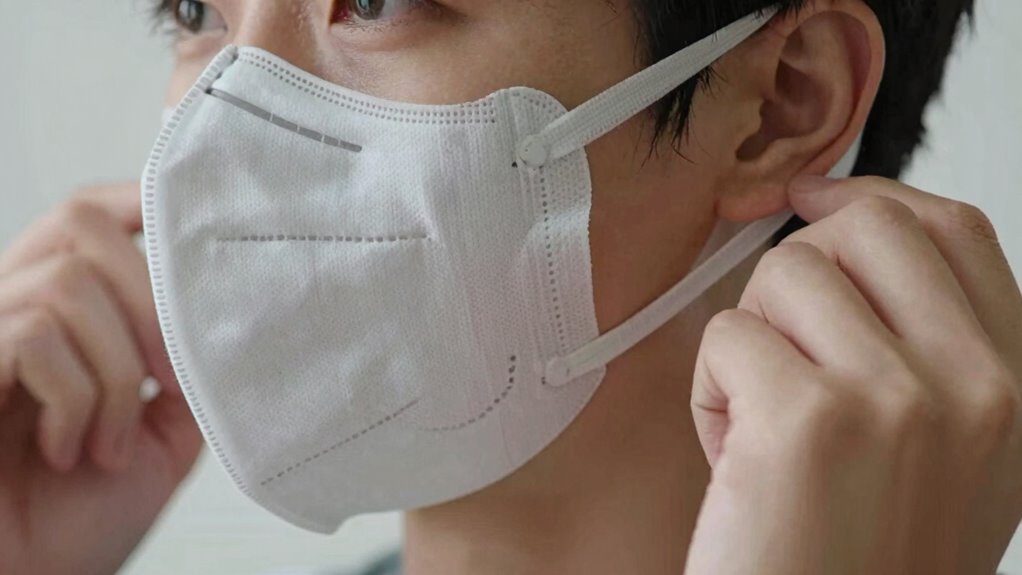
Have you ever thought about how you handle your mask when putting it on or taking it off? Proper mask etiquette is essential to prevent contamination. Always wash or sanitize your hands first. When putting on your mask, ensure it covers your nose and mouth completely without gaps. To remove it, avoid touching the front; instead, hold the ear loops or ties. After removal, fold the mask inward, avoiding contact with the outer surface, and dispose of it properly in a trash bin designated for masks. Remember, correct mask disposal reduces the risk of spreading germs. Use the following table to guide you:
| Step | Action |
|---|---|
| 1 | Wash or sanitize hands before handling |
| 2 | Handle mask by ear loops or ties |
| 3 | Cover nose and mouth completely |
| 4 | Remove without touching the mask front |
| 5 | Dispose of mask properly in a designated bin |
Following these steps ensures you handle your mask safely and effectively. Proper handling of masks also minimizes the risk of contamination and helps keep everyone safe. Additionally, understanding the correct usage of masks can significantly enhance their effectiveness in reducing disease transmission. Proper mask handling is similar to power quality management in portable power solutions, where correct procedures are vital to optimal performance and safety. Moreover, consistent practices in mask handling contribute to overall public health efforts. Recognizing the importance of hygienic practices in mask usage can further reinforce safe behaviors and reduce the spread of germs.
Minimize Touching or Adjusting Your Mask During Use

To prevent contamination and maintain the effectiveness of your mask, try to minimize touching or adjusting it while you’re wearing it. Constantly fiddling with mask accessories or adjusting mask decoration increases the risk of transferring germs from your hands to your mask. If your mask feels uncomfortable or needs repositioning, clean your hands first, then make small adjustments using the ear loops or the mask’s edges. Avoid tugging at the mask or fiddling with decorative elements, as this can compromise the fit and filtration. Keep your hands away from your face as much as possible, and resist the urge to touch your mask throughout the day. Smart home fitness devices like Smart locks and office gear can also help reduce the need for touching surfaces and masks in shared spaces. By reducing unnecessary adjustments, you help keep your mask effective and minimize the risk of contamination.
Replace or Clean Your Mask Regularly for Best Protection
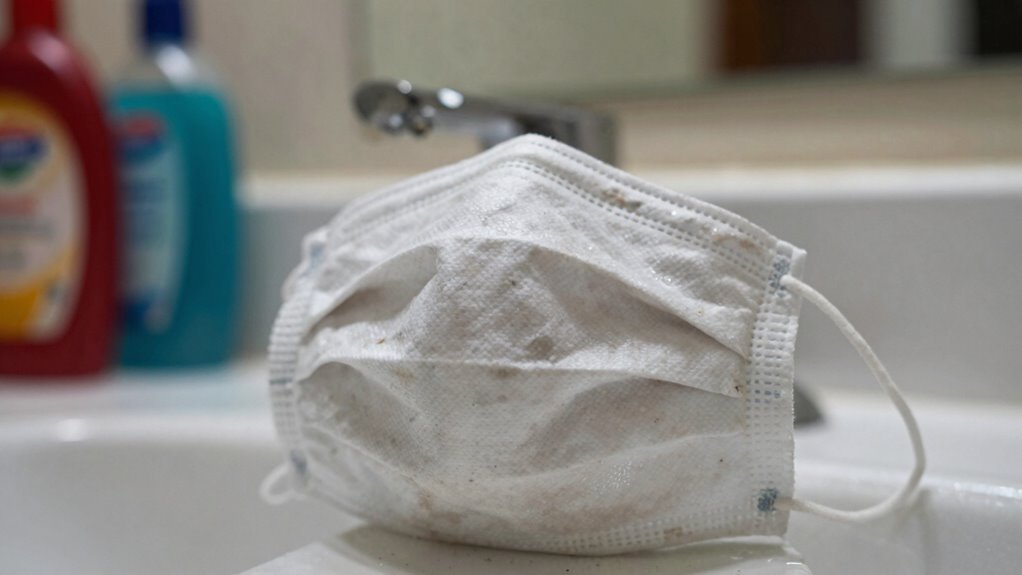
Regularly replacing or cleaning your mask is essential to maintaining its protective qualities. Proper mask maintenance guarantees that the fabric or filter isn’t harboring bacteria or dirt that can reduce effectiveness. Follow a consistent replacement schedule—cloth masks should be washed after each use, while disposable masks should be discarded after one wear. If you use a reusable mask, wash it thoroughly with soap and hot water, or follow the manufacturer’s instructions. Neglecting this step can lead to reduced filtration and increased risk of contamination. Keep track of your mask maintenance routine to ensure it stays effective. By sticking to a reliable replacement schedule and cleaning your mask regularly, you maximize its protective benefits and stay safer during everyday use.
Choose Masks Made From Effective Materials for Better Safety

Choosing masks made from effective materials is crucial for guaranteeing maximum protection. The mask material determines the filtration efficiency, directly impacting how well your mask blocks droplets and airborne particles. Look for masks made from multiple layers of tightly woven fabrics, such as high-quality cotton or specialized synthetic fibers. Avoid masks with thin or porous materials, as they offer little resistance to particles. Masks with high filtration efficiency can greatly reduce your risk of exposure. Remember, the right material not only improves protection but also maintains breathability, making it easier to wear your mask for longer periods. Selecting the appropriate mask material ensures you’re doing everything possible to stay safe and minimizes the chances of virus transmission.
Frequently Asked Questions
Can Masks Be Reused Multiple Times Without Losing Effectiveness?
Yes, masks made from reusable materials can be reused multiple times without losing effectiveness, but only if you follow proper mask longevity guidelines. Wash reusable masks regularly according to manufacturer instructions, typically after each use, to maintain their filtration efficiency. Proper cleaning prevents bacteria buildup and preserves the mask’s fit and function. Avoid reusing disposable masks, as they are designed for single use and may lose effectiveness quickly.
How Do I Know if My Mask Material Is Truly Effective?
Think of your mask material like a sieve—if it’s well-designed, tiny particles won’t pass through. To check its effectiveness, look for masks with high filtration efficiency ratings, often labeled on packaging. Trust reputable brands and materials like N95 or KN95, which are tested for their ability to block airborne particles. If your mask feels flimsy or isn’t tightly sealed, its filtration efficiency may be compromised.
Are There Specific Signs Indicating My Mask No Longer Provides Proper Protection?
If your mask no longer fits well or feels uncomfortable, it might not provide proper protection anymore. Look for signs like gaps around the edges or slipping off your nose or chin. Poor mask fit reduces effectiveness, and discomfort may cause you to touch or adjust it frequently, increasing risk. Make certain your mask stays snug and comfortable; if not, consider replacing it or adjusting its fit for maximum protection.
What’s the Best Way to Sanitize Masks Without Damaging Them?
Think of your mask as a delicate garden needing gentle care. To keep it effective, use proper mask sterilization and cleaning methods. Hand wash with mild soap and warm water, then air dry thoroughly. Avoid harsh chemicals or high heat, which can damage the fabric. If machine washing, use a gentle cycle and avoid fabric softeners. Following these steps guarantees your mask stays clean and protective without losing its integrity.
Does Wearing Glasses Affect Mask Fit and Filtration?
Wearing glasses can affect your mask fit because it causes glasses fog and may lead you to repeatedly adjust your mask. These adjustments can compromise the seal, reducing filtration effectiveness. To minimize fog and maintain a proper fit, make sure your mask fits snugly over your nose and cheeks, and consider using a mask with a nose wire. Proper mask adjustment helps improve filtration and keeps your glasses clear.
Conclusion
Think of your mask as your frontline shield—if it’s not fitting right or used improperly, it’s like trying to block rain with a sieve. By fixing these common mistakes, you’re strengthening your defense and making your mask work like a charm. Just as a well-tuned engine runs smoothly, a properly worn mask keeps you safer. So, take these tips to heart, and keep your protection airtight every time you wear it.