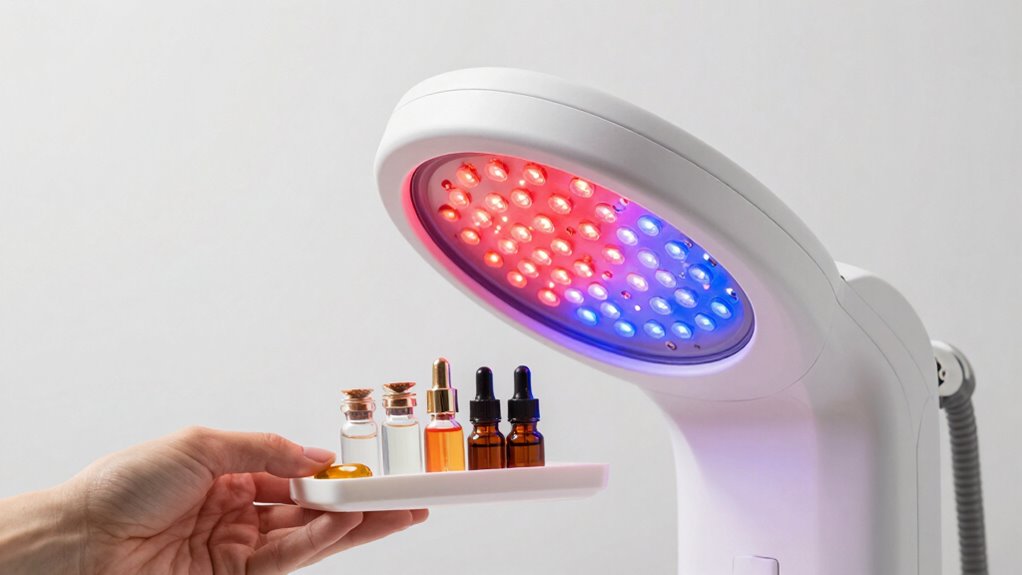

Before your LED session, avoid applying active ingredients like retinoids, AHAs, BHAs, or harsh exfoliants, as they can increase your skin’s sensitivity and cause irritation or burns. Stay away from heavy moisturizers, oily serums, and photosensitive products that can block light penetration. Also, skip alcohol and smoking, which damage your skin’s ability to heal. Ensuring your skin is clean, calm, and free of irritants helps maximize results and keeps your skin safe—learn more about preparing for your best treatment.
Key Takeaways
- Avoid retinoids, AHAs, and BHAs 24-48 hours before LED treatments to prevent increased skin sensitivity.
- Steer clear of chemical exfoliants, scrubs, or aggressive peels prior to your session to protect the skin barrier.
- Refrain from using photosensitive products like vitamin C or harsh sunscreens that can cause reactions during LED therapy.
- Ensure all residual oils, heavy moisturizers, and pore-clogging products are thoroughly removed before treatment.
- Limit alcohol consumption and smoking beforehand to optimize skin response and treatment effectiveness.

XSSNVV Red Light Therapy Mask for Face, 850nm NIR, Red/Blue Led Light, Wireless
- Multi-Mode Light Therapy: Red, NIR, Blue, Amber modes for skin benefits
- Cordless, Remote-Free Design: Built-in controls for easy, wireless use
- Lightweight and Comfortable: 145g soft silicone mask with adjustable straps
As an affiliate, we earn on qualifying purchases.
As an affiliate, we earn on qualifying purchases.
Why Skincare Ingredients Can Interfere With LED Treatments
Skincare ingredients can substantially impact the effectiveness of LED treatments because some compounds make your skin more sensitive or reactive to light exposure. Many skincare myths suggest layering multiple products before a session, but this can be risky. When you layer products, you might unintentionally combine ingredients that increase photosensitivity or cause irritation. For example, some exfoliants or acids can heighten your skin’s reactivity, making LED therapy less effective or uncomfortable. It’s essential to understand how certain ingredients interact with light. Avoid product layering right before your session unless your skincare provider advises it. Being cautious about what you apply ensures your skin responds well to LED treatments, maximizing benefits and minimizing potential side effects. Additionally, understanding dream symbolism related to time and life can help you better interpret your skin’s responses and overall well-being after treatments. Knowing about microplastics in dust and their potential impact on skin health can also influence your pre-treatment skincare routine to promote better outcomes. Incorporating knowledge of aerosol particles can help you better protect your skin from environmental pollutants that may interfere with treatment results. Being aware of pollution-related particles can further improve your skincare choices before LED sessions, especially when considering environmental contaminants that can accumulate on the skin.
Active Ingredients to Skip Before Your Skin Session
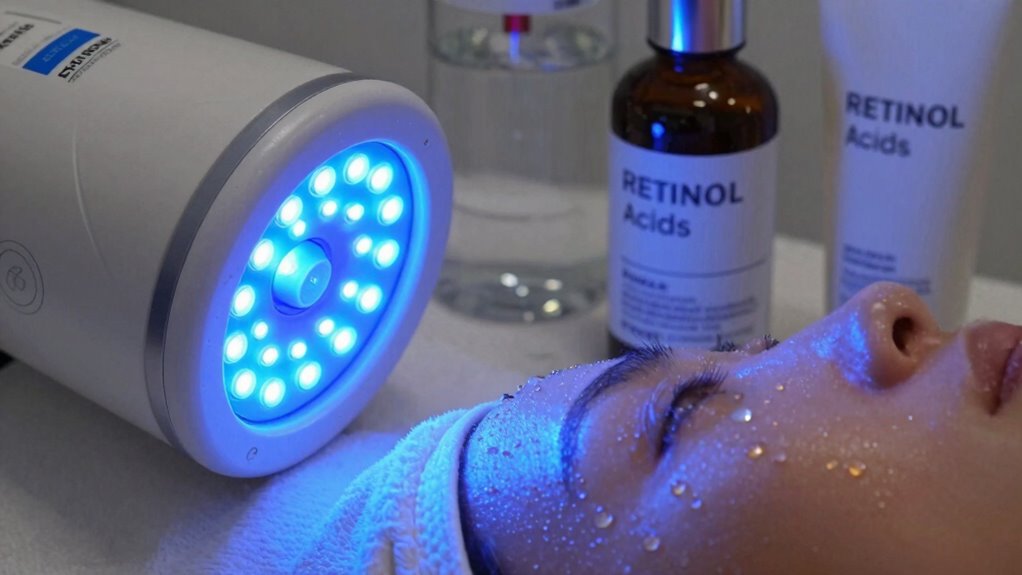
Certain active ingredients can hinder your LED treatment’s effectiveness or cause unwanted reactions if left on your skin beforehand. Ingredients like retinoids, alpha hydroxy acids (AHAs), and beta hydroxy acids (BHAs) can increase skin sensitivity, leading to irritation or burning during your session. These ingredient interactions may compromise your skin’s barrier, making it more prone to redness or discomfort. To guarantee ideal results and avoid adverse effects, skip these potent actives at least 24 to 48 hours before your treatment. Follow skincare precautions and read product labels carefully. If in doubt, consult your skincare professional to determine which ingredients are safe to use and which ones should be avoided to maximize your LED therapy benefits.
Exfoliating Products to Avoid Before Treatment
Before your treatment, avoid using harsh chemical exfoliants that can irritate your skin. Stick to gentle exfoliation methods if needed, but skip anything aggressive. This helps guarantee your skin stays calm and ready for the procedure.
Gentle Exfoliation Methods
While gentle exfoliation can boost your skin’s glow, using harsh or overly abrasive products before treatment can do more harm than good. Avoid chemical peels or physical scrubs right before your session, as they can irritate and weaken your skin’s barrier. Even mild exfoliating products may cause sensitivity if used too close to your appointment. Instead, opt for gentle cleansing without scrubbing or acids, allowing your skin to stay calm and intact. This skin barrier protection helps maintain skin integrity and prevents inflammation, ensuring your skin responds well to the treatment. Remember, the goal is to prepare your skin without overstressing it. When in doubt, skip exfoliation altogether in the days leading up to your session to maximize safety and results. Additionally, being aware of urban pursuits and cultural activities in your area can help you plan your skincare routine around social or cultural events, ensuring your skin remains healthy and radiant for any special occasion. Incorporating proper skincare routines can further protect your skin from environmental stressors that might compromise your treatment outcomes. Staying informed about sauna safety tips can also help you avoid unnecessary skin irritation caused by excessive sweating or heat exposure before your session.
Avoid Harsh Chemical Products
To guarantee your skin responds well to treatment, it’s important to steer clear of harsh chemical exfoliants in the days leading up to your appointment. Avoid products with strong acids or enzymes that can irritate your skin, as well as abrasive scrubs that cause microtears. Stay away from chemical sunscreens, which may contain ingredients that increase photosensitivity and hinder healing. These products can compromise your skin’s barrier, making it more vulnerable to irritation or damage during treatment. Instead, opt for gentle cleansers and moisturizer. Keeping your skin calm and protected ensures better results and reduces the risk of adverse reactions. Always follow your practitioner’s advice on skincare to prepare your skin appropriately for LED or other active treatments. Additionally, avoiding photo-sensitizing ingredients helps prevent unwanted reactions during your session. Be mindful of skin barrier health, as a compromised barrier can lead to increased sensitivity and less effective treatment outcomes. Incorporating products that support skin barrier repair can further enhance your skin’s resilience before treatment. Maintaining optimal skin hydration is also crucial, as well-hydrated skin responds better to active procedures. Being cautious with active ingredients ensures your skin remains stable and less prone to inflammation or irritation.
Serums and Topicals That Make Your Skin Photosensitive
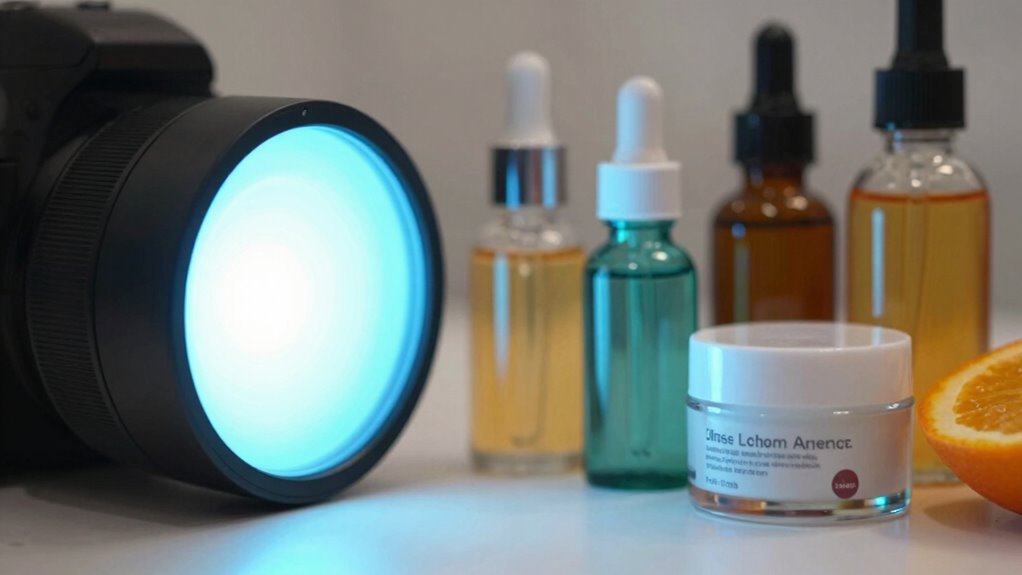
Certain serums and topical treatments contain ingredients that increase your skin’s sensitivity to sunlight. These products can cause your skin to react more strongly to sun exposure, leading to irritation or even burns. Common ingredients like vitamin C, retinoids, alpha hydroxy acids (AHAs), and certain botanical extracts heighten skin sensitivity, especially when exposed to UV rays. If you’re planning an LED session, avoid applying these products beforehand to minimize the risk of adverse reactions. Increased photosensitivity can make your skin more prone to damage during sun exposure, which could interfere with your treatment results or cause discomfort. Always check the labels of your skincare products and consult with your dermatologist if you’re uncertain about their photosensitive effects before your session. Additionally, understanding how boost your car’s performance can be analogous to preparing your skin properly—both require the right precautions to prevent damage and optimize results. Being aware of photosensitivity ingredients in your skincare routine helps you protect your skin effectively and ensures safer treatment outcomes.
Heavy or Oily Moisturizers to Leave Out Before Your Session
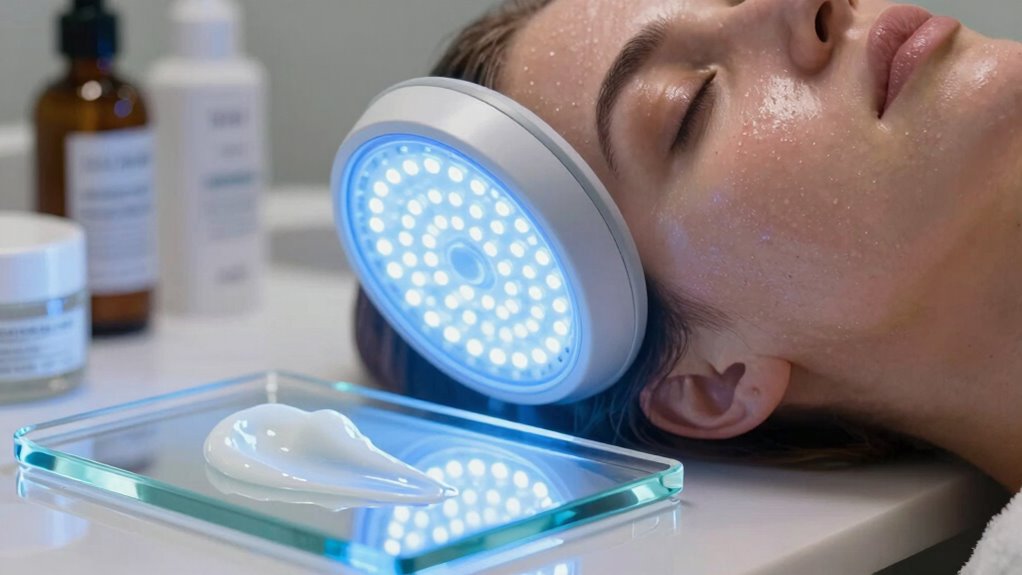
Heavy or oily moisturizers can clog your pores, making it harder for LED light to work effectively. They may also block light penetration, reducing the treatment’s benefits. For ideal results, it’s best to skip these products before your session. Additionally, using deep cleaning fabrics can help prevent residue buildup that might interfere with treatment.
Clogged Pores Risk
Have you ever considered how your moisturizer could affect your skin during a session? Heavy or oily moisturizers can increase pore congestion and sebum buildup, which may hinder the effectiveness of LED treatments. When pores are clogged, light cannot penetrate evenly, reducing the benefits of your session. Excess oils and thick creams can trap dirt and debris, leading to breakouts or irritation. To maximize your results, opt for lightweight, non-comedogenic products that won’t clog your pores. Cleansing thoroughly before your appointment is also vital to remove residual oils. Avoiding heavy moisturizers helps guarantee your skin remains clear and receptive, allowing the LED light to work effectively. Keeping your skin free of excess sebum prepares it for a smoother, more successful treatment. Additionally, choosing products free of heavy or oily ingredients can further improve your skin’s response to LED therapy.
Impaired Light Penetration
If you want LED light therapy to work effectively, it’s crucial to avoid applying heavy or oily moisturizers before your session. These products can create a barrier, impairing light penetration and reducing treatment benefits. Oily ingredients can reflect or scatter light, limiting UV protection and compromising skin hydration. To understand better, consider this:
| Heavy/Oily Moisturizers | Impact on LED Therapy |
|---|---|
| Thick creams | Block light absorption |
| Oily serums | Scatter light, reduce effectiveness |
| Sunscreens with oil | Impair UV protection, hinder results |
| Heavy lotions | Prevent optimal skin hydration |
Avoiding these ensures your skin absorbs maximum light, boosting treatment efficacy and promoting healthier, better-hydrated skin.
Lifestyle Habits Like Alcohol and Smoking That Affect Your Skin
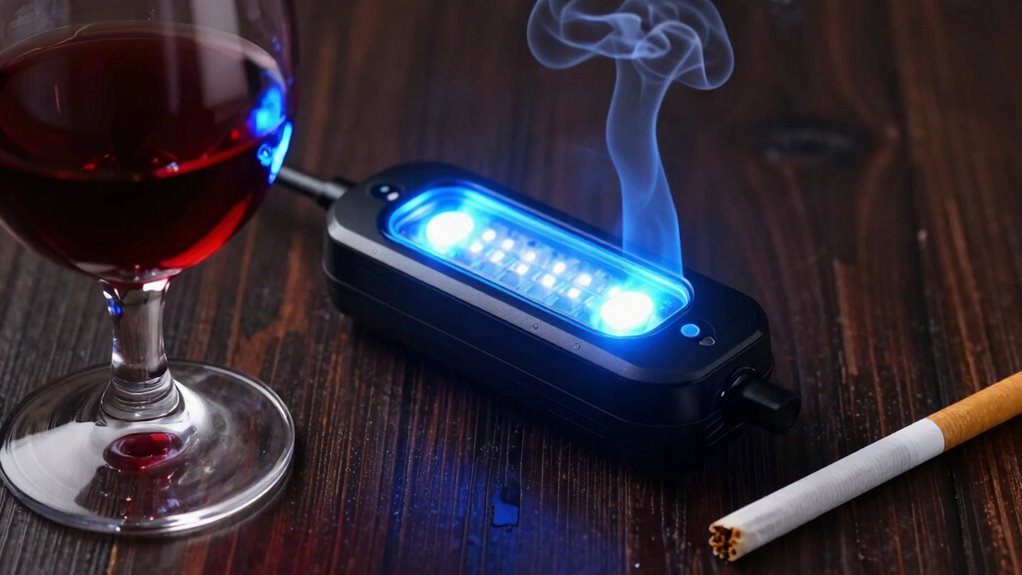
Lifestyle habits like alcohol consumption and smoking can profoundly impact your skin’s health and appearance. Excessive alcohol intake dehydrates your skin, leading to dullness and the formation of fine lines. It also impairs your body’s ability to repair damaged skin cells, slowing down healing processes. Smoking habits, on the other hand, reduce blood flow to your skin, depriving it of essential nutrients and oxygen. This accelerates aging, causes wrinkles, and dulls your complexion. Both habits generate free radicals, which damage skin cells and break down collagen and elastin, essential for skin firmness and elasticity. If you’re preparing for an LED session, avoiding alcohol and quitting smoking will help optimize your skin’s response, ensuring you get the best results and maintain healthier, more resilient skin. Additionally, electric power generation with bike generators can be a sustainable activity that promotes overall wellness and environmental consciousness.
How to Properly Cleanse Your Skin Before a Treatment
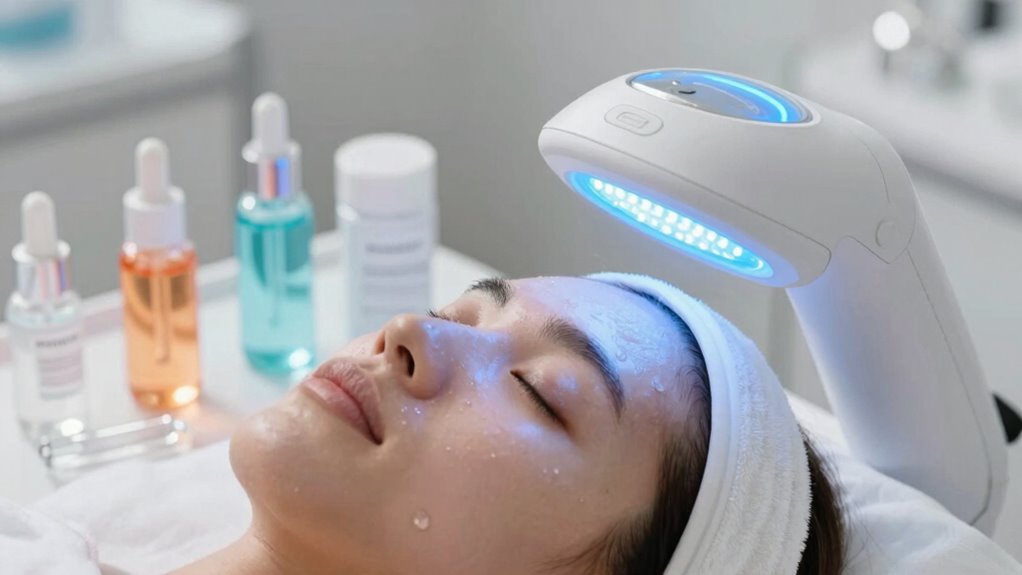
Properly cleansing your skin before a LED treatment guarantees the treatment penetrates effectively and delivers ideal results. Start with gentle cleansing to remove dirt, oil, and makeup without stripping your skin’s natural oils. Use a mild cleanser that maintains pH balancing, preventing irritation or dryness. Avoid harsh scrubs or strong astringents, which can disrupt your skin’s barrier. Make sure your skin is completely dry before starting the session. For optimal results, consider using gentle cleansing techniques that support the skin’s natural barrier and prevent irritation. To prepare your skin: – Use lukewarm water and a gentle cleanser – Avoid alcohol-based or abrasive products – Pat your skin dry gently, not rubbing – Ensure no residual makeup or dirt remains. Additionally, choosing non-irritating skincare products can help maintain skin health and prevent reactions during treatment. Proper cleansing sets the perfect foundation for your treatment, maximizing benefits and minimizing risks. Incorporating knowledge about indoor air quality can also help reduce skin irritation from environmental pollutants, creating a more comfortable environment for your skincare routine.
Tips for Preparing Your Skin for Optimal LED and Active Ingredient Results
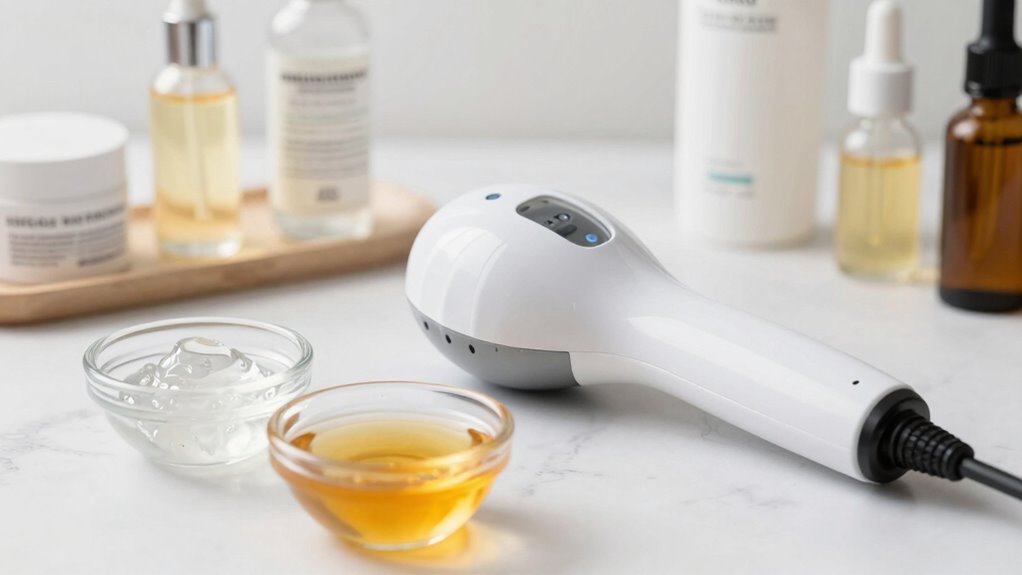
To achieve the best results from your LED treatment and active ingredients, preparing your skin properly is essential. First, debunk skincare myths that suggest over-scrubbing or using harsh products beforehand—gentle cleansing and hydration are key. Make certain your treatment timing aligns with your skincare routine, avoiding products with retinoids, acids, or exfoliants at least 24 hours prior. This prevents irritation and maximizes absorption. Before your session, skip sun exposure and avoid applying heavy makeup or lotions that could interfere with the treatment. Keep your skin clean, calm, and well-hydrated to enhance the effectiveness of both LED therapy and active ingredients. Using carrier oils can also help maintain skin health and reduce irritation during treatment. Proper preparation minimizes risks and helps you achieve visible, lasting results from your skincare routine. Additionally, being aware of skin sensitivity levels can guide you in selecting appropriate products and techniques for optimal outcomes.
Frequently Asked Questions
Can I Wear Makeup Before an LED Treatment?
You can wear makeup before an LED treatment, but it’s best to follow makeup guidelines and avoid heavy or oil-based products. Cosmetic application tips recommend cleansing your skin thoroughly beforehand to guarantee the best results. Light, non-comedogenic makeup is usually fine, but removing it completely helps the LED device work effectively. Always check with your technician for personalized advice, and remember, clean skin enhances the treatment’s benefits.
How Long Should I Wait After Applying Active Ingredients?
Think of your skin as a delicate garden—timing is everything. You should wait at least 24 to 48 hours after applying active ingredients before your LED session. This active ingredient timing guarantees your skin isn’t overly sensitive and can benefit fully from the treatment. Stick to your skincare prep schedule, avoiding potent actives like acids or retinoids right before your appointment, so your skin can relax and rejuvenate effectively.
Are Natural Oils Safe to Use Before a Session?
Natural oils can be safe to use before a session, but it depends on your skin sensitivity. If you have sensitive skin, applying oils might cause irritation or breakouts, which can affect your treatment. It’s best to patch test first and consult with your skincare professional. Avoid heavy or fragranced oils right before your session to prevent clogging pores or unexpected reactions, ensuring the best results and comfort during your treatment.
What Skincare Steps Should I Avoid on the Day of Treatment?
On the day of your treatment, avoid using harsh or active skincare products like retinols, acids, or exfoliants to prevent interactions that can cause irritation. Also, skip heavy creams or oils that might interfere with the procedure. Follow treatment preparation tips by cleansing your skin gently and keeping it hydrated. This guarantees your skin is ready for the session and minimizes any risk of adverse reactions.
Does Hydration Level Affect LED Treatment Effectiveness?
Your hydration levels can influence the effectiveness of LED treatments. When you’re well-hydrated, your skin responds better, enhancing treatment efficacy. Dehydration can make your skin less receptive, reducing the benefits you get from the session. To maximize results, drink plenty of water before your appointment. Staying hydrated helps your skin stay plump and receptive, ensuring the LED therapy works as efficiently as possible for your skin’s health and appearance.
Conclusion
By avoiding certain ingredients and habits before your LED session, you guarantee your skin responds safely and effectively. Are you prepared to give your skin the best possible results? Remember, proper preparation isn’t just about what you skip but how you care for your skin overall. Follow these tips, stay consistent, and watch your skin thrive. After all, isn’t your best skin worth the extra effort?