
TL;DR

Get wellness gear delivered free with Prime
- Fast, free delivery on millions of items
- Prime Video, Amazon Music and more included
- Member-only deals all year
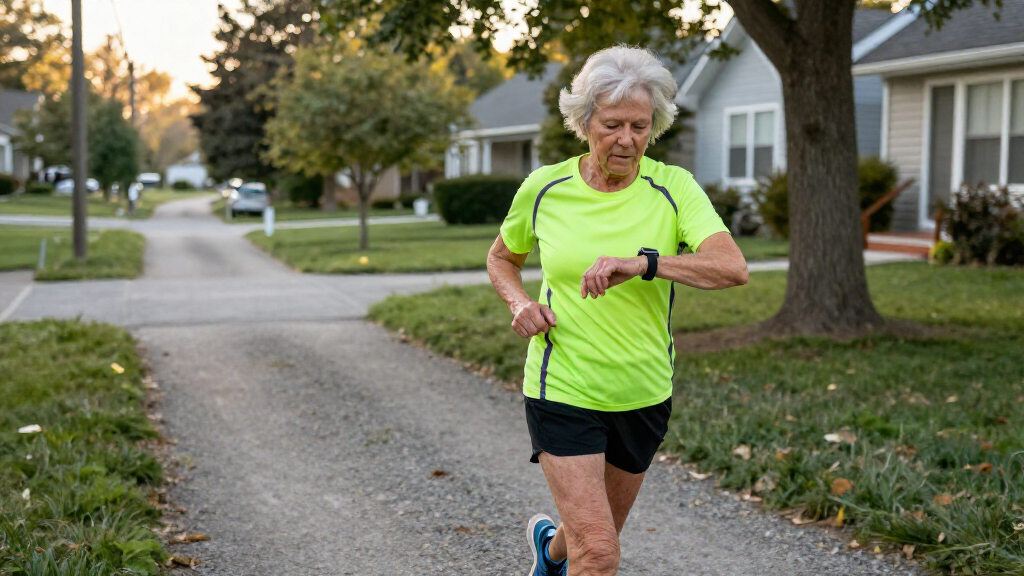
Peter Giles, an 82-year-old runner and former King Crimson bass player, set a British 5-kilometer road record for runners aged 80 and over in December 2025, finishing in 22:28. He attributes his long involvement in running to motivation, enjoyment and responding to his body’s signals; his advice is personal experience, not a guarantee of results for others.
Peter Giles, 82, ran the British 5-kilometer road record for the 80-and-over age group in December 2025, completing the course at London’s Battersea Park in 22 minutes, 28 seconds. The time was one second faster than the mark he set a year earlier, according to Fit&Well, which reports on his career and his approach to staying active.
Giles started competitive running in his mid-40s and has continued racing into his 80s. Fit&Well reports that he won five gold medals at the 2024 World Masters Athletics Championships in Sweden. He now holds 11 British Masters records in the M80 category, for athletes aged 80 and older. Giles says he intends to keep improving the marks he holds.
Before turning 44, Giles had not run competitively. He told Fit&Well that he began with a specific goal: to find out how far he could progress, from club competition to national or world standard. He spent 16 years coaching himself before starting to win British Masters titles at age 60, the report says.
Giles does not rely on a gym routine or cross-training, according to the report. He said he had tried activities including Pilates, yoga, swimming and circuit training, but now prefers running. He covers about 30 miles a week when he is not racing, runs with training partners twice weekly and adds two or three shorter interval or fartlek sessions.
A Late Start, Sustained Competition
Giles’s record offers a concrete example of continued competitive running at an advanced age. His timeline also challenges the assumption that serious running must begin in youth: he took up competition in his mid-40s and later earned Masters titles and age-group records. That is his individual experience, not evidence that every runner will become faster with age or achieve comparable results.
The report also puts his career against a figure cited by running brand Altra: the company says the average person in Britain quits running at 39 and that 32% stop permanently because of injury. Those figures are attributed to the company, and the source material does not provide further detail on how they were calculated. Giles’s experience may interest older runners and people considering taking up the sport, but it does not establish a universal training prescription.
His practical message is less about a particular workout than about sustaining participation: choose a reason to run, make room for enjoyment and social connection, and ease off when the body signals a problem. For readers, the distinction matters: a record-setting athlete’s habits can be informative, but should not replace advice suited to an individual’s health and fitness.
Products Worth Considering

Garmin Forerunner 570 GPS Running Smartwatch, 47mm, Aluminum, Black

Garmin Forerunner 70 GPS Running Smartwatch, 43 mm, Black

Garmin Forerunner 55 GPS Running Smartwatch, Black
As an affiliate, we earn on qualifying purchases.
From Club Running to Masters Records
Giles joined Hercules Wimbledon, a London running club, in 2002. He told Fit&Well that club membership added a team and social element to the sport, as well as opportunities to draw on other runners’ and coaches’ experience. He also described running as a way to explore different routes and places.
His record at Battersea Park followed an earlier mark in the same age category: the December 2025 time of 22:28 was one second quicker than his result a year before. The report also identifies Giles as a former bass player in the British progressive rock band King Crimson and says he is part of The Legacy Team, a running group launched by Altra. The team’s combined age is reported as 321.
“Running became a project because I wanted to find out what level I could get to: club, county, national or world standard.”
— Peter Giles, speaking to Fit&Well
Limits of the Record and Advice
Fit&Well reports the 22:28 time as a British record for the 80-and-over 5K road category, but the supplied report does not name the ratifying body or describe the record-verification process. It also does not provide a race result sheet or further details about the course and event. The report says Giles holds 11 British Masters M80 running records and characterizes that total as unprecedented across British Masters age groups; the source material does not include an independent record-history check.
Giles’s training approach and comments about injury are personal observations. The report does not provide a medical assessment of his health, a complete account of his training history or evidence that his routine is appropriate for other people. Runners with pain, health conditions or concerns about beginning exercise should seek guidance from a qualified health professional.
Giles Plans More Record Attempts
Giles told Fit&Well that he intends to continue setting records and improving the ones he already holds. The report does not identify a specific upcoming race or date for another attempt, so his next competitive event is not confirmed in the available material.
For now, the latest reported milestone is his December 2025 Battersea Park run. Any future record claims will depend on the race result and the relevant age-group record verification.
Key Questions
What record did Peter Giles set?
Fit&Well reports that Giles ran a 22:28 5K at Battersea Park in December 2025, setting a British road record for the 80-and-over age group. It was one second faster than the mark he set a year earlier.
How old was Giles when he began competitive running?
Giles began competitive running in his mid-40s. He told Fit&Well that a goal of finding out how far he could progress in the sport motivated him to start.
What is Giles’s reported weekly running routine?
When he is not racing, Giles says he runs about 30 miles per week, trains with partners twice weekly and does two or three shorter interval or fartlek sessions. This is his reported routine, not a recommendation for every runner.
What does Giles say helps him keep running?
He points to having a goal, enjoying the activity and listening to his body. He has also described the social benefits of running with a club and advises easing off in response to sharp or lingering pain.
Is Giles’s training approach suitable for everyone?
Not necessarily. His routine reflects his own experience and should not be treated as individualized medical or training advice. People starting to run, managing a health condition or experiencing persistent pain can seek guidance from a qualified professional.
Source: fitandwell.com