
TL;DR

Get wellness gear delivered free with Prime
- Fast, free delivery on millions of items
- Prime Video, Amazon Music and more included
- Member-only deals all year
A project called ‘Laser Graffiti’ has emerged on Show HN, showcasing laser-based digital art. Search interest is rising, but official details and widespread adoption are still unconfirmed. The development signals growing curiosity in innovative visual tech. You might also find it interesting to check out Show HN: Git-knife – Edit Commit Messages, Authors, And Dates Like A Spreadsheet.
A project called Laser Graffiti has appeared on the Show HN platform, attracting significant online attention among developers and digital artists. This development involves using laser technology to create dynamic, digital-style graffiti in real-world environments. You can explore similar innovative projects in Show HN: I Wrote A BASIC Interpreter That Boots On UEFI Machines. While the project’s creator has shared a demonstration, details about its technology, potential applications, and adoption remain unconfirmed, making it a topic of active interest and speculation. For related tech innovations, see Show HN: Woxi – Open-source Mathematica / Wolfram Language Reimplementation.
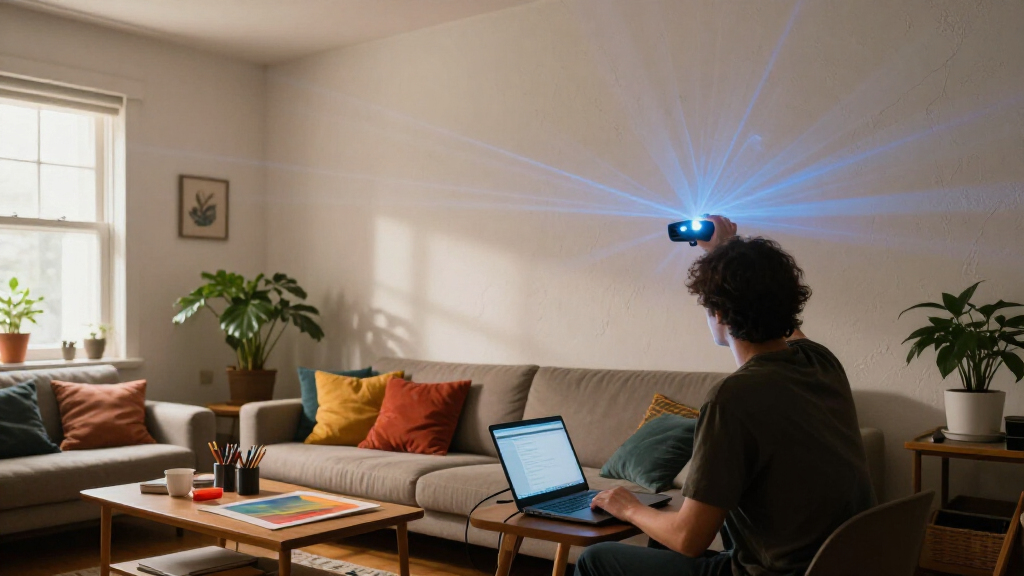
The ‘Laser Graffiti’ project was posted on Show HN recently, showcasing a system that uses laser projectors and computer vision to generate animated, colorful images on physical surfaces. The project’s creator claims it allows users to ‘paint’ with laser beams, creating temporary art that can be viewed in real time. The demonstration video shows laser patterns moving across walls, seemingly controlled via a custom interface.
Search interest for ‘Laser Graffiti’ has surged over the past week, according to trend-tracking tools, indicating a growing curiosity among tech communities and digital artists. However, the project’s technical specifics, such as hardware setup, software platform, and potential commercial or artistic applications, have not been publicly detailed beyond the initial demonstration. No official statements or broader adoption announcements have been made.
Potential Impact on Digital Art and Visual Tech
The emergence of ‘Laser Graffiti’ highlights a possible new frontier in interactive public art and digital display technology. If scalable and accessible, such systems could revolutionize outdoor advertising, live performances, and urban art installations by enabling artists and brands to project animated visuals onto buildings without permanent markings. The project also underscores the increasing interest in light-based interfaces that blend physical and digital realms, which could influence future developments in augmented reality and immersive experiences.
While still in early stages, the curiosity and online buzz suggest that ‘Laser Graffiti’ could inspire new collaborations between technologists, artists, and city planners, fostering innovative approaches to urban aesthetics and interactive environments. However, the lack of detailed technical and commercial information means its broader impact remains speculative at this stage.
As an affiliate, we earn on qualifying purchases.
Rising Interest in Light-Based Digital Art Forms
Over recent years, there has been increased interest in digital art forms that utilize laser and projection technology, driven by advancements in hardware and software. Projects like laser shows, augmented reality installations, and interactive light displays have gained popularity in both entertainment and public art sectors. The recent spike in searches and discussions around ‘Laser Graffiti’ on platforms like Show HN suggests a new wave of experimentation, possibly fueled by accessible laser projectors and open-source software communities.
Historically, laser art has been used in controlled environments such as concerts and exhibitions. The current development indicates a shift toward more portable, user-friendly systems that could democratize the creation of large-scale, temporary visual art in urban spaces. The exact origin of the ‘Laser Graffiti’ project remains unverified, and its technical details are still emerging, leaving questions about its feasibility and scalability.
Technical Details and Broader Adoption Still Unclear
It is not yet confirmed how scalable or practical the ‘Laser Graffiti’ system is for widespread use, nor whether it will be adopted commercially or remain a niche artistic experiment. Details about the hardware specifications, software platforms, or potential safety considerations have not been publicly disclosed. The project’s long-term viability and impact are still uncertain, pending further technical disclosures or demonstrations.
Monitoring for Official Updates and Broader Adoption
The next steps involve observing whether the project’s creator releases more detailed technical information or expands its demonstration to larger or more complex displays. Additionally, community discussions and media coverage will likely influence whether ‘Laser Graffiti’ gains traction beyond initial interest. Stakeholders such as urban artists, tech developers, and city officials may also explore pilot projects if initial proof-of-concept proves feasible.
Key Questions
What exactly is Laser Graffiti?
It appears to be a system that uses laser projectors and computer control to create animated images and patterns on physical surfaces, similar to graffiti but temporary and digital in nature.
Is Laser Graffiti available for public or commercial use?
There are no confirmed details about its commercial availability or accessibility; current information is limited to a demonstration posted online.
What hardware does it require?
Details are not yet disclosed, but it likely involves laser projectors, sensors, and a control interface, based on visual evidence from the demonstration.
Could this be used for advertising or urban art?
Potentially, if scalable and safe, it could be used for temporary urban displays, live performances, or advertising, but this remains speculative at this stage.
Are there safety concerns with laser graffiti?
Safety considerations are not publicly discussed yet; laser projection systems typically require precautions to prevent eye damage or accidents, especially in public spaces.
Source: hn
Cold & flu season Picks
humidifiers
As an affiliate, we earn on qualifying purchases.