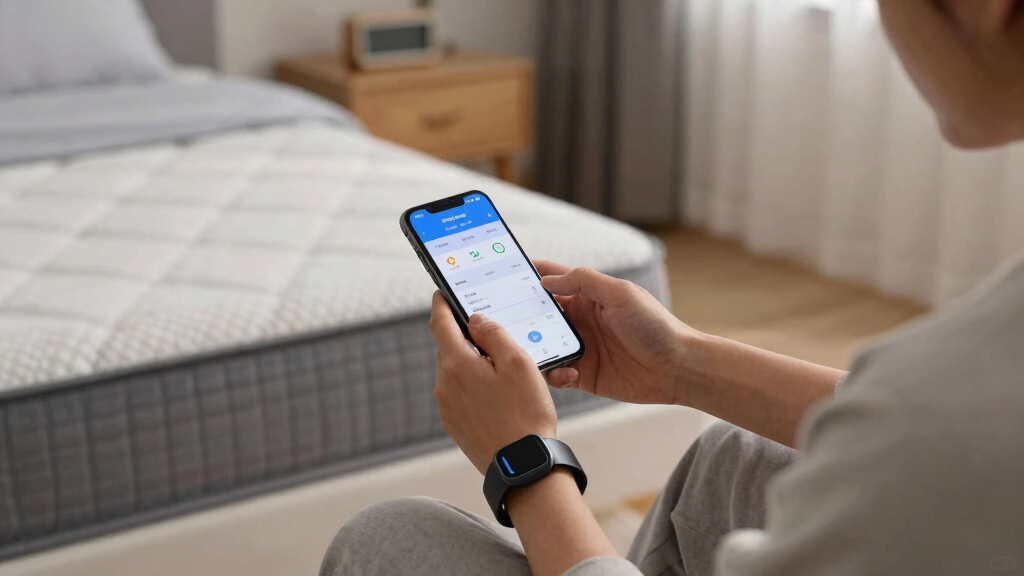
The best sleep tracking devices balance useful overnight data with comfort, clear reporting, and manageable upkeep. My best overall pick is the Google Fitbit Inspire 3 for its approachable wearable format and broad health tracking, while Withings Sleep stands out for people who do not want to wear anything to bed. For coaching and a longer battery interval, WHOOP 5.0/MG is a more involved alternative. The main tradeoffs are wearing a device overnight, relying on a membership or app, and choosing between convenient trend tracking and more detailed metrics. Read on for the full comparison and a guide to choosing the right style for your sleep habits.

Get wellness gear delivered free — and shop member deals
- Fast, free delivery on millions of items
- Access to Prime Big Deal Days deals on October 6–7
- Prime Video, Amazon Music and more included
Key Takeaways
- Wearability is the main dividing line: Fitbit Inspire 3, Fitbit Air, Galaxy Fit3, and WHOOP track sleep on the body, while Withings Sleep and SOMNDEEP offer contactless approaches.
- Fitbit Inspire 3 is the most balanced starting point: it pairs a familiar band format with sleep and general health tracking, without the more specialized focus of WHOOP.
- Withings Sleep suits people who dislike wrist devices: its under-mattress design avoids bedtime wear, though it is tied to one sleeping location.
- WHOOP 5.0/MG is the coaching-led choice: its longer stated battery life and personalized guidance appeal to data-focused users, but the membership model adds a continuing commitment.
- Low-cost-looking feature lists need scrutiny: the MorePro, screenless generic band, and Free Shark ring advertise several health metrics, so buyers should prioritize usable sleep reports, comfort, and app clarity over metric count alone.
| Google Fitbit Air – Screenless Activity Tracker with Fitness, Heart Rate, and Sleep Tracking – Personalized AI-Powered Coaching – Up to 7 Days’ Battery Life – Works with iOS and Android – Lavender |  | Best for Comfortable Everyday Tracking | Battery life: Up to 7 days | Compatibility: iOS and Android | Fit size: 130–210 mm | VIEW LATEST PRICE | See Our Full Breakdown |
| Samsung Galaxy Fit3 (2025, 40mm) – International Model |  | Best for Android Users Who Want an On-Wrist Display | Display: 1.6-inch AMOLED | Resolution: 320 × 320 | Battery capacity: 208 mAh | VIEW LATEST PRICE | See Our Full Breakdown |
| Withings Sleep – Sleep Tracking Pad Under The Mattress With Sleep Cycle Analysis |  | Best Under-Mattress Sleep Tracker | Placement: Under the mattress | Tested mattress thickness: 4–15 inches | Sleep tracking: Light, deep, and REM stages; interruptions | VIEW LATEST PRICE | See Our Full Breakdown |
| Screenless Fitness Tracker Smart Band with Sleep, HRV, Heart Rate, and SpO2 Monitoring |  | Best Long-Battery Wearable Without a Subscription | Battery life: 20–30 days | Battery capacity: 180 mAh | Weight: 25 g | VIEW LATEST PRICE | See Our Full Breakdown |
| SOMNDEEP Contactless Smart Sleep Tracker |  | Best Contactless Radar Tracker | Technology: 60GHz millimeter-wave radar | Connectivity: 2.4GHz Wi-Fi | Monitoring: Sleep routines, heart rate, and breathing patterns | VIEW LATEST PRICE | See Our Full Breakdown |
| Hatch Sleep Clock Bedside Sleep Tracker, Smart Light, Sound Machine, Putty |  | Best for Building a Bedtime Routine | Tracking method: Contactless bedside tracking using micro-movement and breathing-pattern sensors | Mounting type: Tabletop | Functions: Sleep tracker, smart light, sound machine, alarm, sunrise alarm | VIEW LATEST PRICE | See Our Full Breakdown |
| MorePro AIR2 Fitness Tracker with Heart Rate, Blood Pressure, and 2 Bands |  | Best for Sleep and Everyday Health Metrics | Model: AIR2 | Display: 1.57-inch touchscreen | Battery life: Up to 7 days | VIEW LATEST PRICE | See Our Full Breakdown |
| Free Shark Smart Ring with Sleep Monitoring, Heart Rate, and Blood Oxygen Tracking |  | Best Screen-Free Ring | Form: Smart ring | Color: Rose Gold | Size: 8 | VIEW LATEST PRICE | See Our Full Breakdown |
| Google Fitbit Inspire 3 – Midnight Zen/Black – Small and Large Bands |  | Best for Beginners | Product line: Google Fitbit Inspire 3 | Color: Midnight Zen/Black | Included bands: Small and large | VIEW LATEST PRICE | See Our Full Breakdown |
| WHOOP 5.0/MG Activity Tracker – 12 Month Membership – Health and Fitness Wearable |  | Best for Advanced Sleep Coaching | Device: WHOOP 5.0/MG | Membership included: 12 months | Included wearable: SuperKnit band | VIEW LATEST PRICE | See Our Full Breakdown |
| sleep tracking device | Battery life | Compatibility | Connectivity |
|---|---|---|---|
| Google Fitbit Air | Up to 7 days | iOS and Android | Bluetooth |
| Samsung Galaxy Fit3 | Up to 14 days | Android only | — |
| Withings Sleep | — | — | Wi-Fi |
| Screenless Fitness Tracker Sma | 20–30 days | Android 4.4+ / iOS 9.0+ | — |
| SOMNDEEP Contactless Smart Sle | — | — | 2.4GHz Wi-Fi |
| Hatch Sleep Clock Bedside Slee | — | — | Bluetooth and Wi-Fi |
| MorePro AIR2 Fitness Tracker w | Up to 7 days | Android 7.0 or later; iOS 13.0 or later | Bluetooth LE 5.2 |
| Free Shark Smart Ring with Sle | Up to 5 days for the ring | iOS and Android | — |
| Google Fitbit Inspire 3 | — | Apple iOS 16.4 or later; Android OS 11.0 or later | — |
| WHOOP 5.0/MG Activity Tracker | 14+ days | — | — |
More Details on Our Top Picks
Google Fitbit Air – Screenless Activity Tracker with Fitness, Heart Rate, and Sleep Tracking – Personalized AI-Powered Coaching – Up to 7 Days’ Battery Life – Works with iOS and Android – Lavender
The Google Fitbit Air is a good fit for people who want sleep tracking without a watch face or a bulky device to check during the night. Its lightweight, adjustable fit and up-to-seven-day battery life support routine overnight wear, while compatibility with iOS and Android makes it more flexible across phones than the Android-only Samsung Galaxy Fit3. The screenless design is also less distracting, but it means you’ll need the companion app to review your sleep information rather than glancing at your wrist. Personalized coaching may add useful context, though premium coaching features require a subscription. Compared with the under-mattress Withings Sleep, this Fitbit is better for people who want a wearable that follows them through the day as well as at night; skip it if you want detailed data without an app or subscription.
Pros:- Lightweight adjustable fit is suited to overnight and all-day wear.
- Up to seven days of battery life reduces charging interruptions.
- Works with both iOS and Android.
- Personalized coaching and health insights add context to tracking.
Cons:- No built-in screen, so sleep data requires a companion app.
- Premium coaching features require a subscription.
- Detailed metrics are limited without the companion app.
Best for: People who want a discreet, adjustable wearable for sleep and daily activity tracking and need support for either iOS or Android.
Not ideal for: Buyers who want to check sleep data directly on the device or access all coaching features without a subscription.
- Battery life:Up to 7 days
- Compatibility:iOS and Android
- Fit size:130–210 mm
- Tracking:Fitness, heart rate, and sleep
- Coaching:Personalized coaching; premium features require a subscription
- Connectivity:Bluetooth
- Color:Lavender
Our verdict“Choose the Fitbit Air if you want a discreet wearable for day-and-night tracking across iOS or Android and are comfortable reviewing results in an app.”
Samsung Galaxy Fit3 (2025, 40mm) – International Model
The Samsung Galaxy Fit3 suits Android users who want sleep tracking on a wearable that can also show information at a glance. Its 1.6-inch AMOLED display makes it easier to check data and notifications than on the screenless Fitbit Air or the Screenless Fitness Tracker, while its 18.5g body keeps the band lightweight for overnight wear. The listed battery life of up to 14 days also means fewer charging breaks than the Fitbit Air’s up-to-seven-day claim. Sleep coaching, heart-rate tracking, and SpO2 add useful context, but this is not the most phone-flexible option: it is Android-only, and this international model has no US warranty. Buyers should also verify the stated operating-system compatibility for their setup; the product data lists Android-only compatibility alongside Android Wear.
Pros:- Bright 1.6-inch AMOLED display allows at-a-glance access to information.
- Up to 14 days of battery life exceeds the listed Fitbit Air runtime.
- Lightweight 18.5g aluminum body is suited to overnight wear.
- 5ATM and IP68 water resistance support use around water and dust.
Cons:- Not compatible with iOS.
- International model does not include a US warranty.
- Samsung Pay is not supported.
Best for: Android users who want a lightweight sleep tracker with an on-device display, long battery life, and additional activity features.
Not ideal for: iPhone owners or buyers who need a US warranty with their device.
- Display:1.6-inch AMOLED
- Resolution:320 × 320
- Battery capacity:208 mAh
- Water resistance:5ATM / IP68
- Weight:18.5 g
- Compatibility:Android only
- Operating system:Android Wear
- Battery life:Up to 14 days
Our verdict“Pick the Galaxy Fit3 if you use Android and want a light, screen-equipped tracker, but avoid this international model if iOS compatibility or US warranty coverage matters.”
Withings Sleep – Sleep Tracking Pad Under The Mattress With Sleep Cycle Analysis
The Withings Sleep is the clearest choice here for people who don’t want to wear anything to bed. The sensor sits under the mattress and automatically tracks sleep cycles, interruptions, heart rate, breathing disturbances, and snoring, then syncs through Wi-Fi to the Health Mate app. That set-and-leave approach differs from the Fitbit Air and Samsung Galaxy Fit3, which require an overnight wearable; it also makes the Withings less useful for tracking activity away from bed. Mattress compatibility matters: the supplied information says it has been tested with mattresses 4 to 15 inches thick. I’d choose it for home-focused sleep patterns and snoring information, not as a broad daily health tracker. App-based results and a fixed bed setup are the tradeoffs for avoiding a wrist-worn device.
Pros:- Tracks sleep without requiring a wearable at bedtime.
- Reports sleep cycles, interruptions, heart rate, and snoring.
- Automatic Wi-Fi syncing sends results to the Health Mate app.
- IFTTT integration can connect bedtime and wake-up routines to compatible smart-home actions.
Cons:- Stays in one bed, so it cannot track sleep away from home.
- Requires a companion app to review results.
- Mattress setup may not suit beds outside the tested 4–15-inch thickness range.
Best for: People who dislike wearing a band or watch overnight and want automatic, bed-based tracking of sleep patterns, snoring, and heart rate.
Not ideal for: Travelers or anyone seeking a wearable that tracks activity throughout the day, or whose mattress falls outside the stated tested thickness range.
- Placement:Under the mattress
- Tested mattress thickness:4–15 inches
- Sleep tracking:Light, deep, and REM stages; interruptions
- Additional monitoring:Heart rate, breathing disturbances, and snoring
- Connectivity:Wi-Fi
- App:Health Mate
- Smart-home integration:IFTTT
Our verdict“Choose Withings Sleep if you want hands-off, non-wearable tracking in a compatible bed and don’t need a device for daytime activity.”
Screenless Fitness Tracker Smart Band with Sleep, HRV, Heart Rate, and SpO2 Monitoring
This screenless band is a strong match for buyers who want a wearable with HRV, heart-rate, SpO2, stress, and sleep tracking but don’t want to pay for a subscription to use its companion app. Its stated 20–30-day battery life is considerably longer than the Fitbit Air’s up-to-seven-day claim, which can make keeping an overnight tracking routine easier. The tradeoff is that it has no display, so reviewing sleep information means opening the QwatchPro app; the 170+ sports modes and connected GPS also matter more to active users than to someone focused only on sleep. Unlike the under-mattress Withings Sleep, it travels with you, but comfort and tracking depend on wearing a band. Its readings are for reference, not medical use.
Pros:- Listed 20–30-day battery life reduces charging frequency.
- Companion app is available without a subscription.
- Tracks sleep alongside HRV, heart rate, SpO2, and stress.
- IP68-rated, 25g design and quick-release strap support regular wear.
Cons:- No display; detailed data must be checked in the smartphone app.
- GPS depends on a connected smartphone rather than built-in hardware.
- Readings are for reference only and are not medical measurements.
Best for: Wearable-tracker buyers who want HRV and SpO2 data, long time between charges, and app access without a subscription.
Not ideal for: People who dislike wearing a band in bed, want on-device sleep summaries, or need built-in GPS or medical-grade readings.
- Battery life:20–30 days
- Battery capacity:180 mAh
- Weight:25 g
- Water resistance:IP68
- Compatibility:Android 4.4+ / iOS 9.0+
- Tracked metrics:Sleep, HRV, heart rate, SpO2, and stress
- Sports modes:170+
- GPS:Connected GPS via smartphone
- Charging time:Approximately 2 hours
Our verdict“Choose this band for long battery life and subscription-free app access to a broad set of wellness metrics, provided you’re happy to wear it overnight.”
SOMNDEEP Contactless Smart Sleep Tracker
The SOMNDEEP Contactless Smart Sleep Tracker is for sleepers who want to avoid a wristband and prefer a sensor that monitors from nearby. Its 60GHz millimeter-wave radar tracks sleep routines, heart rate, and breathing patterns without a camera or video recording, giving it a different approach from the bed-contact Withings Sleep pad and the wearable Fitbit Air. Automatic nightly tracking and app syncing can keep the routine simple once the device is set up. The main limitations are practical: it requires 2.4GHz Wi-Fi, so a 5GHz-only network won’t work, and it does not track blood oxygen. As with any app-based contactless setup, it’s a home sleep monitor rather than a device you can take along to track nights elsewhere.
Pros:- Radar tracks sleep without a wearable touching the body.
- No camera or video recording supports a privacy-focused setup.
- Monitors sleep routines, heart rate, and breathing patterns.
- Automatic app syncing supports routine nightly tracking.
Cons:- Only supports 2.4GHz Wi-Fi, not 5GHz.
- Does not provide blood-oxygen monitoring.
- A home-based sensor cannot follow sleep while traveling.
Best for: People who want contactless sleep, heart-rate, and breathing tracking at home without wearing a device or using a camera-based monitor.
Not ideal for: Buyers whose home network only supports 5GHz Wi-Fi, people who need blood-oxygen tracking, or frequent travelers seeking portable overnight data.
- Technology:60GHz millimeter-wave radar
- Connectivity:2.4GHz Wi-Fi
- Monitoring:Sleep routines, heart rate, and breathing patterns
- Wearable required:No
- Blood oxygen monitoring:Not supported
- Included components:Sleep monitor, Type-C extension cable, magnetic plate, metal plate, and 3M adhesive pads
- Warranty:2-year manufacturer warranty
- Model number:BQPW
Our verdict“Choose SOMNDEEP if you want camera-free, contactless tracking at home and have a compatible 2.4GHz network; skip it if you need SpO2 or travel-ready tracking.”
Hatch Sleep Clock Bedside Sleep Tracker, Smart Light, Sound Machine, Putty
Hatch Sleep Clock takes a different approach from wearables: it tracks sleep contactlessly from the nightstand and pairs its insights with light, sound, bedtime reminders, and a sunrise alarm. That makes it a stronger fit for people who want help shaping their routine, rather than a wrist device focused on activity and health metrics like the Fitbit Inspire 3 or MorePro AIR2. Its app-based guidance is designed to show patterns and suggest next steps without reducing sleep to a score. The tradeoff is that it needs a powered bedside spot, Bluetooth for setup, and stable 2.4GHz Wi-Fi; it is not a portable tracker. Some audio content is tied to a Hatch+ membership after the included trial, so ongoing access may require a subscription. Choose it for sleep-environment tools as much as tracking, not for wearable-style biometrics.
Pros:- Tracks sleep without wearing or charging a sensor
- Combines sleep insights with light, sound, reminders, and sunrise alarm functions
- Offers personalized guidance without a sleep score
- Bedside setup avoids the wrist-worn format of the Fitbit Inspire 3
Cons:- Requires an outlet and stable 2.4GHz Wi-Fi for ongoing use
- Bluetooth is required for setup, and controls rely on the app
- Some audio-library access requires a Hatch+ membership after the trial
Best for: People who want contactless sleep tracking combined with a sound machine, smart light, bedtime reminders, and a sunrise alarm.
Not ideal for: Travelers or buyers seeking wearable activity, heart-rate, or workout tracking; this is a corded bedside device rather than a portable fitness tracker.
- Tracking method:Contactless bedside tracking using micro-movement and breathing-pattern sensors
- Mounting type:Tabletop
- Functions:Sleep tracker, smart light, sound machine, alarm, sunrise alarm
- Control method:App
- Connectivity:Bluetooth and Wi-Fi
- Wi-Fi requirement:Stable 2.4GHz Wi-Fi for ongoing use
- Power:Corded electric; power adapter included
- Color:Putty
Our verdict“Pick Hatch if you want sleep tracking to support a more consistent bedtime routine, and skip it if you need portable or activity-focused tracking.”
MorePro AIR2 Fitness Tracker with Heart Rate, Blood Pressure, and 2 Bands
The MorePro AIR2 suits buyers who want sleep tracking inside a broader fitness band, with heart-rate, blood-oxygen, and blood-pressure monitoring alongside 112 sports modes. Its up-to-seven-day battery life and two included bands add everyday flexibility, while the IP68 rating supports use around water and during workouts. Compared with the Hatch Sleep Clock, it is portable and tracks activity, but it lacks Hatch’s room-based light, sound, and bedtime-routine tools. The sleep information also sits within a general-purpose wearable, not a dedicated sleep-only system. MorePro states that the device is not a medical device, so its health readings should not replace clinical assessment. It makes most sense for buyers who want one band for sleep and daytime metrics, rather than someone seeking detailed sleep coaching alone.
Pros:- Combines sleep tracking with heart-rate, blood-oxygen, and blood-pressure monitoring
- Up to seven days of stated battery life
- Includes silicone and nylon bands for different wearing preferences
- IP68 water resistance and 112 sports modes support active daily use
Cons:- Not a medical device, so readings are not a substitute for clinical monitoring
- Requires a compatible Android or iOS phone and the FitCloudPro app
- Offers fewer sleep-routine features than the Hatch Sleep Clock
Best for: Wearable-tracker buyers who want sleep monitoring alongside heart-rate, blood-oxygen, and blood-pressure readings, workout modes, and phone notifications.
Not ideal for: People who want dedicated sleep-environment tools or medical-grade monitoring; the AIR2 is a general fitness tracker and is explicitly not a medical device.
- Model:AIR2
- Display:1.57-inch touchscreen
- Battery life:Up to 7 days
- Water resistance:IP68
- Connectivity:Bluetooth LE 5.2
- Compatibility:Android 7.0 or later; iOS 13.0 or later
- Sports modes:112
- Included bands:Silicone band and nylon band
- Health and smart features:Sleep tracking, heart rate, blood pressure, blood oxygen, and call/text notifications
Our verdict“Choose the AIR2 if you want a multi-purpose wearable with sleep and fitness metrics, not a dedicated device for improving your bedtime environment.”
Free Shark Smart Ring with Sleep Monitoring, Heart Rate, and Blood Oxygen Tracking
Free Shark Smart Ring is the compact option for buyers who prefer sleep tracking without a watch display or wrist band. It records sleep quality, heart rate, blood oxygen, and steps, and its app features do not require a subscription. That contrasts with the MorePro AIR2, which adds a touchscreen, sports modes, and notifications but is more obviously a daytime fitness wearable. The ring’s stated 80-meter waterproof rating and charging case support regular wear, though the ring itself is rated for up to five days per charge. Fit is the key decision: accurate sizing matters for comfort and sensor contact, and this listing specifies size 8 rather than a range of sizes. It is best for people comfortable with a ring form factor who want basic sleep and health tracking without recurring app fees.
Pros:- Ring format avoids a wrist-worn tracker while sleeping
- Full app features are available without a subscription
- Tracks sleep, heart rate, blood oxygen, and steps
- Charging case is stated to provide 30+ days of support between case charges
Cons:- The ring itself is rated for up to five days of battery life
- Fit must be carefully checked, and the listed size is 8
- Does not offer the workout-mode and notification breadth of the MorePro AIR2
Best for: People who want a low-profile, screen-free sleep tracker with heart-rate and blood-oxygen monitoring and no required subscription.
Not ideal for: Buyers who cannot confirm a comfortable size 8 fit, need detailed workout modes, or want a tracker with a display and phone notifications.
- Form:Smart ring
- Color:Rose Gold
- Size:8
- Battery life:Up to 5 days for the ring
- Charging case support:30+ days
- Compatibility:iOS and Android
- Subscription:No subscription required for full app features
- Water resistance:Rated to 80 meters
- Tracking features:Sleep, heart rate, blood oxygen, step counting, and GPS tracking
Our verdict“Choose this ring if a discreet, subscription-free sleep tracker matters more than a screen, extensive sports tools, or flexible sizing.”
Google Fitbit Inspire 3 – Midnight Zen/Black – Small and Large Bands
The Fitbit Inspire 3 is a straightforward starting point for buyers who want sleep tracking in a familiar fitness band. It automatically tracks sleep, provides a daily Sleep Score, includes a vibrating smart-wake alarm, and adds sleep mode to limit interruptions. Those features make it more sleep-specific than the MorePro AIR2 in how sleep is presented, while still covering all-day heart rate, activity, and exercise. Unlike the Hatch Sleep Clock, it travels on the wrist and does not depend on a nightstand setup, but it cannot change the bedroom’s light or sound environment. Its value depends on being comfortable wearing a band overnight, and the listed phone requirements rule out older devices. Buyers focused solely on contactless or ring-based tracking should look elsewhere; this is a wearable that combines basic sleep feedback with daytime activity features.
Pros:- Automatic sleep tracking with a daily Sleep Score
- Vibrating smart-wake alarm and sleep mode support a sleep-focused routine
- Combines overnight tracking with all-day heart rate and activity features
- Includes small and large bands for fit adjustment
Cons:- Must be worn on the wrist overnight, unlike the Hatch Sleep Clock
- Phone compatibility requires Apple iOS 16.4 or later or Android OS 11.0 or later
- Sleep tracking is part of a broader fitness wearable rather than a dedicated bedside system
Best for: First-time wearable buyers who want automatic sleep tracking and a simple daily sleep summary alongside all-day activity and heart-rate tracking.
Not ideal for: People who dislike wearing a wrist band overnight, want contactless tracking, or use a phone below the stated operating-system requirements.
- Product line:Google Fitbit Inspire 3
- Color:Midnight Zen/Black
- Included bands:Small and large
- Sleep features:Automatic sleep tracking, daily Sleep Score, sleep mode, and smart-wake vibrating alarm
- Heart-rate tracking:24/7
- Exercise features:40+ exercise modes and automatic exercise tracking
- Compatibility:Apple iOS 16.4 or later; Android OS 11.0 or later
- Additional health features:SpO2, resting heart rate, stress management score, and menstrual health tracking
Our verdict“Pick the Inspire 3 if you want an approachable wrist-worn tracker with automatic sleep summaries and daytime activity features.”
WHOOP 5.0/MG Activity Tracker – 12 Month Membership – Health and Fitness Wearable
WHOOP 5.0/MG is the most coaching-oriented wearable here: it combines sleep insights with strain, recovery, heart-rate, stress, and habit tracking, then uses those signals to tailor recommendations. Its screenless design avoids watch notifications, and the stated 14+ day battery life helps support continuous wear. Compared with the Fitbit Inspire 3, WHOOP puts more emphasis on personalized coaching and relationships between daily behavior and recovery, rather than a daily sleep summary alongside a conventional activity tracker. The main tradeoff is the required 12-month membership; buyers should be comfortable with a subscription-based service and a data-rich app. It also needs to be worn consistently to build useful patterns. This is a better match for people who want sleep guidance connected to training and habits than for someone seeking a simple, standalone sleep tracker.
Pros:- Connects sleep insights with strain, recovery, stress, and daily behavior
- Personalized coaching draws on more than 140 metrics, according to the product description
- Screenless design avoids display and notification distractions
- Up to 14+ days of stated battery life, with a waterproof Wireless PowerPack included
Cons:- The package includes a required 12-month membership
- No screen for viewing information directly on the device
- Its broad performance and health data may be more than sleep-only buyers need
Best for: Data-oriented athletes and health-focused users who want sleep recommendations connected to recovery, training strain, stress, and daily habits.
Not ideal for: People who want a one-time-purchase sleep tracker, a screen for quick readings, or a simple sleep-only experience without a year-long membership.
- Device:WHOOP 5.0/MG
- Membership included:12 months
- Included wearable:SuperKnit band
- Battery life:14+ days
- Display:Screenless
- Included charger:Waterproof Wireless PowerPack
- Health and performance insights:Sleep, strain, recovery, VO2 max, menstrual cycle, heart rate, and stress
- Integrations:Apple Health, Google Health Connect, Strava, and Natural Cycles
Our verdict“Choose WHOOP if you want ongoing, data-driven sleep coaching tied to training and habits and are willing to use its membership model.”

How We Picked
I ranked these devices around how well they serve the specific job of tracking sleep night after night: comfortable wear or unobtrusive placement, useful sleep summaries, dependable access to trends, and a setup that fits ordinary routines. I also weighed battery expectations, compatibility, the role of companion apps or memberships, and whether the product can serve a buyer beyond overnight monitoring. A long list of sensors did not automatically earn a higher position; the data must be easy to interpret and the device practical to keep using.
The Fitbit Inspire 3 leads as the most balanced wearable option, while Withings Sleep ranks highly for a distinct no-wear need. WHOOP 5.0/MG is placed lower for general buyers despite its coaching focus because its membership commitment is not for everyone. The other bands, ring, and bedside options fill narrower roles, with fewer details available to confirm how their sleep insights compare in everyday use. I treat consumer sleep metrics as trend information, not a medical diagnosis.
| sleep tracking device | Compatibility |
|---|---|
| Google Fitbit Air | iOS and Android |
| Samsung Galaxy Fit3 | Android only |
| Withings Sleep | — |
| Screenless Fitness Tracker Sma | Android 4.4+ / iOS 9.0+ |
| SOMNDEEP Contactless Smart Sle | — |
| Hatch Sleep Clock Bedside Slee | — |
| MorePro AIR2 Fitness Tracker w | Android 7.0 or later; iOS 13.0 or later |
| Free Shark Smart Ring with Sle | iOS and Android |
| Google Fitbit Inspire 3 | Apple iOS 16.4 or later; Android OS 11.0 or later |
| WHOOP 5.0/MG Activity Tracker | — |
Factors to Consider When Choosing Best Sleep Tracking Devices
Before choosing a device, decide what you want to change based on the information it gives you. A detailed dashboard is only useful if you can wear or place the tracker consistently and understand its reports. These factors help separate a convenient habit aid from a gadget that adds friction.
Choose a tracking style you can keep using
Wearable trackers need to feel comfortable when you sleep in your usual position, not just during the day. Bands may bother people who dislike wrist contact, while a ring can feel intrusive for hands-on sleepers or anyone sensitive to pressure. Contactless pads and bedside systems avoid that issue, but they track from a fixed location and may be less suited to frequent travel or changing beds. A common mistake is choosing based on daytime appearance without checking whether overnight wear feels acceptable. Prioritize the form you are most likely to use every night, since gaps in use make long-term patterns harder to interpret.
Decide which sleep questions you want answered
Some buyers want a simple view of sleep duration and consistency; others want health signals, coaching, or broader activity context. More measurements do not automatically make a tracker more useful, and consumer estimates can differ from clinical sleep testing. Before buying, ask whether you need a bedtime routine prompt, a record of nightly patterns, or guidance that connects sleep with activity and recovery. Avoid paying for extra metrics you will not check or act on. If symptoms such as persistent insomnia or breathing concerns are your main reason for shopping, use a tracker as a discussion aid rather than a substitute for professional care.
Check the full app and membership commitment
The device is only part of the experience: app access, data history, coaching features, and account requirements shape what you can actually use. A membership-based system may make sense if you want ongoing interpretation and are comfortable with a recurring commitment. A simpler tracker may suit someone who mainly wants basic trends without a coaching-heavy routine. Read the current feature and subscription terms before choosing, since included access can vary by plan, region, and time. Also check whether the app works with your phone and whether you can export or retain the information that matters to you.
Match battery and setup to your bedtime routine
Frequent charging can interrupt overnight tracking if you forget to recharge before bed. Compare the maker’s stated battery life with how you plan to use screens, sensors, and notifications, since actual runtime can vary. Under-mattress and bedside devices trade charging chores for installation and placement requirements, so check whether your bed type and room setup are compatible. For wearable models, think about when charging will fit naturally into your day. A device with more features may be a poor fit if keeping it powered or positioned correctly becomes another nightly task.
Treat health metrics as estimates, not diagnoses
Sleep stages, heart rate, blood oxygen, and other readings from consumer devices can help show personal patterns, but they are not a clinical assessment. Different products may label or calculate sleep measures differently, so avoid treating a single night or a direct device-to-device comparison as definitive. Focus on repeated trends and whether a change matches how you feel, rather than chasing a perfect score. If a reading is alarming or a health concern persists, seek advice from a qualified clinician. This approach helps keep tracking informative without letting uncertain numbers drive unnecessary worry.
Account for travel, bed sharing, and household use
Where and with whom you sleep can change which tracker makes sense. A mattress pad stays at home, while a wearable can travel with you, though a new environment may still affect sleep patterns. Bed-sharing buyers should check how a contactless sensor distinguishes one person’s data and whether the product is designed for shared beds. A bedside sleep clock may support a shared wind-down routine, but its light and sound features can affect a partner too. Consider the whole room and household before choosing a device whose placement or alerts may disrupt someone else.
Frequently Asked Questions
Can a sleep tracker tell me whether I have a sleep disorder?
No consumer tracker can diagnose a sleep disorder. Wearables and contactless sensors estimate sleep-related patterns from signals such as movement or heart activity, and their labels may not match a clinical assessment. The most useful role is to record trends you can discuss with a healthcare professional. If you have persistent symptoms, loud snoring with breathing pauses, or severe daytime sleepiness, do not rely on tracker data to rule out a problem.
Should I choose a wearable or an under-mattress tracker?
Choose based on the format you can use consistently and where you sleep most often. A wearable is easier to take on trips and can pair sleep data with daytime activity, but it must feel comfortable overnight and stay charged. An under-mattress tracker avoids wearing a device, though it is fixed to a particular bed and may require setup checks. If you share a bed, confirm how the contactless model handles two sleepers before relying on its reports.
Are sleep tracking features worth a paid membership?
A membership may be worthwhile if its coaching, reports, and history are features you plan to use regularly. It is less compelling if you only want a basic record of sleep duration or prefer not to depend on a continuing service. Check which data and functions remain available without a subscription, and review the current terms before purchase. The WHOOP option in this roundup makes the membership question especially relevant, while more basic trackers may suit buyers who want a simpler routine.
Will a sleep tracker work if I wake up often or sleep at irregular times?
Many trackers can still record patterns when sleep is interrupted, but their estimates may not capture every waking period accurately. Irregular schedules can also make comparisons between nights less straightforward, so look at longer-term patterns rather than expecting a tidy nightly score. Record context such as shift work, naps, travel, or illness if you use the data to change habits. A tracker can help organize observations, but it cannot explain every cause of fragmented sleep.
What should I prioritize if I only want simple sleep tracking?
Prioritize comfort, clear summaries, reliable app access, and a charging or setup routine you will maintain. You likely do not need a coaching-focused system or a large collection of health metrics if your aim is to understand bedtime consistency and broad sleep trends. The Fitbit Inspire 3 is the most balanced entry in this roundup, while a contactless option may be preferable if wearing a band feels uncomfortable. Check phone compatibility and any paid-feature limits before deciding.
Conclusion
For most buyers, I would start with the Fitbit Inspire 3 as the best overall: it offers a straightforward wearable route to sleep and general health tracking. The screenless generic band is the best value-style pick for shoppers drawn to a simple band and multiple advertised metrics, though I would verify app details and feature limits before purchase. For best premium coaching, choose WHOOP 5.0/MG only if its membership and guidance match your habits. Beginners who want a familiar tracker format can start with Inspire 3, while Withings Sleep is best for people who do not want to wear a tracker. Choose Fitbit Air or Galaxy Fit3 if their screenless or band-based format better suits your daily routine; the Hatch clock makes more sense when bedtime lighting and sound matter alongside tracking. The right pick is the one whose format and reporting you will keep using, not the one with the longest feature list.
Halloween Picks
halloween
As an affiliate, we earn on qualifying purchases.